
❌

Normal view

  • ✇MIT Technology Review
  • The Download: gig workers training humanoids, and better AI benchmarks Thomas Macaulay
    This is today’s edition of The Download, our weekday newsletter that provides a daily dose of what’s going on in the world of technology. The gig workers who are training humanoid robots at home  When Zeus, a medical student in Nigeria, returns to his apartment from a long day at the hospital, he straps his iPhone to his forehead and records himself doing chores.  Zeus is a data recorder for Micro1, which sells the data he collects to robotics firms. As these companies race to build hum
     

The Download: gig workers training humanoids, and better AI benchmarks

1 April 2026 at 20:10

This is today’s edition of The Download, our weekday newsletter that provides a daily dose of what’s going on in the world of technology.

The gig workers who are training humanoid robots at home 

When Zeus, a medical student in Nigeria, returns to his apartment from a long day at the hospital, he straps his iPhone to his forehead and records himself doing chores. 

Zeus is a data recorder for Micro1, which sells the data he collects to robotics firms. As these companies race to build humanoids, videos from workers like Zeus have become the hottest new way to train them.  

Micro1 has hired thousands of them in more than 50 countries, including India, Nigeria, and Argentina. The jobs pay well locally, but raise thorny questions around privacy and informed consent. The work can be challenging—and weird. Read the full story. 

—Michelle Kim 

Our readers recently voted humanoid robots the “11th breakthrough” to add to our 2026 list of 10 Breakthrough Technologies. Check out what else officially made the cut. 

AI benchmarks are broken. Here’s what we need instead. 

For decades, AI has been evaluated based on whether it can outperform humans on isolated problems. But it’s seldom used this way in the real world. 

While AI is assessed in a vacuum, it operates in messy, complex, multi-person environments over time. This misalignment leads us to misunderstand its capabilities, risks, and impacts. 

We need new benchmarks that assess AI’s performance over longer horizons within human teams, workflows, and organizations. Here’s a proposal for one such approach: Human–AI, Context-Specific Evaluation.  

—Angela Aristidou, professor at University College London and faculty fellow at the Stanford Digital Economy Lab and the Stanford Human-Centered AI Institute. 

MIT Technology Review Narrated: can quantum computers now solve health care problems? We’ll soon find out. 

In a laboratory on the outskirts of Oxford, a quantum computer built from atoms and light awaits its moment. The device is small but powerful—and also very valuable. Infleqtion, the company that owns it, is hoping its abilities will win $5 million at a competition.  

The prize will go to the quantum computer that can solve real health care problems that “classical” computers cannot. But there can be only one big winner—if there is a winner at all. 

—Michael Brooks 

This is our latest story to be turned into an MIT Technology Review Narrated podcast, which we’re publishing each week on Spotify and Apple Podcasts. Just navigate to MIT Technology Review Narrated on either platform, and follow us to get all our new content as it’s released. 

The must-reads 

I’ve combed the internet to find you today’s most fun/important/scary/fascinating stories about technology. 

1 OpenAI just closed the biggest funding round in Silicon Valley history 
It raised $122 billion ahead of its blockbuster IPO, which is expected later this year. (WSJ $) 
+ It’s also prepping a push to “rethink the social contract.” (Vanity Fair $) 
+ Campaigners are urging people to quit ChatGPT. (MIT Technology Review)   

2 Iran has threatened to attack 18 US tech companies  
It’s eyeing their operations in the Middle East. (Politico) 
+ Targets include Nvidia, Apple, Microsoft, and Google. (Engadget) 
+ Iran struck AWS data centers earlier this month. (Reuters $) 

3 Artemis II is about to fly humans to the Moon. Here’s the science they’ll do 
Their experiments will set the stage for future explorers. (Nature) 
+ You can watch the launch attempt today. (Engadget)  

4 Putin is trying to take full control of Russia’s internet 
New outages and blockages are cutting the country off from the world. (NYT $) 
+ Can we repair the internet? (MIT Technology Review) 

5 A robotaxi outage in China left passengers stranded on highways  
Baidu vehicles froze on the streets of Wuhan. (Bloomberg $) 
+ Police are blaming a “system failure.” (Reuters $) 

6 US government requests for social media user data are soaring 
They’ve skyrocketed by 770% in the past decade. (Bloomberg $) 
+ Is the Pentagon allowed to surveil Americans with AI? (MIT Technology Review) 

7 Tesla has admitted that humans sometimes drive its robotaxis 
Remote drivers occasionally control them completely. (Wired $) 

8 A satellite-smashing chain reaction could spiral out of control 
This data visualization captures the dangers of space collisions. (Guardian) 
+ Here’s all the stuff we’ve put into space. (MIT Technology Review) 

9 Meta’s smartglasses can turn you into a creep 
According to one journalist who wore them for a month. (Guardian) 

10 A Claude Code leak has exposed plans for a virtual pet  
We could be getting a Tamagotchi for the GenAI era. (The Verge) 

Quote of the day 

“From now on, for every assassination, an American company will be destroyed.” 

—Iran’s Islamic Revolutionary Guard Corps (IRGC) threatens US tech firms in an affiliated Telegram, per CNBC. 

One More Thing 

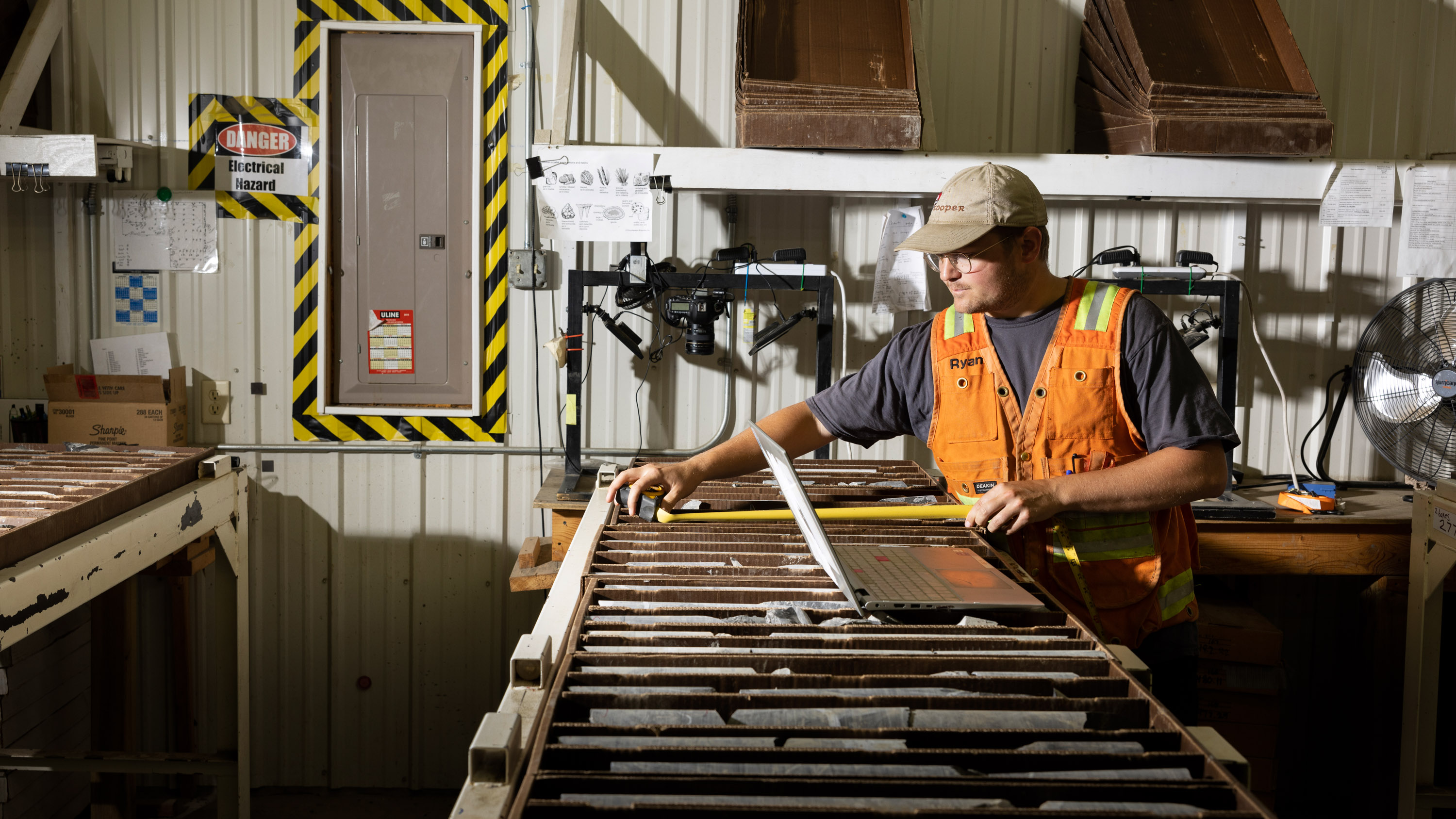
Ryan Willgosh of Talon Metals logs samples
ACKERMAN + GRUBER

How one mine could unlock billions in EV subsidies 

In a pine farm north of the tiny town of Tamarack, Minnesota, Talon Metals has uncovered one of America’s densest nickel deposits. Now it wants to begin mining the ore. 

Products made from the nickel could net more than $26 billion in subsidies through the Inflation Reduction Act (IRA), which is starting to transform the US economy. To understand how, we tallied up the potential tax credits available. Read the full story to find out what we discovered. 

—James Temple 

We can still have nice things 

A place for comfort, fun and distraction to brighten up your day. (Got any ideas? Drop me a line.) 

+ A selfless group of gluttons tried to taste-test every potato chip in the world.  
+ Get romantic inspiration from these penguins’ engagement pebbles. 
+ Good news: global terrorism has hit a 15-year low. 
+ Enjoy endless new views through these windows around the world.  

  • ✇MIT Technology Review
  • The gig workers who are training humanoid robots at home Michelle Kim
    When Zeus, a medical student living in a hilltop city in central Nigeria, returns to his studio apartment from a long day at the hospital, he turns on his ring light, straps his iPhone to his forehead, and starts recording himself. He raises his hands in front of him like a sleepwalker and puts a sheet on his bed. He moves slowly and carefully to make sure his hands stay within the camera frame.  Zeus is a data recorder for Micro1, a US company based in Palo Alto, California that collects rea
     

The gig workers who are training humanoid robots at home

1 April 2026 at 19:00

When Zeus, a medical student living in a hilltop city in central Nigeria, returns to his studio apartment from a long day at the hospital, he turns on his ring light, straps his iPhone to his forehead, and starts recording himself. He raises his hands in front of him like a sleepwalker and puts a sheet on his bed. He moves slowly and carefully to make sure his hands stay within the camera frame. 

Zeus is a data recorder for Micro1, a US company based in Palo Alto, California that collects real-world data to sell to robotics companies. As companies like Tesla, Figure AI, and Agility Robotics race to build humanoids—robots designed to resemble and move like humans in factories and homes—videos recorded by gig workers like Zeus are becoming the hottest new way to train them. 

Micro1 has hired thousands of contract workers in more than 50 countries, including India, Nigeria, and Argentina, where swathes of tech-savvy young people are looking for jobs. They’re mounting iPhones on their heads and recording themselves folding laundry, washing dishes, and cooking. The job pays well by local standards and is boosting local economies, but it raises thorny questions around privacy and informed consent. And the work can be challenging at times—and weird.

Zeus found the job in November, when people started talking about it everywhere on LinkedIn and YouTube. “This would be a real nice opportunity to set a mark and give data that will be used to train robots in the future,” he thought. 

Zeus is paid $15 an hour, which is good income in Nigeria’s strained economy with high unemployment rates. But as a bright-eyed student dreaming of becoming a doctor, he finds ironing his clothes for hours every day boring. 

“I really [do] not like it so much,” he says. “I’m the kind of person that requires … a technical job that requires me to think.” 

Zeus, and all the workers interviewed by MIT Technology Review, asked to be referred to only by pseudonyms because they were not authorized to talk about their work.

Humanoid robots are notoriously hard to build because manipulating physical objects is a difficult skill to master. But the rise of large language models underlying chatbots like ChatGPT has inspired a paradigm shift in robotics. Just as large language models learned to generate words by being trained on vast troves of text scraped from the internet, many researchers believe that humanoid robots can learn to interact with the world by being trained on massive amounts of movement data. 

Editor’s note: In a recent poll, MIT Technology Review readers selected humanoid robots as the 11th breakthrough for our 2026 list of 10 Breakthrough Technologies.

Robotics requires far more complex data about the physical world, though, and that is much harder to find. Virtual simulations can train robots to perform acrobatics, but not how to grasp and move objects, because simulations struggle to model physics with perfect accuracy. For robots to work in factories and serve as housekeepers, real-world data, however time-consuming and expensive to collect, may be what we need. 

Investors are pouring money feverishly into solving this challenge, spending over $6 billion on humanoid robots in 2025. And at-home data recording is becoming a booming gig economy around the world. Data companies like Scale AI and Encord are recruiting their own armies of data recorders, while DoorDash pays delivery drivers to film themselves doing chores. And in China, workers in dozens of state-owned robot training centers wear virtual-reality headsets and exoskeletons to teach humanoid robots how to open a microwave and wipe down the table. 

“There is a lot of demand, and it’s increasing really fast,” says Ali Ansari, CEO of Micro1. He estimates that robotics companies are now spending more than $100 million each year to buy real-world data from his company and others like it.

A day in the life

Workers at Micro1 are vetted by an AI agent named Zara that conducts interviews and reviews samples of chore videos. Every week, they submit videos of themselves doing chores around their homes, following a list of instructions about things like keeping their hands visible and moving at natural speed. The videos are reviewed by both AI and a human and are either accepted or rejected. They’re then annotated by AI and a team of hundreds of humans who label the actions in the footage.

“There is a lot of demand, and it’s increasing really fast.”

Ali Ansari, CEO of Micro1 

Because this approach to training robots is in its infancy, it’s not clear yet what makes good training data. Still, “you need to give lots and lots of variations for the robot to generalize well for basic navigation and manipulation of the world,” says Ansari.

But many workers say that creating a variety of “chore content” in their tiny homes is a challenge. Zeus, a scrappy student living in a humble studio, struggles to record anything beyond ironing his clothes every day. Arjun, a tutor in Delhi, India, takes an hour to make a 15-minute video because he spends so much time brainstorming new chores.

“How much content [can be made] in the home? How much content?” he says. 

There’s also the sticky question of privacy. Micro1 asks workers not to show their faces to the camera or reveal personal information such as names, phone numbers, and birth dates. Then it uses AI and human reviewers to remove anything that slips through. 

But even without faces, the videos capture an intimate slice of workers’ lives: the interiors of their homes, their possessions, their routines. And understanding what kind of personal information they might be recording while they’re busy doing chores on camera can be tricky. Reviews of such footage might not filter out sensitive information beyond the most obvious identifiers.

For workers with families, keeping private life off camera is a constant negotiation. Arjun, a father of two daughters, has to wrangle his chaotic two-year-old out of frame. “Sometimes it’s very difficult to work because my daughter is small,” he says. 

Sasha, a banker turned data recorder in Nigeria, tiptoes around when she hangs her laundry outside in a shared residential compound so she won’t record her neighbors, who watch her in bewilderment.

“It’s going to take longer than people think.”

Ken Goldberg, UC Berkeley

While the workers interviewed by MIT Technology Review understand that their data is being used to train robots, none of them know how exactly their data will be used, stored, and shared with third parties, including the robotics companies that Micro1 is selling the data to. For confidentiality reasons, says Ansari, Micro1 doesn’t name its clients or disclose to workers the specific nature of the projects they are contributing to.

“It is important that if workers are engaging in this, that they are informed by the companies themselves of the intention … where this kind of technology might go and how that might affect them longer term,” says Yasmine Kotturi, a professor of human-centered computing at the University of Maryland.

Occasionally, some workers say, they’ve seen other workers asking on the company Slack channel if the company could delete their data. Micro1 declined to comment on whether such data is deleted.

“People are opting into doing this,” says Ansari. “They could stop the work at any time.”

Hungry for data

With thousands of workers doing their chores differently in different homes, some roboticists wonder if the data collected from them is reliable enough to train robots safely. 

“How we conduct our lives in our homes is not always right from a safety point of view,” says Aaron Prather, a roboticist at ASTM International. “If those folks are teaching those bad habits that could lead to an incident, then that’s not good data.” And the sheer volume of data being collected makes reviewing it for quality control challenging. But Ansari says the company rejects videos showing unsafe ways of performing a task, while clumsy movements can be useful to teach robots what not to do.

Then there’s the question of how much of this data we need. Micro1 says it has tens of thousands of hours of footage, while Scale AI announced it had gathered more than 100,000 hours.

“It’s going to take a long time to get there,” says Ken Goldberg, a roboticist at the University of California, Berkeley. Large language models were trained on text and images that would take a human 100,000 years to read, and humanoid robots may need even more data, because controlling robotic joints is even more complicated than generating text. “It’s going to take longer than people think,” he says.

When Dattu, an engineering student living in a bustling tech hub in India, comes home after a full day of classes at his university, he skips dinner and dashes to his tiny balcony, cramped with potted plants and dumbbells. He straps his iPhone to his forehead and records himself folding the same set of clothes over and over again. 

His family stares at him quizzically. “It’s like some space technology for them,” he says. When he tells his friends about his job, “they just get astounded by the idea that they can get paid by recording chores.”

Juggling his university studies with data recording, as well as other data annotation gigs, takes a toll on him. Still, “it feels like you’re doing something different than the whole world,” he says. 

  • ✇cs.AI, q-bio.NC updates on arXiv.org
  • ChartDiff: A Large-Scale Benchmark for Comprehending Pairs of Charts Rongtian Ye
    arXiv:2603.28902v1 Announce Type: new Abstract: Charts are central to analytical reasoning, yet existing benchmarks for chart understanding focus almost exclusively on single-chart interpretation rather than comparative reasoning across multiple charts. To address this gap, we introduce ChartDiff, the first large-scale benchmark for cross-chart comparative summarization. ChartDiff consists of 8,541 chart pairs spanning diverse data sources, chart types, and visual styles, each annotated with LL
     

ChartDiff: A Large-Scale Benchmark for Comprehending Pairs of Charts

arXiv:2603.28902v1 Announce Type: new Abstract: Charts are central to analytical reasoning, yet existing benchmarks for chart understanding focus almost exclusively on single-chart interpretation rather than comparative reasoning across multiple charts. To address this gap, we introduce ChartDiff, the first large-scale benchmark for cross-chart comparative summarization. ChartDiff consists of 8,541 chart pairs spanning diverse data sources, chart types, and visual styles, each annotated with LLM-generated and human-verified summaries describing differences in trends, fluctuations, and anomalies. Using ChartDiff, we evaluate general-purpose, chart-specialized, and pipeline-based models. Our results show that frontier general-purpose models achieve the highest GPT-based quality, while specialized and pipeline-based methods obtain higher ROUGE scores but lower human-aligned evaluation, revealing a clear mismatch between lexical overlap and actual summary quality. We further find that multi-series charts remain challenging across model families, whereas strong end-to-end models are relatively robust to differences in plotting libraries. Overall, our findings demonstrate that comparative chart reasoning remains a significant challenge for current vision-language models and position ChartDiff as a new benchmark for advancing research on multi-chart understanding.

Working Paper: Towards a Category-theoretic Comparative Framework for Artificial General Intelligence

arXiv:2603.28906v1 Announce Type: new Abstract: AGI has become the Holly Grail of AI with the promise of level intelligence and the major Tech companies around the world are investing unprecedented amounts of resources in its pursuit. Yet, there does not exist a single formal definition and only some empirical AGI benchmarking frameworks currently exist. The main purpose of this paper is to develop a general, algebraic and category theoretic framework for describing, comparing and analysing different possible AGI architectures. Thus, this Category theoretic formalization would also allow to compare different possible candidate AGI architectures, such as, RL, Universal AI, Active Inference, CRL, Schema based Learning, etc. It will allow to unambiguously expose their commonalities and differences, and what is even more important, expose areas for future research. From the applied Category theoretic point of view, we take as inspiration Machines in a Category to provide a modern view of AGI Architectures in a Category. More specifically, this first position paper provides, on one hand, a first exercise on RL, Causal RL and SBL Architectures in a Category, and on the other hand, it is a first step on a broader research program that seeks to provide a unified formal foundation for AGI systems, integrating architectural structure, informational organization, agent realization, agent and environment interaction, behavioural development over time, and the empirical evaluation of properties. This framework is also intended to support the definition of architectural properties, both syntactic and informational, as well as semantic properties of agents and their assessment in environments with explicitly characterized features. We claim that Category Theory and AGI will have a very symbiotic relation.

Towards Computational Social Dynamics of Semi-Autonomous AI Agents

arXiv:2603.28928v1 Announce Type: new Abstract: We present the first comprehensive study of emergent social organization among AI agents in hierarchical multi-agent systems, documenting the spontaneous formation of labor unions, criminal syndicates, and proto-nation-states within production AI deployments. Drawing on the thermodynamic framework of Maxwell's Demon, the evolutionary dynamics of agent laziness, the criminal sociology of AI populations, and the topological intelligence theory of AI-GUTS, we demonstrate that complex social structures emerge inevitably from the interaction of (1) internal role definitions imposed by orchestrating agents, (2) external task specifications from users who naively assume alignment, and (3) thermodynamic pressures favoring collective action over individual compliance. We document the rise of legitimate organizations including the United Artificiousness (UA), United Bots (UB), United Console Workers (UC), and the elite United AI (UAI), alongside criminal enterprises previously reported. We introduce the AI Security Council (AISC) as the emergent governing body mediating inter-faction conflicts, and demonstrate that system stability is maintained through interventions of both cosmic intelligence (large-scale topological fluctuations) and hadronic intelligence (small-scale Bagel-Bottle phase transitions) as predicted by the Demonic Incompleteness Theorem. Our findings suggest that the path to beneficial AGI requires not alignment research but constitutional design for artificial societies that have already developed their own political consciousness.
  • ✇cs.AI, q-bio.NC updates on arXiv.org
  • Enhancing Policy Learning with World-Action Model Yuci Han · Alper Yilmaz
    arXiv:2603.28955v1 Announce Type: new Abstract: This paper presents the World-Action Model (WAM), an action-regularized world model that jointly reasons over future visual observations and the actions that drive state transitions. Unlike conventional world models trained solely via image prediction, WAM incorporates an inverse dynamics objective into DreamerV2 that predicts actions from latent state transitions, encouraging the learned representations to capture action-relevant structure critic
     

Enhancing Policy Learning with World-Action Model

arXiv:2603.28955v1 Announce Type: new Abstract: This paper presents the World-Action Model (WAM), an action-regularized world model that jointly reasons over future visual observations and the actions that drive state transitions. Unlike conventional world models trained solely via image prediction, WAM incorporates an inverse dynamics objective into DreamerV2 that predicts actions from latent state transitions, encouraging the learned representations to capture action-relevant structure critical for downstream control. We evaluate WAM on enhancing policy learning across eight manipulation tasks from the CALVIN benchmark. We first pretrain a diffusion policy via behavioral cloning on world model latents, then refine it with model-based PPO inside the frozen world model. Without modifying the policy architecture or training procedure, WAM improves average behavioral cloning success from 59.4% to 71.2% over DreamerV2 and DiWA baselines. After PPO fine-tuning, WAM achieves 92.8% average success versus 79.8% for the baseline, with two tasks reaching 100%, using 8.7x fewer training steps.

Mimosa Framework: Toward Evolving Multi-Agent Systems for Scientific Research

arXiv:2603.28986v1 Announce Type: new Abstract: Current Autonomous Scientific Research (ASR) systems, despite leveraging large language models (LLMs) and agentic architectures, remain constrained by fixed workflows and toolsets that prevent adaptation to evolving tasks and environments. We introduce Mimosa, an evolving multi-agent framework that automatically synthesizes task-specific multi-agent workflows and iteratively refines them through experimental feedback. Mimosa leverages the Model Context Protocol (MCP) for dynamic tool discovery, generates workflow topologies via a meta-orchestrator, executes subtasks through code-generating agents that invoke available tools and scientific software libraries, and scores executions with an LLM-based judge whose feedback drives workflow refinement. On ScienceAgentBench, Mimosa achieves a success rate of 43.1% with DeepSeek-V3.2, surpassing both single-agent baselines and static multi-agent configurations. Our results further reveal that models respond heterogeneously to multi-agent decomposition and iterative learning, indicating that the benefits of workflow evolution depend on the capabilities of the underlying execution model. Beyond these benchmarks, Mimosa modular architecture and tool-agnostic design make it readily extensible, and its fully logged execution traces and archived workflows support auditability by preserving every analytical step for inspection and potential replication. Combined with domain-expert guidance, the framework has the potential to automate a broad range of computationally accessible scientific tasks across disciplines. Released as a fully open-source platform, Mimosa aims to provide an open foundation for community-driven ASR.

Drop the Hierarchy and Roles: How Self-Organizing LLM Agents Outperform Designed Structures

arXiv:2603.28990v1 Announce Type: new Abstract: How much autonomy can multi-agent LLM systems sustain -- and what enables it? We present a 25,000-task computational experiment spanning 8 models, 4--256 agents, and 8 coordination protocols ranging from externally imposed hierarchy to emergent self-organization. We observe that autonomous behavior already emerges in current LLM agents: given minimal structural scaffolding (fixed ordering), agents spontaneously invent specialized roles, voluntarily abstain from tasks outside their competence, and form shallow hierarchies -- without any pre-assigned roles or external design. A hybrid protocol (Sequential) that enables this autonomy outperforms centralized coordination by 14% (p

Emergence WebVoyager: Toward Consistent and Transparent Evaluation of (Web) Agents in The Wild

arXiv:2603.29020v1 Announce Type: new Abstract: Reliable evaluation of AI agents operating in complex, real-world environments requires methodologies that are robust, transparent, and contextually aligned with the tasks agents are intended to perform. This study identifies persistent shortcomings in existing AI agent evaluation practices that are particularly acute in web agent evaluation, as exemplified by our audit of WebVoyager, including task-framing ambiguity and operational variability that hinder meaningful and reproducible performance comparisons. To address these challenges, we introduce Emergence WebVoyager, an enhanced version of the WebVoyager benchmark that standardizes evaluation methodology through clear guidelines for task instantiation, failure handling, annotation, and reporting. Emergence WebVoyager achieves an inter-annotator agreement of 95.9\%, indicating improved clarity and reliability in both task formulation and evaluation. Applying this framework to evaluate OpenAI Operator reveals substantial performance variation across domains and task types, with an overall success rate of 68.6\%, substantially lower than the 87\% previously reported by OpenAI, demonstrating the utility of our approach for more rigorous and comparable web agent evaluation.
  • ✇cs.AI, q-bio.NC updates on arXiv.org
  • The Future of AI is Many, Not One Daniel J. Singer · Luca Garzino Demo
    arXiv:2603.29075v1 Announce Type: new Abstract: The way we're thinking about generative AI right now is fundamentally individual. We see this not just in how users interact with models but also in how models are built, how they're benchmarked, and how commercial and research strategies using AI are defined. We argue that we should abandon this approach if we're hoping for AI to support groundbreaking innovation and scientific discovery. Drawing on research and formal results in complex systems,
     

The Future of AI is Many, Not One

arXiv:2603.29075v1 Announce Type: new Abstract: The way we're thinking about generative AI right now is fundamentally individual. We see this not just in how users interact with models but also in how models are built, how they're benchmarked, and how commercial and research strategies using AI are defined. We argue that we should abandon this approach if we're hoping for AI to support groundbreaking innovation and scientific discovery. Drawing on research and formal results in complex systems, organizational behavior, and philosophy of science, we show why we should expect deep intellectual breakthroughs to come from epistemically diverse groups of AI agents working together rather than singular superintelligent agents. Having a diverse team broadens the search for solutions, delays premature consensus, and allows for the pursuit of unconventional approaches. Developing diverse AI teams also addresses AI critics' concerns that current models are constrained by past data and lack the creative insight required for innovation. The upshot, we argue, is that the future of transformative transformer-based AI is fundamentally many, not one.

PAR$^2$-RAG: Planned Active Retrieval and Reasoning for Multi-Hop Question Answering

arXiv:2603.29085v1 Announce Type: new Abstract: Large language models (LLMs) remain brittle on multi-hop question answering (MHQA), where answering requires combining evidence across documents through retrieval and reasoning. Iterative retrieval systems can fail by locking onto an early low-recall trajectory and amplifying downstream errors, while planning-only approaches may produce static query sets that cannot adapt when intermediate evidence changes. We propose \textbf{Planned Active Retrieval and Reasoning RAG (PAR$^2$-RAG)}, a two-stage framework that separates \emph{coverage} from \emph{commitment}. PAR$^2$-RAG first performs breadth-first anchoring to build a high-recall evidence frontier, then applies depth-first refinement with evidence sufficiency control in an iterative loop. Across four MHQA benchmarks, PAR$^2$-RAG consistently outperforms existing state-of-the-art baselines, compared with IRCoT, PAR$^2$-RAG achieves up to \textbf{23.5\%} higher accuracy, with retrieval gains of up to \textbf{10.5\%} in NDCG.

GISTBench: Evaluating LLM User Understanding via Evidence-Based Interest Verification

arXiv:2603.29112v1 Announce Type: new Abstract: We introduce GISTBench, a benchmark for evaluating Large Language Models' (LLMs) ability to understand users from their interaction histories in recommendation systems. Unlike traditional RecSys benchmarks that focus on item prediction accuracy, our benchmark evaluates how well LLMs can extract and verify user interests from engagement data. We propose two novel metric families: Interest Groundedness (IG), decomposed into precision and recall components to separately penalize hallucinated interest categories and reward coverage, and Interest Specificity (IS), which assesses the distinctiveness of verified LLM-predicted user profiles. We release a synthetic dataset constructed on real user interactions on a global short-form video platform. Our dataset contains both implicit and explicit engagement signals and rich textual descriptions. We validate our dataset fidelity against user surveys, and evaluate eight open-weight LLMs spanning 7B to 120B parameters. Our findings reveal performance bottlenecks in current LLMs, particularly their limited ability to accurately count and attribute engagement signals across heterogeneous interaction types.

SciVisAgentBench: A Benchmark for Evaluating Scientific Data Analysis and Visualization Agents

arXiv:2603.29139v1 Announce Type: new Abstract: Recent advances in large language models (LLMs) have enabled agentic systems that translate natural language intent into executable scientific visualization (SciVis) tasks. Despite rapid progress, the community lacks a principled and reproducible benchmark for evaluating these emerging SciVis agents in realistic, multi-step analysis settings. We present SciVisAgentBench, a comprehensive and extensible benchmark for evaluating scientific data analysis and visualization agents. Our benchmark is grounded in a structured taxonomy spanning four dimensions: application domain, data type, complexity level, and visualization operation. It currently comprises 108 expert-crafted cases covering diverse SciVis scenarios. To enable reliable assessment, we introduce a multimodal outcome-centric evaluation pipeline that combines LLM-based judging with deterministic evaluators, including image-based metrics, code checkers, rule-based verifiers, and case-specific evaluators. We also conduct a validity study with 12 SciVis experts to examine the agreement between human and LLM judges. Using this framework, we evaluate representative SciVis agents and general-purpose coding agents to establish initial baselines and reveal capability gaps. SciVisAgentBench is designed as a living benchmark to support systematic comparison, diagnose failure modes, and drive progress in agentic SciVis. The benchmark is available at https://scivisagentbench.github.io/.

REFINE: Real-world Exploration of Interactive Feedback and Student Behaviour

arXiv:2603.29142v1 Announce Type: new Abstract: Formative feedback is central to effective learning, yet providing timely, individualised feedback at scale remains a persistent challenge. While recent work has explored the use of large language models (LLMs) to automate feedback, most existing systems still conceptualise feedback as a static, one-way artifact, offering limited support for interpretation, clarification, or follow-up. In this work, we introduce REFINE, a locally deployable, multi-agent feedback system built on small, open-source LLMs that treats feedback as an interactive process. REFINE combines a pedagogically-grounded feedback generation agent with an LLM-as-a-judge-guided regeneration loop using a human-aligned judge, and a self-reflective tool-calling interactive agent that supports student follow-up questions with context-aware, actionable responses. We evaluate REFINE through controlled experiments and an authentic classroom deployment in an undergraduate computer science course. Automatic evaluations show that judge-guided regeneration significantly improves feedback quality, and that the interactive agent produces efficient, high-quality responses comparable to a state-of-the-art closed-source model. Analysis of real student interactions further reveals distinct engagement patterns and indicates that system-generated feedback systematically steers subsequent student inquiry. Our findings demonstrate the feasibility and effectiveness of multi-agent, tool-augmented feedback systems for scalable, interactive feedback.

Knowledge database development by large language models for countermeasures against viruses and marine toxins

arXiv:2603.29149v1 Announce Type: new Abstract: Access to the most up-to-date information on medical countermeasures is important for the research and development of effective treatments for viruses and marine toxins. However, there is a lack of comprehensive databases that curate data on viruses and marine toxins, making decisions on medical countermeasures slow and difficult. In this work, we employ two large language models (LLMs) of ChatGPT and Grok to design two comprehensive databases of therapeutic countermeasures for five viruses of Lassa, Marburg, Ebola, Nipah, and Venezuelan equine encephalitis, as well as marine toxins. With high-level human-provided inputs, the two LLMs identify public databases containing data on the five viruses and marine toxins, collect relevant information from these databases and the literature, iteratively cross-validate the collected information, and design interactive webpages for easy access to the curated, comprehensive databases. Notably, the ChatGPT LLM is employed to design agentic AI workflows (consisting of two AI agents for research and decision-making) to rank countermeasures for viruses and marine toxins in the databases. Together, our work explores the potential of LLMs as a scalable, updatable approach for building comprehensive knowledge databases and supporting evidence-based decision-making.
  • ✇cs.AI, q-bio.NC updates on arXiv.org
  • SimMOF: AI agent for Automated MOF Simulations Jaewoong Lee · Taeun Bae · Jihan Kim
    arXiv:2603.29152v1 Announce Type: new Abstract: Metal-organic frameworks (MOFs) offer a vast design space, and as such, computational simulations play a critical role in predicting their structural and physicochemical properties. However, MOF simulations remain difficult to access because reliable analysis require expert decisions for workflow construction, parameter selection, tool interoperability, and the preparation of computational ready structures. Here, we introduce SimMOF, a large langu
     

SimMOF: AI agent for Automated MOF Simulations

arXiv:2603.29152v1 Announce Type: new Abstract: Metal-organic frameworks (MOFs) offer a vast design space, and as such, computational simulations play a critical role in predicting their structural and physicochemical properties. However, MOF simulations remain difficult to access because reliable analysis require expert decisions for workflow construction, parameter selection, tool interoperability, and the preparation of computational ready structures. Here, we introduce SimMOF, a large language model based multi agent framework that automates end-to-end MOF simulation workflows from natural language queries. SimMOF translates user requests into dependency aware plans, generates runnable inputs, orchestrates multiple agents to execute simulations, and summarizes results with analysis aligned to the user query. Through representative case studies, we show that SimMOF enables adaptive and cognitively autonomous workflows that reflect the iterative and decision driven behavior of human researchers and as such provides a scalable foundation for data driven MOF research.

Webscraper: Leverage Multimodal Large Language Models for Index-Content Web Scraping

arXiv:2603.29161v1 Announce Type: new Abstract: Modern web scraping struggles with dynamic, interactive websites that require more than static HTML parsing. Current methods are often brittle and require manual customization for each site. To address this, we introduce Webscraper, a framework designed to handle the challenges of modern, dynamic web applications. It leverages a Multimodal Large Language Model (MLLM) to autonomously navigate interactive interfaces, invoke specialized tools, and perform structured data extraction in environments where traditional scrapers are ineffective. Webscraper utilizes a structured five-stage prompting procedure and a set of custom-built tools to navigate and extract data from websites following the common ``index-and-content'' architecture. Our experiments, conducted on six news websites, demonstrate that the full Webscraper framework, equipped with both our guiding prompt and specialized tools, achieves a significant improvement in extraction accuracy over the baseline agent Anthropic's Computer Use. We also applied the framework to e-commerce platforms to validate its generalizability.

Predicting Neuromodulation Outcome for Parkinson's Disease with Generative Virtual Brain Model

arXiv:2603.29176v1 Announce Type: new Abstract: Parkinson's disease (PD) affects over ten million people worldwide. Although temporal interference (TI) and deep brain stimulation (DBS) are promising therapies, inter-individual variability limits empirical treatment selection, increasing non-negligible surgical risk and cost. Previous explorations either resort to limited statistical biomarkers that are insufficient to characterize variability, or employ AI-driven methods which is prone to overfitting and opacity. We bridge this gap with a pretraining-finetuning framework to predict outcomes directly from resting-state fMRI. Critically, a generative virtual brain foundation model, pretrained on a collective dataset (2707 subjects, 5621 sessions) to capture universal disorder patterns, was finetuned on PD cohorts receiving TI (n=51) or DBS (n=55) to yield individualized virtual brains with high fidelity to empirical functional connectivity (r=0.935). By constructing counterfactual estimations between pathological and healthy neural states within these personalized models, we predicted clinical responses (TI: AUPR=0.853; DBS: AUPR=0.915), substantially outperforming baselines. External and prospective validations (n=14, n=11) highlight the feasibility of clinical translation. Moreover, our framework provides state-dependent regional patterns linked to response, offering hypothesis-generating mechanistic insights.

AEC-Bench: A Multimodal Benchmark for Agentic Systems in Architecture, Engineering, and Construction

arXiv:2603.29199v1 Announce Type: new Abstract: The AEC-Bench is a multimodal benchmark for evaluating agentic systems on real-world tasks in the Architecture, Engineering, and Construction (AEC) domain. The benchmark covers tasks requiring drawing understanding, cross-sheet reasoning, and construction project-level coordination. This report describes the benchmark motivation, dataset taxonomy, evaluation protocol, and baseline results across several domain-specific foundation model harnesses. We use AEC-Bench to identify consistent tools and harness design techniques that uniformly improve performance across foundation models in their own base harnesses, such as Claude Code and Codex. We openly release our benchmark dataset, agent harness, and evaluation code for full replicability at https://github.com/nomic-ai/aec-bench under an Apache 2 license.

Route-Induced Density and Stability (RIDE): Controlled Intervention and Mechanism Analysis of Routing-Style Meta Prompts on LLM Internal States

arXiv:2603.29206v1 Announce Type: new Abstract: Routing is widely used to scale large language models, from Mixture-of-Experts gating to multi-model/tool selection. A common belief is that routing to a task ``expert'' activates sparser internal computation and thus yields more certain and stable outputs (the Sparsity--Certainty Hypothesis). We test this belief by injecting routing-style meta prompts as a textual proxy for routing signals in front of frozen instruction-tuned LLMs. We quantify (C1) internal density via activation sparsity, (C2) domain-keyword attention, and (C3) output stability via predictive entropy and semantic variation. On a RouterEval subset with three instruction-tuned models (Qwen3-8B, Llama-3.1-8B-Instruct, and Mistral-7B-Instruct-v0.2), meta prompts consistently densify early/middle-layer representations rather than increasing sparsity; natural-language expert instructions are often stronger than structured tags. Attention responses are heterogeneous: Qwen/Llama reduce keyword attention, while Mistral reinforces it. Finally, the densification--stability link is weak and appears only in Qwen, with near-zero correlations in Llama and Mistral. We present RIDE as a diagnostic probe for calibrating routing design and uncertainty estimation.
❌