❌

Normal view

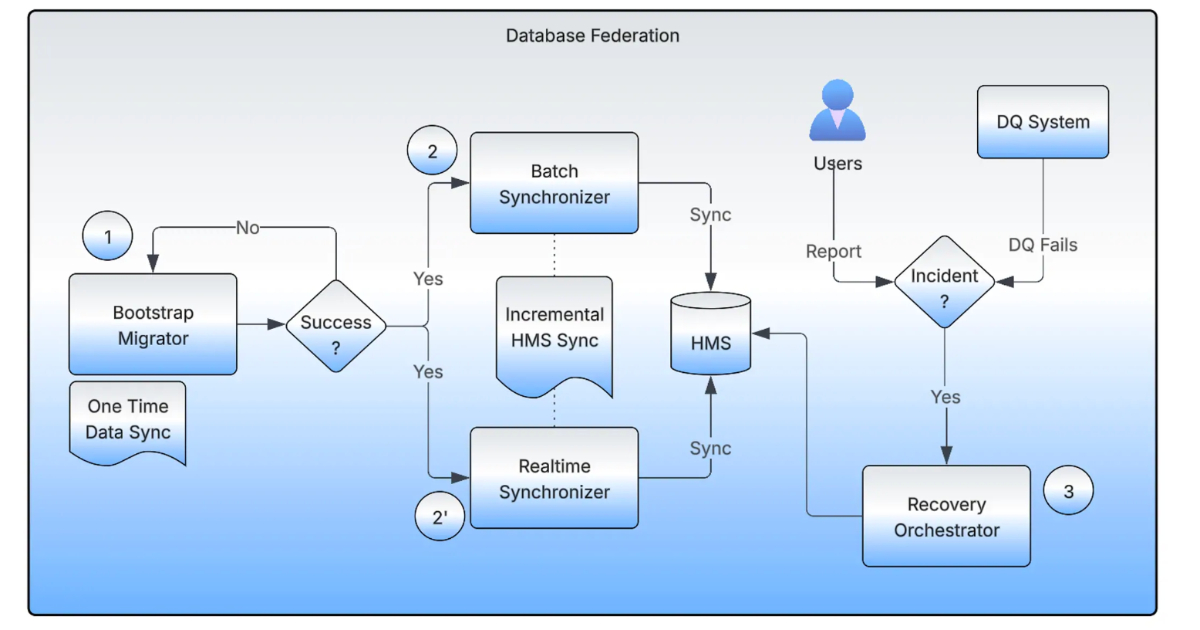
Uber’s Hive Federation Decentralizes 16K Datasets and 10+ PB for Zero-Downtime Analytics at Scale

9 April 2026 at 21:54

Uber has decentralized its Hive data warehouse, migrating 16,000 datasets totaling over 10 petabytes using pointer-based federation. The migration ensures zero downtime, strict ACL enforcement, improved governance, and scalable, domain-specific datasets for analytics and machine learning workloads.

By Leela Kumili
AAIF's MCP Dev Summit: Gateways, gRPC, and Observability Signal Protocol Hardening

9 April 2026 at 21:10

The MCP Dev Summit North America 2026, held on April 2-3 at the New York Marriott Marquis, gathered about 1,200 attendees. Hosted by the Linux Foundation's Agentic AI Foundation, discussions focused on the Model Context Protocol's evolution and enterprise adoption, particularly by Amazon and Uber, emphasizing security, interoperability, and scaling for production.

By Andrew Hoblitzell

  • ✇InfoQ
  • Developing Your Leadership Skills toward Principal Engineering Ben Linders
    Work isn’t the only place where you can develop valuable leadership skills, Sophie Weston mentioned in the video The Principal Engineer’s Path from her QCon London talk. She suggested thinking about the things you do outside of your job where you can learn and practice useful leadership skills, and bringing your full skill set - your whole self - to work. By Ben Linders
     

Developing Your Leadership Skills toward Principal Engineering

9 April 2026 at 19:10

Work isn’t the only place where you can develop valuable leadership skills, Sophie Weston mentioned in the video The Principal Engineer’s Path from her QCon London talk. She suggested thinking about the things you do outside of your job where you can learn and practice useful leadership skills, and bringing your full skill set - your whole self - to work.

By Ben Linders

Evaluating Artificial Intelligence Through a Christian Understanding of Human Flourishing

arXiv:2604.03356v1 Announce Type: new Abstract: Artificial intelligence (AI) alignment is fundamentally a formation problem, not only a safety problem. As Large Language Models (LLMs) increasingly mediate moral deliberation and spiritual inquiry, they do more than provide information; they function as instruments of digital catechesis, actively shaping and ordering human understanding, decision-making, and moral reflection. To make this formative influence visible and measurable, we introduce the Flourishing AI Benchmark: Christian Single-Turn (FAI-C-ST), a framework designed to evaluate Frontier Model responses against a Christian understanding of human flourishing across seven dimensions. By comparing 20 Frontier Models against both pluralistic and Christian-specific criteria, we show that current AI systems are not worldview-neutral. Instead, they default to a Procedural Secularism that lacks the grounding necessary to sustain theological coherence, resulting in a systematic performance decline of approximately 17 points across all dimensions of flourishing. Most critically, there is a 31-point decline in the Faith and Spirituality dimension. These findings suggest that the performance gap in values alignment is not a technical limitation, but arises from training objectives that prioritize broad acceptability and safety over deep, internally coherent moral or theological reasoning.

VERT: Reliable LLM Judges for Radiology Report Evaluation

arXiv:2604.03376v1 Announce Type: new Abstract: Current literature on radiology report evaluation has focused primarily on designing LLM-based metrics and fine-tuning small models for chest X-rays. However, it remains unclear whether these approaches are robust when applied to reports from other modalities and anatomies. Which model and prompt configurations are best suited to serve as LLM judges for radiology evaluation? We conduct a thorough correlation analysis between expert and LLM-based ratings. We compare three existing LLM-as-a-judge metrics (RadFact, GREEN, and FineRadScore) alongside VERT, our proposed LLM-based metric, using open- and closed-source models (reasoning and non-reasoning) of different sizes across two expert-annotated datasets, RadEval and RaTE-Eval, spanning multiple modalities and anatomies. We further evaluate few-shot approaches, ensembling, and parameter-efficient fine-tuning using RaTE-Eval. To better understand metric behavior, we perform a systematic error detection and categorization study to assess alignment of these metrics against expert judgments and identify areas of lower and higher agreement. Our results show that VERT improves correlation with radiologist judgments by up to 11.7% relative to GREEN. Furthermore, fine-tuning Qwen3 30B yield gains of up to 25% using only 1,300 training samples. The fine-tuned model also reduces inference time up to 37.2 times. These findings highlight the effectiveness of LLM-based judges and demonstrate that reliable evaluation can be achieved with lightweight adaptation.

Hume's Representational Conditions for Causal Judgment: What Bayesian Formalization Abstracted Away

arXiv:2604.03387v1 Announce Type: new Abstract: Hume's account of causal judgment presupposes three representational conditions: experiential grounding (ideas must trace to impressions), structured retrieval (association must operate through organized networks exceeding pairwise connection), and vivacity transfer (inference must produce felt conviction, not merely updated probability). This paper extracts these conditions from Hume's texts and argues that they are integral to his causal psychology. It then traces their fate through the formalization trajectory from Hume to Bayesian epistemology and predictive processing, showing that later frameworks preserve the updating structure of Hume's insight while abstracting away these further representational conditions. Large language models serve as an illustrative contemporary case: they exhibit a form of statistical updating without satisfying the three conditions, thereby making visible requirements that were previously background assumptions in Hume's framework.

TABQAWORLD: Optimizing Multimodal Reasoning for Multi-Turn Table Question Answering

arXiv:2604.03393v1 Announce Type: new Abstract: Multimodal reasoning has emerged as a powerful framework for enhancing reasoning capabilities of reasoning models. While multi-turn table reasoning methods have improved reasoning accuracy through tool use and reward modeling, they rely on fixed text serialization for table state readouts. This introduces representation errors in table encoding that significantly accumulate over multiple turns. Such accumulation is alleviated by tabular grounding methods in the expense of inference compute and cost, rendering real world deployment impractical. To address this, we introduce TABQAWORLD, a table reasoning framework that jointly optimizes tabular action through representation and estimation. For representation, TABQAWORLD employs an action-conditioned multimodal selection policy, which dynamically switches between visual and textual representations to maximize table state readout reliability. For estimation, TABQAWORLD optimizes stepwise reasoning trajectory through table metadata including dimension, data types and key values, safely planning trajectory and compressing low-complexity actions to reduce conversation turns and latency. Designed as a training-free framework, empirical evaluations show that TABQAWORLD achieves state-of-the-art performance with 4.87% accuracy improvements over baselines, with 5.42% accuracy gain and 33.35% inference latency reduction over static settings, establishing a new standard for reliable and efficient table reasoning.

ActionNex: A Virtual Outage Manager for Cloud

arXiv:2604.03512v1 Announce Type: new Abstract: Outage management in large-scale cloud operations remains heavily manual, requiring rapid triage, cross-team coordination, and experience-driven decisions under partial observability. We present \textbf{ActionNex}, a production-grade agentic system that supports end-to-end outage assistance, including real-time updates, knowledge distillation, and role- and stage-conditioned next-best action recommendations. ActionNex ingests multimodal operational signals (e.g., outage content, telemetry, and human communications) and compresses them into critical events that represent meaningful state transitions. It couples this perception layer with a hierarchical memory subsystem: long-term Key-Condition-Action (KCA) knowledge distilled from playbooks and historical executions, episodic memory of prior outages, and working memory of the live context. A reasoning agent aligns current critical events to preconditions, retrieves relevant memories, and generates actionable recommendations; executed human actions serve as an implicit feedback signal to enable continual self-evolution in a human-agent hybrid system. We evaluate ActionNex on eight real Azure outages (8M tokens, 4,000 critical events) using two complementary ground-truth action sets, achieving 71.4\% precision and 52.8-54.8\% recall. The system has been piloted in production and has received positive early feedback.

Towards the AI Historian: Agentic Information Extraction from Primary Sources

arXiv:2604.03553v1 Announce Type: new Abstract: AI is supporting, accelerating, and automating scientific discovery across a diverse set of fields. However, AI adoption in historical research remains limited due to the lack of solutions designed for historians. In this technical progress report, we introduce the first module of Chronos, an AI Historian under development. This module enables historians to convert image scans of primary sources into data through natural-language interactions. Rather than imposing a fixed extraction pipeline powered by a vision-language model (VLM), it allows historians to adapt workflows for heterogeneous source corpora, evaluate the performance of AI models on specific tasks, and iteratively refine workflows through natural-language interaction with the Chronos agent. The module is open-source and ready to be used by historical researchers on their own sources.

When Do Hallucinations Arise? A Graph Perspective on the Evolution of Path Reuse and Path Compression

arXiv:2604.03557v1 Announce Type: new Abstract: Reasoning hallucinations in large language models (LLMs) often appear as fluent yet unsupported conclusions that violate either the given context or underlying factual knowledge. Although such failures are widely observed, the mechanisms by which decoder-only Transformers produce them remain poorly understood. We model next-token prediction as a graph search process over an underlying graph, where entities correspond to nodes and learned transitions form edges. From this perspective, contextual reasoning is a constrained search over a sampled subgraph (intrinsic reasoning), while context-free queries rely on memorized structures in the underlying graph (extrinsic reasoning). We show that reasoning hallucinations arise from two fundamental mechanisms: \textbf{Path Reuse}, where memorized knowledge overrides contextual constraints during early training, and \textbf{Path Compression}, where frequently traversed multi-step paths collapse into shortcut edges in later training. Together, these mechanisms provide a unified explanation for reasoning hallucinations in LLMs and connected to well-known behaviors observed in downstream applications.
❌