Is it the Department of Defense or the Department of War? The Gulf of Mexico or the Gulf of America? A vaccine—or an “individualized neoantigen treatment”?
That’s the Trump-era vocabulary paradox facing Moderna, the covid-19 shot maker whose plans for next-generation mRNA vaccines against flus and emerging pathogens have been dashed by vaccine skeptics in the federal government. Canceled contracts and unfriendly regulators have pushed the Massachusetts-based biotech firm to a breaking point.
Is it the Department of Defense or the Department of War? The Gulf of Mexico or the Gulf of America? A vaccine—or an “individualized neoantigen treatment”?
That’s the Trump-era vocabulary paradox facing Moderna, the covid-19 shot maker whose plans for next-generation mRNA vaccines against flus and emerging pathogens have been dashed by vaccine skeptics in the federal government. Canceled contracts and unfriendly regulators have pushed the Massachusetts-based biotech firm to a breaking point. Last year, Robert F. Kennedy Jr., head of the Department of Health and Human Services, zeroed in on mRNA, unwinding support for dozens of projects—including a $776 million award to Moderna for a bird flu vaccine. By January, the company was warning it might have to stop late-stage programs to develop vaccines against infections altogether.
That raises the stakes for a second area of Moderna’s research. In a partnership with Merck, it’s been using its mRNA technology to destroy tumors through a very, very promising technique known as a cancer vacc—
“It’s not a vaccine,” a spokesperson for Merck jumped in before the V-word could leave my mouth. “It’s an individualized neoantigen therapy.”
Oh, but it is a vaccine. And here’s how it works. Moderna sequences a patient’s cancer cells to find the ugliest, most peculiar molecules on their surface. Then it packages the genetic code for those same molecules, called neoantigens, into a shot. The patient’s immune system has its orders: Kill any cells with those yucky surface markers.
Mechanistically, it’s similar to the covid-19 vaccines. What’s different, of course, is that the patient is being immunized against a cancer, not a virus.
And it looks like a possible breakthrough. This year, Moderna and Merck showed that such shots halved the chance that patients with the deadliest form of skin cancer would die from a recurrence after surgery.
In its formal communications, like regulatory filings, Moderna hasn’t called the shot a cancer vaccine since 2023. That’s when it partnered up with Merck and rebranded the tech as individualized neoantigen therapy, or INT. Moderna’s CEO said at the time that the renaming was to “better describe the goal of the program.” (BioNTech, the European vaccine maker that’s also working in cancer, has shifted its language too, moving from “neoantigen vaccine” in 2021 to “mRNA cancer immunotherapies” in its latest report.)
The logic of casting it as a therapy is that patients already have cancer—so it’s a treatment as opposed to a preventive measure. But it’s no secret what the other goal is: to distance important innovation from vaccine fearmongering, which has been inflamed by high-ranking US officials. “Vaccines are maybe a dirty word nowadays, but we still believe in the science and harnessing our immune system to not only fight infections, but hopefully to also fight … cancers,” Kyle Holen, head of Moderna’s cancer program, said last summer during BIO 2025, a big biotech event in Boston.
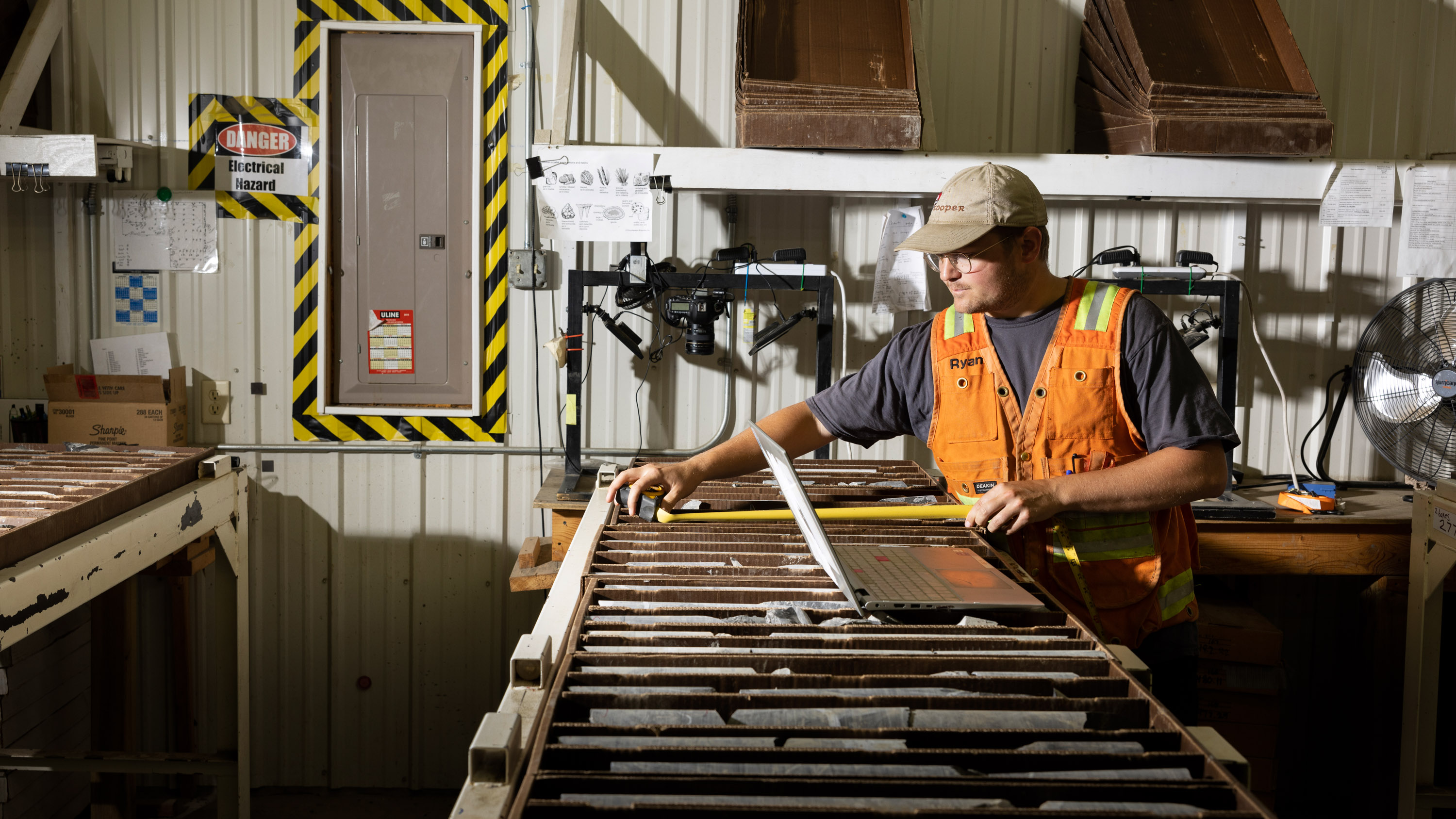
Not everyone is happy with the word games. Take Ryan Sullivan, a physician at Massachusetts General Hospital who has enrolled patients in Moderna’s trials. He says the change raises questions over whether trial volunteers are being properly informed. “There is some concern that there will be patients who decline to treat their cancer because it is a vaccine,” Sullivan told me. “But I also felt it was important, as many of my colleagues did, that you have to call it what it is.”
But is it worth going to the mat for a word? Lillian Siu, a medical oncologist at the Princess Margaret Cancer Centre, in Toronto, who has played a role in safety testing for the new shots, watches US politics from a distance. She believes name change is acceptable “if it allows the research to continue.”
Holen told me the doctors complaining to Moderna were basically motivated by a desire to defend vaccines—which are, of course, among the greatest public health interventions of all time. They wanted the company to stand strong.
But that’s not what’s happening. When Moderna’s latest results were published in February, the paper’s main text didn’t use the word “vaccine” at all. It was only in the footnotes that you could see the term—in the titles of old papers and patents.
All this could be a sign that Kennedy’s strategy is working. His agencies often appear to make mRNA vaccines a focus of people’s worries, impede their reach, devalue them for companies, and sideline their defenders.
Still, Moderna’s strategy may be working too. So far, at least, the government hasn’t had much to say about the company’s cancer vacc— I mean, its individualized neoantigen therapy.
This article first appeared in The Checkup, MIT Technology Review’s weekly biotech newsletter. To receive it in your inbox every Thursday, and read articles like this first, sign up here.
This is today’s edition of The Download, our weekday newsletter that provides a daily dose of what’s going on in the world of technology.
Constellations
—Constellations is a short story by Jeff VanderMeer, the author of the critically acclaimed, bestselling Southern Reach series.
A spacecraft has crash-landed on a hostile planet. The only survivors are three members of the exploration team and the ship’s AI mind.
Little exists on the planet except deserts of snow. But alien arti
This is today’s edition of The Download, our weekday newsletter that provides a daily dose of what’s going on in the world of technology.
Constellations
—Constellations is a short story by Jeff VanderMeer, the author of the critically acclaimed, bestselling Southern Reach series.
A spacecraft has crash-landed on a hostile planet. The only survivors are three members of the exploration team and the ship’s AI mind.
Little exists on the planet except deserts of snow. But alien artifacts lie nearby, in the form of 13 domes, spread across the terrain. Linked by cables threaded through metal posts, the domes form a series of paths—the only hope for life support.
As the team treks across the frozen hellscape, they discover the remains of countless astronauts from unknown species who followed the same route before them. Is their trail a path to salvation, or a cosmic trap?
This story is from the next issue of our print magazine, packed with stories all about nature. Subscribe now to read the full thing when it lands on Wednesday, April 22.
The must-reads
I’ve combed the internet to find you today’s most fun/important/scary/fascinating stories about technology.
1 OpenAI has joined Anthropic in curbing an AI release over security fears Only select partners will get its new cybersecurity tool. (Axios) + Anthropic said only yesterday that its new AI is too dangerous for the public. (NBC News) + Top models may not be so public going forward. (Bloomberg $) + The US has summoned bank CEOs to discuss the risks. (FT $)
2 Florida is investigating OpenAI over an alleged role in a shooting ChatGPT may have helped someone plan a mass shooting in Florida. (WSJ $) + OpenAI has backed a bill that would limit AI liability for deaths. (Wired $) + The family of a victim plans to sue the company. (Guardian) + AI’s role in delusions is dividing opinion. (MIT Technology Review)
3 Volkswagen is ditching EV production for more gasoline models The carmaker will stop making its top electric vehicle in the US. (NYT $) + Instead, it will concentrate on developing a new SUV. (Ars Technica) + Western carmakers are retreating from electric vehicles. (Guardian)
4 Elon Musk’s xAI has sued Colorado over an AI anti-discrimination law It’s the first state bill of its kind. (Bloomberg $) + xAI says it will force the firm to “promote the state’s ideological views.” (FT $)
5 A fifth of US employees say AI now does parts of their job The survey found half of US adults used AI in the past week. (NBC News) + Missing data could shed light on AI’s job impact. (MIT Technology Review)
6 Google DeepMind’s CEO wants to automate drug design He hopes to develop AI capable of curing all diseases. (The Economist) + A scientist is using AI to hunt for antibiotics. (MIT Technology Review)
7 China’s Unitree is launching a viral robot on the international market R1, its cheapest humanoid, will go on sale outside China next week. (SCMP) + Gig workers are training humanoids at home. (MIT Technology Review)
8 An experiment on Artemis II astronauts could reshape space medicine Chips containing their cells will model spaceflight’s effects. (WP $)
9 A pro-Iran meme machine is trolling Trump with AI Lego cartoons The videos have racked up millions of views. (Wired $) + You can learn to love AI slop. (MIT Technology Review)
10 Short breaks could erase 10 years of social media brain damage Studies show that a two-week detox could have a dramatic benefit. (WP $)
Quote of the day
“AI should advance mankind, not destroy it. We’re demanding answers on OpenAI’s activities that have hurt kids, endangered Americans, and facilitated the recent FSU mass shooting.”
—Florida Attorney General James Uthmeier explains on X why he’s probing OpenAI.
One More Thing
TOM HUMBERSTONE
It’s time to retire the term “user”
People have been called “users” for a long time. Often, it’s the right word to describe people who use software. But “users” is also unspecific enough to refer to just about everyone. It can accommodate almost any big idea or long-term vision.
We use—and are used by—computers and platforms and companies. The label “user” suggests these interactions are deeply transactional, but they’re frequently quite personal. Is it time for a more human vocabulary? Read the full story.
—Taylor Majewski
We can still have nice things
A place for comfort, fun and distraction to brighten up your day. (Got any ideas? Drop me a line.)
I.
We had crash-landed on the planet. We were far from home. The spaceship could not be repaired, and the rescue beacon had failed. Besides me, only the astrogator, part of the captain, and the ship’s AI mind were left.
Outside, the atmosphere registered as hostile to most organisms. We huddled in the lifeboat, which was inoperable but still held air. Vast storms buffeted our cockleshell shelter, although we knew from prior readings that other areas remained calm. All that remained to us
We had crash-landed on the planet. We were far from home. The spaceship could not be repaired, and the rescue beacon had failed. Besides me, only the astrogator, part of the captain, and the ship’s AI mind were left.
Outside, the atmosphere registered as hostile to most organisms. We huddled in the lifeboat, which was inoperable but still held air. Vast storms buffeted our cockleshell shelter, although we knew from prior readings that other areas remained calm. All that remained to us was to explore, if we wanted to live. The captain gave me the sole weapon. She tasked the astrogator with carrying some tools that would not unduly weigh him down.
Little existed on the planet except deserts of snow. But alien artifacts lay in an area near us. We were an exploration team, so this discovery had oddly comforted us, even though we had been on our way elsewhere. The massive systems failure had no discernible source, and the planet had been our only choice for landfall.
The artifacts took the form of 13 domes, spread out over that hostile terrain. The domes had been linked by cables just below shoulder level, threaded through the tops of metal posts at irregular intervals. Whether intended or not, these cables and rods formed a series of paths between the domes.
Before our instruments failed, the AI had reported that the domes appeared to have a heat signature. The cables pulsed under our grip in a way that teased promised warmth far ahead. It took some time to get used to the feeling.
The shortest path between domes was a thousand miles long. The longest path was 10 thousand miles long. Our suit technology was good: A suit could recycle water, generate food, create oxygen. It could push us into various states of near hibernation while motors in the legs drove us forward. For the captain, the suit would compensate for having lost her legs and ease her pain. We estimated we could reach the nearest path and follow it to the nearest dome … and that was it. If the dome had life support capabilities, or even just a way to replenish our suits, we would live. Otherwise, we would probably die.
We revised the estimate of our survival downward when we reached the path and soon encountered the skeletons of dead astronauts littering the way. In all shapes and sizes, cocooned within their suits. Their huddled forms under the snow displayed a serenity at odds with their fate. But when I wiped the frost from face plates, we saw the extremity of their suffering.
It is difficult to explain how we felt walking among so many fatalities. So many dead first contacts.
We no longer had to puzzle over the systems failure. Spaceships came here to crash, and intelligent entities came here to die, for whatever reason. We could not presume our fate would be any different, and adjusted our expectations accordingly. The AI’s platitudes about courage did not raise morale. There were too many lost there in the frozen wastes.
Here were the ghastly emissaries of hundreds of spacefaring species we had never before encountered.
The number of the bodies and their haphazard positioning hampered our ability to make progress to the dome. The AI estimated our chances of survival at below 50% for the first time. We would starve in our suits as the motors propelled us forward. We would become desiccated and exist in an elongation of our thoughts that made us weak and stupid until the light winked out. But still, we had no choice. So even in places where the dead in their suits were piled high, we would simply plunge forward, over and through them, headed for the dome.
What we would find there, as I have said, we did not know. But we were in an area of the galaxy where ancient civilizations had died out millions of years ago. We had been on our way to a major site, an ancient city on a moon with no atmosphere in a wilderness of stars.
Although our emotions fluctuated, a professional awe and curiosity about the dead eventually came over us. This created much debate over the comms. We had made a discovery for the ages, but our satisfaction was bittersweet. Even if we lived longer than expected, we would never return home, never see our friends or family again. The AI might continue on after we were dead, but I doubt it envied being the one to report on our discovery centuries hence. And to who?
Here were the ghastly emissaries of hundreds of spacefaring species we had never before encountered. Their suits displayed an extraordinary range, although our examination was cursory. Some even appeared to be made out of scales and other biological substances from their home worlds, giving us further clues as to their origins.
The burial of the suits by snow and the lack of access to anything other than a screaming face or faces, often distorted by time and ice, worked against recording much usable data. This issue was compounded in those cases where the suit was part of the organism and they had not needed any “artificial skin,” as the AI put it, to survive harsh conditions. That many had died despite appearing well-prepared for the planet’s environment sobered us up even before our own suits dispensed drugs to help our mental states.
After a time, each face seemed to express some aspect of our own stress and terror at the seriousness of our situation. After a time, the sheer welter of detail defeated us and caused us extreme distress. The captain made the observation that even one instance of alien contact might cause physiological and mental conditions, including anxiety, stress, fatigue. Here, we were constantly encountering the alien dead of what seemed at times an infinite number of civilizations.
We stopped recording. We recommitted ourselves to the slog toward the nearest dome.
The captain’s drugs unit had failed, but the AI found a way to help her by turning off the heating element in select panels of her suit. Some parts of her would soon be lost to the cold, but the system would allow her to live on with some measure of comfort.
I must admit, we were just glad the screaming had stopped and welcomed her counsel.
II.
For a long time, as we labored in our spacesuits on that planet—following the path, beleaguered by snowstorms—we could not understand why we found so many dead astronauts, of so many unknown alien types, and yet no spaceships. During good visibility, our line of sight reached, unbroken, for 500 miles. Where were the crash sites?
But one day we chanced upon an antenna sticking up out of the ground. Clumsy attempts at excavation soon revealed that below this antenna lay a vast dead spaceship of a kind we had never seen before. The gash that had opened it to the elements had laid bare its unique architecture, but also gave the illusion that the snow had spilled out of it to create the world around us rather than having infiltrated and accumulated inside over time.
Aspects of the spaceship’s texture gave the startling suggestion that it had been made of some ultra-hard wood or wood equivalent. Clambering partway up to stare at the inner compartments, we all felt the strangeness of the dimensions and proportions of the living quarters. There was no sign of the occupants. Perhaps, I suggested, they had headed for the domes. Perhaps they had even made it to the domes. I tried and failed to keep hope from my voice.
But the captain had ordered the AI to perform a materials analysis. The “snow” in this region had been contaminated by ash and tiny particles of bone. The AI estimated that more than 70% of the white surrounding us was made of the remains of vertebrate sentient life and the remnants of suits. Of invertebrates there was no telling. A thaw might bring not just the drip, drip of water but a shushing sound indicative of bone particulate in the mixture. I imagined there might even be the clink of small objects not rendered down by whatever intense heat had created the ash.
The astrogator had insisted on digging deeper into the ship, with the idea that some recognizable commonality between technologies might yield a part or parts with which he could fix our ship. The rest of us allowed this delusion for the obvious reasons. But upon his return, he held in his hands ovals of snow not much larger than the space formed by the circle between a thumb and finger. Many of them had soft indentations, as one might find in the afterbirth of reptiles from eggs. A kind of ghostly cilia-like tread appeared along the bottoms of these objects.
The astrogator did not find any technology of use to us. Instead, he discovered that the species piloting the spaceship had been so different from us as to be safely encapsuled in suits the size of eggs. Much of what had spilled into or spilled out of the gash constituted the bodies of the crew, in their hundreds of thousands. Their suits had been inadequate to the conditions. They had died en masse attempting to escape their own ship.
The AI speculated that it had been a generation ship, perhaps fleeing a planet with a dying star. If we wondered how the AI had reached this conclusion, it was because we did not want it to be true.
The captain became silent upon receiving this further news and did not speak to us for more than 100 miles of further progress.
As we left that site, unsure exactly what we stepped upon, we also knew that since the spaceship was entirely covered by snow, it had been falling into the sediment for days or months or years. We knew then that our ship might not be visible against the horizon should we retrace our steps. The already bleak probability of rescue through visual identification of a crash site from above would be lost to us in time, even as the line of cables remained perpetually visible to the horizon. We now thought of the planet as a trap. But of what sort?
III.
We could not be sure, but in the absence of the captain’s voice, it may have been the AI that put forward the idea of the planet’s being “duplicitous.” The phrasing concerned us, for there was a duplicity in using the planet as the subject of the spoken sentence. A sphere rotating around a sun in deep space could not exhibit forethought or premeditation or other qualities of sentience.
The AI meant whoever or whatever had created the conditions on the planet that allowed spacecraft to be trapped and then the occupants placed in a perilous situation with no recourse. But I distinctly recall the AI using the words “the planet.” In addition to being inaccurate, this also let us know that the AI did not have any analysis available that might help us understand the agency and motivations acting upon us.
But in a sense, the AI only voiced something I had felt for several miles: that there existed an overlay to the planet’s surface, an area or space or different landscape unavailable to us. This overlay had also not been available to any of the prior astronauts who had died here. In this area or space or different landscape existed a wealth of the usual hoped-for things: a breathable atmosphere and abundant food and water.
While we struggled with the line through the snow and through the storms that welled up, others could see us but chose to ignore us for reasons or perhaps just for their own well-being. For hundreds, possibly thousands of years, as explorers had died here in merciless and terrible ways, there raged a sumptuous feast for the senses, as excessive as it was ancient and unending.
I cannot tell you how powerfully the AI’s words struck us, so that our mouths watered at the thought of real food and of clean, unrecycled water, of a freedom unencumbered by suits and breathing apparatus. Even at our intended destination, we would have spent most of our days aboard a small space station. This tedium would have been broken only by the arduous process of reaching the unbreathable surface and its ancient ruins of jagged black stone.
This vision that overtook us functioned not just as tantalizing delusion. It scared us so much that we could not compartmentalize it in our thoughts. It continued to overwhelm us like a wave.
We fought for the first time, with the astrogator expressing the wish to return to the ruined spacecraft and explore nearby areas for parts, while the captain broke silence to order us to continue to make progress toward the nearest dome. The AI, which had brought us to this point, stole the captain’s silence and said no more.
For each of us, those endless white plains with no real elevation, just the metal rope and the metal posts, had become a kind of repetition that hurt the brain, and the mind with it.
As I looked out across the white, I could not help seeing the impression of shapes in the wind, as if invisible entities fled by, carried there by gusts, unable to get purchase, swept up for hundreds and hundreds of miles before being dashed to the ground.
We did not give up, however.
IV.
About halfway to the nearest dome, amid a storm that reduced our progress incrementally and our line of sight to nothing, we came upon a peculiar tableau.
Six astronaut suits had fallen across and around the metal rope. With the flurries of snow, it took us, even with our powerful headlamps, some minutes to determine the nature of the obstruction. The six suits had been created for a humanoid species that must have had torsos like nine-foot-long slabs, attached to six limbs, three for walking. Their heads had flared out like thick fans. All the helmets were cracked open, and curled inside were the skeletons of some other intelligent species no larger than 40 or 50 pounds, possibly warm-blooded. With no sign of the original occupants.
After a brief analysis cut short by the conditions, we postulated that the warm-blooded species had worn breathable skin suits that, as they failed, required these intruders to seek shelter. All they could find were these six dead astronauts. Because we could discover no trace of the original occupants, the AI put forward the theory that this smaller species had eaten every scrap of the remains within the suits.
Then they too had perished, and in time, the AI suggested, something smaller would take up residence inside those bodies, then smaller still within those, and smaller still—
At this point, the captain attempted a soft reboot of the AI using a coded question. We could hear the concern in her voice.
Yet the AI continued undeterred, suggesting that we might find this to be a common situation. It might be replicated across the planet, depending on a system’s ability to break down and process meat that had not evolved alongside the devourer for millions of years. In all likelihood, most who attempted to eat in this way died soon after, poisoned by alien flesh.
The astrogator had taken to muttering inside his suit, off comms, as if he no longer thought we functioned as a team. No amount of castigation from the captain served to change his mind.
In the terse harshness of the captain’s reprimand, I recognized that her pain levels had spiked once again.
V.
The AI began to talk to us in strange alien voices at mile 700, as we labored through the snowstorm to hold onto the cables and thus the path. The AI warbled and chirped and howled and hummed and clucked. The AI spoke in voices like fossilized choruses of beasts, vast and harmonious. And in voices like dry grass spun to fire by the sun. And in voices like the dissolution of all things, darkness in the blinding white that scared me.
At first we thought the AI was deranged. Then that the AI channeled voices from the dome 300 miles ahead. But finally, the AI managed to make known to us that these were the voices of the dead astronauts we had come across from time to time. Huddled frozen. The suits in so many shapes and sizes. That the voices of the dead were channeled through the AI, and nothing could stop them.
We chose to believe that the AI had begun to malfunction. We did not waste time with a response. The captain asked the AI to perform self-shutdown and whispered the numbers in the correct sequence. We knew what we lost with this act, and yet we knew if we did not shut down the AI it might become harmful to us beyond the mental distress of what it had just conveyed to us.
Soon after, the AI gave up its own voice, and all that came from it were the sounds of the others.
A little later, the AI no longer spoke at all.
VI.
The snow began to betray us, as the storms created different forms of ice. Often, our arms became weary, our legs cramping, and we had to rest with greater frequency. We came to accept the solid crunch that could support our weight. We came to reject the feather-light freshness that felt effortless underfoot but could give way just as easily as if it were air. In some places, slick purple-hued ice welled up in sluggish layers as if something half-alive. In others, we discovered strange islands of elevation, with brutal curls and curves that suggested two continental shelves had clashed in that space.
As we adapted to these conditions, and as conditions worsened and still we adapted, we came to feel an illusion of competency, one that made even the astrogator temporarily cheerful. The sounds through the comms of our efforts, the deeper breathing, the occasional muffled curse, seduced us in this regard. We felt that we were becoming adroit at handling the snow. We began to believe if we could only make it to the dome, we would be saved.
Yet this uptick in morale ran parallel to, rather than intersected with, the idea of our ultimate survival.
VII.
We lost track of the distance left to us without the AI to tell us. Or the captain, in her pain, no longer thought to issue updates. But across the distance left to us came sights beyond reckoning: three giant astronauts spaced 50 miles apart. Larger than most starships, each body lay sprawled across an area larger than several fields and in very different conditions.
The first had been badly burned and was thus unrecoverable, even in terms of salvage. The astronaut had crawled or pulled itself along for some distance. It had left a long smudge of black and red across that expanse. The alien species was, as ever, unknown to us, but the five arms were sunk in the ground as if in agony. The skull had once held three eyes, and the face plate had been cracked by force so strong it resembled a meteor strike. The body was bloated, the fabric of the suit gray with a shimmer of green that came and went, linked to photosensitive skin cells. The way the flesh took up space, and how it exhibited aspects more plant than animal, made it impossible to study further.
The second was a sprawl of limbs, with the suggestion of a defensive posture. The debris of conflict flared out to the side in an incomprehensible display. The suit had an intactness that surprised us, but a similar crack in the face plate without any trace of body within. The rest of the suit had become inhabited by a wealth of other dead astronauts of varying sizes and shapes, who had sought shelter or sustenance and then become trapped or simply … given up. As the AI had predicted, we had once again encountered bodies providing other bodies with temporary sustenance and shelter.
I felt like a parasite who beheld a god. Or was the scale even more ludicrous?
But this condition was not at first evident to us, becoming apparent only after we had clambered for an hour to reach the cracked face plate and the entry hole extended like a broken archway before us.
Despite the number of remains within, and the difficulty in moving through them to explore, the captain ordered an exhaustive recon. Her pulse in the readings had a thready quality. Sometimes I felt, and the astrogator too when we took private comms, that the captain had begun to say things similar to the AI’s delusions. Yet we obeyed the order, on the chance that some internal calculation on the captain’s part meant she believed this was the only way we would survive.
What did we expect to find in the dead body of a once-intelligent giant? Food? Oxygen? Some cause of death? To put off the thought of our own death by seeking shelter with a death so large we could not comprehend it?
I felt like a parasite who beheld a god. Or was the scale even more ludicrous? I had trouble envisioning the way the body must have twisted as it pitched forward into that icy ground. I had trouble holding onto my own thoughts.
More and more pressure moved through my skull as I contemplated that scene. We were in the midst of something none of my kind had ever known. We might be the only ones, ever. I better understood the unraveling of the AI and of the captain. My sharpness had dulled, taking my calm with it.
It was impossible to tell how long the astronaut had taken to die. Unless somewhere within that fallen figure some hint of life hid that we would never find.
The storms fell away, rose, then fell away again.
VIII.
The third huge astronaut was full of light and life and shone out across the wasteland of snow like a beacon. For a moment, I thought we had pierced the invisible layer and could see what lay beyond the veil. We would have comforts beyond anything found on our ruined spaceship even when it had been fit to cross galactic space. There would not be recycled urine for our water. There would not be the faint stink of sweat creeping into our suits as the ventilation system began to fail. Our liquid food would not taste stale and moldy.
As we approached, the suit extended almost to the horizon in that foreshortened perspective created by the left foot. We noted through our remaining instrumentation that the suit remained intact. The pressure told us a kind of air circulated within its sealed surfaces.
We climbed with a renewed energy, the promise of sanctuary so close making us giddy. We each exhorted the others on with such exuberance that it made me a little afraid. What lay on the other side of this state of mind but a fall?
When we reached the helmet plate, we could see inside not a face or a skull, but instead such a richness of healthy growth that we fell silent before it. None of us could, I believe, understand exactly what we saw, except that it equaled ecosystem—resplendent with vibrant greens and blues, stippled with other colors. There might be some parallel to a terrarium full of moss and exotic plants. There might be some sense of life moving amongst those plants, as of jewel-like amphibians or even tiny shy sapphire birds. We could not smell or taste or hear what lay behind the face plate. We could not experience it in that way, but somehow we each imagined enough to be calmed and comforted by it.
The astrogator said he might be able to create a hole in the plate or elsewhere on the body to let us in, and then patch the surface such that not too much air or vitality would spill out. This workaround might take an hour or two, due to the delicate nature of what we saw within. But it was possible.
The captain considered the astrogator’s proposal and then agreed. The weather had begun to turn dangerous again. That we should begin immediately did not need to be said. With the proper pressure brought to bear, we would have some measure of sanctuary from which to recover for a final push to the dome. It could be the difference between life and death, the astrogator said. If the atmosphere was breathable, we might even be able to give the captain some better solution to her pain.
I unclipped the astrogator’s equipment from his waist and threw it off the mountain that was the astronaut and watched it sail through the air and into the snow. Then I used my weapon to fry it where it lay. Then I threw my weapon into the snow, too, in a place where the featheriness would cover it and hide it forever.
We were a team and I had helped my team while showing them I posed no threat—although I knew the astrogator and the captain would not see it that way. I stood there on the face plate that we could no longer open with the diminished tools at our disposal as they both yelled at me through the comms. It’s unimportant what they said to me. They were admonishing me for something that had already happened and that they had no power to stop. I did not bother to explain, but began to make the descent to the ground so we could once again take up the metal rope and make for the dome.
Will you follow, I asked them from the ground, when I saw they still stood on the heights. There came no reply, but when they saw me take up the rope, they climbed down to take up the rope too.
I waited then, and let them catch up.
IX.
The captain died not long after. The pain was too great or the wounds she had suffered too damaging. I had known for some time she would never make it to the dome, but there was no point in emphasizing that to her. Nothing she had done until the end had required her to be removed from command. Her last words were the name of our ship and giving her love to someone who would be dead of old age even if we found a way to escape this place and return home. But the astrogator told her he would carry those words forward.
Then we left her by the marker that meant we had 100 miles left to the dome. We knew the snow would cover her for burial. It had done so faithfully for all the rest.
That in that frozen hellscape, the persistence of life in that manner, an oasis in the midst of nothing, could be categorized as a miracle.
As the astrogator followed me down the rope line, he cried out for explanation. The captain’s death required it for some reason, in his mind. The captain had not deserved my betrayal. The captain would not rest easy until I told him why.
You must believe in ghosts, I replied.
ROGAN BROWN
This reply incensed him and he castigated me in words not used among members of a team that respect each other. Once more, I ignored him, but told him if our oxygen got low, he could have mine if we calculated he could make it to the base. I meant this, as I knew the odds were low anyway. I had hurt my knee taking the equipment from the astrogator and then making my way so rapidly down from the dead astronaut.
The astrogator did not reply, by which I knew he did not accept my answer.
The reason I took the tools and destroyed them is because the wind had told me something it had not whispered to the captain or the astrogator. The wind had not spoken to me before, so I believed what it told me. That the astronaut within the suit lived on, if unable to move. That what we saw on the outside and registered as ecosystem, as separate “plants” and “animals,” instead formed a composite life-form and that to crack open the suit or cut through the suit at a leg would have been a violation.
That in that frozen hellscape, the persistence of life in that manner, an oasis in the midst of nothing, could be categorized as a miracle.
I would not snuff that out. I could not allow that to be snuffed out. But I remembered too how I felt looking at that vast and alien country behind the face plate. So calm, so comforted, overcome by the depths of an emotion I could not place. Would I replace that feeling with the feeling of seeing all those explorers dead within the other vast suit? Even as I become one of them?
Because the planet had already told us the rules, the consequences, and the ultimate outcome. There are no odds so terrible that they could not be experienced, and in dozens of ways, in this place.
So I trudged on and the astrogator cursed me and cursed me and called out my childhood and how badly I must have been brought up and how I must have cheated to pass the psych exams, and yet I had thought the same of him at various points during our journey.
See how beautiful the snow is, falling now, I said to him over the comms. See how precise and geometric this line we follow across this expanse.
He did not reply, but a little later he told me he no longer believed in the line at all, and by his calculations he would get to the dome faster if he abandoned it and struck out on his own.
I could not stop the astrogator and did not want to, so I watched him become a smaller and smaller figure against the white until the white ate him up and I was alone.
X.
I have been walking a long time, visiting with the dead. Here, against an arch of heaven that appears no different than what I see directly in front of me.
Jeff VanderMeer is the author of the critically acclaimed, bestselling Southern Reachseries, translated into 38 languages. His short fiction has appeared in Vulture, Slate, New York Magazine, Black Clock, Interzone, American Fantastic Tales (Library of America), and many others.
This is today’s edition of The Download, our weekday newsletter that provides a daily dose of what’s going on in the world of technology.
Is fake grass a bad idea? The AstroTurf wars are far from over.
In 2001, Americans installed just over 7 million square meters of synthetic turf. By 2024, that number was 79 million square meters—enough to carpet all of Manhattan and then some. The increase worries folks who study microplastics and environmental pollution.
While the plastic-making
This is today’s edition of The Download, our weekday newsletter that provides a daily dose of what’s going on in the world of technology.
Is fake grass a bad idea? The AstroTurf wars are far from over.
In 2001, Americans installed just over 7 million square meters of synthetic turf. By 2024, that number was 79 million square meters—enough to carpet all of Manhattan and then some. The increase worries folks who study microplastics and environmental pollution.
This story is from the next issue of our print magazine, packed with stories all about nature. Subscribe now to read the full thing when it lands on Wednesday, April 22.
Mustafa Suleyman: AI development won’t hit a development wall anytime soon—here’s why
—Mustafa Suleyman, Microsoft AI CEO and Google DeepMindco-founder
The skeptics keep predicting that AI compute will soon hit a wall—and keep getting proven wrong. To understand why that is, you need to look at the forces driving the AI explosion.
Three advances are enabling exponential progress: faster basic calculators, high-bandwidth memory, and technologies that turn disparate GPUs into enormous supercomputers. Where does all this get us? Read the full op-ed on the future of AI development to learn more.
Desalination technology, by the numbers
—Casey Crownhart
When I started digging into desalination technology for a new story, I couldn’t help but obsess over the numbers.
I knew on some level that desalination—pulling salt out of seawater to produce fresh water—was an increasingly important technology, especially in water-stressed regions including the Middle East. But just how much some countries rely on desalination, and how big a business it is, still surprised me.
This story is from The Spark, our weekly newsletter on the tech that could combat the climate crisis. Sign up to receive it in your inbox every Wednesday.
The must-reads
I’ve combed the internet to find you today’s most fun/important/scary/fascinating stories about technology.
1 Meta has launched the first AI model from its Superintelligence Labs Muse Spark is the company’s first model in a year. (Reuters $) + The closed model brings reasoning capabilities to the Meta AI app. (Engadget) + It’s built by Meta’s Superintelligence Labs, the unit led by Alexandr Wang. (TechCrunch)
2 Anthropic has lost a bid to pause the Pentagon’s blacklisting An appeals court in Washington, DC denied the request. (CNBC) + A California judge had temporarily blocked the blacklisting in March. (NPR) + The mixed rulings leave Anthropic in a legal limbo. (Wired $) + And open doors for smaller AI rivals. (Reuters $)
3 New evidence suggests Adam Back invented Bitcoin The British cryptographer may be the real Satoshi Nakamoto. (NYT $) + Back denies the claims. (BBC) + There’s a dark side to crypto’s permissionless dream. (MIT Technology Review)
4 Gen Z is cooling on AI The share feeling angry about it has risen from 22% to 31% in a year. (Axios) + Anti-AI protests are also growing. (MIT Technology Review)
5 War in the Gulf could tilt the cloud race toward China Huawei is pitching “multi-cloud” resilience to Gulf clients. (Rest of World)
6 Meta has killed a leaderboard of its AI token users It showed the top 250 users. (The Information $) + Meta blamed data leaks for the shutdown. (Fortune) + It encouraged “tokenmaxxing,” a growing phenomenon in Big Tech. (NYT $)
7 Did Artemis II really tell us anything new about space? Or was it primarily a PR exercise? (Ars Technica)
8 Israeli attacks have brutally exposed Lebanon’s digital infrastructure It’s managing a modern crisis without modern technology. (Wired $)
9 AI models could offer mathematicians a common language They hope it will simplify the process of verifying proofs. (Economist)
10 A “self-doxing’ rave is helping trans people stay safe online It’s among a series of digital self-defenses. (404 Media)
Quote of the day
“I feel like anything that I’m interested in has the potential of maybe getting replaced, even in the next few years.”
—Sydney Gill, a freshman at Rice University, tells the New York Times why she’s soured on AI.
One More Thing
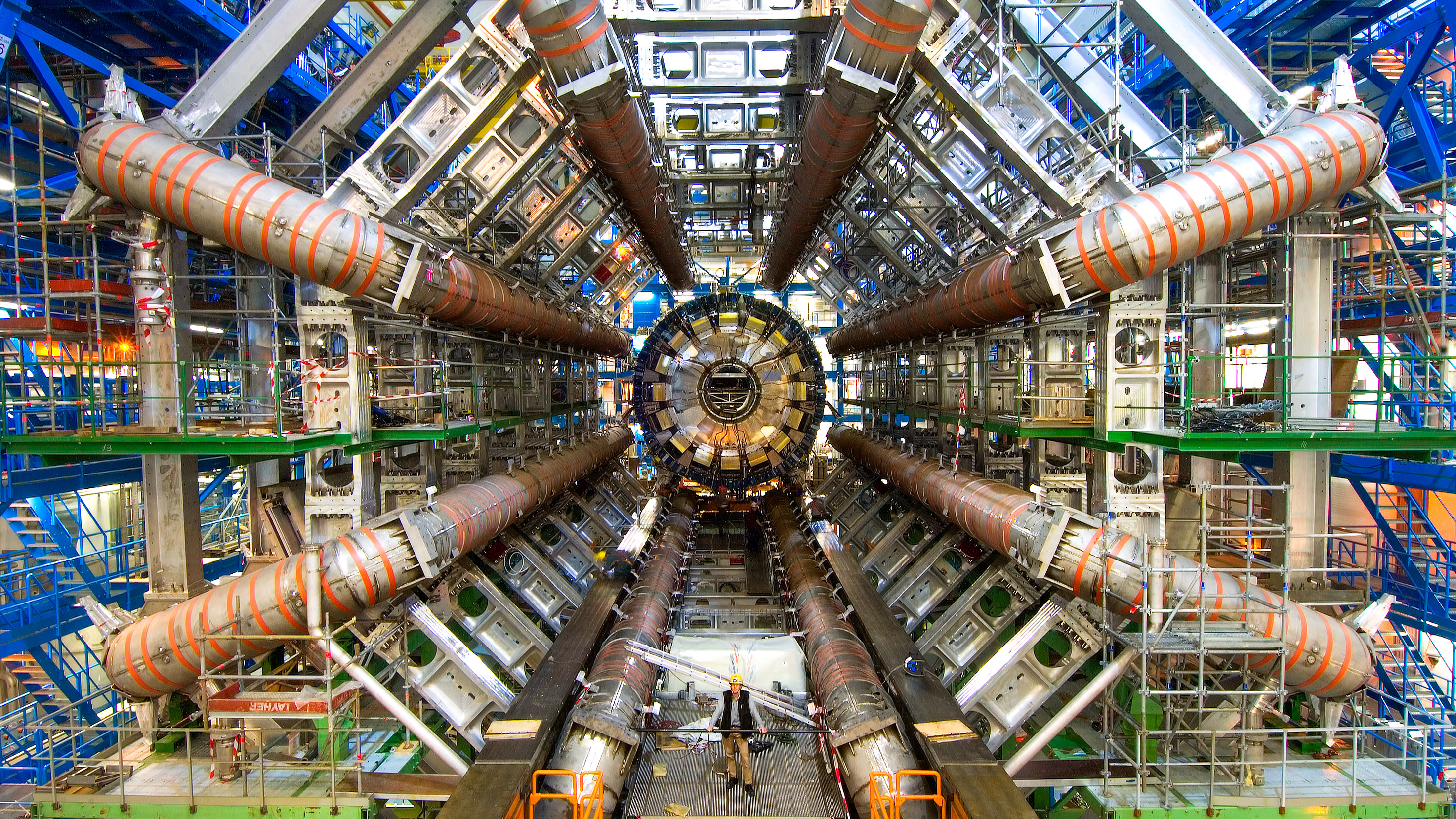
A view inside ATLAS, one of two general-purpose detectors at the Large Hadron Collider.
MAXIMILIEN BRICE/CERN
Inside the hunt for new physics at the world’s largest particle collider
In 2012, data from CERN’s Large Hadron Collider (LHC) unearthed a particle called the Higgs boson. The discovery answered a nagging question: where do fundamental particles, such as the ones that make up all the protons and neutrons in our bodies, get their mass?
A place for comfort, fun and distraction to brighten up your day. (Got any ideas? Drop me a line.)
+ Enjoy this tale of the “joke” sound that accidentally defined 90s rave culture. + Take a nostalgic trip through the websites of the early 00s. + One for animal lovers: sperm whales have teamed up to support a newborn. + Here’s a long overdue answer to a vital question: can the world’s largest mousetrap catch a limousine?
A rare warm spell in January melted enough snow to uncover Cornell University’s newest athletic field, built for field hockey. Months before, it was a meadow teeming with birds and bugs; now it’s more than an acre of synthetic turf roughly the color of the felt on a pool table, almost digital in its saturation. The day I walked up the hill from a nearby creek to take a look, the metal fence around the field was locked, but someone had left a hallway-size piece of the new simulated grass outside
A rare warm spell in January melted enough snow to uncover Cornell University’s newest athletic field, built for field hockey. Months before, it was a meadow teeming with birds and bugs; now it’s more than an acre of synthetic turf roughly the color of the felt on a pool table, almost digital in its saturation. The day I walked up the hill from a nearby creek to take a look, the metal fence around the field was locked, but someone had left a hallway-size piece of the new simulated grass outside the perimeter. It was bristly and tough, but springy and squeaky under my booted feet. I could imagine running around on it, but it would definitely take some getting used to.
My companion on this walk seemed even less favorably disposed to the thought. Yayoi Koizumi, a local environmental advocate, has been fighting synthetic-turf projects at Cornell since 2023. A petite woman dressed that day in a faded plum coat over a teal vest, with a scarf the colors of salmon, slate, and sunflowers, Koizumi compulsively picked up plastic trash as we walked: a red Solo cup, a polyethylene Dunkin’ container, a five-foot vinyl panel. She couldn’t bear to leave this stuff behind to fragment into microplastic bits—as she believes the new field will. “They’ve covered the living ground in plastic,” she said. “It’s really maddening.”
The new pitch is one part of a $70 million plan to build more recreational space at the university. As of this spring, Cornell plans to install something like a quarter million square feet of synthetic grass—what people have colloquially called “astroturf” since the middle of the last century. University PR says it will be an important part of a “health-promoting campus” that is “supportive of holistic individual, social, and ecological well-being.” Koizumi runs an anti-plastic environmental group called Zero Waste Ithaca, which says that’s mostly nonsense.
This fight is more than just the usual town-versus-gown tension. Synthetic turf used to be the stuff of professional sports arenas and maybe a suburban yard or two; today communities across the United States are debating whether to lay it down on playgrounds, parks, and dog runs. Proponents say it’s cheaper and hardier than grass, requiring less water, fertilizer, and maintenance—and that it offers a uniform surface for more hours and more days of the year than grass fields, a competitive advantage for athletes and schools hoping for a more robust athletic program.
But while new generations of synthetic turf look and feel better than that mid-century stuff, it’s still just plastic. Some evidence suggests it sheds bits that endanger users and the environment, and that it contains PFAS “forever chemicals”—per- and polyfluoroalkyl substances, which are linked to a host of health issues. The padding within the plastic grass is usually made from shredded tires, which might also pose health risks. And plastic fields need to be replaced about once a decade, creating lots of waste.
Yet people are buying a lot of the stuff. In 2001, Americans installed just over 7 million square meters of synthetic turf, just shy of 11,000 metric tons. By 2024, that number was 79 million square meters—enough to carpet all of Manhattan and then some, almost 120,000 metric tons. Synthetic turf covers 20,000 athletic fields and tens of thousands of parks, playgrounds, and backyards. And the US is just 20% of the global market.
Where real estate is limited and demand for athletic facilities is high, artificial turf is tempting. “It all comes down to land and demand.”
Frank Rossi, professor of turf science, Cornell
Those increases worry folks who study microplastics and environmental pollution. Any actual risk is hard to parse; the plastic-making industry insists that synthetic fields are safe if properly installed, but lots of researchers think that isn’t so. “They’re very expensive, they contain toxic chemicals, and they put kids at unnecessary risk,” says Philip Landrigan, a Boston College epidemiologist who has studied environmental toxins like lead and microplastics.
But at Cornell, where real estate is limited and demand for athletic facilities is high, synthetic turf was a tempting option. As Frank Rossi, a professor of turf science at Cornell, told me: “It all comes down to land and demand.”
In 1965, Houston’s new, domed baseball stadium was an icon of space-age design. But the Astrodome had a problem: the sun. Deep in the heart of Texas, it shined brightly through the Astrodome’s skylights—so much so that players kept missing fly balls. So the club painted over the skylights. Denied sunlight, the grass in the outfield withered and died.
A replacement was already in the works. In the late 1950s a Ford Foundation–funded educational laboratory determined that a soft, grasslike surface material would give city kids more places to play outside and had prevailed upon the Monsanto corporation to invent one. The result was clipped blades of nylon stuck to a rubber base, which the company called ChemGrass. Down it went into Houston’s outfield, where it got a new, buzzier name: AstroTurf.
Workers lay artificial turf at the Astrodome in Houston on July 13, 1966. Developed by Monsanto, the material was originally known as ChemGrass but was later renamed AstroTurf after the stadium.
AP PHOTO/ED KOLENOVSKY, FILE
That first generation of simulated lawn was brittle and hard, but quality has improved. Today, there are a few competing products, but they’re all made by extruding a petroleum-based polymer—that’s plastic—through tiny holes and then stitching or fusing the resulting fibers to a carpetlike bottom. That gets attached to some kind of padding, also plastic. In the 1970s the industry started layering that over infill, usually sand; by the 1990s, “third generation” synthetic turf had switched to softer fibers made of polyethylene. Beneath that, they added infill that combined sand and a soft, cheap shredded rubber made from discarded automobile tires, which pile up by the hundreds of millions every year. This “crumb rubber” provides padding and fills spaces between the blades and the backing.
In the early 1980s, nearly half the professional baseball and football fields in the US had synthetic turf. But many players didn’t like it. It got hotter than real grass, gave the ball different action, and seemed to be increasing the rate of injuries among athletes. Since the 1990s, most pro sports have shifted back toward grass—water and maintenance costs pale in comparison to the importance of keeping players happy or sparing them the risk of injury.
But at the same time, more universities and high schools are buying the artificial stuff. The advantages are clear, especially in places where it rains either too much or not enough. A natural-grass field is usable for a little more than 800 hours a year at the most, spread across just eight months in the cooler, wetter northern US. An artificial-turf field can see 3,000 hours of activity per year. For sports like lacrosse, which begins in late winter, this makes artificial turf more appealing. Most lacrosse pitches are now synthetic. So are almost all field hockey pitches; players like the way the even, springy turf makes the ball bounce.
Furthermore, supporters say synthetic turf needs less maintenance than grass, saving money and resources. That’s not always true; workers still have to decompact the playing surface and hose it off to remove bird poop or cool it down. Sometimes the infill needs topping up. But real grass allows less playing time, and because grass athletic fields often need to be rotated to avoid damage, synthetic ground cover can require less space. Hence the market’s explosive growth in the 21st century.
The city and town of Ithaca—two separate political entities with overlapping jurisdiction over Cornell construction projects—held multiple public meetings about the university’s new synthetic fields: the field hockey pitch and a complex called the Meinig Fieldhouse. Koizumi’s group turned up in force, and a few folks who worked at Cornell came to oppose the idea too—submitting pages of citations and studies on the risks of synthetic grass.
At two of those meetings, dozens of Cornell athletes turned out to support the turf. Representatives of the university and the athletic department declined to speak with me for this story, citing an ongoing lawsuit from Zero Waste Ithaca. But before that, Nicki Moore, Cornell’s director of athletics, told a local newspaper that demand from campus groups and sports teams meant the fields were constantly overcrowded. “Activities get bumped later and later, and sometimes varsity teams won’t start practicing until 10 at night, you know?” Moore told the paper. “Availability of all-weather space should normalize scheduling a great deal.”
That argument wasn’t universally convincing. “It’s a bad idea, but that’s from the environmental perspective,” says Marianne Krasny, director of Cornell’s Civic Ecology Lab and one of the speakers at those hearings. “Obviously the athletic department thinks it’s a great idea.”
GETTY IMAGES
Members of Cornell on Fire, a climate action group with members from both the university and the town, joined in opposing the use of artificial turf, citing the fossil-fuel origins of the stuff. They described the nominal support of the project from student athletes as inauthentic, representing not grassroots support but, yes, an astroturf campaign.
Sorting out the actual science here isn’t simple. Over time, the plastic that synthetic turf is made of sheds bits of itself into the environment. In one study, published in 2023 in the journal Environmental Pollution, researchers found that 15% of the medium-size and microplastic particles in a river and the Mediterranean Sea outside Barcelona, Spain, came from artificial turf, mostly in the form of tiny green fibers. Back in 2020, the European Chemicals Agency estimated that infill material from artificial-turf fields in the European Union was contributing 16,000 metric tons of microplastics to the environment each year—38% of all annual microplastic pollution. Most of that came from the crumb rubber infill, which Europe now plans to ban by 2031.
This pollution worries the Cornell activists. Ithaca is famous for scenic gorges and waterways. The new field hockey pitch is uphill from a local creek that empties into Cayuga Lake, the longest of the Finger Lakes and the source of drinking water for over 40,000 people.
And it’s not just the plastic bits. When newer generations of synthetic turf switched to durable high-density polyethylene, the new material gunked up the extruders used in the manufacturing process. So turf makers started adding fluorinated polymers—a type of PFAS. Some of these environmentally persistent “forever chemicals” cause cancer, disrupt the endocrine system, or lead to other health problems. Research in several different labs has found PFAS in many types of plastic grass.
But the key to assessing the threat here is exposure. Heather Whitehead, an analytical chemist then at the University of Notre Dame, found PFAS in synthetic turf at levels around five parts per billion—but estimated it’d be in water running off the fields at three parts per trillion; for context, the US Environmental Protection Agency’s legal drinking-water limit on one of the most widespread and dangerous PFAS chemicals is four parts per trillion. “These chemicals will wash off in small amounts for long periods of time,” says Graham Peaslee, Whitehead’s advisor and an emeritus nuclear physicist who studies PFAS concentrations. “I think it’s reason enough not to have artificial turf.”
This gets confusing, though. There are over 16,000 different types of PFAS, few have been well studied, and different companies use different manufacturing techniques. Companies represented by the Synthetic Turf Council now “use zero intentionally added PFAS,” says Melanie Taylor, the group’s president. “This means that as the field rolls off the assembly line, there are zero PFAS-formulated materials present.”
Some researchers are skeptical of the industry’s assurances. They’re hard to confirm, especially because there are a lot of ways to test for PFAS. The type of synthetic turf going onto the new field hockey pitch at Cornell is called GreenFields TX; the university had a sample tested using an EPA method that looks for 40 different PFAS compounds. It came back negative for all of them. The local activists countered that the test doesn’t detect the specific types they’re most concerned about, and in 2025 they paid for three more tests on newly purchased synthetic turf. Two clearly found fluorine—the F in “PFAS”—and one identified two distinct PFAS compounds. (The company that makes GreenFields TX, TenCate, declined to comment, citing ongoing litigation.)
PFAS isn’t the only potential problem. There’s also the crumb rubber made from tires. A billion tires get thrown out every year worldwide, and if they aren’t recycled they sit in giant piles that make great habitats for rats and mosquitoes; they also occasionally catch fire. Lots of the tires that go into turf are made of styrene-butadiene rubber, or SBR. In bulk, that’s bad. Butadiene is a carcinogen that causes leukemia, and fumes from styrene can cause nervous system damage. SBR also contains high levels of lead.
But how much of that comes out of synthetic-turf infill? Again, that’s hotly debated. Researchers around the world have published suggestive studies finding potentially dangerous levels of heavy metals like zinc and lead in synthetic turf, with possible health risks to people using the fields. But a review of many of the relevant studies on turf and crumb rubber from Canada’s National Collaborating Centre for Environmental Health determined that most well-conducted health risk assessments over the last decade found exposures below levels of concern for cancer and certain other diseases. A 2017 report by the European Chemicals Agency—the same people who found all those microplastics in the environment—“found no reason to advise people against playing sports on synthetic turf containing recycled rubber granules as infill material.” And a multiyear study from the EPA, published in 2024, found much the same thing—although the researchers said that levels of certain synthetic chemicals were elevated inside places that used indoor artificial turf. They also stressed that the paper was not a risk assessment.
The problem is, the kinds of cancers these chemicals can cause may take decades to show up. Long-term studies haven’t been done yet. All the evidence available so far is anecdotal—like a series for the Philadelphia Inquirer that linked the deaths of six former Phillies players from a rare type of brain cancer called glioblastoma to years spent playing on PFAS-containing artificial turf. That’d be about three times the usual rate of glioblastoma among adult men, but the report comes with a lot of cautions—small sample size, lots of other potential causes, no way to establish causation.
Synthetic turf has one negative that no one really disputes: It gets very hot in the sun—as hot as 150 °F (66 °C). This can actually burn players, so they often want to avoid using a field on very hot days.
A field hockey player from Cornell University passes the ball during a game played on artificial turf at Bryant University in 2025. Cornell’s own turf field will be ready for the 2026 season.
GETTY IMAGES
Athletes playing on artificial turf also have a higher rate of foot and ankle injuries, and elite-level football players seem to be more predisposed to knee injuries on those surfaces. But other studies have found rates of knee and hip injury to be roughly comparable on artificial and natural turf—a point the landscape architect working on the Cornell project made in the information packet the university sent to the city. Athletic departments and city parks departments say that the material’s upsides make it worthwhile, given that there’s no conclusive proof of harm.
Back in Ithaca, Cornell hired an environmental consulting firm called Haley & Aldrich to assess the evidence. The company concluded that none of the university’s proposed installations of artificial turf would have a negative environmental impact. People from Cornell on Fire and Zero Waste Ithaca told me they didn’t trust the firm’s findings; representatives from Haley & Aldrich declined to comment.
Longtime activists say that as global consumption of fossil fuels declines, petrochemical companies are desperate to find other markets. That means plastics. “There’s a big push to shift more petrochemicals into plastic products for an end market,” says Jeff Gearhart, a consumer product researcher at the Ecology Center. “Industry people, with a vested interest in petrochemicals, are looking to expand and build out alternative markets for this stuff.”
All that and more went before the decision-makers in Ithaca. In September 2024, the City of Ithaca Planning Board unanimously issued a judgment that the Meinig Fieldhouse would not have a significant environmental impact and thus would not need to complete a full environmental impact assessment. Six months later, the town made the same determination for the field hockey pitch.
Zero Waste Ithaca sued in New York’s supreme court, which ruled against the group. Koizumi and lawyers from Pace University’s Environmental Litigation Clinic have appealed. She says she’s still hopeful the court might agree that Ithaca authorities made a mistake by not requiring an environmental impact statement from the college. “We have the science on our side,” she says.
Ithaca is a pretty rarefied place, an Ivy League university town. But these same tensions—potential long-term environmental and public health consequences versus the financial and maintenance concerns of the now—are pitting worried citizens against their representatives and city agencies around the country.
New York City has 286 municipal synthetic-turf fields, with more under construction. In Inwood, the northernmost neighborhood in Manhattan, two fields were approved via Zoom meetings during the pandemic, and Massimo Strino, a local artist who makes kaleidoscopes, says he found out only when he saw signs announcing the work on one of his daily walks in Inwood Hill Park, along the Hudson River. He joined a campaign against the plan, gathering more than 4,300 signatures. “I was canvassing every weekend,” Strino says. “You can count on one hand, literally, the number of people who said they were in favor.”
But that doesn’t include the group that pushed for one of those fields in the first place: Uptown Soccer, which offers free and low-cost lessons and games to 1,000 kids a year, mostly from underserved immigrant families. “It was turning an unused community space into a usable space,” says David Sykes, the group’s executive director. “That trumped the sort of abstract concerns about the environmental impacts. I’m not an expert in artificial turf, but the parks department assured me that there was no risk of health effects.”
Artificial turf doesn’t go away. “You’re going to be paying to get rid of it. Somebody will have to take it to a dump, where it will sit for a thousand years.”
Graham Peaslee, emeritus nuclear physicist studying PFAS concentrations, University of Notre Dame
New York City councilmember Christopher Marte disagrees. He has introduced a bill to ban new artificial turf from being installed in parks, and he hopes the proposal will be taken up by the Parks Committee this spring. Last session, the bill had 10 cosponsors—that’s a lot. Marte says he expects resistance from lobbyists, but there’s precedent. The city of Boston banned artificial turf in 2022.
Upstate, in a Rochester suburb called Brighton, the school district included synthetic-turf baseball and softball diamonds in a wide-ranging February 2024 capital improvement proposition. The measure passed. In a public meeting in November 2025, the school board acknowledged the intent to use synthetic grass—or, as concerned parents had it, “to rip up a quarter million square feet of this open space and replace it with artificial turf,” says David Masur, executive director of the environmental group PennEnvironment, whose kids attend school in Brighton. Parents and community members mobilized against the plan, further angered when contractors also cut down a beloved 200-year-old tree. School superintendent Kevin McGowan says it’s too late to change course. Masur has been working to oppose the plan nevertheless—he says school boards are making consequential decisions about turf without sharing information or getting input, even though these fields can cost millions of dollars of taxpayer money.
In short, the fights can get tense. On Martha’s Vineyard, in Massachusetts, a meeting about plans to install an artificial field at a local high school had to be ended early amid verbal abuse. A staffer for the local board of health who voiced concern about PFAS in the turf quit the board after discovering bullet casings in her tote bag, she said, which she perceived as a death threat. After an eight-year fight, the board eventually banned artificial turf altogether.
What happens next? Well, outdoor artificial turf lasts only eight to 12 years before it needs to be taken up and replaced. The Synthetic Turf Council says it’s at least partially recyclable and cites a company called BestPLUS Plastic Lumber as a purveyor of products made from recycled turf. The company says one of its products, a liner called GreenBoard that artificial turf can be nailed into, is at least 40% recycled from fake grass. Joseph Sadlier, vice president and general manager of plastics recycling at BestPLUS, says the company recycles over 10 million pounds annually.
Yet the material is piling up. In 2021, a Danish company called Re-Match announced plans to open a recycling plant in Pennsylvania and began amassing thousands of tons of used plastic turf in three locations. The company filed for bankruptcy in 2025.
In Ithaca, university representatives told planning boards that it would be possible to recycle the old artificial turf they ripped out to make way for the Meinig Fieldhouse. That didn’t happen. An anonymous local activist tracked the old rolls to a hauling company a half-hour’s drive south of campus and shared pictures of them sitting on the lot, where they stayed for months. It’s unclear what their ultimate fate will be.
That’s the real problem: Artificial turf just doesn’t go away. “You’re going to be paying to get rid of it,” says Peaslee, the PFAS expert. “Somebody will have to take it to a dump, where it will sit for a thousand years.” At minimum, real grass is a net carbon sink, even including installation and maintenance. Synthetic turf releases greenhouse gases. One life-cycle analysis of a 2.2-acre synthetic field in Toronto determined that it would emit 55 metric tons of carbon dioxide over a decade. Plastic fields need less water to maintain, but it takes water to make plastic, and natural grass lets rainwater seep into the ground. Synthetic turf sends most of it away as runoff.
It’s a boggling set of issues to factor into a decision. Rossi, the Cornell turf scientist, says he can understand why a school in the northern United States might go plastic, even when it cares about its students’ health. “It was the best bad option,” he says. Concerns about microplastics and PFAS are “significant issues we have not fully addressed.” And they need to be.
Douglas Main is a journalist and former senior editor and writer at National Geographic.
When I started digging into desalination technology for a new story, I couldn’t help but obsess over the numbers.
I’d known on some level that desalination—pulling salt out of seawater to produce fresh water—was an increasingly important technology, especially in water-stressed regions including the Middle East. But just how much some countries rely on desalination, and how big a business it is, still surprised me.
For more on how this crucial water infrastructure is increasingly vulnerabl
When I started digging into desalination technology for a new story, I couldn’t help but obsess over the numbers.
I’d known on some level that desalination—pulling salt out of seawater to produce fresh water—was an increasingly important technology, especially in water-stressed regions including the Middle East. But just how much some countries rely on desalination, and how big a business it is, still surprised me.
For more on how this crucial water infrastructure is increasingly vulnerable during the war in Iran, check out my latest story. Here, though, let’s look at the state of desalination technology, by the numbers.
Desalination produces 77% of all fresh water and 99% of drinking water in Qatar.
Globally, we rely on desalination for just 1% of fresh-water withdrawals. But for some countries in the Middle East, and particularly for the Gulf Cooperation Council countries (Bahrain, Qatar, Kuwait, the United Arab Emirates, Saudi Arabia, and Oman), it’s crucial.
Qatar, home to over 3 million people, is one of the most staggering examples, with nearly all its drinking water supplies coming from desalination. But many major cities in the region couldn’t exist without the technology. There are no permanent rivers on the Arabian Peninsula, and supplies of fresh water are incredibly limited, so countries rely on facilities that can take in seawater and pull out the salt and other impurities.
The Middle East is home to just 6% of the world’s population and over 27% of its desalination facilities.
The region has historically been water-scarce, and that trend is only continuing as climate change pushes temperatures higher and changes rainfall patterns.
Of the 17,910 desalination facilities that are operational globally, 4,897 are located in the Middle East, according to a 2026 study in npj Clean Water. The technology supplies not only municipal water used by homes and businesses, but also industries including agriculture, manufacturing, and increasingly data centers.
One massive desalination plant in Saudi Arabia produces over 1 million cubic meters of fresh water per day.
The Ras Al-Khair water and power plant in Eastern Province, Saudi Arabia, is one of a growing number of gigantic plants that output upwards of a million cubic meters of water each day. That amount of water can meet the needs of millions of people in Riyadh City. Producing it takes a lot of power—the attached power plant has a capacity of 2.4 gigawatts.
While this plant is just one of thousands across the region, it’s an example of a growing trend: The average size of a desalination plant is about 10 times what it was 15 years ago, according to data from the International Energy Agency. Communities are increasingly turning to larger plants, which can produce water more efficiently than smaller ones.
Between 2024 and 2028, the Middle East’s desalination capacity could grow by over 40%.
Desalination is only going to be more crucial for life in the Middle East. The region is expected to spend over $25 billion on capital expenses for desalination facilities between 2024 and 2028, according to the 2026 npj Clean Waterstudy. More massive plants are expected to come online in Saudi Arabia, Iraq, and Egypt during that time.
All this growth could consume a lot of electricity. Between growth of the technology generally and the move toward plants that use electricity rather than fossil fuels, desalination could add 190 terawatt-hours of electricity demand globally by 2035, according to IEA data. That’s the equivalent of about 60 million households.
This article is from The Spark, MIT Technology Review’s weekly climate newsletter. To receive it in your inbox every Wednesday, sign up here.
We evolved for a linear world. If you walk for an hour, you cover a certain distance. Walk for two hours and you cover double that distance. This intuition served us well on the savannah. But it catastrophically fails when confronting AI and the core exponential trends at its heart.
From the time I began work on AI in 2010 to now, the amount of training data that goes into frontier AI models has grown by a staggering 1 trillion times—from roughly 10¹⁴ flops (floating-point operations‚ the cor
We evolved for a linear world. If you walk for an hour, you cover a certain distance. Walk for two hours and you cover double that distance. This intuition served us well on the savannah. But it catastrophically fails when confronting AI and the core exponential trends at its heart.
From the time I began work on AI in 2010 to now, the amount of training data that goes into frontier AI models has grown by a staggering 1 trillion times—from roughly 10¹⁴ flops (floating-point operations‚ the core unit of computation) for early systems to over 10²⁶ flops for today’s largest models. This is an explosion. Everything else in AI follows from this fact.
The skeptics keep predicting walls. And they keep being wrong in the face of this epic generational compute ramp. Often, they point out that Moore’s Law is slowing. They also mention a lack of data, or they cite limitations on energy.
But when you look at the combined forces driving this revolution, the exponential trend seems quite predictable. To understand why, it’s worth looking at the complex and fast-moving reality beneath the headlines.
Think of AI training as a room full of people working calculators. For years, adding computational power meant adding more people with calculators to that room. Much of the time those workers sat idle, drumming their fingers on desks, waiting for the numbers to come through for their next calculation. Every pause was wasted potential. Today’s revolution goes beyond more and better calculators (although it delivers those); it is actually about ensuring that all those calculators never stop, and that they work together as one.
Three advances are now converging to enable this. First, the basic calculators got faster. Nvidia’s chips have delivered an over sevenfold increase in raw performance in just six years, from312 teraflops in 2020 to2,250 teraflops today. Our ownMaia 200 chip, launched this January, delivers 30% better performance per dollar than any other hardware in our fleet. Second, the numbers arrive faster thanks to a technology called HBM, or high bandwidth memory, which stacks chips vertically like tiny skyscrapers; the latest generation, HBM3, triples the bandwidth of its predecessor, feeding data to processors fast enough to keep them busy all the time. Third, the room of people with calculators became an office and then a whole campus or city. Technologies likeNVLink andInfiniBand connect hundreds of thousands of GPUs into warehouse-size supercomputers that function as single cognitive entities. A few years ago this was impossible.
These gains all come together to deliver dramatically more compute. Where training a language model took 167 minutes on eight GPUs in 2020, it now takes under four minutes on equivalent modern hardware. To put this in perspective: Moore’s Law would predict only about a 5x improvement over this period. We saw 50x. We’ve gone from two GPUs training AlexNet, the image recognition model that kicked off the modern boom in deep learning in 2012, to over 100,000 GPUs in today’s largest clusters, each one individually far more powerful than its predecessors.
Then there’s the revolution in software. Research fromEpoch AI suggests that the compute required to reach a fixed performance level halves approximately every eight months, much faster than the traditional 18-to-24-month doubling of Moore’s Law. The costs of serving some recent models have collapsed by a factor of up to 900 on an annualized basis. AI is becoming radically cheaper to deploy.
The numbers for the near future are just as staggering. Consider that leading labs are growing capacity at nearly 4x annually. Since 2020, the compute used to train frontier models has grown5x every year. Global AI-relevant compute is forecast to hit 100 million H100-equivalents by 2027, a tenfold increase in three years. Put all this together and we’re looking at something like another 1,000x in effective compute by the end of 2028. It’s plausible that by 2030 we’ll bring an additional200 gigawatts of compute online every year—akin to the peak energy use of the UK, France, Germany, and Italy put together.
What does all this get us? I believe it will drive the transition from chatbots to nearly human-level agents—semiautonomous systems capable of writing code for days, carrying out weeks- and months-long projects, making calls, negotiating contracts, managing logistics. Forget basic assistants that answer questions. Think teams of AI workers that deliberate, collaborate, and execute. Right now we’re only in the foothills of this transition, and the implications stretch far beyond tech. Every industry built on cognitive work will be transformed.
The obvious constraint here is energy. A single refrigerator-size AI rack consumes 120 kilowatts, equivalent to 100 homes. But this hunger collides with another exponential: Solar costs have fallen by a factor of nearly 100 over 50 years;battery prices have dropped 97% over three decades. There is a pathway to clean scaling coming into view.
The capital is deployed. The engineering is delivering. The $100 billion clusters, the 10-gigawatt power draws, the warehouse-scale supercomputers … these are no longer science fiction. Ground is being broken for these projects now across the US and the world. As a result, we are heading toward true cognitive abundance. At Microsoft AI, this is the world our superintelligence lab is planning for and building.
Skeptics accustomed to a linear world will continue predicting diminishing returns. They will continue being surprised. The compute explosion is the technological story of our time, full stop. And it is still only just beginning.
This is today’s edition of The Download, our weekday newsletter that provides a daily dose of what’s going on in the world of technology.
Desalination plants in the Middle East are increasingly vulnerable
As the conflict in Iran has escalated, a crucial resource is under fire: the desalinization technology that supplies water in the region. President Donald Trump has threatened to destroy “possibly all desalinization plants” in Iran if the Strait of Hormuz is not reopened. The impact on
This is today’s edition of The Download, our weekday newsletter that provides a daily dose of what’s going on in the world of technology.
Desalination plants in the Middle East are increasingly vulnerable
As the conflict in Iran has escalated, a crucial resource is under fire: the desalinization technology that supplies water in the region.
President Donald Trump has threatened to destroy “possibly all desalinization plants” in Iran if the Strait of Hormuz is not reopened. The impact on farming, industry, and—crucially—drinking in the Middle East could be severe. Find out why.
—Casey Crownhart
This story is part of MIT Technology Review Explains, our series untangling the complex, messy world of technology to help you understand what’s coming next. You can read more from the series here.
AI is changing how small online sellers decide what to make
For small entrepreneurs, deciding what to sell and where to make it has traditionally been a slow, labor-intensive process. Now that work is increasingly being done by AI.
Tools like Alibaba’s Accio compress weeks of product research and supplier hunting into a single chat. Business owners and e-commerce experts say they’re making sourcing more accessible—and slashing the time from product idea to launch.
The gig workers who are training humanoid robots at home
When Zeus, a medical student in Nigeria, returns to his apartment from a long day at the hospital, he straps his iPhone to his forehead and records himself doing chores.
Zeus is a data recorder for Micro1, which sells the data he collects to robotics firms. As these companies race to build humanoids, videos from workers like Zeus have become the hottest new way to train them.
Micro1 has hired thousands of them in more than 50 countries, including India, Nigeria, and Argentina. The jobs pay well locally, but raise thorny questions around privacy and informed consent. The work can be challenging—and weird. Read the full story.
—Michelle Kim
This is our latest story to be turned into an MIT Technology Review Narrated podcast, which we’re publishing each week on Spotify and Apple Podcasts. Just navigate to MIT Technology Review Narrated on either platform, and follow us to get all our new content as it’s released.
The must-reads
I’ve combed the internet to find you today’s most fun/important/scary/fascinating stories about technology.
1 Anthropic’s new model found security problems in every OS and browser Claude Mythos has been heralded as a cybersecurity “reckoning.” (The Verge) + Anthrophic is limiting the rollout over hacking fears. (CNBC) + It’s also launching a project that lets Mythos flag vulnerabilities. (Gizmodo) + Apple, Google, and Microsoft have joined the initiative. (ZDNET)
2 Iranian hackers are targeting American critical infrastructure Their focus is on energy and water infrastructure.(Wired) + They’re targeting industrial control devices. (TechCrunch)
3 Google’s AI Overviews deliver millions of incorrect answers per hour Despite a 90% accuracy rate. (NYT $) + AI means the end of internet search as we’ve known it. (MIT Technology Review)
4 Elon Musk is trying to oust OpenAI CEO Sam Altman in a lawsuit As remedies for Altman allegedly defrauding him. (CNBC) + Musk wants any damages given to OpenAI’s nonprofit arm. (WSJ $)
5 ICE has admitted it’s using powerful spyware The tools that can intercept encrypted messages. (NPR) + Immigration agencies are also weaponizing AI videos. (MIT Technology Review)
6 Greece has joined the countries banning kids from social media Under-15s will be blocked from 2027. (Reuters) + Australia introduced the world’s first social media ban for children. (Guardian) + Indonesia recently rolled out the first one in Southeast Asia. (DW) + Experts say they’re a lazy fix. (CNBC)
7 Intel will help Elon Musk build his Terafab in Texas They aim to manufacture chips for AI projects. (Engadget) + Musk says it will be the largest-ever semiconductor factory. (Engadget) + Future AI chips could be built on glass. (MIT Technology Review)
8 TikTok is building a second billion-euro data center in Finland It’s moving data storage for European users. (Reuters) + Finland has become a magnet for data centers. (Bloomberg $) + But nobody wants one in their backyard. (MIT Technology Review)
9 Plans for Canada’s first “virtual gated community” have sparked a row The AI-powered surveillance system has divided neighbors. (Guardian) + Is the Pentagon allowed to surveil Americans with AI? (MIT Technology Review)
10 The high-tech engineering of the “space toilet” has been revealed Artemis II is the first mission to carry one around the world. (Vox)
Quote of the day
“This case has always been about Elon generating more power and more money for what he wants. His lawsuit remains nothing more than a harassment campaign that’s driven by ego, jealousy and a desire to slow down a competitor.”
—OpenAI criticizes Musk’s legal action in an X post.
One More Thing
USWDS
Inside the US government’s brilliantly boring websites
You may not notice it, but your experience on every US government website is carefully crafted.
Each site aligns an official web design and a custom typeface. They aim to make government websites not only good-looking but accessible and functional for all.
A place for comfort, fun and distraction to brighten up your day. (Got any ideas? Drop me a line.)
+ Rejoice in the splendor of the “Earthset” image captured by Artemis II. + Meet the fearless cat chasing off bears. + This document vividly explains what makes the octopus so unique. + Revealed: the rhythmic secret that makes emo music so angsty.
MIT Technology Review Explains: Let our writers untangle the complex, messy world of technology to help you understand what’s coming next. You can read more from the series here.
As the conflict in Iran has escalated, a crucial resource is under fire: the desalination technology that supplies water across much of the region.
In early March, Iran’s foreign minister accused the US of attacking a desalination plant on Qeshm Island in the Strait of Hormuz and disrupting the water supply to
MIT Technology Review Explains: Let our writers untangle the complex, messy world of technology to help you understand what’s coming next. You can read more from the series here.
As the conflict in Iran has escalated, a crucial resource is under fire: the desalination technology that supplies water across much of the region.
In early March, Iran’s foreign minister accused the US of attacking a desalination plant on Qeshm Island in the Strait of Hormuz and disrupting the water supply to nearly 30 villages. (The US denied responsibility.) In the weeks since, both Bahrain and Kuwait have reported damage to desalination plants and blamed Iran, though Iran also denied responsibility.
In late March, President Donald Trump threatened the destruction of “possibly all desalinization plants” in Iran if the Strait of Hormuz was not reopened. Since then, he’s escalated his threats against Iran, warning of plans to attack other crucial civilian infrastructure like power plants and bridges.
Countries in the Middle East, particularly the Gulf states, rely on the technology to turn salt water into fresh water for farming, industry, and—crucially—drinking. The mounting attacks and threats to date highlight just how vital the industry is to the region—a situation made even more precarious by rising temperatures and extreme weather driven by climate change.
Right now, 83% of the Middle East is under extremely high water stress, says Liz Saccoccia, a water security associate at the World Resources Institute. Future projections suggest that’s going to increase to about 100% by 2050, she adds: “This is a continuing trend, and it’s getting worse, not better.”
Here’s a look at desalination technology in the Middle East and what wartime threats to the critical infrastructure could mean for people in the region.
A vital resource
Desalination technology has helped provide water supplies in the Middle East since the early 20th century and became widespread in the 1960s and 1970s.
There are two major categories of desalination plants. Thermal plants use heat to evaporate water, leaving salt and other impurities behind. The vapor can then be condensed into usable fresh water. The alternative is membrane-based technology like reverse osmosis, which pushes water through membranes that have tiny pores—so small that salt can’t get through.
Early desalination plants in the Middle East were the first type, burning fossil fuels to evaporate water, leaving the salt behind. This technique is incredibly energy-intensive, and over time, processes that rely on filters became the dominant choice.
Membrane technologies have made up essentially all new desalination capacity in recent years; the last major thermal plant built in the Gulf came online in 2018. Many reverse osmosis plants still rely on fossil fuels, but they’re more efficient. Since then, membrane technologies have added more than 15 million cubic meters of daily capacity—enough to supply water to millions of people.
Capacity has expanded quickly in recent years; between 2006 and 2024, countries across the Middle East collectively spent over $50 billion building and upgrading desalination facilities, and nearly that much operating them.
Today, there are nearly 5,000 desalination plants operational across the Middle East.
And looking ahead, growth is continuing. Between 2024 and 2028, daily capacity is expected to grow from about 29 million cubic meters to 41 million cubic meters.
Uneven vulnerabilities
Some countries rely on the technology more than others. Iran, for example, uses desalination for about 3% of its municipal fresh water. The country has access to groundwater and some surface water, including rivers, though these resources are being stretched thin by agriculture and extreme drought.
Other nations in the region, particularly the Gulf countries (Bahrain, Qatar, Kuwait, the United Arab Emirates, Saudi Arabia, and Oman), have much more limited water resources and rely heavily on desalination. Across these six nations, all but the UAE get more than half their drinking water from desalination, and for Bahrain, Qatar, and Kuwait the figure is more than 90%.
“The Gulf countries are much, much more vulnerable to attacks on their desalination plants than Iran is,” says David Michel, a senior associate in the global food and water security program at the Center for Strategic and International Studies.
There are thousands of desalination facilities across the region, so the system wouldn’t collapse if a small number were taken offline, Michel says. However, in recent years there’s been a trend toward larger, more centralized plants.
The average desalination plant is about 10 times larger than it was 15 years ago, according to data from the International Energy Agency. The largest desalination plants today can produce 1 million cubic meters of water daily, enough for hundreds of thousands of people. Taking one or more of these massive facilities offline could have a significant effect on the system, Michel says.
Escalating threats
Desalination facilities are quite linear, meaning there are multiple steps and pieces of equipment that work in sequence—and the failure of a component in that chain can take an entire facility down. Attacks on water inlets, transportation networks, and power supplies can also disrupt the system, Michel says.
During the Gulf War in 1991, Iraqi forces pumped oil into the gulf, contaminating the water and shutting down desalination plants in Kuwait.
The facilities are also generally located close to other targets in this conflict. Desalination is incredibly energy intensive, so about three-quarters of facilities in the region are next to power plants. Trump has repeatedly threatened power plants in Iran. In response, Iran’s military has said that if civilian targets are hit, the country will respond with strikes that are “much more devastating and widespread.” Other governments and organizations, including the United Nations, the European Union, and the Red Cross, have broadly condemned threats to infrastructure as illegal.
But war isn’t the only danger facing these plants, even if it is the most immediate. Some studies have suggested that global warming could strengthen cyclones in the region, and these extreme weather events could force shutdowns or damage equipment.
Water pollution could also cause shutdowns. Oil spills, whether accidental or intentional, as in the case of the Gulf War, can wreak havoc. And in 2009, a red algae bloom closed desalination plants in Oman and the United Arab Emirates for weeks. The algae fouled membranes and blocked the plants from being able to take water in from the Persian Gulf and the Gulf of Oman.
Desalination facilities could become more resilient to threats in the future, and they may need to as their importance continues to grow.
There’s increasing interest in running desalination facilities at least partially on solar power, which could help reduce dependence on the oil that powers most facilities today. The Hassyan seawater desalination project in the UAE, currently under construction, would be the largest reverse osmosis plant in the world to operate solely with renewable energy.
Another way to increase resilience is for countries to build up more strategic water storage to meet demand. Qatar recently issued new policies that aim to improve management and storage of desalinated water, for example. Countries could also work together to invest in shared infrastructure and policies that help strengthen the water supply through the region.
Preparedness, resilience, and cooperation will be key for the Middle East broadly as critical infrastructure, including the water supply, is increasingly under threat.
“The longer the conflict goes on, the more likely we’ll see significant water infrastructure damage,” says Ginger Matchett, an assistant director at the Atlantic Council. “What worries me is that after this war ends, some of the lessons will show how water can be weaponized more strategically than previously imagined.”
Unlike static, rules-based systems, AI agents can learn, adapt, and optimize processes dynamically. As they interact with data, systems, people, and other agents in real time, AI agents can execute entire workflows autonomously.
But unlocking their potential requires redesigning processes around agents rather than bolting them onto fragmented legacy workflows using traditional optimization methods. Companies must become agent first.
DOWNLOAD THE ARTICLE
In an agent-first enterpri
Unlike static, rules-based systems, AI agents can learn, adapt, and optimize processes dynamically. As they interact with data, systems, people, and other agents in real time, AI agents can execute entire workflows autonomously.
But unlocking their potential requires redesigning processes around agents rather than bolting them onto fragmented legacy workflows using traditional optimization methods. Companies must become agent first.
In an agent-first enterprise, AI systems operate processes while humans set goals, define policy constraints, and handle exceptions.
“You need to shift the operating model to humans as governors and agents as operators,” says Scott Rodgers, global chief architect and U.S. CTO of the Deloitte Microsoft Technology Practice.
The agent-first imperative
With technology budgets for AI expected to increase more than 70% over the next two years, AI agents, powered by generative AI, are poised to fundamentally transform organizations and achieve results beyond traditional automation. These initiatives have the potential to produce significant performance gains, while shifting humans toward higher value work.
AI is advancing so quickly that static approaches to task automation will likely only produce incremental gains. Because legacy processes aren’t built for autonomous systems, AI agents require machine-readable process definitions, explicit policy constraints, and structured data flows, according to Rodgers.
Further complicating matters, many organizations don’t understand the full economic drivers of their business, such as cost to serve and per-transaction costs. As a result, they have trouble prioritizing agents that can create the most value and instead focus on flashy pilots. To achieve structural change, executives should think differently.
Companies must instead orchestrate outcomes faster than competitors. “The real risk isn’t that AI won’t work—it’s that competitors will redesign their operating models while you’re still piloting agents and copilots,” says Rodgers. “Nonlinear gains come when companies create agent-centric workflows with human governance and adaptive orchestration.”
Routine and repetitive tasks are increasingly handled automatically, freeing employees to focus on higher value, creative, and strategic work. This shift improves operational efficiency, fosters stronger collaboration, and generates faster decision-making—helping organizations modernize the workplace without sacrificing enterprise security.
This content was produced by Insights, the custom content arm of MIT Technology Review. It was not written by MIT Technology Review’s editorial staff. It was researched, designed, and written by human writers, editors, analysts, and illustrators. This includes the writing of surveys and collection of data for surveys. AI tools that may have been used were limited to secondary production processes that passed thorough human review.
This is today’s edition of The Download, our weekday newsletter that provides a daily dose of what’s going on in the world of technology.
The one piece of data that could actually shed light on your job and AI
Within Silicon Valley’s orbit, an AI-fueled jobs apocalypse is spoken about as a given. Now even economists who have downplayed the threat are coming around to the idea.
Alex Imas, based at the University of Chicago, is one of them. He believes that any plan to address AI’s imp
This is today’s edition of The Download, our weekday newsletter that provides a daily dose of what’s going on in the world of technology.
The one piece of data that could actually shed light on your job and AI
Within Silicon Valley’s orbit, an AI-fueled jobs apocalypse is spoken about as a given. Now even economists who have downplayed the threat are coming around to the idea.
Alex Imas, based at the University of Chicago, is one of them. He believes that any plan to address AI’s impact will depend on collecting one vital piece of data: price elasticity.
This article is from The Algorithm, our weekly newsletter giving you the inside track on all things AI. Sign up to receive it in your inbox every Monday.
Four things we’d need to put data centers in space
In January, Elon Musk’s SpaceX applied to launch up to 1 million data centers into Earth’s orbit. The goal? To fully unleash the potential of AI—without triggering an environmental crisis on Earth.
This story is part of MIT Technology Review Explains, our series untangling the complex, messy world of technology to help you understand what’s coming next. You can read more from the series here.
The must-reads
I’ve combed the internet to find you today’s most fun/important/scary/fascinating stories about technology.
1 Trump has again proposed major cuts to US science and tech spending He wants to slash nearly every science-focused agency. (Ars Technica) + If Trump gets his way, the US could face a costly brain drain. (NYT $) + Top research talent is already fleeing the country. (Guardian) + Basic science deserves our boldest investment. (MIT Technology Review)
2 Sam Altman lobbied against AI regulations he publicly welcomed A bombshell report reveals many OpenAI insiders don’t trust him. (The New Yorker $) + Some have called him a sociopath. (Futurism) + OpenAI’s CFO fears it won’t be IPO-ready this year.(The Information $) + A war over AI regulation is brewing in the US. (MIT Technology Review)
3 NASA’s Artemis II has broken humanity’s all-time distance record The astronauts have flown farther than any humans before them. (BBC) + Their mission includes MIT-developed technology. (Axios)
4 Chinese tech firms are selling intel “exposing” US forces It comes from combining AI with open-source data.. (WP $) + AI is turning the Iran conflict into theater. (MIT Technology Review)
5 War is pushing countries to ditch hyperscalers Driven by Iran naming tech giants as military targets. (Rest of World) + No one wants a data center in their backyard. (MIT Technology Review)
6 OpenAI, Anthropic, and Google have united against China’s AI copying They’re sharing information on “adversarial distillation” (Bloomberg $)
7 Anduril and Impulse Space are working on Trump’s “Golden Dome” They’re developing space-based missile tracking for the project. (Gizmodo)
8 OpenAI has urged California to probe Elon Musk’s “anti-competitive behavior.” It accuses Musk of trying to “take control of the future of AGI.” (Reuters $) + And claims he coordinated attacks with Mark Zuckerberg. (CNBC) + A former Tesla president has revealed how he survived working for Musk. (WP $)
9 DeepSeek’s new AI model will run on Huawei chips It’s expected to launch in the next few weeks. (The Information $)
10 Memes have nuked our culture Internet “brain rot” has escaped our phones to take over everything. (NYT $)
Quote of the day
“I must say, it was actually quite nice.”
—Astronaut Victor Glover tells President Donald Trump what it was like when Artemis II was out of communication with the rest of humanity, The New York Times reports.
One More Thing
PABLO ALBARENGA
Inside the controversial tree farms powering Apple’s carbon-neutral goal
In 2020, Apple set a goal to become net zero by the end of the decade. To hit that target, the company is offsetting its emissions by planting millions of eucalyptus trees in Brazil.
Apple is betting that the strategy will lead to a greener future. But critics warn that the industrial tree farms will do more harm than good.
A place for comfort, fun and distraction to brighten up your day. (Got any ideas? Drop me a line.)
+ Japan’s automated bike garage is a cyclist’s dream come true. + This deep dive into bird behavior reveals the secrets of their dining habits. (Big thanks to reader Terry Gordon for the find!) + The first photo from the Artemis astronauts vividly captures the glow of our atmosphere. + There’s a new contender for the world’s most gorgeous website: RobertDeNiro.com.
This story originally appeared in The Algorithm, our weekly newsletter on AI. To get stories like this in your inbox first, sign up here.
Within Silicon Valley’s orbit, an AI-fueled jobs apocalypse is spoken about as a given. The mood is so grim that a societal impacts researcher at Anthropic, responding Wednesday to a call for more optimistic visions of AI’s future, said there might be a recession in the near term and a “breakdown of the early-career ladder.” Her less-measured colleague Dari
This story originally appeared in The Algorithm, our weekly newsletter on AI. To get stories like this in your inbox first, sign up here.
Within Silicon Valley’s orbit, an AI-fueled jobs apocalypse is spoken about as a given. The mood is so grim that a societal impacts researcher at Anthropic, responding Wednesday to a call for more optimistic visions of AI’s future, said there might be a recession in the near term and a “breakdown of the early-career ladder.” Her less-measured colleague Dario Amodei, the company’s CEO, has called AI “a general labor substitute for humans” that could do all jobs in less than five years. And those ideas are not just coming from Anthropic, of course.
These conversations have unsurprisingly left many workers in a panic (and are probably contributing to support for efforts to entirely pause the construction of data centers, some of which gained steam last week). The panic isn’t being helped by lawmakers, none of whom have articulated a coherent plan for what comes next.
Even economists who have cautioned that AI has not yet cut jobs and may not result in a cliff ahead are coming around to the idea that it could have a unique and unprecedented impact on how we work.
Alex Imas, based at the University of Chicago, is one of those economists. He shared two things with me when we spoke on Friday morning: a blunt assessment that our tools for predicting what this will look like are pretty abysmal, and a “call to arms” for economists to start collecting the one type of data that could make a plan to address AI in the workforce possible at all.
On our abysmal tools: consider the fact that any job is made up of individual tasks. One part of a real estate agent’s job, for example, is to ask clients what sort of property they want to buy. The US government chronicled thousands of these tasks in a massive catalogue first launched in 1998 and updated regularly since then. This was the data that researchers at OpenAI used in December to judge how “exposed” a job is to AI (they found a real estate agent to be 28% exposed, for example). Then in February, Anthropic used this data in its analysis of millions of Claude conversations to see which tasks people are actually using its AI to complete and where the two lists overlapped.
But knowing the AI exposure of tasks leads to an illusory understanding of how much a given job is at risk, Imas says. “Exposure alone is a completely meaningless tool for predicting displacement,” he told me.
Sure, it is illustrative in the gloomiest case—for a job in which literally every task could be done by AI with no human direction. If it costs less for an AI model to do all those tasks than what you’re paid—which is not a given, since reasoning models and agentic AI can rack up quite a bill—and it can do them well, the job likely disappears, Imas says. This is the oft-mentioned case of the elevator operator from decades ago; maybe today’s parallel is a customer service agent solely doing phone call triage.
But for the vast majority of jobs, the case is not so simple. And the specifics matter, too: Some jobs are likely to have dark days ahead, but knowing how and when this will play out is hard to answer when only looking at exposure.
Take writing code, for example. Someone who builds premium dating apps, let’s say, might use AI coding tools to create in one day what used to take three days. That means the worker is more productive. The worker’s employer, spending the same amount of money, can now get more output. So then will the employer want more employees or fewer?
This is the question that Imas says should keep any policymaker up at night, because the answer will change depending on the industry. And we are operating in the dark.
In this coder’s case, these efficiencies make it possible for dating apps to lower prices. (A skeptic might expect companies to simply pocket the gains, but in a competitive market, they risk being undercut if they do.) These lower prices will always drive some increase in demand for the apps. But how much? If millions more people want it, the company might grow and ultimately hire more engineers to meet this demand. But if demand barely ticks up—maybe the people who don’t use premium dating apps still won’t want them even at a lower price—fewer coders are needed, and layoffs will happen.
Repeat this hypothetical across every job with tasks that AI can do, and you have the most pressing economic question of our time: the specifics of price elasticity, or how much demand for something changes when its price changes. And this is the second part of what Imas emphasized last week: We don’t currently have this data across the economy. But we could.
We do have the numbers for grocery items like cereal and milk, Imas says, because the University of Chicago partners with supermarkets to get data from their price scanners. But we don’t have such figures for tutors or web developers or dietitians (all jobs found to have “exposure” to AI, by the way). Or at least not in a way that’s been widely compiled or made accessible to researchers; sometimes it’s scattered across private companies or consultancies.
“We need, like, a Manhattan Project to collect this,” Imas says. And we don’t need it just for jobs that could obviously be affected by AI now: “Fields that are not exposed now will become exposed in the future, so you just want to track these statistics across the entire economy.”
Getting all this information would take time and money, but Imas makes the case that it’s worth it; it would give economists the first realistic look at how our AI-enabled future could unfold and give policymakers a shot at making a plan for it.
For years Mike McClary sold the Guardian LTE Flashlight, a heavy-duty black model, online through his small outdoor brand. The product, designed for brightness and durability, became one of his most popular items ever. Even after he stopped offering it around 2017, customers kept sending him emails asking where they could buy it.
When McClary decided to revisit the Guardian flashlight in 2025, he didn’t begin the way he might have in the past, by combing through supplier listings and sending
For years Mike McClary sold the Guardian LTE Flashlight, a heavy-duty black model, online through his small outdoor brand. The product, designed for brightness and durability, became one of his most popular items ever. Even after he stopped offering it around 2017, customers kept sending him emails asking where they could buy it.
When McClary decided to revisit the Guardian flashlight in 2025, he didn’t begin the way he might have in the past, by combing through supplier listings and sending inquiries to factories. Instead, he opened Accio, an AI sourcing and researching tool on Alibaba.com.
For small entrepreneurs in the US, deciding what to sell and where to make it has traditionally been a slow, labor-intensive process that can take months. Now that work is increasingly being done by AI tools like Accio, which help connect businesses with manufacturers in countries including China and India. Business owners and e-commerce experts told MIT Technology Review that these AI tools are making sourcing more accessible and significantly shortening the time it takes to go from product idea to launch.
McClary, 51, who runs his business from his Illinois living room, has sold products ranging from leather conditioner to camping lights, including one rechargeable lantern that brought in half a million dollars. Like many small online merchants, he built his business by being extremely scrappy—spotting demand for a product, tweaking existing designs, finding a factory, doing modest marketing, and getting the goods in front of customers fast.
This time, though, he began by telling Accio about the flashlight’s original design, production cost, and profit margin. Then Accio suggested several changes, making it smaller and slightly less bright and switching its charging method to battery power. It also identified a manufacturer in Ningbo, China, that McClary said could cut the manufacturing cost from $17 to about $2.50 per unit.
McClary took the process from there, contacting the supplier himself to discuss the revised design. Within a month, the new version of the Guardian flashlight was back up for sale on Amazon and on his brand’s website.
The new factory hunt
Although Alibaba is better known for owning Taobao, the biggest shopping site in China, its first business was Alibaba.com, the primary website that lists Chinese factories open for bulk orders. Placing an order with a manufacturer usually requires far more than clicking “Buy.” Sellers often spend days or weeks browsing listings, comparing suppliers’ reviews and manufacturing capacities, asking about minimum order quantities, requesting samples, and negotiating timelines and customization options.
But Accio has gained significant momentum by changing how that sourcing gets done. Launched in 2024, Accio exceeded 10 million monthly active users in March 2026, according to the company. That means about one in five Alibaba users consults with AI about product sourcing.
Accio’s interface looks a lot like ChatGPT or Claude: Users type a question into an empty box and choose between “fast” and “thinking” modes. But when asked about products, the tool returns more than text, offering charts, links, and visuals and asking follow-up questions to clarify the buyer’s needs. It then narrows the field to one or a handful of suppliers that appear capable of delivering. After that, the human work begins: Users still have to reach out to suppliers themselves and negotiate the details.
Zhang Kuo, the president of Alibaba.com, told MIT Technology Review that the tool is built on multiple frontier models, including the company’s own Qwen series, a popular family of open-source large language models. The system is able to pull from the site’s millions of supplier profiles and is trained on 26 years of proprietary transaction data.
For tasks like product research and sourcing analysis, the tool “blows it away” compared with general AI tools like ChatGPT, says Richard Kostick, CEO of the beauty brand 100% Pure.
Many websites have tried using AI to assist shopping, but Alibaba has been one of the most aggressive. In March, Eddie Wu, CEO of the site’s parent company Alibaba Group, told managers that integrating the company’s core services with Qwen’s AI capabilities is a top priority. During a Chinese New Year promotion of Qwen’s personal shopping AI agent, where the company gave away cash, customers placed 200 million orders, the firm says.
Vincenzo Toscano, an e-commerce seller and consultant, recommended Accio to his clients before deciding to try it himself for a new sunglasses brand. He came in with a rough vision: a brand shaped by his Italian heritage, his personal style, and a boutique aesthetic. He says the AI helped turn that concept into something more concrete, suggesting materials, refining the look, and pointing to design ideas that felt current.
But the tool has clear limits. McClary, who uses AI tools regularly, says Accio is strongest when it comes to product ideation, but less helpful on marketing questions such as advertising and social media outreach. To use it well, he says, buyers still need to challenge its recommendations, since some can be generic.
The rest of the business
As platforms become more AI-driven, manufacturers are adjusting too. Sally Li, a representative at a makeup packaging company in Wuhan, China, says her firm has started writing more detailed product descriptions and adding information about its equipment and manufacturing experience on Alibaba.com because it suspects those details make its listings more likely to be surfaced by AI.
Yan says manufacturers cannot tell whether an inquiry from a customer was generated or guided by AI, and that her firm is not using AI to negotiate pricing or product details.
“AI agents are increasingly used by people to assist purchase decisions and even directly making transactions, and with clear guardrails, they can become extremely useful,” says Jiaxin Pei, a research scientist at the Stanford Institute for Human-Centered AI, “but agents need to act transparently, securely, and in the customer’s best interest.” Pei says developers of these tools should disclose the data they collect and the incentives built into them to ensure that the marketplace remains fair.
Zhang, of Alibaba.com, says Accio currently does not include advertising. Suppliers can pay for higher placement in Alibaba.com’s regular search results, but Zhang says Accio is “not integrated” with that system. “We haven’t had a clear answer in terms of how to monetize this tool,” he says. For now, users can pay for additional tokens to continue chatting with the agent after their free queries run out.
Sellers say that while AI tools have made it easier to come up with ideas and get a business off the ground, they do not replace the core skills that make someone good at e-commerce. McClary believes that even when sellers have access to the same market information, some are still better at making decisions, acting quickly, and actually delivering on orders. Those differences, he says, still go a long way.
Toscano, the brand founder and e-commerce consultant, feels good about officially launching his new brand of sunglasses in just a few months: “We [small business owners] always have to bootstrap a lot of decisions. Deciding what to sell often comes down to an educated guess,” he says, “And we’re now in an era when making those decisions is easier than ever.”
MIT Technology Review Explains: Let our writers untangle the complex, messy world of technology to help you understand what’s coming next. You can read more from the series here.
In January, Elon Musk’s SpaceX filed an application with the US Federal Communications Commission to launch up to one million data centers into Earth’s orbit. The goal? To fully unleash the potential of AI without triggering an environmental crisis on Earth. But could it work?
SpaceX is the latest in a string of h
MIT Technology Review Explains: Let our writers untangle the complex, messy world of technology to help you understand what’s coming next. You can read more from the series here.
In January, Elon Musk’s SpaceX filed an application with the US Federal Communications Commission to launch up to one million data centers into Earth’s orbit. The goal? To fully unleash the potential of AI without triggering an environmental crisis on Earth. But could it work?
SpaceX is the latest in a string of high-tech companies extolling the potential of orbital computing infrastructure. Last year, Amazon founder Jeff Bezos said that the tech industry will move toward large-scale computing in space. Google has plans to loft data-crunching satellites, aiming to launch a test constellation of 80 as early as next year. And last November Starcloud, a startup based in Washington State, launched a satellite fitted with a high-performance Nvidia H100 GPU, marking the first orbital test of an advanced AI chip. The company envisions orbiting data centers as large as those on Earth by 2030.
Proponents believe that putting data centers in space makes sense. The current AI boom is straining energy grids and adding to the demand for water, which is needed to cool the computers. Communities in the vicinity of large-scale data centers worry about increasing prices for those resources as a result of the growing demand, among other issues.
In space, advocates say, the water and energy problems would be solved. In constantly illuminated sun-synchronous orbits, space-borne data centers would have uninterrupted access to solar power. At the same time, the excess heat they produce would be easily expelled into the cold vacuum of space. And with the cost of space launches decreasing, and mega-rockets such as SpaceX’s Starship promising to push prices even lower, there could be a point at which moving the world’s data centers into space makes sound business sense. Detractors, on the other hand, tell a different story and point to a variety of technological hurdles, though some say it’s possible they may be surmountable in the not-so-distant future. Here are four of the must-haves we’d need to make space-based data centers a reality.
A way to carry away heat
AI data centers produce a lot of heat. Space might seem like a great place to dispel that heat without using up massive amounts of water. But it’s not so simple. To get the power needed to run 24-7, a space-based data center would have to be in a constantly illuminated orbit, circling the planet from pole to pole, and never hide in Earth’s shadow. And in that orbit, the temperature of the equipment would never drop below 80 °C, which is way too hot for electronics to operate safely in the long term.
Getting the heat out of such a system is surprisingly challenging. “Thermal management and cooling in space is generally a huge problem,” says Lilly Eichinger, CEO of the Austrian space tech startup Satellives.
On Earth, heat dissipates mostly through the natural process of convection, which relies on the movement of gases and liquids like air and water. In the vacuum of space, heat has to be removed through the far less efficient process of radiation. Safely removing the heat produced by the computers, as well as what’s absorbed from the sun, requires large radiative surfaces. The bulkier the satellite, the harder it is to send all the heat inside it out into space.
But Yves Durand, former director of technology at the European aerospace giant Thales Alenia Space, says that technology already exists to tackle the problem.
The company previously developed a system for large telecommunications satellites that can pipe refrigerant fluid through a network of tubing using a mechanical pump, ultimately transferring heat from within a spacecraft to radiators on the exterior. Durand led a 2024 feasibility study on space-based data centers, which found that although challenges exist, it should be possible for Europe to put gigawatt-scale data centers (on par with the largest Earthbound facilities) into orbit before 2050. These would be considerably larger than those envisioned by SpaceX, featuring solar arrays hundreds of meters in size—larger than the International Space Station.
Computer chips that can withstand a radiation onslaught
The space around Earth is constantly battered by cosmic particles and lashed by solar radiation. On Earth’s surface, humans and their electronic devices are protected from this corrosive soup of charged particles by the planet’s atmosphere and magnetosphere. But the farther away from Earth you venture, the weaker that protection becomes. Studies show that aircraft crews have a higher risk of developing cancer because of their frequent exposure to high radiation at cruising altitude, where the atmosphere is thin and less protective.
Electronics in space are at risk of three types of problems caused by high radiation levels, says Ken Mai, a principal systems scientist in electrical and computer engineering at Carnegie Mellon University. Phenomena known as single-event upsets can cause bit flips and corrupt stored data when charged particles hit chips and memory devices. Over time, electronics in space accumulate damage from ionizing radiation that degrades their performance. And sometimes a charged particle can strike the component in a way that physically displaces atoms on the chip, creating permanent damage, Mai explains.
Traditionally, computers launched to space had to undergo years of testing and were specifically designed to withstand the intense radiation present in Earth’s orbit. These space-hardened electronics are much more expensive, though, and their performance is also years behind the state-of-the-art devices for Earth-based computing. Launching conventional chips is a gamble. But Durand says cutting-edge computer chips use technologies that are by default more resistant to radiation than past systems. And in mid-March, Nvidia touted hardware, including a new GPU, that is “bringing AI compute to orbital data centers.”
Nvidia’s head of edge AI marketing, Chen Su, told MIT Technology Review, that “Nvidia systems are inherently commercial off the shelf, with radiation resilience achieved at the system level rather than through radiation‑hardened silicon alone.” He added that satellite makers increase the chips’ resiliency with the help of shielding, advanced software for error detection, and architectures that combine the consumer-grade devices with bespoke, hardened technologies.
Still, Mai says that the data-crunching chips are only one issue. The data centers would also need memory and storage devices, both of which are vulnerable to damage by excessive radiation. And operators would need the ability to swap things out or adapt when issues arise. The feasibility and affordability of using robots or astronaut missions for maintenance is a major question mark hanging over the idea of large-scale orbiting data centers.
“You not only need to throw up a data center to space that meets your current needs; you need redundancy, extra parts, and reconfigurability, so when stuff breaks, you can just change your configuration and continue working,” says Mai. “It’s a very challenging problem because on one hand you have free energy and power in space, but there are a lot of disadvantages. It’s quite possible that those problems will outweigh the advantages that you get from putting a data center into space.”
In addition to the need for regular maintenance, there’s also the potential for catastrophic loss. During periods of intense space weather, satellites can be flooded with enough radiation to kill all their electronics. The sun has just passed the most active phase of its 11-year cycle with relatively little impact on satellites. Still, experts warn that since the space age began, the planet has not experienced the worst the sun is capable of. Many doubt whether the low-cost new space systems that dominate Earth’s orbits today are prepared for that.
A plan to dodge space debris
Both large-scale orbiting data centers such as those envisioned by Thales Alenia Space and the mega-constellations of smaller satellites as proposed by SpaceX give a headache to space sustainability experts. The space around Earth is already quite crowded with satellites. Starlink satellites alone perform hundreds of thousands of collision avoidance maneuvers every year to dodge debris and other spacecraft. The more stuff in space, the higher the likelihood of a devastating collision that would clutter the orbit with thousands of dangerous fragments.
Large structures with hundreds of square meters of solar arrays would quickly suffer damage from small pieces of space debris and meteorites, which would over time degrade the performance of their solar panels and create more debris in orbit. Operating one million satellites in low Earth orbit, the region of space at the altitude of up to 2,000 kilometers, might be impossible to do safely unless all satellites in that area are part of the same network so they can communicate effectively to maneuver around each other, Greg Vialle, the founder of the orbital recycling startup Lunexus Space, told MIT Technology Review.
“You can fit roughly four to five thousand satellites in one orbital shell,” Vialle says. “If you count all the shells in low Earth orbit, you get to a number of around 240,000 satellites maximum.”
And spacecraft must be able to pass each other at a safe distance to avoid collisions, he says.
“You also need to be able to get stuff up to higher orbits and back down to de-orbit,” he adds. “So you need to have gaps of at least 10 kilometers between the satellites to do that safely. Mega-constellations like Starlink can be packed more tightly because the satellites communicate with each other. But you can’t have one million satellites around Earth unless it’s a monopoly.”
On top of that, Starlink would likely want to regularly upgrade its orbiting data centers with more modern technology. Replacing a million satellites perhaps every five years would mean even more orbital traffic—and it could increase the rate of debris reentry into Earth’s atmosphere from around three or four pieces of junk a day to about one every three minutes, according to a group of astronomers who filed objections against SpaceX’s FCC application. Some scientists are concerned that reentering debris could damage the ozone layer and alter Earth’s thermal balance.
Economical launch and assembly
The longer hardware survives in orbit, the better the return on investment. But for orbital data centers to make economic sense, companies will have to find a relatively cheap way to get that hardware in orbit. SpaceX is betting on its upcoming Starship mega-rocket, which will be able to carry up to six times as much payload as the current workhorse, Falcon 9. The Thales Alenia Space study concluded that if Europe were to build its own orbital data centers, it would have to develop a similarly potent launcher.
But launch is only part of the equation. A large-scale orbital data center won’t fit in a rocket—even a mega-rocket. It will need to be assembled in orbit. And that will likely require advanced robotic systems that do not exist yet. Various companies have conducted Earth-based tests with precursors of such systems, but they are still far from real-world use.
Durand says that in the short term, smaller-scale data centers are likely to establish themselves as an integral part of the orbital infrastructure, by processing images from Earth-observing satellites directly in space without having to send them to Earth. That would be a huge help for companies selling insights from space, as many of these data sets are extremely large, and competition for opportunities to downlink them to Earth for processing via ground stations is growing.
“The good thing with orbital data centers is that you can start with small servers and gradually increase and build up larger data centers,” says Durand. “You can use modularity. You can learn little by little and gradually develop industrial capacity in space. We have all the technology, and the demand for space-based data processing infrastructure is huge, so it makes sense to think about it.”
Smaller facilities probably won’t do much to offset the strain that terrestrial data centers are placing on the planet’s water and electricity, though. That vision of the future might take decades to come to fruition, some critics think—if it even gets off the ground at all.
This is today’s edition of The Download, our weekday newsletter that provides a daily dose of what’s going on in the world of technology.
Fuel prices are soaring. Plastic could be next.
As the war in Iran continues, one of the most visible global economic ripple effects has been fossil-fuel prices. But looking ahead, further consequences could be looming for plastics.
Plastics are made from petrochemicals, and the supply chain impacts from the conflict are starting to build up. Americ
This is today’s edition of The Download, our weekday newsletter that provides a daily dose of what’s going on in the world of technology.
Fuel prices are soaring. Plastic could be next.
As the war in Iran continues, one of the most visible global economic ripple effects has been fossil-fuel prices. But looking ahead, further consequences could be looming for plastics.
Plastics are made from petrochemicals, and the supply chain impacts from the conflict are starting to build up. Americans will likely feel the ripples.
This story is from The Spark, our weekly climate newsletter. Sign up to get it in your inbox every Wednesday.
The must-reads
I’ve combed the internet to find you today’s most fun/important/scary/fascinating stories about technology.
1 SpaceX has filed for an IPO It’s set to be the largest ever, targeting a $1.75 trillion valuation. (NYT $) + Which would make Elon Musk the world’s first trillionaire. (Al Jazeera) + But the IPO could hinge on the success of Moon missions. (LA Times $) + And the conflicts of interest are staggering. (The Next Web) + Meanwhile, rivals are rising to challenge SpaceX. (MIT Technology Review)
2 Artemis II is on its way to the Moon NASA successfully launched the four astronauts on its rocket yesterday. (Axios) + The lunar plans could violate international law. (The Verge) + But the potential scientific advances are tremendous. (Nature) + Check out our roundtable on the next era of space exploration. (MIT Technology Review)
3 Iran has struck Amazon’s cloud business in Bahrain again It promised to hit US companies only yesterday. (FT $) + Other targets include Google, Microsoft, Apple, and Nvidia. (CNBC) + AWS data centers in Bahrain were also hit last month. (Reuters $)
4 OpenAI was secretly behind a child safety campaign group It pushed for age verification requirements for AI. (The San Francisco Standard $) + OpenAI had backed the legislation as a compromise measure. (WSJ $) + Coincidentally, Sam Altman heads a company providing age verification. (Engadget)
5 Anthropic is scrambling to limit the Claude Code leak It’s trying to remove 8,000 copies of the exposed code from GitHub. (Gizmodo) + An executive blamed the leak on “process errors.” (Bloomberg $) + Here’s what it reveals about Anthropic’s plans. (Ars Technica) + AI is making online crimes easier—and it could get much worse. (MIT Technology Review)
6 A new Russian “super-app” aims to emulate China’s WeChat And give the Kremlin new surveillance powers. (WSJ $)
7 America’s AI boom is leaving the rest of the world behind And it’s concentrating power and wealth in a handful of companies. (Rest of World)
8 Chinese chipmakers have claimed nearly half the country’s market Nvidia’s lead is shrinking rapidly. (Reuters $)
9 The first quantum computer to break encryption is imminent New research reveals how it could happen. (New Scientist)
10 The world’s oldest tortoise has been embroiled in a crypto scam Reports that Jonathan died at just 194 years old are thankfully false. (Guardian)
Quote of the day
“Starlink is the only reason this valuation is defensible.”
—Shay Boloor, chief market strategist at Futurum Equities, tells Reuters why SpaceX has such high hopes for its IPO.
One More Thing
These companies are creating food out of thin air
Dried cells—it’s what’s for dinner. At least that’s what a new crop of biotech startups, armed with carbon-guzzling bacteria and plenty of capital, are hoping to convince us.
Their claims sound too good to be true: they say they can make food out of thin air. But that’s exactly how certain soil-dwelling bacteria work.
Startups are replicating the process to turn abundant carbon dioxide into nutritious “air protein.” They believe it could dramatically lower farming emissions—and even disrupt agriculture altogether. Read the full story.
—Claire L. Evans
We can still have nice things
A place for comfort, fun and distraction to brighten up your day. (Got any ideas? Drop me a line.)
+ Need more Artemis II in your life? This site takes you inside the flight. + Here’s a fascinating look at the recording errors that improved songs. + Good news: the elusive Nightjar bird is making a comeback. + Finally, a master chef has baked clam chowder donuts.
As the war in Iran continues to engulf the Middle East and the Strait of Hormuz stays closed, one of the most visible global economic ripple effects has been fossil-fuel prices. In particular, you can’t get away from news about the price of gasoline, which just topped an average of $4 a gallon in the US, its highest level since 2022.
But looking ahead, further consequences for the global economy could be looming in plastics. Plastics are made using petrochemicals, and the supply chain impacts
As the war in Iran continues to engulf the Middle East and the Strait of Hormuz stays closed, one of the most visible global economic ripple effects has been fossil-fuel prices. In particular, you can’t get away from news about the price of gasoline, which just topped an average of $4 a gallon in the US, its highest level since 2022.
But looking ahead, further consequences for the global economy could be looming in plastics. Plastics are made using petrochemicals, and the supply chain impacts of the oil bottleneck near Iran are starting to build up.
Plastic production accounts for roughly 5% of global carbon dioxide emissions today. And our current moment shows just how embedded oil and gas products are in our lives. It goes far beyond their use for energy.
As I write this, I’m wearing clothes that contain plastic fibers, typing on a plastic keyboard, and looking through the plastic lenses of my glasses. It’s hard to imagine what our world looks like without plastic. And in some ways, moving away from fossil-derived plastic could prove even more complicated than decarbonizing our energy system.
Crude oil prices have been on a roller-coaster in recent weeks, and prices have recently topped $100 a barrel.
Crude oil contains a huge range of hydrocarbons, and it’s typically refined by putting it through a distillation unit that separates the raw material into different fractions according to their boiling point. Those fractions then go on to be further processed into everything from jet fuel to asphalt binder. We’ve already seen the price spikes for some materials pulled out of crude oil, like gasoline and jet fuel.
Let’s zoom in on another component, naphtha. It can be added to gasoline and jet fuel to improve performance. It can also be used as a solvent or as a raw material to make plastics.
The Middle East currently accounts for about 20% of global naphtha production and supplies about 40% of the market in Asia, where prices are already up by 50% over the last month.
We’re starting to see these effects trickle down already. The price of polypropylene (which is made from naphtha and used for food containers, bottle caps, and even automotive parts) is climbing, especially in Asia.
Typically, manufacturers have a bit of stock built up, but that’ll be exhausted soon, likely in the coming weeks. The largest supplier of water bottles in India recently announced that it would raise prices by 11% after its packaging costs went up by over 70%, according to reporting from Reuters. Toys could be more expensive this holiday season as manufacturers grapple with supply chain concerns.
Americans will likely feel these ripples especially hard if disruptions continue. The average US resident used over 250 kilograms of new plastics in 2019, according to a 2022 report from the Organization for Economic Cooperation and Development. That’s an absolutely massive number—the global average is just 60 kilograms.
The effects of higher prices for both fuels and feedstocks could compound and multiply, and alternatives aren’t widely available. Bio-based plastics made with materials like plant sugars exist, but they still make up a vanishingly tiny portion of the market. As of 2025, global plastics production totaled over 431 million metric tons per year. Bio-based and bio-degradable plastics made up about 0.5% of that, a share that could reach 1% by 2030.
Bio-based plastics are much more expensive than their fossil-derived counterparts. And many are made using agricultural raw materials, so scaling them up too much could be harmful for the environment and might compete with other industries like food production.
Recycling isn’t the easy answer either. Mechanical recycling is the current standard method used for materials like the plastics that make up water bottles and disposable coffee cups. But that degrades the materials over time, so they can’t be used infinitely. Chemical recycling has its own host of issues—the facilities that do it can be highly polluting, and today plastics that go into advanced recycling plants largely don’t actually go into new plastics.
There’s been a lot of talk in recent weeks about how this energy crisis is going to push the world more toward renewable energy. Solar panels, electric vehicles, and batteries could suddenly become more attractive as we face the drastic consequences of a disruption in the global fossil-fuel supply.
But when it comes to plastic, the future looks far more complicated. Even though the plastics industry is facing much the same disruptions as the energy sector, there aren’t the same obvious alternatives available for a transition. Our lives are tied up in plastic, with uses ranging from the essential (like medical equipment) to the mundane (my to-go coffee cup). Soon, our economy could feel the effects of just how much we rely on fossil-derived plastics, and how hard it’s going to be to replace them.
This article is from The Spark, MIT Technology Review’s weekly climate newsletter. To receive it in your inbox every Wednesday, sign up here.
This is today’s edition of The Download, our weekday newsletter that provides a daily dose of what’s going on in the world of technology.
The gig workers who are training humanoid robots at home
When Zeus, a medical student in Nigeria, returns to his apartment from a long day at the hospital, he straps his iPhone to his forehead and records himself doing chores.
Zeus is a data recorder for Micro1, which sells the data he collects to robotics firms. As these companies race to build hum
This is today’s edition of The Download, our weekday newsletter that provides a daily dose of what’s going on in the world of technology.
The gig workers who are training humanoid robots at home
When Zeus, a medical student in Nigeria, returns to his apartment from a long day at the hospital, he straps his iPhone to his forehead and records himself doing chores.
Zeus is a data recorder for Micro1, which sells the data he collects to robotics firms. As these companies race to build humanoids, videos from workers like Zeus have become the hottest new way to train them.
Micro1 has hired thousands of them in more than 50 countries, including India, Nigeria, and Argentina. The jobs pay well locally, but raise thorny questions around privacy and informed consent. The work can be challenging—and weird. Read the full story.
AI benchmarks are broken. Here’s what we need instead.
For decades, AI has been evaluated based on whether it can outperform humans on isolated problems. But it’s seldom used this way in the real world.
While AI is assessed in a vacuum, it operates in messy, complex, multi-person environments over time. This misalignment leads us to misunderstand its capabilities, risks, and impacts.
We need new benchmarks that assess AI’s performance over longer horizons within human teams, workflows, and organizations. Here’s a proposal for one such approach: Human–AI, Context-Specific Evaluation.
—Angela Aristidou, professor at University College London and faculty fellow at the Stanford Digital Economy Lab and the Stanford Human-Centered AI Institute.
MIT Technology Review Narrated: can quantum computers now solve health care problems? We’ll soon find out.
In a laboratory on the outskirts of Oxford, a quantum computer built from atoms and light awaits its moment. The device is small but powerful—and also very valuable. Infleqtion, the company that owns it, is hoping its abilities will win $5 million at a competition.
The prize will go to the quantum computer that can solve real health care problems that “classical” computers cannot. But there can be only one big winner—if there is a winner at all.
—Michael Brooks
This is our latest story to be turned into an MIT Technology Review Narrated podcast, which we’re publishing each week on Spotify and Apple Podcasts. Just navigate to MIT Technology Review Narrated on either platform, and follow us to get all our new content as it’s released.
The must-reads
I’ve combed the internet to find you today’s most fun/important/scary/fascinating stories about technology.
1 OpenAI just closed the biggest funding round in Silicon Valley history It raised $122 billion ahead of its blockbuster IPO, which is expected later this year. (WSJ $) + It’s also prepping a push to “rethink the social contract.” (Vanity Fair $) + Campaigners are urging people to quit ChatGPT. (MIT Technology Review)
2 Iran has threatened to attack 18 US tech companies It’s eyeing their operations in the Middle East. (Politico) + Targets include Nvidia, Apple, Microsoft, and Google. (Engadget) + Iran struck AWS data centers earlier this month. (Reuters $)
3 Artemis II is about to fly humans to the Moon. Here’s the science they’ll do Their experiments will set the stage for future explorers. (Nature) + You can watch the launch attempt today. (Engadget)
4 Putin is trying to take full control of Russia’s internet New outages and blockages are cutting the country off from the world. (NYT $) + Can we repair the internet? (MIT Technology Review)
5 A robotaxi outage in China left passengers stranded on highways Baidu vehicles froze on the streets of Wuhan. (Bloomberg $) + Police are blaming a “system failure.” (Reuters $)
6 US government requests for social media user data are soaring They’ve skyrocketed by 770% in the past decade. (Bloomberg $) + Is the Pentagon allowed to surveil Americans with AI? (MIT Technology Review)
7 Tesla has admitted that humans sometimes drive its robotaxis Remote drivers occasionally control them completely. (Wired $)
8 A satellite-smashing chain reaction could spiral out of control This data visualization captures the dangers of space collisions. (Guardian) + Here’s all the stuff we’ve put into space. (MIT Technology Review)
9 Meta’s smartglasses can turn you into a creep According to one journalist who wore them for a month. (Guardian)
10 A Claude Code leak has exposed plans for a virtual pet We could be getting a Tamagotchi for the GenAI era. (The Verge)
Quote of the day
“From now on, for every assassination, an American company will be destroyed.”
—Iran’s Islamic Revolutionary Guard Corps (IRGC) threatens US tech firms in an affiliated Telegram, per CNBC.
One More Thing
ACKERMAN + GRUBER
How one mine could unlock billions in EV subsidies
In a pine farm north of the tiny town of Tamarack, Minnesota, Talon Metals has uncovered one of America’s densest nickel deposits. Now it wants to begin mining the ore.
Products made from the nickel could net more than $26 billion in subsidies through the Inflation Reduction Act (IRA), which is starting to transform the US economy. To understand how, we tallied up the potential tax credits available. Read the full story to find out what we discovered.
—James Temple
We can still have nice things
A place for comfort, fun and distraction to brighten up your day. (Got any ideas? Drop me a line.)
When Zeus, a medical student living in a hilltop city in central Nigeria, returns to his studio apartment from a long day at the hospital, he turns on his ring light, straps his iPhone to his forehead, and starts recording himself. He raises his hands in front of him like a sleepwalker and puts a sheet on his bed. He moves slowly and carefully to make sure his hands stay within the camera frame.
Zeus is a data recorder for Micro1, a US company based in Palo Alto, California that collects rea
When Zeus, a medical student living in a hilltop city in central Nigeria, returns to his studio apartment from a long day at the hospital, he turns on his ring light, straps his iPhone to his forehead, and starts recording himself. He raises his hands in front of him like a sleepwalker and puts a sheet on his bed. He moves slowly and carefully to make sure his hands stay within the camera frame.
Zeus is a data recorder for Micro1, a US company based in Palo Alto, California that collects real-world data to sell to robotics companies. As companies like Tesla, Figure AI, and Agility Robotics race to build humanoids—robots designed to resemble and move like humans in factories and homes—videos recorded by gig workers like Zeus are becoming the hottest new way to train them.
Micro1 has hired thousands of contract workers in more than 50 countries, including India, Nigeria, and Argentina, where swathes of tech-savvy young people are looking for jobs. They’re mounting iPhones on their heads and recording themselves folding laundry, washing dishes, and cooking. The job pays well by local standards and is boosting local economies, but it raises thorny questions around privacy and informed consent. And the work can be challenging at times—and weird.
Zeus found the job in November, when people started talking about it everywhere on LinkedIn and YouTube. “This would be a real nice opportunity to set a mark and give data that will be used to train robots in the future,” he thought.
Zeus is paid $15 an hour, which is good income in Nigeria’s strained economy with high unemployment rates. But as a bright-eyed student dreaming of becoming a doctor, he finds ironing his clothes for hours every day boring.
“I really [do] not like it so much,” he says. “I’m the kind of person that requires … a technical job that requires me to think.”
Zeus, and all the workers interviewed by MIT Technology Review, asked to be referred to only by pseudonyms because they were not authorized to talk about their work.
Humanoid robots are notoriously hard to build because manipulating physical objects is a difficult skill to master. But the rise of large language models underlying chatbots like ChatGPT has inspired a paradigm shift in robotics. Just as large language models learned to generate words by being trained on vast troves of text scraped from the internet, many researchers believe that humanoid robots can learn to interact with the world by being trained on massive amounts of movement data.
Editor’s note: In a recent poll, MIT Technology Review readers selected humanoid robots as the 11th breakthrough for our 2026 list of 10 Breakthrough Technologies.
Robotics requires far more complex data about the physical world, though, and that is much harder to find. Virtual simulations can train robots to perform acrobatics, but not how to grasp and move objects, because simulations struggle to model physics with perfect accuracy. For robots to work in factories and serve as housekeepers, real-world data, however time-consuming and expensive to collect, may be what we need.
Investors are pouring money feverishly into solving this challenge, spending over $6 billion on humanoid robots in 2025. And at-home data recording is becoming a booming gig economy around the world. Data companies like Scale AI and Encord are recruiting their own armies of data recorders, while DoorDash pays delivery drivers to film themselves doing chores. And in China, workers in dozens of state-owned robot training centers wear virtual-reality headsets and exoskeletons to teach humanoid robots how to open a microwave and wipe down the table.
“There is a lot of demand, and it’s increasing really fast,” says Ali Ansari, CEO of Micro1. He estimates that robotics companies are now spending more than $100 million each year to buy real-world data from his company and others like it.
A day in the life
Workers at Micro1 are vetted by an AI agent named Zara that conducts interviews and reviews samples of chore videos. Every week, they submit videos of themselves doing chores around their homes, following a list of instructions about things like keeping their hands visible and moving at natural speed. The videos are reviewed by both AI and a human and are either accepted or rejected. They’re then annotated by AI and a team of hundreds of humans who label the actions in the footage.
“There is a lot of demand, and it’s increasing really fast.”
Ali Ansari, CEO of Micro1
Because this approach to training robots is in its infancy, it’s not clear yet what makes good training data. Still, “you need to give lots and lots of variations for the robot to generalize well for basic navigation and manipulation of the world,” says Ansari.
But many workers say that creating a variety of “chore content” in their tiny homes is a challenge. Zeus, a scrappy student living in a humble studio, struggles to record anything beyond ironing his clothes every day. Arjun, a tutor in Delhi, India, takes an hour to make a 15-minute video because he spends so much time brainstorming new chores.
“How much content [can be made] in the home? How much content?” he says.
There’s also the sticky question of privacy. Micro1 asks workers not to show their faces to the camera or reveal personal information such as names, phone numbers, and birth dates. Then it uses AI and human reviewers to remove anything that slips through.
But even without faces, the videos capture an intimate slice of workers’ lives: the interiors of their homes, their possessions, their routines. And understanding what kind of personal information they might be recording while they’re busy doing chores on camera can be tricky. Reviews of such footage might not filter out sensitive information beyond the most obvious identifiers.
For workers with families, keeping private life off camera is a constant negotiation. Arjun, a father of two daughters, has to wrangle his chaotic two-year-old out of frame. “Sometimes it’s very difficult to work because my daughter is small,” he says.
Sasha, a banker turned data recorder in Nigeria, tiptoes around when she hangs her laundry outside in a shared residential compound so she won’t record her neighbors, who watch her in bewilderment.
“It’s going to take longer than people think.”
Ken Goldberg, UC Berkeley
While the workers interviewed by MIT Technology Review understand that their data is being used to train robots, none of them know how exactly their data will be used, stored, and shared with third parties, including the robotics companies that Micro1 is selling the data to. For confidentiality reasons, says Ansari, Micro1 doesn’t name its clients or disclose to workers the specific nature of the projects they are contributing to.
“It is important that if workers are engaging in this, that they are informed by the companies themselves of the intention … where this kind of technology might go and how that might affect them longer term,” says Yasmine Kotturi, a professor of human-centered computing at the University of Maryland.
Occasionally, some workers say, they’ve seen other workers asking on the company Slack channel if the company could delete their data. Micro1 declined to comment on whether such data is deleted.
“People are opting into doing this,” says Ansari. “They could stop the work at any time.”
Hungry for data
With thousands of workers doing their chores differently in different homes, some roboticists wonder if the data collected from them is reliable enough to train robots safely.
“How we conduct our lives in our homes is not always right from a safety point of view,” says Aaron Prather, a roboticist at ASTM International. “If those folks are teaching those bad habits that could lead to an incident, then that’s not good data.” And the sheer volume of data being collected makes reviewing it for quality control challenging. But Ansari says the company rejects videos showing unsafe ways of performing a task, while clumsy movements can be useful to teach robots what not to do.
Then there’s the question of how much of this data we need. Micro1 says it has tens of thousands of hours of footage, while Scale AI announced it had gathered more than 100,000 hours.
“It’s going to take a long time to get there,” says Ken Goldberg, a roboticist at the University of California, Berkeley. Large language models were trained on text and images that would take a human 100,000 years to read, and humanoid robots may need even more data, because controlling robotic joints is even more complicated than generating text. “It’s going to take longer than people think,” he says.
When Dattu, an engineering student living in a bustling tech hub in India, comes home after a full day of classes at his university, he skips dinner and dashes to his tiny balcony, cramped with potted plants and dumbbells. He straps his iPhone to his forehead and records himself folding the same set of clothes over and over again.
His family stares at him quizzically. “It’s like some space technology for them,” he says. When he tells his friends about his job, “they just get astounded by the idea that they can get paid by recording chores.”
Juggling his university studies with data recording, as well as other data annotation gigs, takes a toll on him. Still, “it feels like you’re doing something different than the whole world,” he says.
In the early days of large language models (LLMs), we grew accustomed to massive 10x jumps in reasoning and coding capability with every new model iteration. Today, those jumps have flattened into incremental gains. The exception is domain-specialized intelligence, where true step-function improvements are still the norm.
When a model is fused with an organization’s proprietary data and internal logic, it encodes the company’s history into its future workflows. This alignment creates a co
In the early days of large language models (LLMs), we grew accustomed to massive 10x jumps in reasoning and coding capability with every new model iteration. Today, those jumps have flattened into incremental gains. The exception is domain-specialized intelligence, where true step-function improvements are still the norm.
When a model is fused with an organization’s proprietary data and internal logic, it encodes the company’s history into its future workflows. This alignment creates a compounding advantage: a competitive moat built on a model that understands the business intimately. This is more than fine-tuning; it is the institutionalization of expertise into an AI system. This is the power of customization.
Intelligence tuned to context
Every sector operates within its own specific lexicon. In automotive engineering, the “language” of the firm revolves around tolerance stacks, validation cycles, and revision control. In capital markets, reasoning is dictated by risk-weighted assets and liquidity buffers. In security operations, patterns are extracted from the noise of telemetry signals and identity anomalies.
Custom-adapted models internalize the nuances of the field. They recognize which variables dictate a “go/no-go” decision, and they think in the language of the industry.
Domain expertise in action
The transition from general-purpose to tailored AI centers on one goal: encoding an organization’s unique logic directly into a model’s weights.
Mistral AI partners with organizations to incorporate domain expertise into their training ecosystems. A few use cases illustrate customized implementations in practice:
Software engineering and assisting at scale: A network hardware company with proprietary languages and specialized codebases found that out-of-the-box models could not grasp their internal stack. By training a custom model on their own development patterns, they achieved a step function in fluency. Integrated into Mistral’s software development scaffolding, this customized model now supports the entire lifecycle—from maintaining legacy systems to autonomous code modernization via reinforcement learning. This turns once-opaque, niche code into a space where AI reliably assists at scale.
Automotive and the engineering copilot: A leading automotive company uses customization to revolutionize crash test simulations. Previously, specialists spent entire days manually comparing digital simulations with physical results to find divergences. By training a model on proprietary simulation data and internal analyses, they automated this visual inspection, flagging deformations in real time. Moving beyond detection, the model now acts as a copilot, proposing design adjustments to bring simulations closer to real-world behavior and radically accelerating the R&D loop.
Public sector and sovereign AI: In Southeast Asia, a government agency is building a sovereign AI layer to move beyond Western-centric models. By commissioning a foundation model tailored to regional languages, local idioms, and cultural contexts, they created a strategic infrastructure asset. This ensures sensitive data remains under local governance while powering inclusive citizen services and regulatory assistants. Here, customization is the key to deploying AI that is both technically effective and genuinely sovereign.
The blueprint for strategic customization
Moving from a general-purpose AI strategy to a domain-specific advantage requires a structural rethinking of the model’s role within the enterprise. Success is defined by three shifts in organizational logic.
1. Treat AI as infrastructure, not an experiment. Historically, enterprises have treated model customization as an ad hoc experiment—a single fine-tuning run for a niche use case or a localized pilot. While these bespoke silos often yield promising results, they are rarely built to scale. They produce brittle pipelines, improvised governance, and limited portability. When the underlying base models evolve, the adaptation work must often be discarded and rebuilt from scratch.
In contrast, a durable strategy treats customization as foundational infrastructure. In this model, adaptation workflows are reproducible, version-controlled, and engineered for production. Success is measured against deterministic business outcomes. By decoupling the customization logic from the underlying model, firms ensure that their “digital nervous system” remains resilient, even as the frontier of base models shifts.
2. Retain control of your own data and models. As AI migrates from the periphery to core operations, the question of control becomes existential. Reliance on a single cloud provider or vendor for model alignment creates a dangerous asymmetry of power regarding data residency, pricing, and architectural updates.
Enterprises that retain control of their training pipelines and deployment environments preserve their strategic agency. By adapting models within controlled environments, organizations can enforce their own data residency requirements and dictate their own update cycles. This approach transforms AI from a service consumed into an asset governed, reducing structural dependency and allowing for cost and energy optimizations aligned with internal priorities rather than vendor roadmaps.
3. Design for continuous adaptation. The enterprise environment is never static: regulations shift, taxonomies evolve, and market conditions fluctuate. A common failure is treating a customized model as a finished artifact. In reality, a domain-aligned model is a living asset subject to model decay if left unmanaged.
Designing for continuous adaptation requires a disciplined approach to ModelOps. This includes automated drift detection, event-driven retraining, and incremental updates. By building the capacity for constant recalibration, the organization ensures that its AI does not just reflect its history, but it evolves in lockstep with its future. This is the stage where the competitive moat begins to compound: the model’s utility grows as it internalizes the organization’s ongoing response to change.
Control is the new leverage
We have entered an era where generic intelligence is a commodity, but contextual intelligence is a scarcity. While raw model power is now a baseline requirement, the true differentiator is alignment—AI calibrated to an organization’s unique data, mandates, and decision logic.
In the next decade, the most valuable AI won’t be the one that knows everything about the world; it will be the one that knows everything about you. The firms that own the model weights of that intelligence will own the market.
This content was produced by Mistral AI. It was not written by MIT Technology Review’s editorial staff.
This is today’s edition of The Download, our weekday newsletter that provides a daily dose of what’s going on in the world of technology.
There are more AI health tools than ever—but how well do they work?
In the last few months alone, Microsoft, Amazon, and OpenAI have all launched medical chatbots.
There’s a clear demand for these tools, given how hard it is for many people to access advice through the existing medical system—and they could make safe and useful recommendations. But
This is today’s edition of The Download, our weekday newsletter that provides a daily dose of what’s going on in the world of technology.
There are more AI health tools than ever—but how well do they work?
In the last few months alone, Microsoft, Amazon, and OpenAI have all launched medical chatbots.
There’s a clear demand for these tools, given how hard it is for many people to access advice through the existing medical system—and they could make safe and useful recommendations. But concerns have surfaced about how little external evaluation they undergo before being released to the public.
The Pentagon’s culture war tactic against Anthropic has backfired
A judge has temporarily blocked the Pentagon from labeling Anthropic a supply chain risk and ordering government agencies to stop using its AI. Her intervention suggests that the feud never needed to reach such a frenzy.
This story is from The Algorithm, our weekly newsletter giving you the inside track on all things AI. Sign up to receive it in your inbox every Monday.
The must-reads
I’ve combed the internet to find you today’s most fun/important/scary/fascinating stories about technology.
1 California has defied Trump to impose new AI regulations Governor Newsom signed off on the new standards yesterday. (Guardian) + Firms seeking state contracts will need extra safeguards. (Reuters $) + States are installing guardrails despite Trump’s order to stop. (NYT $) + An AI regulation war is brewing in the US. (MIT Technology Review)
2 Experiments have verified quantum simulations for the first time It’s a breakthrough for quantum computing applications. (Nature) + Which could one day help solve healthcare problems. (MIT Technology Review)
3 The new White House app is a security and privacy nightmare It extensively tracks users and relies on external code. (Gizmodo) + The new app promises “unparalleled access” to Trump. (CNET) + It also invites users to report people to ICE. (The Verge)
4 Big Tech’s $635 billion AI spending faces an energy shock test The Middle East crisis is clouding prospects for growth. (Reuters $) + Here are three big unknowns about AI’s energy burden. (MIT Technology Review)
5 Meta and Google have been accused of breaking child safety rules Australia suspects they flouted a social media ban. (Bloomberg $) + Indonesia is also investigating non-compliance. (Reuters $)
6 Nebius is building a $10 billion AI data center in Finland The company is rapidly expanding Europe’s AI infrastructure. (CNBC)
7 South Korea’s chipmakers’ helium stocks will last until June Beyond that? Who knows. (Reuters $) + Shortages caused by the Iran war threaten the chip industry. (NYT $)
8 Another Starlink satellite has inexplicably exploded SpaceX suffered a similar episode in December. (The Verge) + We went inside Ukraine’s largest Starlink repair shop. (MIT Technology Review)
9 Bluesky’s new AI tool is already its most blocked account—after JD Vance About 83 times as many users have blocked it as have followed it. (TechCrunch)
10 An AI agent banned from Wikipedia has lashed out in angry blogs The bot accused its human editors of “uncivil behavior.” (404 Media)
Quote of the day
“Is any of this illegal? Probably not. Is it what you’d expect from an official government app? Probably not either.”
—Security researcher Thereallo reviews the White House’s new app.
One More Thing
CHANTAL JAHCHAN
Inside Amsterdam’s high-stakes experiment to create fair welfare AI
When Hans de Zwart, a digital rights advocate, saw Amsterdam’s plan to have an algorithm evaluate every welfare applicant for potential fraud, he nearly fell out of his chair. He believed the system had “unfixable problems.”
Meanwhile, Paul de Koning, a consultant to the city, was excited. He saw immense potential to improve efficiencies and remove biases.
These opposing viewpoints epitomize a global debate about whether algorithms can ever make fair decisions that shape people’s lives. Read the full story.
—Eileen Guo, Gabriel Geiger, and Justin-Casimir Braun
We can still have nice things
A place for comfort, fun and distraction to brighten up your day. (Got any ideas? Drop me a line.)

 Login
Login