Normal view
-
Journal of Medical Internet Research
-
New Doc on the Block: Scoping Review of AI Systems Delivering Motivational Interviewing for Health Behavior Change
Background: Artificial intelligence (AI) is increasingly used in digital health, particularly through large language models (LLMs), to support patient engagement and behavior change. One novel application is the delivery of motivational interviewing (MI), an evidence-based, patient-centered counseling technique designed to enhance motivation and resolve ambivalence around health behaviors. AI tools, including chatbots, mobile apps, and web-based agents, are being developed to simulate MI techniq
-
Journal of Medical Internet Research
-
Development of a Data-Based Method for Predicting Nursing Workload in an Acute Care Hospital: Methodological Study
Background: Determining effective nurse staffing levels is crucial for ensuring quality patient care and operational efficiency within hospitals. Traditional workload prediction methods often rely on professional judgment or simple volume-based approaches, which can be inaccurate. Machine learning offers a promising avenue for more data-driven and precise predictions, by using historical nursing workload data to forecast future patient care requirements, which could help with staff planning whil
Development of a Data-Based Method for Predicting Nursing Workload in an Acute Care Hospital: Methodological Study
-
Journal of Medical Internet Research
-
Behavior Change Strategies in Digital Exercise Interventions for Adolescent Idiopathic Scoliosis: Scoping Review
Background: Adolescent idiopathic scoliosis is a common spinal deformity typically treated with exercise therapy. Despite the increasing use of digital technologies in interventions, there remains a gap in understanding how to effectively integrate behavior change techniques (BCTs) and behavior theories within these digital solutions. Objective: This review aims to identify the digital characteristics of interventions and the BCTs used, and to analyze potential theoretical mechanisms with the Th
Behavior Change Strategies in Digital Exercise Interventions for Adolescent Idiopathic Scoliosis: Scoping Review
-
Nature Biotechnology - Issue - nature.com science feeds
-
AI designs de novo antibiotics
Nature Biotechnology, Published online: 15 September 2025; doi:10.1038/s41587-025-02822-6AI designs de novo antibiotics
AI designs de novo antibiotics
Nature Biotechnology, Published online: 15 September 2025; doi:10.1038/s41587-025-02822-6
AI designs de novo antibiotics-
Journal of Medical Internet Research
-
Digital Health Technology Infrastructure Challenges to Support Health Equity in the United States: Scoping Review
Background: Even though Digital Health Technology (DHT) is widely utilized in the United States (U.S.) at both hospital provider and individual levels, it is beset with several challenges that have contributed to inequities in the health service delivery. Previous studies have shown that health inequities observed may be amplified many by DHT requirements. Objective: The objectives of this scoping review are aimed at synthesizing information on DHT inequities by exploring evidence that describes
Digital Health Technology Infrastructure Challenges to Support Health Equity in the United States: Scoping Review
-
Journal of Medical Internet Research
-
Prompt Engineering in Clinical Practice: Tutorial for Clinicians
Large language models (LLMs), such as OpenAI’s GPT series and Google’s PaLM, are transforming healthcare by improving clinical decision-making, enhancing patient communication, and simplifying administrative tasks. However, their performance relies heavily on prompt design, where small changes in wording or structure can greatly impact output quality. This poses a challenge for clinicians who are not experts in natural language processing (NLP). This tutorial combines prompt engineering techniqu
Prompt Engineering in Clinical Practice: Tutorial for Clinicians
-
InfoQ

-
Hugging Face Releases FinePDFs: a 3-Trillion-Token Dataset Built from PDFs
Hugging Face has unveiled FinePDFs, the largest publicly available corpus built entirely from PDFs. The dataset spans 475 million documents in 1,733 languages, totaling roughly 3 trillion tokens. At 3.65 terabytes in size, FinePDFs introduces a new dimension to open training datasets by tapping into a resource long considered too complex and expensive to process. By Robert Krzaczyński
Hugging Face Releases FinePDFs: a 3-Trillion-Token Dataset Built from PDFs
Hugging Face has unveiled FinePDFs, the largest publicly available corpus built entirely from PDFs. The dataset spans 475 million documents in 1,733 languages, totaling roughly 3 trillion tokens. At 3.65 terabytes in size, FinePDFs introduces a new dimension to open training datasets by tapping into a resource long considered too complex and expensive to process.
By Robert Krzaczyński-
TechCrunch
-
Do startups still need Silicon Valley? Leaders at SignalFire, Lago, and Revolution debate at TechCrunch Disrupt 2025
Does Silicon Valley still give founders an edge? At TechCrunch Disrupt 2025, Anh-Tho Chuong (Lago), David Hall (Revolution), and Tawni Nazario-Cranz (SignalFire) debate whether location still drives startup success.
Do startups still need Silicon Valley? Leaders at SignalFire, Lago, and Revolution debate at TechCrunch Disrupt 2025
-
Nature Medicine
-
Primary care detection of Alzheimer’s disease using a self-administered digital cognitive test and blood biomarkers
Nature Medicine, Published online: 15 September 2025; doi:10.1038/s41591-025-03965-4A brief, self-administered digital cognitive test, in combination with a blood test, accurately detects clinical Alzheimer’s disease in primary care.
Primary care detection of Alzheimer’s disease using a self-administered digital cognitive test and blood biomarkers
Nature Medicine, Published online: 15 September 2025; doi:10.1038/s41591-025-03965-4
A brief, self-administered digital cognitive test, in combination with a blood test, accurately detects clinical Alzheimer’s disease in primary care.-
Nature Medicine
-
Functions of the global health system in a new era
Nature Medicine, Published online: 11 September 2025; doi:10.1038/s41591-025-03936-9In an irrevocably changed landscape, reform of the global health system needs to answer key questions on functions, what should be delivered in different contexts and at different levels, and how the system should operate.
Functions of the global health system in a new era
Nature Medicine, Published online: 11 September 2025; doi:10.1038/s41591-025-03936-9
In an irrevocably changed landscape, reform of the global health system needs to answer key questions on functions, what should be delivered in different contexts and at different levels, and how the system should operate.-
Journal of Medical Internet Research
-
Interventions Based on Biofeedback Systems to Improve Workers’ Psychological Well-Being, Mental Health, and Safety: Systematic Literature Review
Background: In modern, high-speed work settings, the significance of mental health disorders is increasingly acknowledged as a pressing health issue, with potential adverse consequences for organizations, including reduced productivity and increased absenteeism. Over the past few years, various mental health management solutions, such as biofeedback applications, have surfaced as promising avenues to improve employees’ mental well-being. However, most studies on these interventions have been con
Interventions Based on Biofeedback Systems to Improve Workers’ Psychological Well-Being, Mental Health, and Safety: Systematic Literature Review
-
(Multiomics OR Omics) AND (Lung OR gastric OR Hepatocellular)
-
The New Age of Cell-Free DNA in Pulmonary Medicine
Chest. 2025 Sep;168(3):581-583. doi: 10.1016/j.chest.2025.04.023.NO ABSTRACTPMID:40935546 | DOI:10.1016/j.chest.2025.04.023
The New Age of Cell-Free DNA in Pulmonary Medicine
Chest. 2025 Sep;168(3):581-583. doi: 10.1016/j.chest.2025.04.023.
NO ABSTRACT
PMID:40935546 | DOI:10.1016/j.chest.2025.04.023
-
TechCrunch
-
Why the Oracle-OpenAI deal caught Wall Street by surprise
The $300B deal is a reminder that despite Oracle’s legacy status, it shouldn’t be overlooked when it comes to AI infrastructure. But key questions around power and how OpenAI will pay for this remain.
Why the Oracle-OpenAI deal caught Wall Street by surprise
-
Nature - Issue - nature.com science feeds
-
Fluctuating DNA methylation tracks cancer evolution at clinical scale
Nature, Published online: 10 September 2025; doi:10.1038/s41586-025-09374-4Cancer evolutionary dynamics are quantitatively inferred using a method, EVOFLUx, applied to fluctuating DNA methylation.
Fluctuating DNA methylation tracks cancer evolution at clinical scale
Nature, Published online: 10 September 2025; doi:10.1038/s41586-025-09374-4
Cancer evolutionary dynamics are quantitatively inferred using a method, EVOFLUx, applied to fluctuating DNA methylation.-
Nature - Issue - nature.com science feeds
-
AI-generated medical data can sidestep usual ethics review, universities say
Nature, Published online: 10 September 2025; doi:10.1038/d41586-025-02911-1Representatives of four medical research centres have told Nature they have waived normal ethical review because ‘synthetic’ data do not contain real or traceable patient information.
AI-generated medical data can sidestep usual ethics review, universities say
Nature, Published online: 10 September 2025; doi:10.1038/d41586-025-02911-1
Representatives of four medical research centres have told Nature they have waived normal ethical review because ‘synthetic’ data do not contain real or traceable patient information.-
InfoQ

-
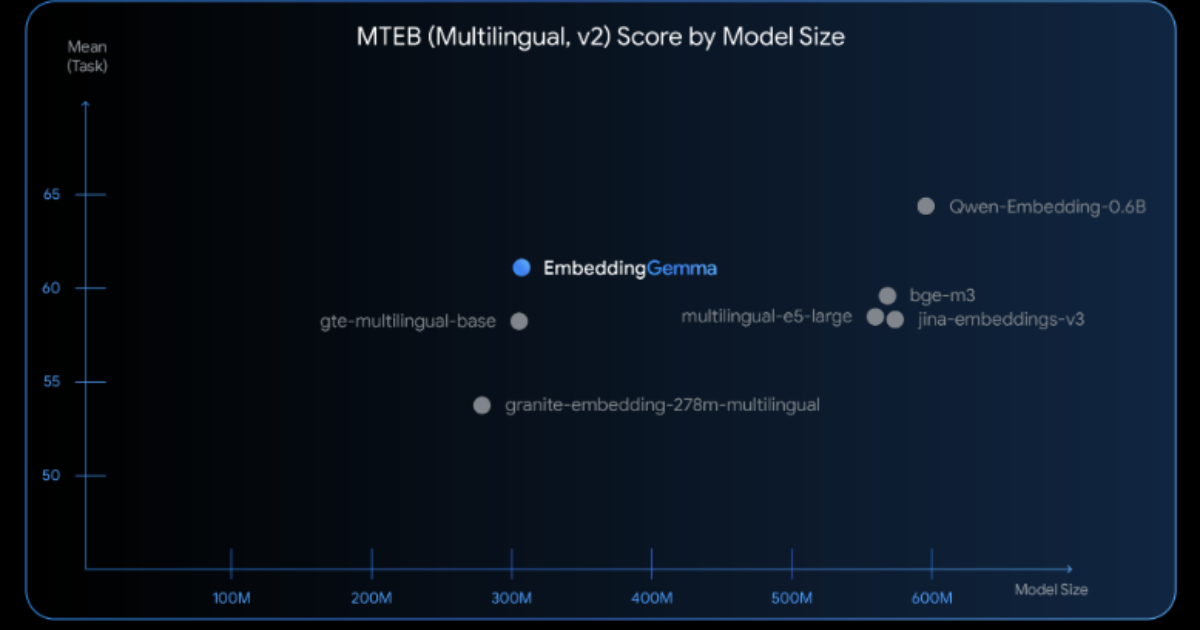
Google DeepMind Launches EmbeddingGemma, an Open Model for On-Device Embeddings
Google DeepMind has introduced EmbeddingGemma, a 308M parameter open embedding model designed to run efficiently on-device. The model aims to make applications like retrieval-augmented generation (RAG), semantic search, and text classification accessible without the need for a server or internet connection. By Robert Krzaczyński
Google DeepMind Launches EmbeddingGemma, an Open Model for On-Device Embeddings
Google DeepMind has introduced EmbeddingGemma, a 308M parameter open embedding model designed to run efficiently on-device. The model aims to make applications like retrieval-augmented generation (RAG), semantic search, and text classification accessible without the need for a server or internet connection.
By Robert Krzaczyński-
Nature - Issue - nature.com science feeds
-
AI chatbots are already biasing research — we must establish guidelines for their use now
Nature, Published online: 09 September 2025; doi:10.1038/d41586-025-02810-5The academic community has looked at how artificial-intelligence tools help researchers to write papers, but not how they distort the literature scientists choose to cite.
AI chatbots are already biasing research — we must establish guidelines for their use now
Nature, Published online: 09 September 2025; doi:10.1038/d41586-025-02810-5
The academic community has looked at how artificial-intelligence tools help researchers to write papers, but not how they distort the literature scientists choose to cite.-
(Multiomics OR Omics) AND (Pancreatic)
-
Single-cell multiome and spatial profiling reveals pancreas cell type-specific gene regulatory programs of type 1 diabetes progression
Sci Adv. 2025 Sep 12;11(37):eady0080. doi: 10.1126/sciadv.ady0080. Epub 2025 Sep 10.ABSTRACTCell type-specific regulatory programs that drive type 1 diabetes (T1D) in the pancreas are poorly understood. Here, we performed single-nucleus multiomics and spatial transcriptomics in up to 32 nondiabetic (ND), autoantibody-positive (AAB+), and T1D pancreas donors. Genomic profiles from 853,005 cells mapped to 12 pancreatic cell types, including multiple exocrine subtypes. β, Acinar, and other cell typ
Single-cell multiome and spatial profiling reveals pancreas cell type-specific gene regulatory programs of type 1 diabetes progression
Sci Adv. 2025 Sep 12;11(37):eady0080. doi: 10.1126/sciadv.ady0080. Epub 2025 Sep 10.
ABSTRACT
Cell type-specific regulatory programs that drive type 1 diabetes (T1D) in the pancreas are poorly understood. Here, we performed single-nucleus multiomics and spatial transcriptomics in up to 32 nondiabetic (ND), autoantibody-positive (AAB+), and T1D pancreas donors. Genomic profiles from 853,005 cells mapped to 12 pancreatic cell types, including multiple exocrine subtypes. β, Acinar, and other cell types, and related cellular niches, had altered abundance and gene activity in T1D progression, including distinct pathways altered in AAB+ compared to T1D. We identified epigenomic drivers of gene activity in T1D and AAB+ which, combined with genetic association, revealed causal pathways of T1D risk including antigen presentation in β cells. Last, single-cell and spatial profiles together revealed widespread changes in cell-cell signaling in T1D including signals affecting β cell regulation. Overall, these results revealed drivers of T1D in the pancreas, which form the basis for therapeutic targets for disease prevention.
PMID:40929272 | PMC:PMC12422192 | DOI:10.1126/sciadv.ady0080
-
Omics In Lung
-
Organoids in Genetic Disorders: from Disease Modeling to Translational Applications
Stem Cell Rev Rep. 2025 Sep 11. doi: 10.1007/s12015-025-10973-x. Online ahead of print.ABSTRACTThe emergence of organoid models has significantly bridged the gap between traditional cell cultures/animal models and authentic human disease states, particularly for genetic disorders, where their inherent genetic fidelity enables more biologically relevant research directions and enhances translational validity. This review systematically analyzes established organoid models of genetic diseases acro
Organoids in Genetic Disorders: from Disease Modeling to Translational Applications
Stem Cell Rev Rep. 2025 Sep 11. doi: 10.1007/s12015-025-10973-x. Online ahead of print.
ABSTRACT
The emergence of organoid models has significantly bridged the gap between traditional cell cultures/animal models and authentic human disease states, particularly for genetic disorders, where their inherent genetic fidelity enables more biologically relevant research directions and enhances translational validity. This review systematically analyzes established organoid models of genetic diseases across organs (e.g., brain, eye, kidney, lung, and heart), highlighting their pivotal roles in identifying novel pathogenic genes, elucidating disease mechanisms, and advancing therapeutic strategies such as drug screening platforms, gene-editing therapies, and organ transplantation strategies. Furthermore, we critically address current limitations-including challenges in recapitulating complex pathologies and scaling production-while underscoring their potential for personalized medicine through multi-omics integration and bioengineering innovations. Although the scope of "genetic diseases" is broad, this synthesis focuses on disorders with well-defined inheritance patterns, such as monogenic disorders, copy number variations (CNVs), and aneuploidies. Despite covering only a subset of these conditions, this review aims to provide researchers with a comprehensive overview of the field, emphasizing how organoid-based approaches could accelerate both mechanistic discoveries and clinical translation in genetic disease research.
PMID:40931310 | DOI:10.1007/s12015-025-10973-x
-
MRD
-
Liquid biopsy- A pivotal test to help navigate clinical decisions at a precision center in India!
J Liq Biopsy. 2025 Aug 9;9:100323. doi: 10.1016/j.jlb.2025.100323. eCollection 2025 Sep.ABSTRACTLiquid biopsy, specifically circulating tumor DNA (ctDNA) analysis, has emerged as a transformative tool in precision oncology, providing real-time, minimally invasive characterizations of the tumor and tumor dynamics. While tissue biopsy is a critical tool for baseline diagnosis of malignancy, it is often limited by sampling constraints and an inability to capture tumor heterogeneity. In this study,
Liquid biopsy- A pivotal test to help navigate clinical decisions at a precision center in India!
J Liq Biopsy. 2025 Aug 9;9:100323. doi: 10.1016/j.jlb.2025.100323. eCollection 2025 Sep.
ABSTRACT
Liquid biopsy, specifically circulating tumor DNA (ctDNA) analysis, has emerged as a transformative tool in precision oncology, providing real-time, minimally invasive characterizations of the tumor and tumor dynamics. While tissue biopsy is a critical tool for baseline diagnosis of malignancy, it is often limited by sampling constraints and an inability to capture tumor heterogeneity. In this study, we explored the clinical utility of serial ctDNA testing in guiding therapeutic decisions across a cohort of 30 patients with diverse solid tumors. Our real-world analysis demonstrates that ctDNA profiling meaningfully influenced treatment escalation, de-escalation, disease monitoring, and early relapse prediction. Cases where ctDNA positivity indicated minimal residual disease prompted timely escalation of therapy, while ctDNA clearance allowed safe treatment de-intensification, minimizing toxicity without compromising outcomes. Longitudinal ctDNA monitoring provided a dynamic, non-invasive method for assessing treatment response and detecting recurrence months before radiological progression. Our study highlights the potential of integrating liquid biopsy into routine clinical practice to enable dynamic treatment monitoring, early detection of therapeutic resistance, and more informed, personalized decision-making across various cancer types.
PMID:40919127 | PMC:PMC12409318 | DOI:10.1016/j.jlb.2025.100323