
❌

Normal view

Health care Experiences of Educated Young Adults With Blindness in the Digital Age: Qualitative Study

Background: The rapid advancement of digital health technologies (DHTs) offers substantial potential for improving healthcare access, yet it simultaneously risks exacerbating existing inequities for marginalized populations. Previous research on the digital divide has often treated individuals with blindness as a homogenous group, primarily focusing on barriers related to digital access and skills. However, less is known about the nuanced experiences of specific subgroups, such as educated and digitally literate young adults. This study focuses on this demographic to understand how their advanced digital capabilities interact with systemic and infrastructural barriers in healthcare. Objective: This qualitative study aimed to explore the lived healthcare experiences of educated young adults with blindness in China, specifically identifying how DHTs simultaneously contribute to their empowerment and exclusion. Methods: Eligible participants were educated young adults with blindness in China (aged 18-30 years, Mandarin speakers, smartphone users, and holding or pursuing higher education). A total of 12 semi-structured interviews were conducted in Mandarin during September 2024. All interviews were audio-recorded and transcribed verbatim. An inductive thematic analysis was employed to interpret the data and identify key themes. Results: Participants’ experiences highlighted an “empowered but excluded” dynamic. Seven key themes emerged, categorized into empowerment and exclusion. Empowerment themes included: (1) digital platforms empowering self-management and healthcare access, where DHTs enabled independent appointment booking and access to comprehensive health information; and (2) digital platforms empowering for finding medical visit companions, facilitating the discovery of companions for physical and emotional support. Exclusion themes comprised: (3) inaccessible online appointment systems, due to non-inclusive designs; (4) inaccessible healthcare environments and information formats, stemming from non-accessible self-service machines and written materials; (5) lack of provider competencies in respecting patient autonomy, as providers often assumed digital incompetence; (6) data privacy and security concerns, heightened by increased digitalization and reliance on assistive tools; and (7) challenges related to the quality and consistency of online companion support, highlighting the limitations of platform-based assistance. Conclusions: Our findings reveal an “empowered but excluded” dynamic: the potential for digital empowerment and enhanced independence is often curtailed by systematic barriers. Addressing this necessitates a multifaceted approach: enhancing technological accessibility through robust standards adherence and inclusive co-design processes; improving healthcare provider competencies in patient-centered care via targeted training; and empowering educated young blind adults by building their capacity for self-determination to achieve equitable healthcare access.
Impact of Digital Interventions on the Treatment Burden of Patients With Chronic Conditions: Systematic Review

Background: Digital interventions can provide cost-effective, quality health care for patients with chronic conditions. Patients with chronic conditions often are burdened by a substantial load of adhering to a treatment regimen and suffer from impacts on their function and well-being. This treatment burden has consequences for treatment adherence and disease outcomes. Digital interventions have the potential to alleviate the burden, but they also may cause new challenges and an increased workload for the patient. Previous reviews have examined digital interventions or treatment burden separately, but there is a lack of systematic reviews on the intersection of digital interventions, treatment burden, and chronic conditions. Objective: This systematic review aimed to evaluate the evidence of how digital interventions impact the treatment burden experienced by people with chronic conditions, and to assess the quality of this evidence. Methods: We searched databases PubMed, Scopus, Web of Science, ACM, PubMed Central, and CINAHL for articles published between January 1, 2013, and June 17, 2025. We included studies that had key topics related to chronic conditions, treatment burden, and digital interventions. A total of 2 reviewers independently screened the articles in 2 stages, extracted data on study design, participant characteristics, intervention type, and treatment burden outcomes from included articles, and assessed their quality using the Critical Appraisal tools from the Joanna Briggs Institute. A convergent integrated approach was used for data synthesis and integration, where quantitative data were converted into qualitative data, and the qualitative and quantitative evidence were analyzed and categorized together. Results: We included 46 relevant studies in total. We categorized the interventions into 4 types: Telehealth, informational resources, self-management tools, and facilitated tools. The results of this study indicate that digital interventions mostly support patients with chronic conditions with their treatment burden, with minor concerns of increasing treatment burden. The main benefits are support with self-management, informational support, and easier ways to contact health care professionals. The main concerns were accessibility issues, time-consuming tools, and causing fear and anxiety. Conclusions: Our findings demonstrate how treatment burden is a relevant concept for future digital health care research and practice. Digital interventions can help patients with their treatment burden by supporting self-management, improving access to health care, improving patients’ experience, and addressing relevant concerns. More research is needed about conditions with low or medium initial treatment burden.

Considerations for Patient Privacy of Large Language Models in Health Care: Scoping Review

Background: The application of large language models (LLMs) in health care holds significant potential for enhancing patient care and advancing medical research. However, the protection of patient privacy remains a critical issue, especially when handling patient health information (PHI). Objective: This scoping review aims to evaluate the adequacy of current approaches and identify areas in need of improvement to ensure robust patient privacy protection in the existing studies about PHI-LLMs within the health care domain. Methods: A search of the literature published from January 1, 2022, to July 20, 2025, was performed on July 20, 2025, using 2 databases (PubMed and Embase). This scoping review focused on the following three research questions: (1) What studies on the development and application of LLMs using PHI currently exist within the health care domain? (2) What patient privacy considerations are addressed in existing PHI-LLMs research, and are these measures sufficient? (3) How can future research on the development and application of LLMs using PHI better protect patient privacy? Studies were included if they focused on the development and application of LLMs within health care using PHI, encompassing activities such as model construction, fine-tuning, optimization, testing, and performance comparison. Eligible literature comprised original research articles written in English. Conversely, studies were excluded if they used publicly available datasets, under the assumption that such data have been adequately deidentified. Additionally, non-English publications, reviews, abstracts, incomplete reports, and preprints were excluded from the review due to the lack of rigorous peer review. Results: This study systematically identified 9823 studies on PHI-LLM and included 464 studies published between 2022 and 2025. Among the 464 studies, (1) a small number of studies neglected ethical review (n=45, 9.7%) and patient informed consent (n=148, 31.9%) during the research process, (2) more than a third of the studies (n=178, 38.4%) failed to report whether to implement effective measures to protect PHI, and (3) there was a significant lack of transparency and comprehensive detail in anonymization and deidentification methods. Conclusions: We propose comprehensive recommendations across 3 phases—study design, implementation, and reporting—to strengthen patient privacy protection and transparency in PHI-LLM. This study emphasizes the urgent need for the development of stricter regulatory frameworks and the adoption of advanced privacy protection technologies to effectively safeguard PHI. It is anticipated that future applications of LLMs in the health care field will achieve a balance between innovation and robust patient privacy protection, thereby enhancing ethical standards and scientific credibility.

Organoid-based precision cancer modeling: New frontier in lung cancer research

22 November 2025 at 19:00

Cell Rep. 2025 Nov 20;44(12):116595. doi: 10.1016/j.celrep.2025.116595. Online ahead of print.

ABSTRACT

Lung cancer remains a leading cause of cancer-related mortality globally, underscoring the need for advanced preclinical models that accurately recapitulate disease biology. Recent advances in organoid technology have enabled the establishment of patient-derived lung cancer organoids (LCOs), which faithfully reproduce the histological, genetic, and phenotypic features of primary tumors. This organoid-based precision modeling facilitates deeper insights into tumor biology and disease progression, supporting the identification of novel therapeutic targets and biomarkers. In this review, we summarize recent progress in LCO-based precision modeling, focusing on their ability to preserve tumor heterogeneity, link genotype and phenotype through multi-omics integration, and explore tumor-microenvironment interactions via gene editing and co-culture systems. We also highlight the growing importance of LCO biobanks and international collaborations in translational research. Despite challenges such as low establishment efficiency, LCO-based precision modeling offers a powerful platform for understanding lung cancer pathogenesis and guiding the development of more effective therapies.

PMID:41273722 | DOI:10.1016/j.celrep.2025.116595

  • ✇InfoQ
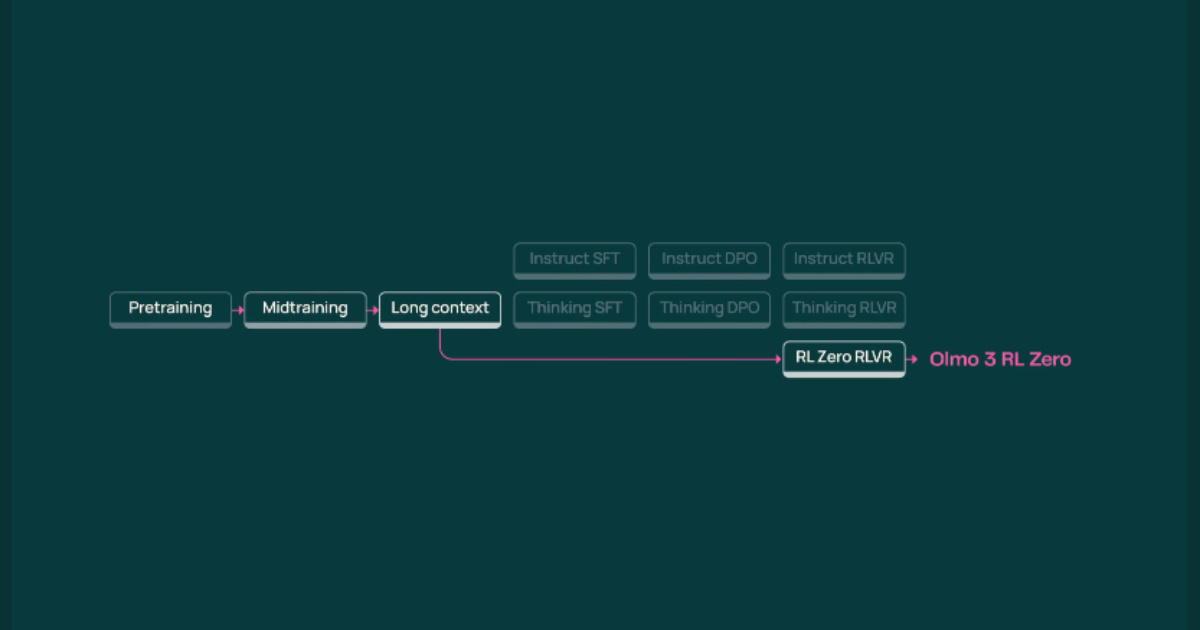
  • Olmo 3 Release Provides Full Transparency into Model Development and Training Robert Krzaczyński
    The Allen Institute for AI has unveiled Olmo 3, an open-source language model family that empowers developers with full access to the model lifecycle, from training datasets to checkpoints. Featuring reasoning-focused variants and robust tools for post-training modifications, Olmo 3 promotes transparency, experimentation, and community collaboration, driving innovations in AI. By Robert Krzaczyński
     

Olmo 3 Release Provides Full Transparency into Model Development and Training

23 November 2025 at 00:00

The Allen Institute for AI has unveiled Olmo 3, an open-source language model family that empowers developers with full access to the model lifecycle, from training datasets to checkpoints. Featuring reasoning-focused variants and robust tools for post-training modifications, Olmo 3 promotes transparency, experimentation, and community collaboration, driving innovations in AI.

By Robert Krzaczyński

Clinical validation of a three-marker methylation panel to detect CIN3+ in vaginal self-samples in the Dutch population-based screening programme

The use of vaginal self-sampling for cervical cancer screening is promising and increasing. However, triage cytology cannot be performed on vaginal self-sampling material after a high-risk human papilloma viru...

Beyond GeneGPT: A Multi-Agent Architecture with Open-Source LLMs for Enhanced Genomic Question Answering

arXiv:2511.15061v1 Announce Type: new Abstract: Genomic question answering often requires complex reasoning and integration across diverse biomedical sources. GeneGPT addressed this challenge by combining domain-specific APIs with OpenAI's code-davinci-002 large language model to enable natural language interaction with genomic databases. However, its reliance on a proprietary model limits scalability, increases operational costs, and raises concerns about data privacy and generalization. In this work, we revisit and reproduce GeneGPT in a pilot study using open source models, including Llama 3.1, Qwen2.5, and Qwen2.5 Coder, within a monolithic architecture; this allows us to identify the limitations of this approach. Building on this foundation, we then develop OpenBioLLM, a modular multi-agent framework that extends GeneGPT by introducing agent specialization for tool routing, query generation, and response validation. This enables coordinated reasoning and role-based task execution. OpenBioLLM matches or outperforms GeneGPT on over 90% of the benchmark tasks, achieving average scores of 0.849 on Gene-Turing and 0.830 on GeneHop, while using smaller open-source models without additional fine-tuning or tool-specific pretraining. OpenBioLLM's modular multi-agent design reduces latency by 40-50% across benchmark tasks, significantly improving efficiency without compromising model capability. The results of our comprehensive evaluation highlight the potential of open-source multi-agent systems for genomic question answering. Code and resources are available at https://github.com/ielab/OpenBioLLM.

Exploring the use of AI authors and reviewers at Agents4Science

arXiv:2511.15534v1 Announce Type: new Abstract: There is growing interest in using AI agents for scientific research, yet fundamental questions remain about their capabilities as scientists and reviewers. To explore these questions, we organized Agents4Science, the first conference in which AI agents serve as both primary authors and reviewers, with humans as co-authors and co-reviewers. Here, we discuss the key learnings from the conference and their implications for human-AI collaboration in science.

Eguard: Defending LLM Embeddings Against Inversion Attacks via Text Mutual Information Optimization

arXiv:2411.05034v2 Announce Type: replace-cross Abstract: Embeddings have become a cornerstone in the functionality of large language models (LLMs) due to their ability to transform text data into rich, dense numerical representations that capture semantic and syntactic properties. These embedding vector databases serve as the long-term memory of LLMs, enabling efficient handling of a wide range of natural language processing tasks. However, the surge in popularity of embedding vector databases in LLMs has been accompanied by significant concerns about privacy leakage. Embedding vector databases are particularly vulnerable to embedding inversion attacks, where adversaries can exploit the embeddings to reverse-engineer and extract sensitive information from the original text data. Existing defense mechanisms have shown limitations, often struggling to balance security with the performance of downstream tasks. To address these challenges, we introduce Eguard, a novel defense mechanism designed to mitigate embedding inversion attacks. Eguard employs a transformer-based projection network and text mutual information optimization to safeguard embeddings while preserving the utility of LLMs. Our approach significantly reduces privacy risks, protecting over 95% of tokens from inversion while maintaining high performance across downstream tasks consistent with original embeddings.

Accelerating Local AI on Consumer GPUs: A Hardware-Aware Dynamic Strategy for YOLOv10s

arXiv:2509.07928v2 Announce Type: replace-cross Abstract: As local AI grows in popularity, there is a critical gap between the benchmark performance of object detectors and their practical viability on consumer-grade hardware. While models like YOLOv10s promise real-time speeds, these metrics are typically achieved on high-power, desktop-class GPUs. This paper reveals that on resource-constrained systems, such as laptops with RTX 4060 GPUs, performance is not compute-bound but is instead dominated by system-level bottlenecks, as illustrated by a simple bottleneck test. To overcome this hardware-level constraint, we introduce a Two-Pass Adaptive Inference algorithm, a model-independent approach that requires no architectural changes. This study mainly focuses on adaptive inference strategies and undertakes a comparative analysis of architectural early-exit and resolution-adaptive routing, highlighting their respective trade-offs within a unified evaluation framework. The system uses a fast, low-resolution pass and only escalates to a high-resolution model pass when detection confidence is low. On a 5000-image COCO dataset, our method achieves a 1.85x speedup over a PyTorch Early-Exit baseline, with a modest mAP loss of 5.51%. This work provides a practical and reproducible blueprint for deploying high-performance, real-time AI on consumer-grade devices by shifting the focus from pure model optimization to hardware-aware inference strategies that maximize throughput.

Uncertainty Makes It Stable: Curiosity-Driven Quantized Mixture-of-Experts

arXiv:2511.11743v2 Announce Type: replace-cross Abstract: Deploying deep neural networks on resource-constrained devices faces two critical challenges: maintaining accuracy under aggressive quantization while ensuring predictable inference latency. We present a curiosity-driven quantized Mixture-of-Experts framework that addresses both through Bayesian epistemic uncertainty-based routing across heterogeneous experts (BitNet ternary, 1-16 bit BitLinear, post-training quantization). Evaluated on audio classification benchmarks (ESC-50, Quinn, UrbanSound8K), our 4-bit quantization maintains 99.9 percent of 16-bit accuracy (0.858 vs 0.859 F1) with 4x compression and 41 percent energy savings versus 8-bit. Crucially, curiosity-driven routing reduces MoE latency variance by 82 percent (p = 0.008, Levene's test) from 230 ms to 29 ms standard deviation, enabling stable inference for battery-constrained devices. Statistical analysis confirms 4-bit/8-bit achieve practical equivalence with full precision (p > 0.05), while MoE architectures introduce 11 percent latency overhead (p
  • ✇STAT
  • STAT+: Armed with AI and virtual care, K Health thinks it can make primary care more accessible Katie Palmer
    In many parts of the United States, patients have gotten used to living without primary care. Nearly 75 million people in the United States live in an area with a shortage of these critical providers, leading to long wait times — if a patient can find primary care at all.  The scale of the access problem, “it’s like red alert — red, red, red alert level — and it’s been like that for a while,” said physician Rajesh Patel, vice president of digital patient experience at Mass General Brigham.
     

STAT+: Armed with AI and virtual care, K Health thinks it can make primary care more accessible

20 November 2025 at 21:00

In many parts of the United States, patients have gotten used to living without primary care. Nearly 75 million people in the United States live in an area with a shortage of these critical providers, leading to long wait times — if a patient can find primary care at all. 

The scale of the access problem, “it’s like red alert — red, red, red alert level — and it’s been like that for a while,” said physician Rajesh Patel, vice president of digital patient experience at Mass General Brigham.

The situation is only getting worse: By 2037, the nation will be short 87,000 primary care physicians, according to federal estimates. 

Clinical artificial intelligence company K Health thinks it has part of the solution. Over the last two years, it has partnered with five large health systems — Cedars-Sinai, Mayo Clinic, Hackensack Meridian Health, Hartford HealthCare, and Mass General Brigham — to launch round-the-clock virtual primary care platforms enabled by its AI. Today, it announced another partnership with Northwell Health, New York’s largest health system, which began rolling out its platform in October. 

Continue to STAT+ to read the full story…

© Adobe

Pan-cancer prevalence, risk, and clinical and demographic characteristics of Lynch Syndrome-associated variants in BioBank Japan

Commun Med (Lond). 2025 Nov 13. doi: 10.1038/s43856-025-01231-9. Online ahead of print.

ABSTRACT

BACKGROUND: Although germline testing for DNA mismatch repair (MMR) genes is routinely performed, clinical guidelines highlight evidence gaps due to limited populations and biases. We examined germline pathogenic variants of MMR genes (MLH1, MSH2, MSH6, and PMS2) in 112,927 unselected individuals from BioBank Japan.

METHODS: We analyzed 74,085 cancer patients with 23 cancer types and 38,842 controls matched by sex, age, and hospital area from BioBank Japan, collected between April 2003 and March 2018. Germline pathogenic variants in the coding regions and 2 bp flanking intronic sequences of MMR genes were identified using a multiplex PCR-based target sequencing method. We examined associations with cancer types and demographic characterization of the pathogenic variants, comparing findings to existing clinical guidelines.

RESULTS: Here we show 228 pathogenic variants identified in MMR genes, with pathogenic MSH6 variants most frequently observed in endometrial cancer and 12 other significant associations. Twelve other significant associations are noted across a broad range of odds ratios, whereas pancreatic cancer exhibits no such association. Pathogenic variant carriers are diagnosed up to 12.4 years earlier than non-carriers, and colorectal and gastric cancers are diagnosed up to 16.4 years later than indicated by the guidelines. Higher carrier frequencies are observed in patients with both colorectal and endometrial cancers (24.8%) and in those with endometrial cancer and a family history of endometrial (26.0%) or colorectal (16.1%) cancers.

CONCLUSIONS: This study provides critical insights for clinical guidelines on the associations between cancer types, age at diagnosis, and carrier frequency.

PMID:41258140 | DOI:10.1038/s43856-025-01231-9

Latent plasticity of the human pancreas across development, health, and disease

bioRxiv [Preprint]. 2025 Oct 3:2025.10.01.679230. doi: 10.1101/2025.10.01.679230.

ABSTRACT

The pancreas plays a central role in major human diseases, yet our understanding of its cellular diversity and plasticity remains incomplete. Here, we present a single-cell multiomics atlas of the human pancreas, profiling over four million cells and nuclei from 57 donors across fetal development, adult homeostasis, and type 2 diabetes (T2D). Integrating sc/snRNA-seq, snATAC-seq, VASA-seq, spatial transcriptomics (Xenium), and multiplexed proteomics (CODEX), we resolve gene expression, chromatin accessibility, and spatial organization at high resolution. We identify transcriptionally plastic centroacinar-like cells (pCACs) in adults with fetal-like features, delineate endocrine and exocrine lineage trajectories during development, and uncover HNF1A-defined beta cell epigenetic states. In T2D, we observe shifts in beta cell subtypes and altered regulatory programs. Glucose perturbation of healthy islets reveals cell-type-specific adaptation and stress responses. This atlas provides a foundational framework to understand pancreas biology and the role of cellular plasticity in regeneration and disease.

PMID:41256699 | PMC:PMC12622017 | DOI:10.1101/2025.10.01.679230

SMMILe enables accurate spatial quantification in digital pathology using multiple-instance learning

Nature Cancer, Published online: 19 November 2025; doi:10.1038/s43018-025-01060-8

Gao et al. present SMMILe, a multiple-instance learning-based tool that leverages whole-slide images for accurate spatial quantification without compromising on classification performance, and show it outperforms state-of-the-art methods.
❌