Normal view
-
cs.AI, q-bio.NC updates on arXiv.org
-
Toward explainable AI approaches for breast imaging: adapting foundation models to diverse populations
arXiv:2511.17828v1 Announce Type: cross Abstract: Foundation models hold promise for specialized medical imaging tasks, though their effectiveness in breast imaging remains underexplored. This study leverages BiomedCLIP as a foundation model to address challenges in model generalization. BiomedCLIP was adapted for automated BI-RADS breast density classification using multi-modality mammographic data (synthesized 2D images, digital mammography, and digital breast tomosynthesis). Using 96,995 ima
-
cs.AI, q-bio.NC updates on arXiv.org
-
Towards Automating Data Access Permissions in AI Agents
arXiv:2511.17959v1 Announce Type: cross Abstract: As AI agents attempt to autonomously act on users' behalf, they raise transparency and control issues. We argue that permission-based access control is indispensable in providing meaningful control to the users, but conventional permission models are inadequate for the automated agentic execution paradigm. We therefore propose automated permission management for AI agents. Our key idea is to conduct a user study to identify the factors influenci
Towards Automating Data Access Permissions in AI Agents
-
cs.AI, q-bio.NC updates on arXiv.org
-
Reinforcement Learning for Portfolio Optimization with a Financial Goal and Defined Time Horizons
arXiv:2511.18076v1 Announce Type: cross Abstract: This research proposes an enhancement to the innovative portfolio optimization approach using the G-Learning algorithm, combined with parametric optimization via the GIRL algorithm (G-learning approach to the setting of Inverse Reinforcement Learning) as presented by. The goal is to maximize portfolio value by a target date while minimizing the investor's periodic contributions. Our model operates in a highly volatile market with a well-diversif
Reinforcement Learning for Portfolio Optimization with a Financial Goal and Defined Time Horizons
-
cs.AI, q-bio.NC updates on arXiv.org
-
The Alignment Paradox of Medical Large Language Models in Infertility Care: Decoupling Algorithmic Improvement from Clinical Decision-making Quality
arXiv:2511.18084v1 Announce Type: cross Abstract: Large language models (LLMs) are increasingly adopted in clinical decision support, yet aligning them with the multifaceted reasoning pathways of real-world medicine remains a major challenge. Using more than 8,000 infertility treatment records, we systematically evaluate four alignment strategies: Supervised Fine-Tuning (SFT), Direct Preference Optimization (DPO), Group Relative Policy Optimization (GRPO), and In-Context Learning (ICL) through
The Alignment Paradox of Medical Large Language Models in Infertility Care: Decoupling Algorithmic Improvement from Clinical Decision-making Quality
-
cs.AI, q-bio.NC updates on arXiv.org
-
Clinician-in-the-Loop Smart Home System to Detect Urinary Tract Infection Flare-Ups via Uncertainty-Aware Decision Support
arXiv:2511.18334v1 Announce Type: cross Abstract: Urinary tract infection (UTI) flare-ups pose a significant health risk for older adults with chronic conditions. These infections often go unnoticed until they become severe, making early detection through innovative smart home technologies crucial. Traditional machine learning (ML) approaches relying on simple binary classification for UTI detection offer limited utility to nurses and practitioners as they lack insight into prediction uncertain
Clinician-in-the-Loop Smart Home System to Detect Urinary Tract Infection Flare-Ups via Uncertainty-Aware Decision Support
-
cs.AI, q-bio.NC updates on arXiv.org
-
Are Large Vision Language Models Truly Grounded in Medical Images? Evidence from Italian Clinical Visual Question Answering
arXiv:2511.19220v1 Announce Type: cross Abstract: Large vision language models (VLMs) have achieved impressive performance on medical visual question answering benchmarks, yet their reliance on visual information remains unclear. We investigate whether frontier VLMs demonstrate genuine visual grounding when answering Italian medical questions by testing four state-of-the-art models: Claude Sonnet 4.5, GPT-4o, GPT-5-mini, and Gemini 2.0 flash exp. Using 60 questions from the EuropeMedQA Italian
Are Large Vision Language Models Truly Grounded in Medical Images? Evidence from Italian Clinical Visual Question Answering
-
Journal of Medical Internet Research
-
AI-Assisted Cardiovascular Risk Assessment by General Practitioners in Resource-Constrained Indonesian Settings Using a Conceptual Prototype: Randomized Controlled Study
Background: Preventive strategies integrated with digital health and artificial intelligence (AI), have significant potential to mitigate the global burden of atherosclerotic cardiovascular disease (ASCVD). AI-enabled clinical decision support (CDS) systems increasingly provide patient-specific insights beyond traditional risk factors. Despite these advances, their capacity to enhance clinical decision-making in resource-constrained settings remains largely unexplored. Objective: We conducted a
AI-Assisted Cardiovascular Risk Assessment by General Practitioners in Resource-Constrained Indonesian Settings Using a Conceptual Prototype: Randomized Controlled Study
-
cs.AI, q-bio.NC updates on arXiv.org
-
ConCISE: A Reference-Free Conciseness Evaluation Metric for LLM-Generated Answers
arXiv:2511.16846v1 Announce Type: cross Abstract: Large language models (LLMs) frequently generate responses that are lengthy and verbose, filled with redundant or unnecessary details. This diminishes clarity and user satisfaction, and it increases costs for model developers, especially with well-known proprietary models that charge based on the number of output tokens. In this paper, we introduce a novel reference-free metric for evaluating the conciseness of responses generated by LLMs. Our m
ConCISE: A Reference-Free Conciseness Evaluation Metric for LLM-Generated Answers
-
cs.AI, q-bio.NC updates on arXiv.org
-
Artificial Intelligence Index Report 2025
arXiv:2504.07139v3 Announce Type: replace Abstract: Welcome to the eighth edition of the AI Index report. The 2025 Index is our most comprehensive to date and arrives at an important moment, as AI's influence across society, the economy, and global governance continues to intensify. New in this year's report are in-depth analyses of the evolving landscape of AI hardware, novel estimates of inference costs, and new analyses of AI publication and patenting trends. We also introduce fresh data on
Artificial Intelligence Index Report 2025
-
npj Digital Medicine
-
Multimodal analysis of whole slide images in colorectal cancer
npj Digital Medicine, Published online: 24 November 2025; doi:10.1038/s41746-025-02095-yMultimodal analysis of whole slide images in colorectal cancer
Multimodal analysis of whole slide images in colorectal cancer
npj Digital Medicine, Published online: 24 November 2025; doi:10.1038/s41746-025-02095-y
Multimodal analysis of whole slide images in colorectal cancer-
(Multiomics OR Omics) AND (Pancreatic)
-
Integrative analysis of genomic and transcriptomic data informs precancer progression in the pancreas
bioRxiv [Preprint]. 2025 Nov 4:2025.11.03.686234. doi: 10.1101/2025.11.03.686234.ABSTRACTPancreatic ductal adenocarcinoma (PDAC) arises from heterogeneous precursor lesions, including intraductal papillary mucinous neoplasms (IPMNs), but the features distinguishing indolent from progressive lesions remain unclear. We performed an integrative analysis of transcriptomic, genomic, and microenvironmental profiles of IPMNs to define multi-omic phenotypes. Using transfer learning, we projected IPMN-de
Integrative analysis of genomic and transcriptomic data informs precancer progression in the pancreas
bioRxiv [Preprint]. 2025 Nov 4:2025.11.03.686234. doi: 10.1101/2025.11.03.686234.
ABSTRACT
Pancreatic ductal adenocarcinoma (PDAC) arises from heterogeneous precursor lesions, including intraductal papillary mucinous neoplasms (IPMNs), but the features distinguishing indolent from progressive lesions remain unclear. We performed an integrative analysis of transcriptomic, genomic, and microenvironmental profiles of IPMNs to define multi-omic phenotypes. Using transfer learning, we projected IPMN-derived transcriptional programs onto spatial transcriptomic datasets from IPMNs and pancreatic intraepithelial neoplasias (PanINs). We identified two major phenotypes: one associated with cancer-associated fibroblasts and epithelial-to-mesenchymal transition, shared across IPMN, PanIN, and PDAC; and a second, glycolysis-enriched phenotype with a unique somatic mutation profile specific to IPMN. Spatial mapping further revealed grade-specific enrichment of transcriptional programs and distinct interactions with stromal and immune subtypes, underscoring the role of the precancer microenvironment in progression. These findings establish multi-omic phenotypes that unify genetic, transcriptional, and microenvironmental heterogeneity, providing a framework for distinguishing progressive from indolent precancers and a web-based public atlas for future exploration of these data and transcriptional phenotypes.
PMID:41279473 | PMC:PMC12637499 | DOI:10.1101/2025.11.03.686234
-
MRD
-
Knowledge-informed multimodal cfDNA analysis improves sensitivity and generalization in cancer detection
bioRxiv [Preprint]. 2025 Oct 21:2025.10.20.683167. doi: 10.1101/2025.10.20.683167.ABSTRACTLiquid biopsy offers a minimally invasive opportunity to detect and monitor cancers through analysis of cell-free DNA (cfDNA). However, current approaches face challenges of limited sensitivity at low tumor fractions, technical variability, and poor generalization across cohorts. Tumor-informed targeted methods offer high specificity but suffer from low sensitivity due to random sampling, tumor evolution an
Knowledge-informed multimodal cfDNA analysis improves sensitivity and generalization in cancer detection
bioRxiv [Preprint]. 2025 Oct 21:2025.10.20.683167. doi: 10.1101/2025.10.20.683167.
ABSTRACT
Liquid biopsy offers a minimally invasive opportunity to detect and monitor cancers through analysis of cell-free DNA (cfDNA). However, current approaches face challenges of limited sensitivity at low tumor fractions, technical variability, and poor generalization across cohorts. Tumor-informed targeted methods offer high specificity but suffer from low sensitivity due to random sampling, tumor evolution and adaptation (including resistance mechanisms), and other sources of heterogeneity. Conversely, tumor-naive genome-wide methods can increase sensitivity but often sacrifice specificity, particularly at low tumor fractions. We developed Fragmentomics Analysis for Tumor Evaluation with AI (Fate-AI), a multimodal framework that integrates fragmentomic and methylation-derived features from low-pass whole-genome sequencing (LPWGS) and cell-free methylated DNA immunoprecipitation and high-throughput sequencing (cfMeDIP-seq). It employs a knowledge-informed strategy to select recurrently altered genomic regions and tissue-specific methylation loci to combine the advantages of tumor-naive approaches with the specificity of tumor-informed approaches. This approach derives robust per-sample normalized features that mitigate batch effects and enhance cross-cohort reproducibility. We evaluated Fate-AI on a total of 1,219 plasma samples spanning ten cancer types and healthy controls from multiple laboratories and sequencing centers, including 432 newly profiled cases (280 with both cfMeDIP-seq and LPWGS) together with 787 samples from four independent public datasets. Fate-AI achieved superior sensitivity and specificity compared to state-of-the-art methods, detecting tumor-derived signals at fractions as low as 10-5 in experimental dilutions. Fate-AI scores correlated with disease stage and tracked longitudinal progression, anticipating relapse months before clinical progression. Furthermore, Fate-AI enabled tissue-of-origin classification, with AUCs ranging from 0.84 to 0.97 across six cancer types. Collectively, our results demonstrate that Fate-AI provides a sensitive, generalizable, and clinically actionable platform for early detection, minimal residual disease monitoring, and tissue-of-origin classification, supporting its potential as a liquid biopsy framework in precision oncology.
PMID:41278930 | PMC:PMC12633305 | DOI:10.1101/2025.10.20.683167
-
Journal of Medical Internet Research
-
Impact of Digital Interventions on the Treatment Burden of Patients With Chronic Conditions: Systematic Review
Background: Digital interventions can provide cost-effective, quality health care for patients with chronic conditions. Patients with chronic conditions often are burdened by a substantial load of adhering to a treatment regimen and suffer from impacts on their function and well-being. This treatment burden has consequences for treatment adherence and disease outcomes. Digital interventions have the potential to alleviate the burden, but they also may cause new challenges and an increased worklo
Impact of Digital Interventions on the Treatment Burden of Patients With Chronic Conditions: Systematic Review
-
Omics In Lung
-
Organoid-based precision cancer modeling: New frontier in lung cancer research
Cell Rep. 2025 Nov 20;44(12):116595. doi: 10.1016/j.celrep.2025.116595. Online ahead of print.ABSTRACTLung cancer remains a leading cause of cancer-related mortality globally, underscoring the need for advanced preclinical models that accurately recapitulate disease biology. Recent advances in organoid technology have enabled the establishment of patient-derived lung cancer organoids (LCOs), which faithfully reproduce the histological, genetic, and phenotypic features of primary tumors. This org
Organoid-based precision cancer modeling: New frontier in lung cancer research
Cell Rep. 2025 Nov 20;44(12):116595. doi: 10.1016/j.celrep.2025.116595. Online ahead of print.
ABSTRACT
Lung cancer remains a leading cause of cancer-related mortality globally, underscoring the need for advanced preclinical models that accurately recapitulate disease biology. Recent advances in organoid technology have enabled the establishment of patient-derived lung cancer organoids (LCOs), which faithfully reproduce the histological, genetic, and phenotypic features of primary tumors. This organoid-based precision modeling facilitates deeper insights into tumor biology and disease progression, supporting the identification of novel therapeutic targets and biomarkers. In this review, we summarize recent progress in LCO-based precision modeling, focusing on their ability to preserve tumor heterogeneity, link genotype and phenotype through multi-omics integration, and explore tumor-microenvironment interactions via gene editing and co-culture systems. We also highlight the growing importance of LCO biobanks and international collaborations in translational research. Despite challenges such as low establishment efficiency, LCO-based precision modeling offers a powerful platform for understanding lung cancer pathogenesis and guiding the development of more effective therapies.
PMID:41273722 | DOI:10.1016/j.celrep.2025.116595
-
InfoQ

-
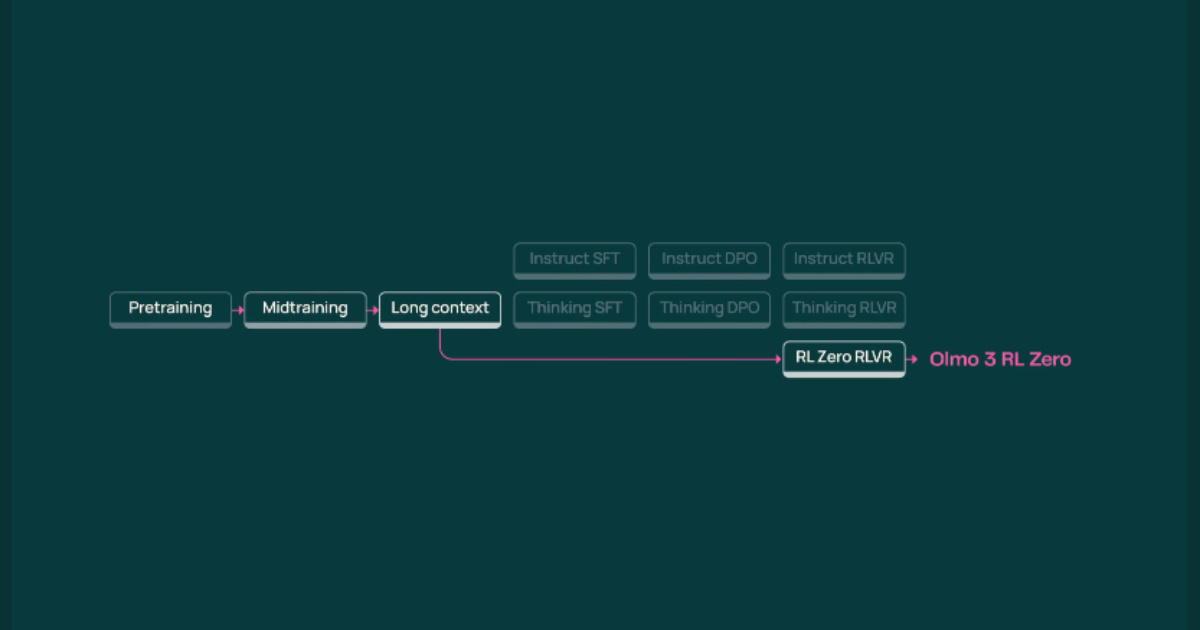
Olmo 3 Release Provides Full Transparency into Model Development and Training
The Allen Institute for AI has unveiled Olmo 3, an open-source language model family that empowers developers with full access to the model lifecycle, from training datasets to checkpoints. Featuring reasoning-focused variants and robust tools for post-training modifications, Olmo 3 promotes transparency, experimentation, and community collaboration, driving innovations in AI. By Robert Krzaczyński
Olmo 3 Release Provides Full Transparency into Model Development and Training
The Allen Institute for AI has unveiled Olmo 3, an open-source language model family that empowers developers with full access to the model lifecycle, from training datasets to checkpoints. Featuring reasoning-focused variants and robust tools for post-training modifications, Olmo 3 promotes transparency, experimentation, and community collaboration, driving innovations in AI.
By Robert Krzaczyński-
(Multiomics OR Omics) AND (Pancreatic)
-
Pan-cancer prevalence, risk, and clinical and demographic characteristics of Lynch Syndrome-associated variants in BioBank Japan
Commun Med (Lond). 2025 Nov 13. doi: 10.1038/s43856-025-01231-9. Online ahead of print.ABSTRACTBACKGROUND: Although germline testing for DNA mismatch repair (MMR) genes is routinely performed, clinical guidelines highlight evidence gaps due to limited populations and biases. We examined germline pathogenic variants of MMR genes (MLH1, MSH2, MSH6, and PMS2) in 112,927 unselected individuals from BioBank Japan.METHODS: We analyzed 74,085 cancer patients with 23 cancer types and 38,842 controls mat
Pan-cancer prevalence, risk, and clinical and demographic characteristics of Lynch Syndrome-associated variants in BioBank Japan
Commun Med (Lond). 2025 Nov 13. doi: 10.1038/s43856-025-01231-9. Online ahead of print.
ABSTRACT
BACKGROUND: Although germline testing for DNA mismatch repair (MMR) genes is routinely performed, clinical guidelines highlight evidence gaps due to limited populations and biases. We examined germline pathogenic variants of MMR genes (MLH1, MSH2, MSH6, and PMS2) in 112,927 unselected individuals from BioBank Japan.
METHODS: We analyzed 74,085 cancer patients with 23 cancer types and 38,842 controls matched by sex, age, and hospital area from BioBank Japan, collected between April 2003 and March 2018. Germline pathogenic variants in the coding regions and 2 bp flanking intronic sequences of MMR genes were identified using a multiplex PCR-based target sequencing method. We examined associations with cancer types and demographic characterization of the pathogenic variants, comparing findings to existing clinical guidelines.
RESULTS: Here we show 228 pathogenic variants identified in MMR genes, with pathogenic MSH6 variants most frequently observed in endometrial cancer and 12 other significant associations. Twelve other significant associations are noted across a broad range of odds ratios, whereas pancreatic cancer exhibits no such association. Pathogenic variant carriers are diagnosed up to 12.4 years earlier than non-carriers, and colorectal and gastric cancers are diagnosed up to 16.4 years later than indicated by the guidelines. Higher carrier frequencies are observed in patients with both colorectal and endometrial cancers (24.8%) and in those with endometrial cancer and a family history of endometrial (26.0%) or colorectal (16.1%) cancers.
CONCLUSIONS: This study provides critical insights for clinical guidelines on the associations between cancer types, age at diagnosis, and carrier frequency.
PMID:41258140 | DOI:10.1038/s43856-025-01231-9
-
(Multiomics OR Omics) AND (Pancreatic)
-
Latent plasticity of the human pancreas across development, health, and disease
bioRxiv [Preprint]. 2025 Oct 3:2025.10.01.679230. doi: 10.1101/2025.10.01.679230.ABSTRACTThe pancreas plays a central role in major human diseases, yet our understanding of its cellular diversity and plasticity remains incomplete. Here, we present a single-cell multiomics atlas of the human pancreas, profiling over four million cells and nuclei from 57 donors across fetal development, adult homeostasis, and type 2 diabetes (T2D). Integrating sc/snRNA-seq, snATAC-seq, VASA-seq, spatial transcript
Latent plasticity of the human pancreas across development, health, and disease
bioRxiv [Preprint]. 2025 Oct 3:2025.10.01.679230. doi: 10.1101/2025.10.01.679230.
ABSTRACT
The pancreas plays a central role in major human diseases, yet our understanding of its cellular diversity and plasticity remains incomplete. Here, we present a single-cell multiomics atlas of the human pancreas, profiling over four million cells and nuclei from 57 donors across fetal development, adult homeostasis, and type 2 diabetes (T2D). Integrating sc/snRNA-seq, snATAC-seq, VASA-seq, spatial transcriptomics (Xenium), and multiplexed proteomics (CODEX), we resolve gene expression, chromatin accessibility, and spatial organization at high resolution. We identify transcriptionally plastic centroacinar-like cells (pCACs) in adults with fetal-like features, delineate endocrine and exocrine lineage trajectories during development, and uncover HNF1A-defined beta cell epigenetic states. In T2D, we observe shifts in beta cell subtypes and altered regulatory programs. Glucose perturbation of healthy islets reveals cell-type-specific adaptation and stress responses. This atlas provides a foundational framework to understand pancreas biology and the role of cellular plasticity in regeneration and disease.
PMID:41256699 | PMC:PMC12622017 | DOI:10.1101/2025.10.01.679230
-
cs.AI, q-bio.NC updates on arXiv.org
-
Foundation Models in Medical Imaging: A Review and Outlook
arXiv:2506.09095v4 Announce Type: replace-cross Abstract: Foundation models (FMs) are changing the way medical images are analyzed by learning from large collections of unlabeled data. Instead of relying on manually annotated examples, FMs are pre-trained to learn general-purpose visual features that can later be adapted to specific clinical tasks with little additional supervision. In this review, we examine how FMs are being developed and applied in pathology, radiology, and ophthalmology, dr
Foundation Models in Medical Imaging: A Review and Outlook
-
cs.AI, q-bio.NC updates on arXiv.org
-
Embedding Explainable AI in NHS Clinical Safety: The Explainability-Enabled Clinical Safety Framework (ECSF)
arXiv:2511.11590v2 Announce Type: replace-cross Abstract: Artificial intelligence (AI) is increasingly embedded in NHS workflows, but its probabilistic and adaptive behaviour conflicts with the deterministic assumptions underpinning existing clinical-safety standards. DCB0129 and DCB0160 provide strong governance for conventional software yet do not define how AI-specific transparency, interpretability, or model drift should be evidenced within Safety Cases, Hazard Logs, or post-market monitori
Embedding Explainable AI in NHS Clinical Safety: The Explainability-Enabled Clinical Safety Framework (ECSF)
-
cs.AI, q-bio.NC updates on arXiv.org
-
CLINB: A Climate Intelligence Benchmark for Foundational Models
arXiv:2511.11597v1 Announce Type: new Abstract: Evaluating how Large Language Models (LLMs) handle complex, specialized knowledge remains a critical challenge. We address this through the lens of climate change by introducing CLINB, a benchmark that assesses models on open-ended, grounded, multimodal question answering tasks with clear requirements for knowledge quality and evidential support. CLINB relies on a dataset of real users' questions and evaluation rubrics curated by leading climate s