❌

Normal view

  • ✇InfoQ
  • GitHub Copilot CLI Reaches General Availability Mark Silvester
    GitHub has launched Copilot CLI into general availability, bringing generative AI directly to the terminal. Integrated with the GitHub CLI, it offers natural language command suggestions and code explanations. Recent updates introduce "agentic" workflows with Autopilot mode and GPT-5.4 support, alongside new enterprise telemetry for tracking usage across development teams. By Mark Silvester
     

GitHub Copilot CLI Reaches General Availability

12 April 2026 at 17:00

GitHub has launched Copilot CLI into general availability, bringing generative AI directly to the terminal. Integrated with the GitHub CLI, it offers natural language command suggestions and code explanations. Recent updates introduce "agentic" workflows with Autopilot mode and GPT-5.4 support, alongside new enterprise telemetry for tracking usage across development teams.

By Mark Silvester
  • ✇STAT
  • STAT+: Replimune skin cancer drug that became FDA flashpoint is rejected again Jason Mast
    The Food and Drug Administration on Friday rejected — again — an experimental treatment for advanced skin cancer developed by Replimune Group.  Replimune’s treatment, an engineered virus designed to rev up the immune system against melanoma, has been a flashpoint in a simmering debate over shifting standards at the agency. The drug was initially rejected in July, just two months after Vinay Prasad was appointed the FDA’s head of biologics. As an academic oncologist, Prasad criticized regul
     

STAT+: Replimune skin cancer drug that became FDA flashpoint is rejected again

10 April 2026 at 23:23

The Food and Drug Administration on Friday rejected — again — an experimental treatment for advanced skin cancer developed by Replimune Group. 

Replimune’s treatment, an engineered virus designed to rev up the immune system against melanoma, has been a flashpoint in a simmering debate over shifting standards at the agency.

The drug was initially rejected in July, just two months after Vinay Prasad was appointed the FDA’s head of biologics. As an academic oncologist, Prasad criticized regulators for approving drugs with limited data, and the Replimune decision was viewed as a possible sign of the stricter stance he might take at the agency.

Continue to STAT+ to read the full story…

© Markus Schober and Elaine Fuchs, The Rockefeller University/NIH

  • ✇InfoQ
  • Presentation: Latency: the Race to Zero...Are We There Yet? Amir Langer
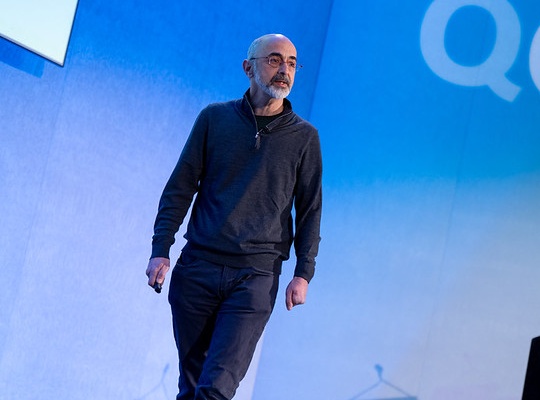
    Amir Langer discusses the evolution of latency reduction, from the Pony Express to modern hardware. He explains how separation of concerns - decoupling business logic from I/O - and tools like Aeron and the Disruptor achieve single-digit microsecond speeds. He shares insights into replicated state machines, consensus protocols like Raft, and the future of low-latency sequencer architectures. By Amir Langer
     

Presentation: Latency: the Race to Zero...Are We There Yet?

10 April 2026 at 22:28

Amir Langer discusses the evolution of latency reduction, from the Pony Express to modern hardware. He explains how separation of concerns - decoupling business logic from I/O - and tools like Aeron and the Disruptor achieve single-digit microsecond speeds. He shares insights into replicated state machines, consensus protocols like Raft, and the future of low-latency sequencer architectures.

By Amir Langer
  • ✇STAT
  • STAT+: A new trick for old science, and biotech VCs’ scrambled playbook Meghana Keshavan
    Want to stay on top of the science and politics driving biotech today? Sign up to get our biotech newsletter in your inbox. CAR-T therapies are continuing to gain traction in autoimmune disease, with a notable new case. Also, the FDA has withdrawn approval of GSK’s leucovorin for a rare brain disorder tied to autism, closing out an unusual episode shaped in part by political pressure.Continue to STAT+ to read the full story…
     

STAT+: A new trick for old science, and biotech VCs’ scrambled playbook

10 April 2026 at 21:38

Want to stay on top of the science and politics driving biotech today? Sign up to get our biotech newsletter in your inbox.

CAR-T therapies are continuing to gain traction in autoimmune disease, with a notable new case.

Also, the FDA has withdrawn approval of GSK’s leucovorin for a rare brain disorder tied to autism, closing out an unusual episode shaped in part by political pressure.

Continue to STAT+ to read the full story…

© Adobe

  • ✇InfoQ
  • Safari Adds Scrollend Event Support, Completing Baseline Browser Coverage Daniel Curtis
    Safari's release of version 26.2 in December introduced support for the scrollend event, completing its alignment with major browsers. This event signals when scrolling has definitively ended, enabling more reliable interactions without the need for workarounds. It improves performance for developers managing UI updates and data fetching based on scroll completion. By Daniel Curtis
     

Safari Adds Scrollend Event Support, Completing Baseline Browser Coverage

10 April 2026 at 17:06

Safari's release of version 26.2 in December introduced support for the scrollend event, completing its alignment with major browsers. This event signals when scrolling has definitively ended, enabling more reliable interactions without the need for workarounds. It improves performance for developers managing UI updates and data fetching based on scroll completion.

By Daniel Curtis
  • ✇InfoQ
  • Cloudflare Introduces EmDash: TypeScript CMS Positioned as WordPress Successor Renato Losio
    Cloudflare recently announced the preview of EmDash, a new open-source CMS it describes as a “spiritual successor to WordPress.” Designed to rebuild the CMS model around a serverless, developer-focused architecture, EmDash includes AI-native features, developer tooling, and migration paths from WordPress, sparking debate across the WordPress and broader CMS community. By Renato Losio
     

Cloudflare Introduces EmDash: TypeScript CMS Positioned as WordPress Successor

10 April 2026 at 04:39

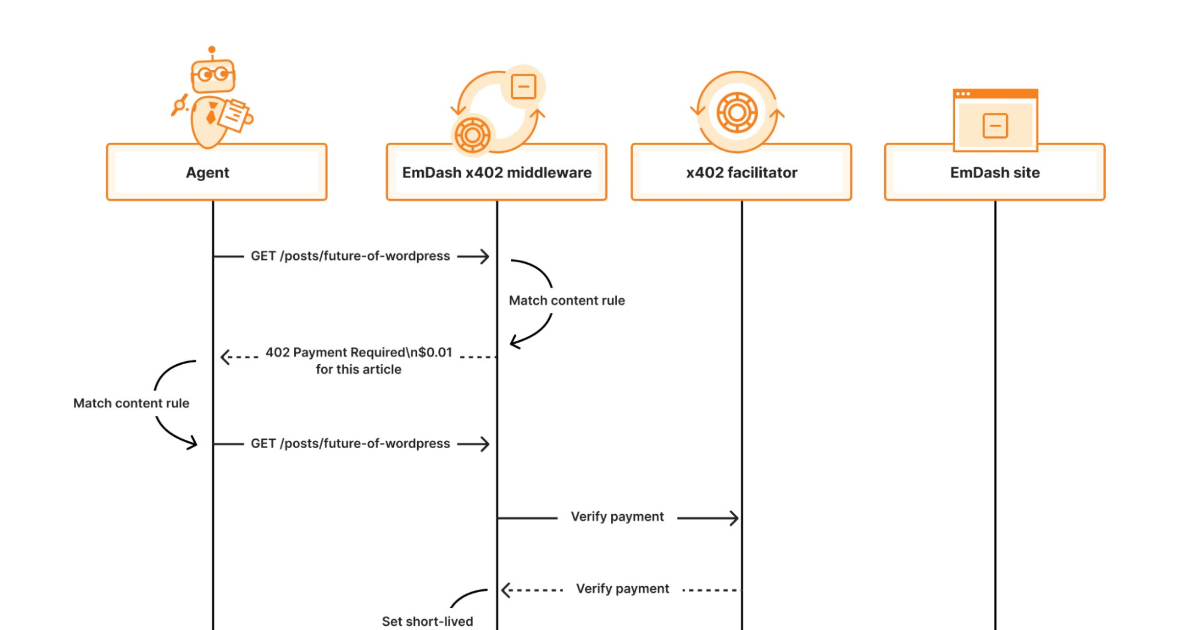
Cloudflare recently announced the preview of EmDash, a new open-source CMS it describes as a “spiritual successor to WordPress.” Designed to rebuild the CMS model around a serverless, developer-focused architecture, EmDash includes AI-native features, developer tooling, and migration paths from WordPress, sparking debate across the WordPress and broader CMS community.

By Renato Losio
  • ✇STAT
  • STAT+: A new health care blueprint from a key Democratic think tank John Wilkerson
    You’re reading the web edition of D.C. Diagnosis, STAT’s twice-weekly newsletter about the politics and policy of health and medicine. Sign up here to receive it in your inbox on Tuesdays and Thursdays. In which RFK Jr. says the “government lies to us” while sitting in front of an HHS seal. Send news tips and podcast recommendations to John.Wilkerson@statnews.com or John_Wilkerson.07 on Signal. First, control health care costs Last month, a group of 12 Senate Democrats proposed a framew
     

STAT+: A new health care blueprint from a key Democratic think tank

9 April 2026 at 23:40

You’re reading the web edition of D.C. Diagnosis, STAT’s twice-weekly newsletter about the politics and policy of health and medicine. Sign up here to receive it in your inbox on Tuesdays and Thursdays.

In which RFK Jr. says the “government lies to us” while sitting in front of an HHS seal. Send news tips and podcast recommendations to John.Wilkerson@statnews.com or John_Wilkerson.07 on Signal.

First, control health care costs

Last month, a group of 12 Senate Democrats proposed a framework for rebuilding the health care system. The idea was to spur input from others ahead of when Democrats might get a chance to act on those plans.

Continue to STAT+ to read the full story…

© Adobe

Uber’s Hive Federation Decentralizes 16K Datasets and 10+ PB for Zero-Downtime Analytics at Scale

9 April 2026 at 21:54

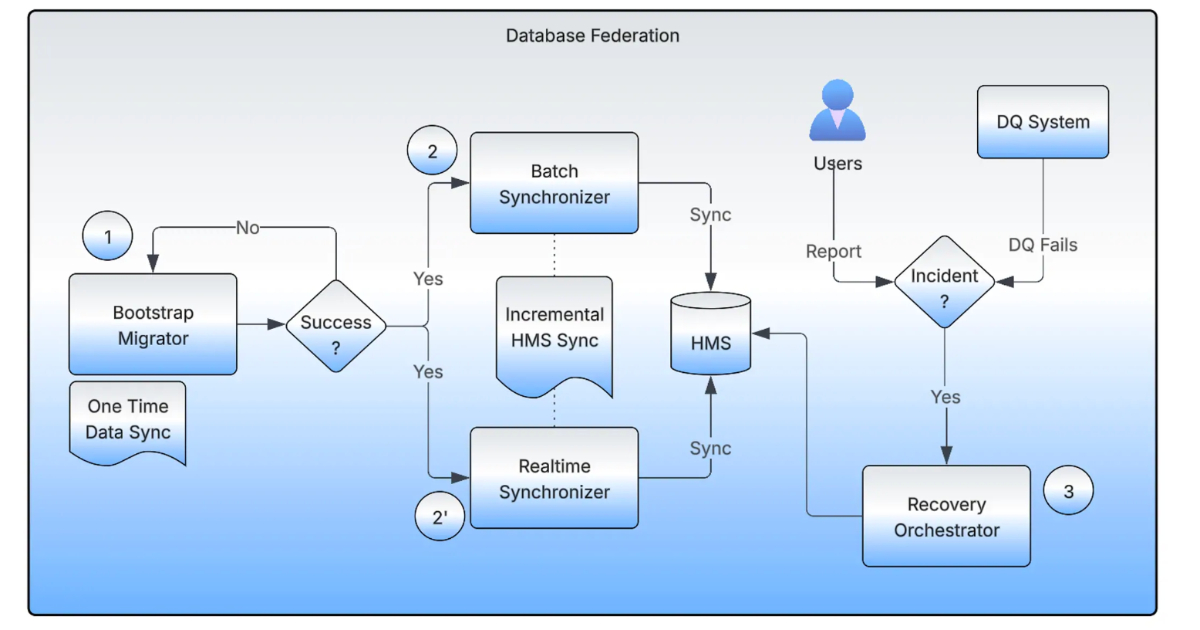
Uber has decentralized its Hive data warehouse, migrating 16,000 datasets totaling over 10 petabytes using pointer-based federation. The migration ensures zero downtime, strict ACL enforcement, improved governance, and scalable, domain-specific datasets for analytics and machine learning workloads.

By Leela Kumili

AAIF's MCP Dev Summit: Gateways, gRPC, and Observability Signal Protocol Hardening

9 April 2026 at 21:10

The MCP Dev Summit North America 2026, held on April 2-3 at the New York Marriott Marquis, gathered about 1,200 attendees. Hosted by the Linux Foundation's Agentic AI Foundation, discussions focused on the Model Context Protocol's evolution and enterprise adoption, particularly by Amazon and Uber, emphasizing security, interoperability, and scaling for production.

By Andrew Hoblitzell
  • ✇STAT
  • STAT+: Genetics may shape GLP-1 outcomes, slightly Meghana Keshavan
    Want to stay on top of the science and politics driving biotech today? Sign up to get our biotech newsletter in your inbox. PhRMA CEO Steve Ubl is stepping down. Biotech investors are grappling with pressure from AI and rising competition from Chinese labs, even though firms sit on large cash reserves. Also, the Trump administration is stepping back from the “indirect cost” fight at the NIH, and new data suggest genetics may modestly influence responses to GLP-1 drugs.Continue to STAT+ to
     

STAT+: Genetics may shape GLP-1 outcomes, slightly

9 April 2026 at 20:59

Want to stay on top of the science and politics driving biotech today? Sign up to get our biotech newsletter in your inbox.

PhRMA CEO Steve Ubl is stepping down. Biotech investors are grappling with pressure from AI and rising competition from Chinese labs, even though firms sit on large cash reserves.

Also, the Trump administration is stepping back from the “indirect cost” fight at the NIH, and new data suggest genetics may modestly influence responses to GLP-1 drugs.

Continue to STAT+ to read the full story…

© Adobe

Article: Building Hierarchical Agentic RAG Systems: Multi-Modal Reasoning with Autonomous Error Recovery

9 April 2026 at 17:00

In this article, the author explores how hierarchical agentic RAG systems coordinate specialized workers through structured orchestration to improve accuracy, reliability, and explainability in complex enterprise analytics workflows. The article uses Protocol-H as a to show how deterministic routing, reflective retry, and modality-aware reasoning support safer multi-source query execution.

By Abhijit Ubale

Aspire 13.2 Released with Expanded CLI, TypeScript AppHost Preview, and Dashboard Improvements

9 April 2026 at 16:30

Aspire 13.2 brings expanded CLI with detached mode and process management, TypeScript AppHost support in preview, dashboard telemetry export and import, stable Docker Compose publishing, Microsoft Foundry integration, Azure Virtual Network support, and a major VS Code extension update. The release also includes several breaking changes to configuration files and resource commands.

By Almir Vuk
  • ✇AI News
  • AI’s software development success and central management needs Joe Green
    A survey carried out by OutSystems, The State of AI Development 2026 [email wall], argues that AI has moved into early production phase for many enterprises, primarily inside the IT function. The survey was based on the responses of 1,879 IT leaders, and warns that adoption of AI is in danger of running ahead of governance and integration. The shortfall is a gap between what IT leaders want agents to do and what their organisations can safely control. The report’s authors urge companies to ad
     

AI’s software development success and central management needs

8 April 2026 at 18:43

A survey carried out by OutSystems, The State of AI Development 2026 [email wall], argues that AI has moved into early production phase for many enterprises, primarily inside the IT function.

The survey was based on the responses of 1,879 IT leaders, and warns that adoption of AI is in danger of running ahead of governance and integration. The shortfall is a gap between what IT leaders want agents to do and what their organisations can safely control. The report’s authors urge companies to address the controls or guardrails on AI systems, and also stress the importance of integrating new, AI technology into an organisation’s existing platforms.

OutSystems says 97% of its respondents are exploring some form of agentic strategy, with 49% of them describing their current abilities as “advanced” or “expert.” Nearly half of those surveyed say that over half of agentic AI projects have moved from pilot into production, with Indian companies most successful in implementing the technology: 50% of Indian companies say their AI projects are 51% to 75% successful.

Companies are considering where agents should be deployed first, and under what controls, but although “cost reduction or efficiency gains” is the most cited expectation for AI’s effects, only 22% found their deployments most effective in that regard. Instead, the most effective area gains in a business stemmed from equipping software developers with AI tools described as “generative AI-assisted.”

The report’s geography and sector data show that transitions to AI agentic workflows are unevenly distributed. India stands out as the market with the highest share of users considering themselves “expert”, while many organisations in Australia, Brazil, Germany, the Netherlands, the UK, and the US still identify as intermediate stage users. France and Germany are the most dubious of AI adoption, with Germany recording the highest share of leaders not using agentic AI in any form.

The sectors and functions invested in AI

Financial services and technology show the most movement from pilot to production, with many implementations in core business functions. The sector can be considered as having the most clear line of sight from automation to measurable returns in terms of income. The practical inference from the report’s findings would be for slower-moving sectors to copy the implementation workflows employed by the fintech industry: Start with narrow, high-volume workflows where performance can be measured and failures can be contained, and focus on the IT function.

According to the survey, generative AI-assisted development is now common in nine of the ten countries surveyed, alongside traditional coding, outsourced development, and SaaS customisation. It undercuts the notion that enterprises are moving into an AI-native or all-AI stack. In fact, most organisations add agents and AI-generated code on top of the processes already proven effective in their development environments.

Fragmented data no roadblock to AI progress

OutSystems finds that 48% of respondents see integration with legacy systems as the most important ability needed to expand agentic AI, and 38% say legacy systems are the main reason projects stall between pilot and production. Of the potential barriers to AI development that were offered as choices to the survey’s participants, more than 40% cited integration difficulties and legacy fragmentation the most problematic.

Organisations considering large data clean-up programmes (which many AI vendors advocate as a reason why deployments fail to reach production) may want to rethink, the report implies. The authors state agents can be built that can work well in complex data environments, as long as governance and integration are strengthened at the same time as AI implementation. Across the board, most sectors express “moderate trust” levels of agentic AI at around 50%, although responses from different business functions were not broken out in the survey results’ figures.

IT operations and software development

The financial returns are manifest mostly in IT functions themselves. The report says the most explored use cases are IT operations, at 55%, and data analysis, at 52%. Workflow automation follows at 36%, then customer experience at 33%. On realised return on investment, IT development and productivity lead by a margin, at 40%, ahead of operational efficiency at 22%. That distribution suggests that the first durable value from agentic AI is internal at developers’ desks rather than in customer-facing environments. Customer-facing deployments may still make sense, but the report indicates they require more trust in system performance, stronger controls, better orchestration, and an ability to create watertight oversight mechanisms.

Trust in and control of agents and governance

Trust in agentic AI, however, is improving. OutSystems reports that 73% of respondents express either high or moderate trust in letting agents to act autonomously, a rise of around 10% compared to a similar survey the company undertook last year. Trust in code or workflows generated by third-party AI tools is slightly lower, at 67%, a substantial increase from the prior year’s figure, when only 40% ‘mostly trusted’ generative AI to write code without human help.

Only 36% of respondents say they have a centralised approach to AI governance, while 64% say they lack such a facility, and 41% rely on rules implemented on a per-project basis. Two-thirds say building human-in-the-loop checkpoints is technically difficult because it requires orchestration that can pause agents – in effect inserting manual braking on operations that might be fully autonomous.

Many organisations appear to be deploying looser oversight models, although it is not clear if that is a result of greater trust in models or whether business functions are under pressure to deploy AI regardless of security or reliability concerns. If the trend to loosen oversight continues, the report’s authors note that agentic AI adoption may advance faster than the methods of accountability that many consider important.

Firms that want to scale agents in regulated or mission-critical settings should treat orchestration and auditability as part of the product, the survey’s findings state. When compliance checks consider a business’s operations, breadcrumb trails in the form of logfiles and defined responsibilities are considered important elements of any agentic AI rollout.

The report says 94% of leaders are concerned about “AI sprawl”, which is not defined, but could be inferred to be a lack of a centralised management platform that oversees all AI deployments in the enterprise. 39% are very or extremely concerned about the issue, and only 12% currently use a centralised platform to keep that sprawl under control.

The full survey can be accessed here.

(Image source: “Relax” by Koijots is licensed under CC BY-SA 2.0. To view a copy of this license, visit https://creativecommons.org/licenses/by-sa/2.0)


Want to learn more about AI and big data from industry leaders? Check out AI & Big Data Expo taking place in Amsterdam, California, and London. The comprehensive event is part of TechEx and co-located with other leading technology events. Click here for more information.

AI News is powered by TechForge Media. Explore other upcoming enterprise technology events and webinars here.

The post AI’s software development success and central management needs appeared first on AI News.

Presentation: When Every Bit Counts: How Valkey Rebuilt Its Hashtable for Modern Hardware

7 April 2026 at 21:40

Madelyn Olson discusses the evolution of Valkey's data structures, moving away from "textbook" pointer-chasing HashMaps to more cache-aware designs. She explains the implementation of "Swedish" tables to maximize memory density. She shares insights on systems intuition, memory prefetching, and the rigorous testing needed for mission-critical caches.

By Madelyn Olson
  • ✇STAT
  • STAT+: Gilead to buy cancer biotech Tubulis for more than $3 billion Andrew Joseph
    In a move that will grow its oncology pipeline, Gilead Sciences is spending more than $3 billion to buy the German biotech Tubulis, the companies said Tuesday. The deal includes an upfront payment of $3.15 billion and up to $1.85 billion more if certain milestones are reached. It also highlights both the therapeutic and commercial promise of antibody-drug conjugates, the next-generation chemotherapy treatments that the privately held Tubulis is developing. Gilead’s latest move comes just m
     

STAT+: Gilead to buy cancer biotech Tubulis for more than $3 billion

7 April 2026 at 20:30

In a move that will grow its oncology pipeline, Gilead Sciences is spending more than $3 billion to buy the German biotech Tubulis, the companies said Tuesday.

The deal includes an upfront payment of $3.15 billion and up to $1.85 billion more if certain milestones are reached. It also highlights both the therapeutic and commercial promise of antibody-drug conjugates, the next-generation chemotherapy treatments that the privately held Tubulis is developing.

Gilead’s latest move comes just months after it said it would acquire Arcellx in a deal worth $7.8 billion. The two companies had already been working together on a multiple myeloma CAR-T therapy that could be approved later this year. Gilead last month also announced that it was buying Ouro Therapeutics, which is focused on drugs for autoimmune disease, for up to $2.18 billion.

Continue to STAT+ to read the full story…

© Justin Sullivan/Getty Images

Article: Bloom Filters: Theory, Engineering Trade‑offs, and Implementation in Go

7 April 2026 at 17:00

This article walks you through the Go implementation of Bloom filters to optimize the performance of a recommender. It cover the architectural view, Bloom filter mechanics, Go integration, parameter tuning, and practical lessons learned from making it work under production constraints.

By Gabor Koos

University of Michigan wins 2026 STAT Madness for new insights into abdominal aortic aneurysms

7 April 2026 at 16:30

An abdominal aortic aneurysm is a life-threatening vascular condition with limited treatment options. 

Now, researchers from the University of Michigan Frankel Cardiovascular Center have identified a driving force behind the condition, opening up a potential target for new therapies. Their paper uncovering the causal link between triglycerides and abdominal aortic aneurysms won the STAT Madness 2026 popular vote. 

Read the rest…

© Kara Gavin/University of Michigan

  • ✇STAT
  • STAT+: FDA backs proposals to entice pharma companies to test, make drugs domestically John Wilkerson and Lizzy Lawrence
    WASHINGTON — The Food and Drug Administration used the president’s budget to propose policies aimed at encouraging domestic development and manufacturing of drugs.   FDA Commissioner Marty Makary has said the agency needs “giant, big ideas” to counter China’s dominance in early-stage clinical development of drugs. Among the FDA’s ideas are proposals to make it easier to run early-stage trials in the U.S. and to hand an advantage to U.S.-based generics manufacturers. The Trump administrat
     

STAT+: FDA backs proposals to entice pharma companies to test, make drugs domestically

7 April 2026 at 16:30

WASHINGTON — The Food and Drug Administration used the president’s budget to propose policies aimed at encouraging domestic development and manufacturing of drugs.  

FDA Commissioner Marty Makary has said the agency needs “giant, big ideas” to counter China’s dominance in early-stage clinical development of drugs. Among the FDA’s ideas are proposals to make it easier to run early-stage trials in the U.S. and to hand an advantage to U.S.-based generics manufacturers.

The Trump administration has been using a variety of policy levers to try and bring drug manufacturing to the U.S. For example, many of the brand drugmakers that struck deals to lower U.S. prices also promised to increase domestic manufacturing, under the threat of tariffs.

Continue to STAT+ to read the full story…

© DREW ANGERER/AFP via Getty Images

  • ✇InfoQ
  • Anthropic Accidentally Exposes Claude Code Source via npm Source Map File Steef-Jan Wiggers
    Anthropic's Claude Code CLI had its full TypeScript source exposed after a source map file was accidentally included in version 2.1.88 of its npm package. The 512,000-line codebase was archived to GitHub within hours. Anthropic called it a packaging error caused by human error. The leak revealed unreleased features, internal model codenames, and multi-agent orchestration architecture. By Steef-Jan Wiggers
     

Anthropic Accidentally Exposes Claude Code Source via npm Source Map File

7 April 2026 at 16:00

Anthropic's Claude Code CLI had its full TypeScript source exposed after a source map file was accidentally included in version 2.1.88 of its npm package. The 512,000-line codebase was archived to GitHub within hours. Anthropic called it a packaging error caused by human error. The leak revealed unreleased features, internal model codenames, and multi-agent orchestration architecture.

By Steef-Jan Wiggers

Google Open Sources Experimental Multi-Agent Orchestration Testbed Scion

7 April 2026 at 16:00

Designed to manage concurrent agents running in containers across local and remote compute, Scion is an experimental orchestration testbed that enables developers to run groups of specialized agents with isolated identities, credentials, and shared workspaces.

By Sergio De Simone
❌