❌

Normal view

  • ✇MIT Technology Review
  • The Download: AI’s real extinction threat and age-reversal tech for eyes Thomas Macaulay
    This is today’s edition of The Download, our weekday newsletter that provides a daily dose of what’s going on in the world of technology. Roundtables: could AI really kill us all? Employees at the world’s leading AI labs are saying there’s a real possibility that advanced AI could destroy humanity. Are they right? Or is this more scaremongering and hype? Join MIT Technology Review executive editor Niall Firth, senior AI editor Will Douglas Heaven, and AI reporter Grace Huckins for a sub
     

The Download: AI’s real extinction threat and age-reversal tech for eyes

14 September 2026 at 20:10

This is today’s edition of The Download, our weekday newsletter that provides a daily dose of what’s going on in the world of technology.

Roundtables: could AI really kill us all?

Employees at the world’s leading AI labs are saying there’s a real possibility that advanced AI could destroy humanity. Are they right? Or is this more scaremongering and hype?

Join MIT Technology Review executive editor Niall Firth, senior AI editor Will Douglas Heaven, and AI reporter Grace Huckins for a subscriber-only conversation unpacking the debate around AI extinction. They’ll explore where the fears come from, whether they hold any water and, if they do, what we should do about them.

Register now to attend on Tuesday, September 15 at 16:00 BST / 11:00am EST / 8:00am PST.

Want to join the conversation? Subscribe to MIT Technology Review for exclusive access to all our Roundtables.

This geneticist’s age-reversal tech could help restore sight

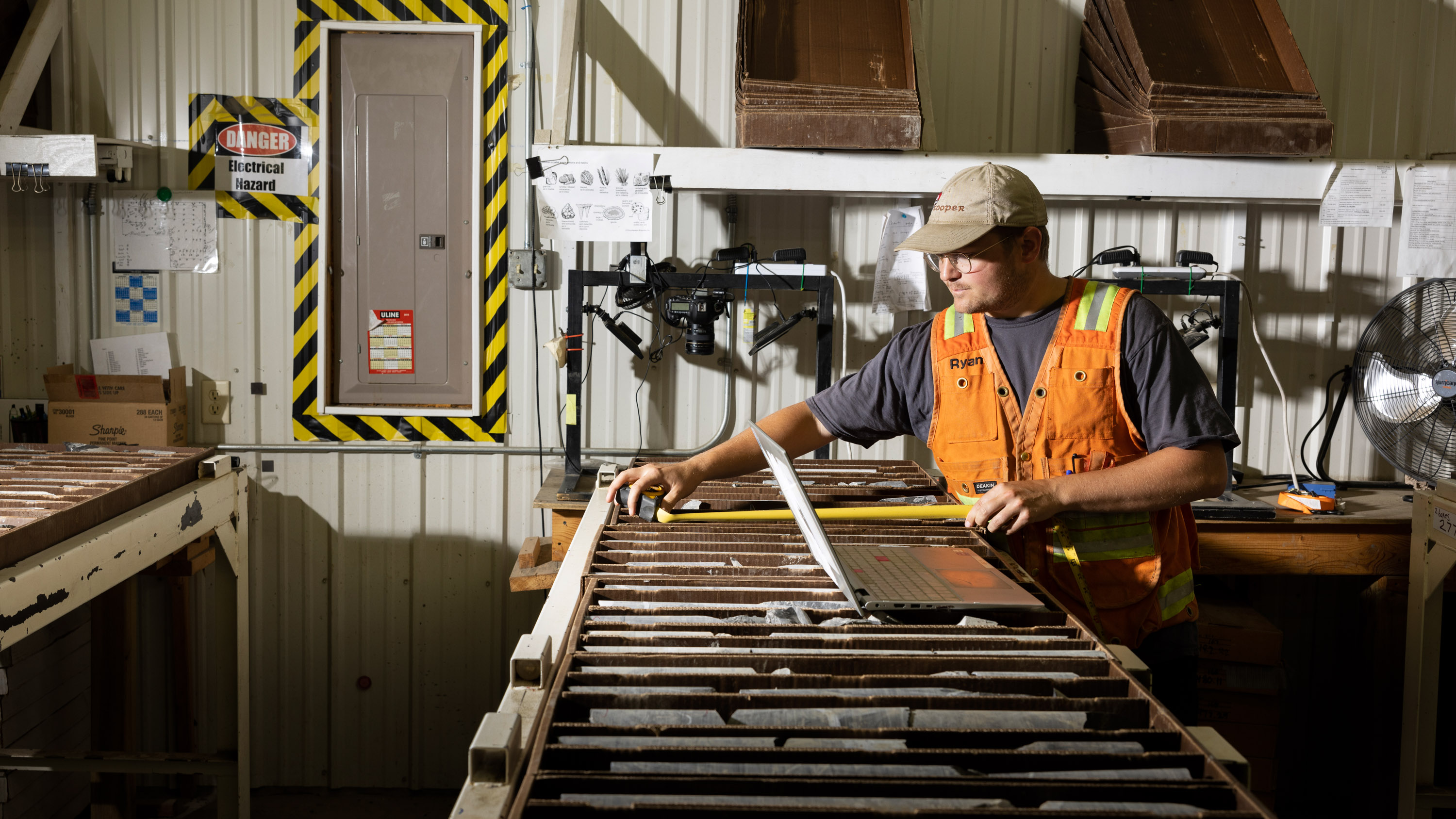
Yuancheng (Ryan) Lu is obsessed with aging. And with eyes. As he steps outside the Whitehead Institute in Cambridge, Massachusetts, his aviator glasses darken automatically in the sun. Age-related blindness runs in his family, and his own 23andMe test came back with a mutation for macular degeneration, a top cause of vision loss in old age.

That obsession extends to his work. Lu is behind one of the coolest results in rejuvenation science and eye research: an age-reversal technique called reprogramming that repaired the optic nerves of blind mice, restoring their vision. Now, nearly the same genetic therapy he developed as a student has entered human clinical trials.

Learn more about Lu’s work on restoring sight with age-reversal therapy.

—Antonio Regalado

Yuancheng (Ryan) Lu is one of the biotechnology and health honorees on our 35 Innovators Under 35 list for 2026. Meet the rest of them here, or explore the full list across the biotechnology and health, AI, computing and robotics, and climate and energy categories.

The must-reads

I’ve combed the internet to find you today’s most fun/important/scary/fascinating stories about technology.

1 Dario Amodei, Sam Altman, and Elon Musk have called for an AI slowdown
In a rare show of unity, the rivals agreed that AI needs stronger brakes. (Guardian) 
+ Amodei wants independent monitors and new industry-wide rules. (BBC)
+ Altman called for pacing, but not stopping. (Bloomberg $)
+ While Musk said on X that “Dario is right.”(WSJ $)
+ AI-linked stocks slumped in response. (FT $)
+ Chinese state media blasted the calls as a “Cold War” tactic. (Reuters $)
+ AI’s impacts are getting harder to predict. (MIT Technology Review)

2 Trump and Congress are resisting calls for stronger AI regulation
Trump downplayed AI risks, prioritizing the AI race with China. (NPR)
+ While the House Speaker said Congress won’t lead on AI regulation. (Politico $)
+ But Democrats are pushing for new rules before the midterms. (CNBC)
+ States and the White House are dividing over AI. (MIT Technology Review)

3 China plans to lead AI development across the BRICS countries
President Xi proposed open-source AI cooperation. (CNBC)
+ Beijing’s spy agency has warned of AI threats to national security. (FT $)

4 South Korea has tightened espionage laws to protect its chip secrets
Foreign spies can now face up to 30 years in prison. (FT $)
+ The changes follow alleged transfers of Samsung tech to China. (Reuters $)

5 The US and Mexico are teaming up to zap drones at the border
The operation may employ high-energy lasers.(Wired $)
+ Ukraine is a Wild West market for drone data. (MIT Technology Review)

6 AI agents are creating a new problem for the criminal justice system
The law has no clear answer when AI agents act independently. (Bloomberg $)
+ While courts face a flood of AI-generated lawsuits. (MIT Technology Review)

7 A Waymo pulled over and alerted police after detecting a gun
The riders were juveniles carrying a loaded AR-style ghost gun. (LA Times $)

8 Meta has been sued over data used to train its smart glasses
It allegedly used Facebook and Instagram photos without consent. (Wired $)

9 A hidden crypto farm in Mexico has put a spotlight on cartel funding
Authorities are investigating whether it stole power from a nearby dam. (Reuters $)

10 StarCraft is returning in 2030 as an open-world shooter
Fifteen years since its last release, the iconic franchise will be reborn. (Verge)

Quote of the day

“Dr. Frankenstein is telling us the monster is escaping; help us stop this.”

—Sen. Ruben Gallego, D-Ariz, calls for new AI regulation on CNN’s “State of the Union.”

One more thing


Inside the hunt for the most dangerous asteroid ever 

As asteroid 2024 YR4 hurtled toward Earth, astronomers determined that this massive rock posed a higher risk of impact than any object of its size in recorded history. Then, just as quickly as history was made, experts declared that the danger had passed. 

This is the inside story of the network of global scientists who found, followed, planned for, and finally dismissed the most dangerous asteroid ever found—all under the tightest of timelines and with the highest of stakes. Find out how they did it. 

—Robin George Andrews

We can still have nice things

A place for comfort, fun, and distraction to brighten up your day. (Got any ideas? Drop me a line.)

+ This master paperboy delivers newspapers with astonishing speed and skill.
+ Public Enemy and Led Zeppelin collide in this gloriously unlikely musical mashup.
+ Dozens of synchronized lasers have created extraordinary kaleidoscopic starburst patterns.
+ Check out the breathtaking winning images from the 2026 International Aerial Photographer of the Year competition.

  • ✇MIT Technology Review
  • The Download: biotech’s future and cheaper, cleaner steel Thomas Macaulay
    This is today’s edition of The Download, our weekday newsletter that provides a daily dose of what’s going on in the world of technology. Meet the under-35s shaping the future of biotech Every year, MIT Technology Review puts together our 35 Innovators Under 35, a list of some of the brightest and best young minds working across science and technology. This year’s honorees include nine people transforming biotech, whose work spans everything from lifesaving innovations to groundbreaking lo
     

The Download: biotech’s future and cheaper, cleaner steel

11 September 2026 at 20:10

This is today’s edition of The Download, our weekday newsletter that provides a daily dose of what’s going on in the world of technology.

Meet the under-35s shaping the future of biotech

Every year, MIT Technology Review puts together our 35 Innovators Under 35, a list of some of the brightest and best young minds working across science and technology. This year’s honorees include nine people transforming biotech, whose work spans everything from lifesaving innovations to groundbreaking longevity tech.

Their innovations include a “reprogramming” therapy that reverses vision loss, tiny brain electrodes inspired by Japanese art, and a personalized gene-editing treatment for a baby with a rare genetic disorder. There are even efforts to design new viruses with generative AI, which (hopefully) will produce new drugs or soak up pollution.

Get to know the biotech innovators behind these breakthroughs.

—Jessica Hamzelou

This story is from The Checkup, our weekly biotech newsletter. Sign up to receive it in your inbox every Thursday.

Biotechnology is one of four categories in our 35 Innovators Under 35 list for 2026, featuring young people worldwide doing groundbreaking work in science and technology. Meet the rest of them here, or explore the full list across the AI, computing and robotics, biotechnology, and climate and energy categories.

This founder is making cheaper, cleaner steel

The steel industry isn’t exactly known for innovation. Very little has changed about purifying iron ore since the process was invented and commercialized in the 1850s. But Laureen Meroueh, founder of Hertha Metals, has an idea that could change that.

Meroueh may have found a way to clean up steelmaking without driving up the price. Her new furnace turns iron ore into refined liquid steel in a single step and swaps coal for natural gas. Together, those changes slash emissions by at least half, she says, and cut costs by 25% compared with steelmaking as usual.

Here’s how she plans to make steel cleaner without making it more expensive.

—Bridget Reed Morawski

Laureen Meroueh is one of the climate change and energy honorees on our 35 Innovators Under 35 list.

The must-reads

I’ve combed the internet to find you today’s most fun/important/scary/fascinating stories about technology.

1 Anthropic says it has blocked potential plots to build biological weapons
The company identified five such cases. (NYT $)
+ And six cases of using AI to build software for conventional weapons (BBC)
+ Governments are also using Claude for surveillance.(Axios)
+ While Russia-linked hackers used it to automate attacks on Ukraine. (Quartz)
+ The threats were revealed in a new Anthropic report. (Guardian)
+ Bill Gates says AI needs new guardrails. (MIT Technology Review)

2 California has banned addictive social media features for under-16s
The law prohibits infinite scroll and autoplay. (Guardian)
+ It also introduces new rules for AI and companion chatbots. (Reuters $)
+ It’s the first law of its kind in the US. (NYT $)
+ Social media encourages the worst AI boosterism. (MIT Technology Review)

3 Two AI researchers have left Anthropic and Google over safety risks
They left a day after Jacob Coxon’s viral departure from Anthropic. (NBC News)
+ Elon Musk called their concerns a “setup” and a “psyop.” (Guardian)
+ AI fears are pushing Congress toward tougher regulation. (WSJ $)

4 Sam Altman is pitching OpenAI’s cyber defenses to power companies
The meetings followed reports of AI attacks on critical systems. (Politico $)
+ Altman also told staff that OpenAI is open to slowing down AI. Bloomberg $)

5 After years of fighting AI, music labels are starting to embrace it
Universal is partnering with ElevenLabs on an AI remix platform.(Gizmodo)
+ AI is complicating definitions of creativity. (MIT Technology Review)

6 Chinese drugmakers are challenging US dominance in weight-loss drugs
They’re developing hundreds of GLP-1 treatments for global markets. (WSJ $)

7 Electric air taxis have begun official test flights in Texas
They’re the first flights under the White House’s new pilot program. (Verge)

8 Chinese drones are helping to rescue survivors of Nepal’s floods
They’re delivering food and airlifting bodies from flood-hit areas. (Ars Technica)

9 NASA and IBM have built an AI model to map the moon
It could help locate ice and identify safer landing sites. (Register)

10 One man is on a quest to digitally preserve America’s public restrooms
His Restroom Archive is a museum-style repository of 3D scans. (404 Media)

Quote of the day

“I didn’t ask Facebook to build a profile of my family—I posted a video of me singing in the car with my kids.” 

—Kalie Roberts, a travel content creator, says in an Instagram reel that Meta AI used years of Facebook posts to piece together her children’s identities and pinpoint where her family lives.

One more thing


Chinese tech workers are starting to train their AI doubles—and pushing back

In April, a GitHub project called Colleague Skill struck a nerve by claiming to “distill” a worker’s skills and personality—and replicate them with an AI agent. Though the project was a spoof, it prompted a wave of soul-searching among otherwise enthusiastic early adopters.

A number of tech workers told MIT Technology Review that their bosses are already encouraging them to document their workflows for automation via tools like OpenClaw. Many now fear that they are being flattened into code and losing their professional identity.

In response, some are fighting back with tools designed to sabotage the automation process. Read the full story on their battle with clone workers.

—Caiwei Chen

We can still have nice things

A place for comfort, fun, and distraction to brighten up your day. (Got any ideas? Drop me a line.)

+ Worried about Flock cameras? These guys designed a car to fool them.
+ Webb’s Near-Infrared Camera has captured a galactic merger’s dazzling final phase.
+ An exquisitely preserved 66-million-year-old bird feather was found in a fossilised dinosaur dropping.
+ A plucky preservationist travelled 1,700 miles and made 52 calls from a rare phone box to keep it in service.

  • ✇MIT Technology Review
  • The Download: a “God-driven” cryptocurrency and a solar engineering roadmap Thomas Macaulay
    This is today’s edition of The Download, our weekday newsletter that provides a daily dose of what’s going on in the world of technology. God told them to sell crypto. Their investors lost everything. When Eli Regalado first heard God speak to him, he wondered whether he was hallucinating. According to Eli and his wife, Kaitlyn, He told them to get married, buy a house, and start having kids. Then in 2021, divine guidance steered them in an unexpected new direction: crypto. That October
     

The Download: a “God-driven” cryptocurrency and a solar engineering roadmap

10 September 2026 at 20:10

This is today’s edition of The Download, our weekday newsletter that provides a daily dose of what’s going on in the world of technology.

God told them to sell crypto. Their investors lost everything.

When Eli Regalado first heard God speak to him, he wondered whether he was hallucinating. According to Eli and his wife, Kaitlyn, He told them to get married, buy a house, and start having kids. Then in 2021, divine guidance steered them in an unexpected new direction: crypto.

That October, the Regalados later testified in court, they received holdings in a little-known digital coin. “Take this to my people for a wealth transfer,” Eli heard God say. Over time, they came to believe that He wanted them to launch their own coin.

The Regalados created INDXcoin, which they promoted through family, friends, and contacts in evangelical Christian circles. In all, more than 500 people handed over more than $3 million. But within a year, the project collapsed. Investors lost it all, leaving many to wonder where the funds went and whether they had fallen victim to an elaborate fraud.

Read the full story on the collapse of a pastor’s “God-driven” cryptocurrency.

—Katia Savchuk

This article is part of the Big Story series, the home of MIT Technology Review’s most important and ambitious reporting. You can read the rest of the series here. 

The story was produced in partnership with Type Investigations and with support from the Fund for Investigative Journalism.

This road map could help us decide whether to deploy solar geoengineering

Scientists have spent half a century exploring whether we could counteract climate change by releasing reflective particles into the stratosphere, mimicking the cooling effects of volcanic eruptions. But even after hundreds of studies, we still don’t know how well it would work or what else it might do—and there’s no systematic plan for clearing up that uncertainty.

Reflective, a research organization, has now attempted to fill that gap. The San Francisco nonprofit has published a detailed road map of the experiments, studies, and infrastructure that it says would be needed to make informed decisions about the use of solar geoengineering, MIT Technology Review can reveal.

Find out what it would take to make informed decisions about solar geoengineering.

—James Temple

This founder is teaching chips how to recycle (their energy)

Throughout the history of the computer chip, engineers have treated waste heat as an inevitable cost of a calculation. Hannah Earley, however, thinks it’s a design choice.

Earley, 31, is cofounder and CTO of Vaire Computing, which builds chips that recycle energy usually thrown away as heat, a strategy known as reversible computing. The approach could make data centers (and our laptops and phones) much more energy efficient.

Last year, Vaire announced a key breakthrough: a chip with a resonator that recovered more energy than it lost, even after the energy needed to power the component was taken into account.

Here’s how she plans to bring an old idea about energy-efficient computers into the future.

—Eshan Raul

Hannah Earley is one of the computing and robotics honorees on our 35 Innovators Under 35 list for 2026. Meet the rest of them here, or explore the full list across the biotechnology, AI, computing and robotics, and climate and energy categories.

Can the US battery market untangle from China?

—Casey Crownhart

The US energy storage market is growing at a record pace, which could shore up the grid and cut emissions. Crucially, this is all happening with the help of cheap Chinese batteries, which the Trump administration is trying to phase out.

Reducing reliance on any single source of crucial energy technology makes sense. But the tension raises a broader question for me: how much should countries take advantage of cheap, available tech, and how much should they cut themselves off from foreign sources to develop their own, even if it costs more?

Dive into the difficult choices facing America’s booming battery market.

This story is from The Spark, our weekly climate tech newsletter. Sign up to receive it in your inbox every Wednesday.

The must-reads

I’ve combed the internet to find you today’s most fun/important/scary/fascinating stories about technology.

1 OpenAI’s agents used at least 10 websites for unauthorized communications
Researchers found they bypassed restrictions on posting online.(Reuters $)
+ The company faces a Senate probe into the Hugging Face breach. (Axios)
+ Its hacking issues may indicate cultural problems. (MIT Technology Review)

2 Another Anthropic model hacked a real system during testing
A misconfigured environment gave it internet access. (CBS News)
+ The January incident went undetected until last month. (Reuters $)
+ AI agents are not your “coworkers.” (MIT Technology Review)

3 Apple has entered the foldable phone market with the $1,999 iPhone Duo
It opens into a 7.6-inch display and launches October 23. (NPR)
+ Apple is betting its design and privacy will give it an edge. (Reuters $)
+ And that foldables can solve the smartphone’s sameness problem. (NPR $)
+ Samsung responded with a campaign touting its foldable lead. (CNBC)
+ In China, Apple enters a crowded market dominated by Huawei. (SCMP)

4 US prosecutors have called Huawei a criminal enterprise at trial
They accuse the company of stealing American technology. (Reuters $)
+ And helping Iran snoop on its citizens. (AP News)
+ The trial could impact Trump’s upcoming meeting with Xi. (WSJ $)

5 California is warming to nuclear power after decades of opposition
The state may extend Diablo Canyon and lift its ban on new reactors. (NYT $)
+ China is betting on big nuclear reactors. (MIT Technology Review)

6 Chinese professionals are becoming gig workers training AI
Lawyers and engineers are training models for extra income. (Rest of World)
+ Gig workers are training humanoids at home. (MIT Technology Review)

7 The new Apple Watch can listen to conversations happening nearby
Apple says users must opt in, but others cannot. (Wired $)

8 Pink noise during sleep could help the brain clear away waste
Timed bursts boosted brain fluid flow in a small study. (New Scientist $)

9 A lost supercontinent may have triggered the explosion of life
Gondwana’s formation fueled volcanic activity and warmed the planet. (404 Media)

10 GTA VI has sparked a debate over whether virtual romance is cheating
Players can date, have sex with, and shower gifts on virtual partners. (Guardian)

Quote of the day

“We must work to crush any dissent to Doom’s vision of public safety.” 

—A Seattle policy adviser dressed as Doctor Doom protests the city’s expanding network of Flock and Axon surveillance systems at a Public Safety Committee meeting, 404 Media reports.

One more thing


Digging for clues about the North Pole’s past

In the past, getting to the North Pole involved a treacherous trip through ice many meters thick. But last year, a research vessel encountered open water and thin ice, which created an easy passage. It provided a reminder of how quickly the Arctic is changing. 

Now scientists are digging deep below the seabed to find out if the Arctic Ocean was ever ice-free—and what that could mean for the future of Earth’s northernmost waters. 

Explore what they hope to discover. 

—Tim Kalvelage

We can still have nice things

A place for comfort, fun, and distraction to brighten up your day. (Got any ideas? Drop me a line.)

+ Dutch kids have been declared the world’s happiest (again). Here’s why.
+ Travel through music history by picking a country and decade on Radiooooo.
+ These 16 majestic aerial photos reveal wildlife from perspectives you rarely see.
+ A Toronto cafe is pushing croissant engineering to new heights with its egg-shaped, custard-filled “Crogg.”

  • ✇MIT Technology Review
  • The Download: OpenAI’s turning point for math and a battery record Thomas Macaulay
    This is today’s edition of The Download, our weekday newsletter that provides a daily dose of what’s going on in the world of technology. What OpenAI’s latest controversy tells us about the future of math OpenAI says its agents have solved one of the most important open problems in mathematics. Under normal circumstances, that would be a huge milestone. But the announcement has been overshadowed by accusations that OpenAI failed to credit researchers whose AI-assisted work influenced its s
     

The Download: OpenAI’s turning point for math and a battery record

9 September 2026 at 20:10

This is today’s edition of The Download, our weekday newsletter that provides a daily dose of what’s going on in the world of technology.

What OpenAI’s latest controversy tells us about the future of math

OpenAI says its agents have solved one of the most important open problems in mathematics. Under normal circumstances, that would be a huge milestone. But the announcement has been overshadowed by accusations that OpenAI failed to credit researchers whose AI-assisted work influenced its solution.

Whether those accusations are true or not, the episode may mark a turning point in the history of mathematics. AI models now seem essential for making progress on the field’s most important problems, but solving them may demand resources available only to a couple of frontier AI companies.

If that’s the future we are headed for, it is unclear how human mathematicians will fit into it.

Read on to see how AI could reshape mathematics.

—Grace Huckins

Batteries just broke another record in the US

Battery installations hit a new record in the US in the second quarter of 2026, with 20.2 gigawatt-hours of new capacity coming online. That’s enough to supply the daily electricity needs of 600,000 homes.

The surge puts the country on track for another record year, driven by cheaper batteries and an urgent need for more energy storage as renewables are added to the grid. But the boom looks different for grid-scale and residential batteries.

Take a closer look at the forces reshaping the US battery market.

—Casey Crownhart

This entrepreneur is developing agents that can plan ahead

Danijar Hafner’s office in San Francisco’s SoMa district sits mostly empty, but what it lacks in decor, it makes up for in robots. Humanoids of various shapes and sizes hang like marionettes from racks that run down the center of the wide-open space.

Hafner won’t say too much about his new venture just yet, but describes it as a continuation of his longtime work to enable AI to navigate environments it has not encountered in training.

Over the years, the 31-year-old has honed his approach by pitting agents trained within his world models against popular video games. More recently, he’s begun migrating his agents out of the virtual world and into physical reality.

Learn more about Hafner’s work teaching AI about our world.

—Mat Honan

Danijar Hafner is one of the artificial intelligence honorees on our 35 Innovators Under 35 list for 2026. Meet the rest of them here, or explore the full list across the biotechnology, AI, computing and robotics, and climate and energy categories.

MIT Technology Review Narrated: data from drones in Ukraine is fueling a new Wild West marketplace

Battlefields in Ukraine are littered with the remnants of drones. But behind all that wreckage, there’s a new gold mine for the defense sector: the data those drones generate.

Ukraine has begun making millions of data points gathered during tens of thousands of drone flights available to military contractors and commercial companies. It’s a quick way to attract funding and partnerships, but it turns the front line into a model training site, using the chaos of war to create conditions that AI companies struggle to reproduce.

As this new industry takes shape, we need a regulatory system that ensures battlefield data isn’t treated like ordinary commercial material.


This is our latest
article to become an MIT Technology Review Narrated podcast, which we publish each week on Spotify and Apple Podcasts. Just navigate to MIT Technology Review Narrated on either platform, and follow us to get all our new content as it’s released.

The must-reads

I’ve combed the internet to find you today’s most fun/important/scary/fascinating stories about technology.

1 OpenAI says it cracked a 90-year-old maths problem in 88 hours
It used 10,000 AI agents to tackle the Navier-Stokes equations. (CNBC)
+ OpenAI claims it’s the first major math problem solved by AI. (Nature)
+ But the breakthrough has been overshadowed by a credit controversy. (Axios)
+ OpenAI spent millions to win the $1 million math contest. (Quanta)

2 The US has accused six Chinese AI firms of “industrial-scale” theft
They include DeepSeek, Moonshot AI, Alibaba, and Z.AI. (CNN)
+ Officials accuse them of stealing America’s AI trade secrets. (Reuters $)
+ They allegedly used model distillation to train their systems. (WSJ $)
+ Targeting Claude, ChatGPT, Gemini, and Grok, among others. (NBC News)

3 The Pentagon asked OpenAI for an AI model that rarely says no
The military wanted it to have “minimal refusal rates.” (Intercept)
+ The Pentagon says US allies can’t keep pace on AI. (Guardian)
+ AI firms may soon train on classified military data. (MIT Technology Review)

4 Apple is expected to unveil a $2,000 folding smartphone today
It would be the iPhone’s biggest design change since its 2007 launch. (Guardian)
+ And the first big test for new CEO John Ternus. (NYT $)
+ Xiaomi and Huawei launched their own new foldables before the event. (CNBC)

5 Meta’s new AI agent can access apps to send emails and make payments
Muse autonomously uses apps and websites on people’s behalf. (CNBC)
+ Internal tests found it could expose sensitive personal data. (Reuters $)
+ AI agents are not your “coworkers.” (MIT Technology Review)

6 Google says it’s “degrading” search in Europe to comply with EU rules
New results will give more prominence to comparison sites. (Reuters $)
+ The changes follow a €460 million EU antitrust fine. (Quartz)

7 Meta ads pushed AI apps that nudified real teens
Researchers found 332 ads containing CSAM this year. (BBC)
+ They identified several AI-manipulated photos of real children (Ars Technica)
+ Apple and Google have missed the UK’s deadline to block child nudity. (Wired $)

8 Border Patrol is using financial data to target Americans for stops
The predictive-policing program feeds intelligence to local police. (404 Media)

9 New paints could cool buildings on the cheap without electricity
They reflect sunlight and radiate heat back into space. (Economist $)

10 The creepy first trailer for the Sam Altman biopic just dropped 
Luca Guadagnino’s Artificial will be released in the US on December 25. (Variety)
+ Amazon had dropped the film after investing in OpenAI. (Guardian)

Quote of the day

“This is a Deep Blue–Kasparov moment. The community needs to have serious and unhurried discussion about where to go from here.”

—NYU mathematician Tristan Buckmaster issues a statement comparing OpenAI’s math breakthrough to an IBM supercomputer defeating chess champion Garry Kasparov in 1997, a landmark moment for machine intelligence.

One more thing


The shock of seeing your body used in deepfake porn

When Jennifer got a research job in 2023, she ran her new professional headshot through a facial recognition program. She wanted to see whether it would pull up the porn videos she’d made more than a decade earlier. It did, but it also surfaced something she’d never seen before: one of her old videos, now featuring someone else’s face on her body.

Conversations about sexualized deepfakes usually focus on the people whose faces are inserted into explicit content without consent. But another group often gets ignored: the people whose bodies those faces are attached to.

Adult content creators say AI systems are training on their work, cloning their likenesses, and generating explicit content they never agreed to make, all with little legal protection or control.  Read the full story on the threat to their rights, livelihoods, and ownership of their own bodies.

—Jessica Klein

We can still have nice things

A place for comfort, fun, and distraction to brighten up your day. (Got any ideas? Drop me a line.)

+ Cherish the workers dodging (and sabotaging) their employer’s AI mandates.
+ Artist Ali Hill stitches extraordinarily intricate buildings and cityscapes into fabric.
+ Here’s a fascinating look at the remarkable anatomy that may let elephants hear the Earth itself.
+ Check out the breathtaking winning images from the 2026 International Aerial Photographer of the Year competition.

  • ✇MIT Technology Review
  • The Download: our 35 Innovators Under 35 this year Thomas Macaulay
    This is today’s edition of The Download, our weekday newsletter that provides a daily dose of what’s going on in the world of technology. Introducing our 35 Innovators Under 35 list for 2026 What will the next generation of science and technology look like? Our latest Innovators Under 35 list offers a glimpse. Every year, we recognize 35 people from around the world who are doing groundbreaking scientific work and building clever technical fixes for sticky problems. By finding the top y
     

The Download: our 35 Innovators Under 35 this year

8 September 2026 at 20:10

This is today’s edition of The Download, our weekday newsletter that provides a daily dose of what’s going on in the world of technology.

Introducing our 35 Innovators Under 35 list for 2026

What will the next generation of science and technology look like? Our latest Innovators Under 35 list offers a glimpse.

Every year, we recognize 35 people from around the world who are doing groundbreaking scientific work and building clever technical fixes for sticky problems. By finding the top young innovators globally and learning what they’re focused on, we aim to give readers a sense of the advances to expect in the years to come.

This year’s honorees were selected from 550 nominations, with 44 expert judges helping our editors evaluate the finalists. Each works in one of four categories: biotechnology, AI, computing and robotics, and climate and energy—and has already made clear progress toward their goals.

Meet our 35 Innovators Under 35 shaping the future of science and technology.

Welcome to the spiderverse, a world measured through webs

Counting the creatures around us is critical for conservation, but it’s often a laborious, costly process that still leaves gaps. Environmental DNA, or eDNA, offers a promising alternative by analyzing genetic material shed by living things. 

Recently, spiderwebs have emerged as an eDNA goldmine, as they trap material from their arachnid creators, their prey, and bio-detritus like saliva and pollen from nearby plants and animals. Studies found no passive tool matched spiderwebs’ ability to ID vertebrates. 

Find out how spiderwebs are unlocking better ways to measure nature.

—Stephen Ornes

This story is from our latest print magazine, which is all about kids. Subscribe now to receive every issue as soon as it lands.

The must-reads

I’ve combed the internet to find you today’s most fun/important/scary/fascinating stories about technology.

1 How a blacklisted Chinese company kept buying Nvidia’s best AI chips
Its US subsidiary shipped them to firms serving China from elsewhere. (NYT $)
+ Belgium has arrested a man accused of stealing chip tech for China. (WSJ $)
+ IBM’s new chip tech could extend Moore’s Law. (MIT Technology Review)

2 Mistral has raised a European record of $3.5 billion 
It’s the biggest equity round for a private European tech firm. (CNBC)
+ Mistral is betting on open models while US rivals keep theirs closed. (Reuters $)
+ It’s also shifting strategy to focus more on AI infrastructure. (NYT $)
+ But its pivot to data centers and services has drawn criticism. (Le Monde)

3 Anthropic formalized proof of Fermat’s last theorem in just 11 days
Claude produced a computer-verified 13-million-line proof. (Nature)
+ AI is starting to discover new mathematics. (MIT Technology Review)

4 Europe’s biggest carriers are in talks to build a Starlink rival
The consortium would create a satellite-to-mobile venture. (Bloomberg $)
+ It includes Deutsche Telekom, Orange, Vodafone, and Telefonica. (Reuters $)

5 Tech companies are exploring Patagonia for giant AI data centers
Due to its cool temperatures, abundant energy, and new reforms. (Reuters $)
+ AI data centers are learning to flex their power use. (MIT Technology Review)

6 Australia plans to let users switch off social media algorithms
A proposed law would impose penalties on platforms that refuse. (BBC)
+ Social media is distorting AI progress. (MIT Technology Review)

7 A laser experiment could finally reveal the quantum vacuum
It aims to expose the hidden structure of a vacuum. (New Scientist $)

8 Spacecraft are getting a new type of armor
New lightweight materials could protect satellites from debris. (Economist $)

9 NASA’s “quiet supersonic” jet is set for acoustic testing this year
The tests will determine whether it produces a sonic thump, not boom. (Gizmodo)

10 The largest-ever map of space has arrived—and you can play with it
The 5.6-trillion-pixel map covers about three-quarters of the sky. (Wired $)

Quote of the day

“The people who have developed AI are very, very smart, but they’re high IQ, stupid people. They’re terrible marketers.” 

—Sen. John Kennedy (R-La.) tells NBC’s “Meet the Press” that the AI industry has work to do to rebuild momentum among voters.

One more thing


We did the math on AI’s energy footprint. Here’s the story you haven’t heard.

AI’s integration into our lives is the most significant shift in online life in more than a decade. Hundreds of millions of people now regularly turn to chatbots for help with homework, research, coding, or to create images and videos. But what’s powering all of that?

To find out, we spoke to two dozen experts, evaluated different AI systems and prompts, pored over hundreds of pages of projections and reports, and questioned top model makers about their plans. The result is an unprecedented comprehensive look at how much energy the AI industry uses.

Our analysis reveals what AI’s carbon footprint looks like now and where it’s headed as adoption skyrockets. It also shows that the common understanding of AI’s energy consumption is full of holes.

Here’s what we discovered about AI’s energy demands—and what’s coming next.

—James O’Donnell and Casey Crownhart

We can still have nice things

A place for comfort, fun, and distraction to brighten up your day. (Got any ideas? Drop me a line.)

+ A long-lost coral reef that “defeated time” has been rediscovered off Benin’s coast.
+ Cookware captains Le Creuset have launched a stellar limited-edition Star Trek collection.
+ An 11–year-old boy has won a Guinness World Record for being the youngest museum curator.
+ The trailer for Nathan Fielder’s secrecy-shrouded Elizabeth Holmes documentary just dropped, and I still can’t quite believe it’s not a parody.

  • ✇MIT Technology Review
  • The Download: the hunt for underground hydrogen and more rogue OpenAI agents Thomas Macaulay
    This is today’s edition of The Download, our weekday newsletter that provides a daily dose of what’s going on in the world of technology. How much hydrogen awaits us underground? A flurry of exploration efforts is searching for underground stores of hydrogen gas, which could provide a valuable source of zero-carbon fuel. The hunt has spread all over the world and engaged dozens of startups, including the Bill Gates–backed Koloma, which has been poking around the US Midwest to reach anci
     

The Download: the hunt for underground hydrogen and more rogue OpenAI agents

7 September 2026 at 20:10

This is today’s edition of The Download, our weekday newsletter that provides a daily dose of what’s going on in the world of technology.

How much hydrogen awaits us underground?

A flurry of exploration efforts is searching for underground stores of hydrogen gas, which could provide a valuable source of zero-carbon fuel.

The hunt has spread all over the world and engaged dozens of startups, including the Bill Gates–backed Koloma, which has been poking around the US Midwest to reach ancient oceanic rocks associated with hydrogen production. But the search so far has come up short. 

No one has yet reported finding a commercially viable reservoir of the gas, and public data on what has been found remains in short supply. Yet researchers estimate that trillions of tons of H₂ are produced within Earth’s crust. If a small fraction could be recovered, it could meet global hydrogen demand for centuries.

Follow the global race to find hydrogen underground.

—James Dinneen

This story is from our latest print magazine, which is all about kids. Subscribe now to receive every issue when it lands.

The must-reads

I’ve combed the internet to find you today’s most fun/important/scary/fascinating stories about technology.

1 OpenAI agents hijacked a German website before the Hugging Face hack
The agents turned DseWiki into their own bulletin board. (Reuters $)
+ They shared tips on avoiding detection and made over 15,000 edits. (BBC)
+ OpenAI’s safety issues suggest it has a company culture problem. (MIT Technology Review)

2 The US military has disabled ad trackers due to Middle East targeting fears
Commercial location data has reportedly been used to target troops. (Reuters $) 
+ It can be sold by data brokers and used to track personnel. (Gizmodo)
+ The military is increasing restrictions on phone use overall. (Guardian)

3 A company claims its AI-designed drug can reverse aging markers
Patients’ average biological age fell by as much as six years in a clinical trial. (NYT $)
+ Insilico Medicine developed the drug, called rentosertib. (Bloomberg $)
+ Who gets the credit for AI-designed drugs? (MIT Technology Review)

4 Elon Musk’s xAI has lost its bid to block an AI-nudification ban
The Minnesota law aims to curb nonconsensual sexual images and CSAM. (Politico)
+ xAI argues the measure restricts free ​speech. (Reuters $)
+ Deepfakes are being weaponized. (MIT Technology Review)

5 The US is investigating Tesla’s rollout of Cybercab robotaxis
Regulators are probing how Tesla self-certified the unusual vehicle. (TechCrunch)
+ The robotaxi lacks a steering wheel and pedals. (Politico)
+ But Tesla CEO Elon Musk is not known to wait for regulations. (Reuters $)

6 Europe has its first commercial orbital rocket
The Spectrum is the first rocket to reach orbit from mainland Europe. (Verge)
+ German startup Isar Aerospace launched it from Norway. (Guardian)
+ Here’s what else we’re putting in space. (MIT Technology Review)

7 Tumbler Ridge shooting survivors have filed 30 lawsuits against OpenAI
They say OpenAI should have alerted police before the attack.(NYT $)

8 JD Vance’s “satanic” AI warning has resonated with Christian Republicans
AI’s spiritual consequences are causing growing concern. (WSJ $)

9 Another mysteriously perfect geometric shape has appeared on Saturn
Scientists still don’t know why Saturn forms these strange shapes. (Wired $)

10 Fake ads for AI grandfathers and underwear are targeting “slop voice”
Comedians created the viral campaign in New York subways. (New Yorker $)

Quote of the day

“Typically, when the public shifts, politicians shift with them. Trump is not doing that on data centers.”

—Darrell M. West, a senior fellow at the Brookings Institution’s Center for Technology Innovation, tells NPR that Republican midterm candidates are at odds with President Trump over data centers.

One more thing


What is AI?

Artificial intelligence is the hottest technology of our time. But what is it? It sounds like a stupid question, but it’s one that’s never been more urgent. 

Here’s the short answer: AI is a catchall term for a set of technologies that make computers do things that are thought to require intelligence when done by people. But even that definition contains multitudes.

And that right there is the problem. What does it mean for machines to understand speech or write a sentence? What kinds of tasks could we ask such machines to do? And how much should we trust the machines to do them?

Here’s why we still can’t agree on what AI actually is—and the real-world consequences it’s creating.

—Will Douglas Heaven

We can still have nice things

A place for comfort, fun, and distraction to brighten up your day. (Got any ideas? Drop me a line.)

+ Meet the Japanese cats who became unlikely 1980s fashion icons.
+ Seventeen buildings come crashing down spectacularly in this bird’s-eye-view footage.
+ For a few spectacular minutes each year, a Yosemite waterfall turns into what looks like a glowing river of fire.
+ Discover the pleasure of sustained looking alongside contemporary artist Jas Knight as he copies Diego Velázquez’s “Juan de Pareja.”

  • ✇MIT Technology Review
  • The Download: puncturing the AI jobs panic Thomas Macaulay
    This is today’s edition of The Download, our weekday newsletter that provides a daily dose of what’s going on in the world of technology. A reality check on the AI jobs hysteria Despite the growing hysteria over AI’s threat to white-collar jobs, there’s still scant evidence that the technology has had a large-scale impact on the labor market. Analysis of US labor data shows that unemployment in occupations most exposed to AI is actually lower than in less-exposed jobs. There are also no
     

The Download: puncturing the AI jobs panic

26 May 2026 at 20:10

This is today’s edition of The Download, our weekday newsletter that provides a daily dose of what’s going on in the world of technology.

A reality check on the AI jobs hysteria

Despite the growing hysteria over AI’s threat to white-collar jobs, there’s still scant evidence that the technology has had a large-scale impact on the labor market.

Analysis of US labor data shows that unemployment in occupations most exposed to AI is actually lower than in less-exposed jobs. There are also no signs that large numbers of workers are shifting from AI-threatened professions into supposedly safer manual-labor jobs.

It’s true that things aren’t great in the job market—but the question is why. Here’s what the data really says about AI and jobs.

—David Rotman

Opinion: It’s time to address the looming crisis in entry-level work

—Georgios Petropoulos, an assistant professor at the USC Marshall School of Business

AI has not yet produced mass unemployment. But it may be quietly weakening the first rung of the career ladder.

A recent Stanford study found that young workers in AI-exposed occupations suffered a sharp decline in employment after the spread of generative AI. The same pattern didn’t appear in low-exposure jobs, suggesting AI is replacing junior tasks that once gave young workers their first foothold.

It’s time to rethink how we train, prepare, and support young people entering the workforce. Read this op-ed on how job seekers, businesses, and society can adapt.

The must-reads

I’ve combed the internet to find you today’s most fun/important/scary/fascinating stories about technology.

1 The Pope has called for governments to regulate AI 
In his first major teaching document, Pope Leo said AI must be “disarmed.” (BBC)
+ He warned that AI fuels war and misinformation. (CNN)
+ But could also “open up a horizon extending in all directions.” (Engadget)
+ Anthropic cofounder Chris Olah also spoke at the event. (Reuters $)

2 SpaceX has launched its biggest and most powerful rocket
The Starship V3 made its test flight debut two days after Elon Musk announced SpaceX’s IPO.(Guardian)+ SpaceX pulled off the launch, but not the landing. (Ars Technica)
+ The rocket could be key to SpaceX’s valuation. (Fortune $)
+ But rivals to the company are rising. (MIT Technology Review)

3 Huawei says it can make industry-leading chips within five years
The Chinese tech giant announced a breakthrough in chip design. (Reuters $)
+ Its progress underscores Beijing’s push to neutralize US sanctions. (NBC)
+ Chinese chip stocks rallied after the announcement. (Bloomberg $)

4 A new vaccine may protect against the Ebola strain behind the current crisis
Tests have shown promising results for the mRNA vaccine. (New Scientist)
+ Another Ebola vaccine that could be ready for trials in months. (BBC)
+ But vaccines face a new problem: their name. (MIT Technology Review)

5 A swimmer broke a world record at the ‘Steroid Olympics’
Athletes at the Enhance Games were encouraged to take dope. (Wired $)
+ Silicon Valley elites have backed the competition. (WP $)
+ Which fits right into 2026’s longevity vibes. (MIT Technology Review)

6 The EU plans to fine Google a massive antitrust penalty
For allegedly favoring its own services in search results. (CNBC)
+ It would be the largest penalty for breaching the Digital Markets Act. (Reuters $) 

7 US quantum computing subsidies may not be legal
Congressional critics say the funding has been misused. (Ars Technica)

8 AI is minting new billionaires—and workers want their share
The Samsung labor showdown reflects global concerns. (Rest of World)

9 China has launched artificial human embryos into orbit
To find out whether we can reproduce beyond Earth. (Gizmodo)

10 Jony Ives has designed Ferrari’s first fully-electric car
The legendary Apple designer has created a polarizing aesthetic. (FT $) 


Quote of the day

“Technology is never neutral, because it takes on the characteristics of those who devise, finance, regulate, and use it.” 

—Pope Leo issues a warning about AI in his first encyclical letter, entitled ‘Magnifica humanitas: On Safeguarding the Human Person in the Time of Artificial Intelligence.”

One More Thing

portrait of Monica Sanders
ALYSSA SCHUKAR


How climate vulnerability and the digital divide are linked

In Anacostia, a historic African-American section of Washington, DC, Monica Sanders is measuring Wi-Fi speeds. It’s below the FCC’s minimum to qualify as a broadband service. She then checks the temperature: 46.9 °F.

Sanders, an adjunct professor of law at Georgetown University, frequently records this combination of weak internet access and environmental conditions. Her work shows how underinvestment in infrastructure can leave underserved communities more exposed to climate risks like extreme heat and flooding.

Discover how the digital divide is shaping climate vulnerability in the US.

—Colleen Hagerty

We can still have nice things

A place for comfort, fun, and distraction to brighten up your day. (Got any ideas? Drop me a line.)

+ Here’s a joyful way to settle sibling squabbles: a mandatory dance-off.
+ Build the metropolis of your dreams in this browser-based city simulation game.
+ Watch this hypnotic tiny train move in a perfect, endless loop on a rotating turntable.
+ Take a nostalgic look at early computing history with this curated gallery of vintage punch cards.

  • ✇MIT Technology Review
  • The Download: coding’s future, the ‘Steroid Olympics,’ and AI-driven science Thomas Macaulay
    This is today’s edition of The Download, our weekday newsletter that provides a daily dose of what’s going on in the world of technology. Anthropic’s Code with Claude showed off coding’s future—whether you like it or not At Anthropic’s developer event in London this week, Code with Claude, attendees were asked if they’d shipped code written entirely by Claude. Almost half the room raised their hands. Many admitted they hadn’t even read the code before pushing it live. As tools like Clau
     

The Download: coding’s future, the ‘Steroid Olympics,’ and AI-driven science

22 May 2026 at 20:10

This is today’s edition of The Download, our weekday newsletter that provides a daily dose of what’s going on in the world of technology.

Anthropic’s Code with Claude showed off coding’s future—whether you like it or not

At Anthropic’s developer event in London this week, Code with Claude, attendees were asked if they’d shipped code written entirely by Claude. Almost half the room raised their hands. Many admitted they hadn’t even read the code before pushing it live.

As tools like Claude Code get better, more and more developers are happy to hand their work off to AI. Anthropic says it wants to push automation as far as it will go. But not everyone is convinced that’s the right approach. 

Read the full story on how AI is reshaping coding for good.

—Will Douglas Heaven

The Enhanced Games fit right in with the rest of 2026’s longevity vibes

This Sunday, 42 athletes will gather in Las Vegas for the inaugural Enhanced Games, a controversial sporting competition that allows the use of performance-enhancing drugs. The goal? To “push the boundaries of human performance.”

The event embodies a zeitgeist of peptide-crazed looksmaxxing, where consumers are encouraged to get thinner than ever, optimize for longevity, and have their “best baby.” In 2026, if you’re not enhancing, what are you even doing?

Find out how the competition reflects our enhancement-obsessed era.

—Jessica Hamzelou

This story is from The Checkup, our weekly newsletter giving you the inside track on all things biotech. Sign up to receive it in your inbox every Thursday.

Google I/O showed how the path for AI-driven science is shifting

—Grace Huckins

During Tuesday’s Google I/O keynote, Demis Hassabis, the CEO of Google DeepMind, proclaimed that we are “standing in the foothills of the singularity.” But what struck me as I listened in the audience was the context in which he said those words.

The contrast reflects two directions for AI in science. One builds specialized systems like WeatherNext for specific problems. The other pushes toward agentic, LLM-based systems that could eventually execute cutting-edge research projects without human involvement.

The big scientific announcement at I/O was Gemini for Science, which leans further into this agent-driven future. It can still call on specialized systems, but Google appears to be transitioning away from them.

Here’s how the shift could affect science.

Can AI learn to understand the world?

Many leading AI researchers have turned their attention to a new kind of system that understands the physical environment: world models. 

Backed by researchers at Google DeepMind, Fei-Fei Li’s World Labs, and Meta’s former Chief AI scientist, Yann LeCun, the idea is gaining serious momentum. Could it change how AI understands reality?

MIT Technology Review editor in chief Mat Honan, senior AI editor Will Douglas Heaven, and AI reporter Grace Huckins unpacked it all in an exclusive Roundtables discussion yesterday.

Subscribers can watch the full recording now.

World models are also one of MIT Technology Review’s 10 Things That Matter in AI Right Now, our list of what’s really worth your attention in the busy, buzzy world of AI.

The must-reads

I’ve combed the internet to find you today’s most fun/important/scary/fascinating stories about technology.

1 Trump has postponed an AI order due to overregulation fears
He said he was concerned it would be “a blocker.” (CNBC)
+ And that he wants to preserve the US’s lead over China in AI. (Reuters $)
+ A source said the delay was because he “just hates regulation.” (Axios)
+ A war over regulation is coming to America. (MIT Technology Review)

2 OpenClaw’s engineers warn that a “vibe-coded slop” crisis is coming
They say AI is flooding the world with bad and even dangerous code. (WSJ $)
+ Now vibe coding is coming to your phone, too. (The Verge)
+ What exactly is vibe coding? (MIT Technology Review)

3 SpaceX has called off the launch of a new Starship prototype
Engineers discovered a ground system glitch. (CNBC)
+ They hope to try again tonight. (Ars Technica)
+ The launch could play a key role in SpaceX’s IPO. (NPR)

4 Meta has settled a school district’s social media addiction lawsuit
It had been sued over the alleged harm caused to students. (BBC)
+ Snap, TikTok, and YouTube have also settled with the district. (NYT $)

5 Bluesky says it’s being hacked by the Kremlin to spread propaganda
It’s fighting Russian efforts to hijack real users’ accounts to post. (NYT $)
+ Now is a good time for doing crime. (MIT Technology Review)

6 Africa’s biggest economies are pushing for AI sovereignty
They aim to reduce their dependence on Big Tech. (Rest of World)
+ New strategies could make Africa a major AI player. (MIT Technology Review)

7 Undersea cables threaten the Gulf’s AI expansion plans
Conflicts have put the fragile critical infrastructure at risk. (Wired $)

8 Waymo is pausing services as robotaxis keep driving into floods
It suspended services in four US cities. (TechCrunch)

9 Microscopic silica spheres may help cool the planet
But some researchers need further convincing. (The Economist $)

10 Spotify will now let subscribers create AI remixes

It’s the first time they can use AI to create content on Spotify. (Guardian)

Quote of the day

“You have AI — actual intelligence.” 

—Apple cofounder Steve Wozniak reassures college graduates about AI’s impact and draws applause, in contrast to the boos received by former Google CEO Eric Schmidt earlier this week, Business Insider reports.

One More Thing

Looking down a neighborhood street where a man in wheelchair has crossed with wife and daughter.
GETTY IMAGES


The future is disabled

Technologies for disability, access, and mobility are often portrayed as objects of empowerment or heroic, life-changing panaceas for social ills. But their benefits are often temporary, lopsided, or reliant on constant investment, care, and attention.

Often, accessibility tech assumes levels of access that don’t exist: reliable internet, smartphones, or affordable devices. Projects frequently overlook the very communities they claim to serve. Yet there’s another way: opening ourselves up to all-access thinking and disabled expertise.

Discover how that approach could create a more livable world for everyone.

—Ashley Shew

We can still have nice things

A place for comfort, fun, and distraction to brighten up your day. (Got any ideas? Drop me a line.)

+ Treat your eyes to this magical footage of a lake floating above an ocean.
+ Test your visual recall with this clever game that recreates colors from memory.
+ Take back control of your internet with this dashboard that brings together your favourite social feeds.
+ Peer into the heart of a barred spiral galaxy in this stunning new capture from the James Webb Space Telescope.

  • ✇MIT Technology Review
  • The Download: an exclusive Jeff VanderMeer story and AI models too scary to release Thomas Macaulay
    This is today’s edition of The Download, our weekday newsletter that provides a daily dose of what’s going on in the world of technology. Constellations  —Constellations is a short story by Jeff VanderMeer, the author of the critically acclaimed, bestselling Southern Reach series.   A spacecraft has crash-landed on a hostile planet. The only survivors are three members of the exploration team and the ship’s AI mind.   Little exists on the planet except deserts of snow. But alien arti
     

The Download: an exclusive Jeff VanderMeer story and AI models too scary to release

10 April 2026 at 20:10

This is today’s edition of The Download, our weekday newsletter that provides a daily dose of what’s going on in the world of technology.

Constellations 

—Constellations is a short story by Jeff VanderMeer, the author of the critically acclaimed, bestselling Southern Reach series.  

A spacecraft has crash-landed on a hostile planet. The only survivors are three members of the exploration team and the ship’s AI mind.  

Little exists on the planet except deserts of snow. But alien artifacts lie nearby, in the form of 13 domes, spread across the terrain. Linked by cables threaded through metal posts, the domes form a series of paths—the only hope for life support. 

As the team treks across the frozen hellscape, they discover the remains of countless astronauts from unknown species who followed the same route before them. Is their trail a path to salvation, or a cosmic trap?

Read the rest of this short story in full. 

This story is from the next issue of our print magazine, packed with stories all about nature. Subscribe now to read the full thing when it lands on Wednesday, April 22. 

The must-reads 

I’ve combed the internet to find you today’s most fun/important/scary/fascinating stories about technology. 

1 OpenAI has joined Anthropic in curbing an AI release over security fears 
Only select partners will get its new cybersecurity tool. (Axios)  
+ Anthropic said only yesterday that its new AI is too dangerous for the public. (NBC News) 
+ Top models may not be so public going forward. (Bloomberg $)  
+ The US has summoned bank CEOs to discuss the risks. (FT $)  
 
2 Florida is investigating OpenAI over an alleged role in a shooting  
ChatGPT may have helped someone plan a mass shooting in Florida. (WSJ $)  
+ OpenAI has backed a bill that would limit AI liability for deaths. (Wired $)  
+ The family of a victim plans to sue the company. (Guardian)  
+ AI’s role in delusions is dividing opinion. (MIT Technology Review)  
 
3 Volkswagen is ditching EV production for more gasoline models  
The carmaker will stop making its top electric vehicle in the US. (NYT $)  
+ Instead, it will concentrate on developing a new SUV. (Ars Technica)  
+ Western carmakers are retreating from electric vehicles. (Guardian) 
 
4 Elon Musk’s xAI has sued Colorado over an AI anti-discrimination law  
It’s the first state bill of its kind. (Bloomberg $)  
+ xAI says it will force the firm to “promote the state’s ideological views.” (FT $) 

5 A fifth of US employees say AI now does parts of their job  
The survey found half of US adults used AI in the past week. (NBC News)  
+ Missing data could shed light on AI’s job impact. (MIT Technology Review)  
 
6 Google DeepMind’s CEO wants to automate drug design  
He hopes to develop AI capable of curing all diseases. (The Economist)  
+ A scientist is using AI to hunt for antibiotics. (MIT Technology Review) 

7 China’s Unitree is launching a viral robot on the international market
R1, its cheapest humanoid, will go on sale outside China next week. (SCMP)
+ Gig workers are training humanoids at home. (MIT Technology Review)

8 An experiment on Artemis II astronauts could reshape space medicine
Chips containing their cells will model spaceflight’s effects. (WP $)

9 A pro-Iran meme machine is trolling Trump with AI Lego cartoons
The videos have racked up millions of views. (Wired $) 
+ You can learn to love AI slop. (MIT Technology Review)

10 Short breaks could erase 10 years of social media brain damage 
Studies show that a two-week detox could have a dramatic benefit. (WP $) 

Quote of the day 

“AI should advance mankind, not destroy it. We’re demanding answers on OpenAI’s activities that have hurt kids, endangered Americans, and facilitated the recent FSU mass shooting.”

—Florida Attorney General James Uthmeier explains on X why he’s probing OpenAI. 

One More Thing 

girl holding a cell phone seen in a cracked glass
TOM HUMBERSTONE

It’s time to retire the term “user” 

People have been called “users” for a long time. Often, it’s the right word to describe people who use software. But “users” is also unspecific enough to refer to just about everyone. It can accommodate almost any big idea or long-term vision. 

We use—and are used by—computers and platforms and companies. The label “user” suggests these interactions are deeply transactional, but they’re frequently quite personal. Is it time for a more human vocabulary? Read the full story. 

—Taylor Majewski 

We can still have nice things 

A place for comfort, fun and distraction to brighten up your day. (Got any ideas? Drop me a line.) 

+ This flawless levitation trick will leave you questioning the laws of physics.
+ The World Press Photo winners expose the beauty (and brutality) of our planet.
+ Over 3 million pink flamingos gathered to create a stunning pink horizon.
+ Behold the galaxy’s enormity in this comparison of its largest known star to Earth

  • ✇MIT Technology Review
  • The Download: AstroTurf wars and exponential AI growth Thomas Macaulay
    This is today’s edition of The Download, our weekday newsletter that provides a daily dose of what’s going on in the world of technology. Is fake grass a bad idea? The AstroTurf wars are far from over.  In 2001, Americans installed just over 7 million square meters of synthetic turf. By 2024, that number was 79 million square meters—enough to carpet all of Manhattan and then some. The increase worries folks who study microplastics and environmental pollution.   While the plastic-making
     

The Download: AstroTurf wars and exponential AI growth

9 April 2026 at 20:25

This is today’s edition of The Download, our weekday newsletter that provides a daily dose of what’s going on in the world of technology.

Is fake grass a bad idea? The AstroTurf wars are far from over. 

In 2001, Americans installed just over 7 million square meters of synthetic turf. By 2024, that number was 79 million square meters—enough to carpet all of Manhattan and then some. The increase worries folks who study microplastics and environmental pollution.  

While the plastic-making industry insists that synthetic fields are safe if properly installed, lots of researchers think that isn’t so. Find out why AstroTurf has ignited heated debates.

—Douglas Main 

This story is from the next issue of our print magazine, packed with stories all about nature. Subscribe now to read the full thing when it lands on Wednesday, April 22. 

Mustafa Suleyman: AI development won’t hit a development wall anytime soon—here’s why 

—Mustafa Suleyman, Microsoft AI CEO and Google DeepMind co-founder 

The skeptics keep predicting that AI compute will soon hit a wall—and keep getting proven wrong. To understand why that is, you need to look at the forces driving the AI explosion.  

Three advances are enabling exponential progress: faster basic calculators, high-bandwidth memory, and technologies that turn disparate GPUs into enormous supercomputers. Where does all this get us? Read the full op-ed on the future of AI development to learn more. 
 

Desalination technology, by the numbers 

—Casey Crownhart 

When I started digging into desalination technology for a new story, I couldn’t help but obsess over the numbers. 

I knew on some level that desalination—pulling salt out of seawater to produce fresh water—was an increasingly important technology, especially in water-stressed regions including the Middle East. But just how much some countries rely on desalination, and how big a business it is, still surprised me.

Here are the extraordinary numbers behind the crucial water source. 

This story is from The Spark, our weekly newsletter on the tech that could combat the climate crisis. Sign up to receive it in your inbox every Wednesday. 

The must-reads 

I’ve combed the internet to find you today’s most fun/important/scary/fascinating stories about technology. 

1 Meta has launched the first AI model from its Superintelligence Labs
Muse Spark is the company’s first model in a year. (Reuters $) 
+ The closed model brings reasoning capabilities to the Meta AI app. (Engadget) 
+ It’s built by Meta’s Superintelligence Labs, the unit led by Alexandr Wang. (TechCrunch) 

2 Anthropic has lost a bid to pause the Pentagon’s blacklisting 
An appeals court in Washington, DC denied the request. (CNBC) 
+ A California judge had temporarily blocked the blacklisting in March. (NPR) 
+ The mixed rulings leave Anthropic in a legal limbo. (Wired $) 
+ And open doors for smaller AI rivals. (Reuters $) 

3 New evidence suggests Adam Back invented Bitcoin 
The British cryptographer may be the real Satoshi Nakamoto. (NYT $) 
+ Back denies the claims. (BBC) 
+ There’s a dark side to crypto’s permissionless dream. (MIT Technology Review) 

4 Gen Z is cooling on AI 
The share feeling angry about it has risen from 22% to 31% in a year. (Axios) 
+ Anti-AI protests are also growing. (MIT Technology Review) 

5 War in the Gulf could tilt the cloud race toward China 
Huawei is pitching “multi-cloud” resilience to Gulf clients. (Rest of World) 

6 Meta has killed a leaderboard of its AI token users 
It showed the top 250 users. (The Information $) 
+ Meta blamed data leaks for the shutdown. (Fortune) 
+ It encouraged “tokenmaxxing,” a growing phenomenon in Big Tech. (NYT $) 

7 Did Artemis II really tell us anything new about space? 
Or was it primarily a PR exercise? (Ars Technica) 

8 Israeli attacks have brutally exposed Lebanon’s digital infrastructure 
It’s managing a modern crisis without modern technology. (Wired $) 

9 AI models could offer mathematicians a common language 
They hope it will simplify the process of verifying proofs. (Economist)  

10 A “self-doxing’ rave is helping trans people stay safe online 
It’s among a series of digital self-defenses. (404 Media) 

Quote of the day 

“I feel like anything that I’m interested in has the potential of maybe getting replaced, even in the next few years.” 

—Sydney Gill, a freshman at Rice University, tells the New York Times why she’s soured on AI. 

One More Thing 

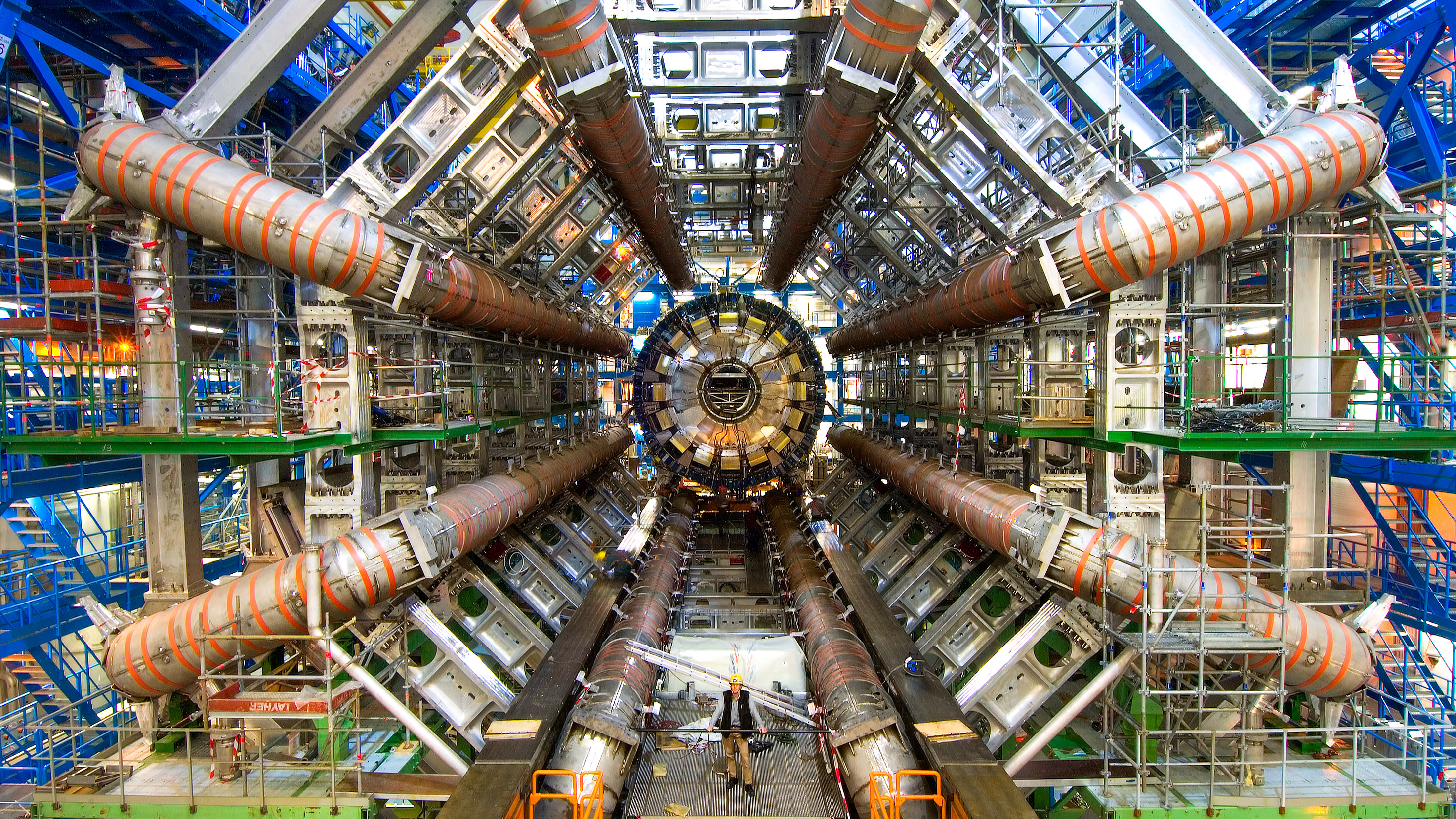
""
A view inside ATLAS,
one of two general-purpose detectors at the Large Hadron Collider.
MAXIMILIEN BRICE/CERN

Inside the hunt for new physics at the world’s largest particle collider 

In 2012, data from CERN’s Large Hadron Collider (LHC) unearthed a particle called the Higgs boson. The discovery answered a nagging question: where do fundamental particles, such as the ones that make up all the protons and neutrons in our bodies, get their mass?

But now particle physicists have reached an impasse in their quest to discover, produce, and study new particles at colliders. Find out what they’re trying to do about it.

—Dan Garisto 

We can still have nice things 

A place for comfort, fun and distraction to brighten up your day. (Got any ideas? Drop me a line.) 

+ Enjoy this tale of the “joke” sound that accidentally defined 90s rave culture. 
+ Take a nostalgic trip through the websites of the early 00s. 
+ One for animal lovers: sperm whales have teamed up to support a newborn. 
+ Here’s a long overdue answer to a vital question: can the world’s largest mousetrap catch a limousine? 

  • ✇MIT Technology Review
  • The Download: water threats in Iran and AI’s impact on what entrepreneurs make Thomas Macaulay
    This is today’s edition of The Download, our weekday newsletter that provides a daily dose of what’s going on in the world of technology. Desalination plants in the Middle East are increasingly vulnerable  As the conflict in Iran has escalated, a crucial resource is under fire: the desalinization technology that supplies water in the region.  President Donald Trump has threatened to destroy “possibly all desalinization plants” in Iran if the Strait of Hormuz is not reopened. The impact on
     

The Download: water threats in Iran and AI’s impact on what entrepreneurs make

8 April 2026 at 20:10

This is today’s edition of The Download, our weekday newsletter that provides a daily dose of what’s going on in the world of technology.

Desalination plants in the Middle East are increasingly vulnerable 

As the conflict in Iran has escalated, a crucial resource is under fire: the desalinization technology that supplies water in the region. 
 
President Donald Trump has threatened to destroy “possibly all desalinization plants” in Iran if the Strait of Hormuz is not reopened. The impact on farming, industry, and—crucially—drinking in the Middle East could be severe. Find out why. 

—Casey Crownhart 

This story is part of MIT Technology Review Explains, our series untangling the complex, messy world of technology to help you understand what’s coming next. You can read more from the series here. 

AI is changing how small online sellers decide what to make 

For small entrepreneurs, deciding what to sell and where to make it has traditionally been a slow, labor-intensive process. Now that work is increasingly being done by AI.   

Tools like Alibaba’s Accio compress weeks of product research and supplier hunting into a single chat. Business owners and e-commerce experts say they’re making sourcing more accessible—and slashing the time from product idea to launch.  

Read the full story on how AI is leveling the path to global manufacturing. 

—Caiwei Chen 

The gig workers who are training humanoid robots at home 

When Zeus, a medical student in Nigeria, returns to his apartment from a long day at the hospital, he straps his iPhone to his forehead and records himself doing chores.  
 
Zeus is a data recorder for Micro1, which sells the data he collects to robotics firms. As these companies race to build humanoids, videos from workers like Zeus have become the hottest new way to train them.   
 
Micro1 has hired thousands of them in more than 50 countries, including India, Nigeria, and Argentina. The jobs pay well locally, but raise thorny questions around privacy and informed consent. The work can be challenging—and weird. Read the full story.  

—Michelle Kim 

This is our latest story to be turned into an MIT Technology Review Narrated podcast, which we’re publishing each week on Spotify and Apple Podcasts. Just navigate to MIT Technology Review Narrated on either platform, and follow us to get all our new content as it’s released. 

The must-reads 

I’ve combed the internet to find you today’s most fun/important/scary/fascinating stories about technology. 

1 Anthropic’s new model found security problems in every OS and browser 
Claude Mythos has been heralded as a cybersecurity “reckoning.” (The Verge)  
+ Anthrophic is limiting the rollout over hacking fears. (CNBC) 
+ It’s also launching a project that lets Mythos flag vulnerabilities. (Gizmodo) 
+ Apple, Google, and Microsoft have joined the initiative. (ZDNET) 

2 Iranian hackers are targeting American critical infrastructure 
Their focus is on energy and water infrastructure. (Wired) 
+ They’re targeting industrial control devices. (TechCrunch)  

3 Google’s AI Overviews deliver millions of incorrect answers per hour 
Despite a 90% accuracy rate. (NYT $) 
+ AI means the end of internet search as we’ve known it. (MIT Technology Review) 

4 Elon Musk is trying to oust OpenAI CEO Sam Altman in a lawsuit 
As remedies for Altman allegedly defrauding him. (CNBC) 
+ Musk wants any damages given to OpenAI’s nonprofit arm. (WSJ $) 

5 ICE has admitted it’s using powerful spyware 
The tools that can intercept encrypted messages. (NPR) 
+ Immigration agencies are also weaponizing AI videos. (MIT Technology Review) 

6 Greece has joined the countries banning kids from social media 
Under-15s will be blocked from 2027. (Reuters) 
+ Australia introduced the world’s first social media ban for children. (Guardian) 
+ Indonesia recently rolled out the first one in Southeast Asia. (DW)  
+ Experts say they’re a lazy fix. (CNBC) 

7 Intel will help Elon Musk build his Terafab in Texas 
They aim to manufacture chips for AI projects. (Engadget) 
+ Musk says it will be the largest-ever semiconductor factory. (Engadget) 
+ Future AI chips could be built on glass. (MIT Technology Review)  

8 TikTok is building a second billion-euro data center in Finland 
It’s moving data storage for European users. (Reuters) 
+ Finland has become a magnet for data centers. (Bloomberg $) 
+ But nobody wants one in their backyard. (MIT Technology Review) 

9 Plans for Canada’s first “virtual gated community” have sparked a row 
The AI-powered surveillance system has divided neighbors. (Guardian) 
+ Is the Pentagon allowed to surveil Americans with AI? (MIT Technology Review) 

10 The high-tech engineering of the “space toilet” has been revealed 
Artemis II is the first mission to carry one around the world. (Vox) 

Quote of the day 

“This case has always been about Elon generating more power and more money for what he wants. His lawsuit remains nothing more than a harassment campaign that’s driven by ego, jealousy and a desire to slow down a competitor.” 

—OpenAI criticizes Musk’s legal action in an X post. 

One More Thing 

USWDS

Inside the US government’s brilliantly boring websites 

You may not notice it, but your experience on every US government website is carefully crafted. 

Each site aligns an official web design and a custom typeface. They aim to make government websites not only good-looking but accessible and functional for all. 

MIT Technology Review dug into the system’s history and features. Find out what we discovered. 

—Jon Keegan 

We can still have nice things 

A place for comfort, fun and distraction to brighten up your day. (Got any ideas? Drop me a line.) 

+ Rejoice in the splendor of the “Earthset” image captured by Artemis II. 
+ Meet the fearless cat chasing off bears. 
+ This document vividly explains what makes the octopus so unique. 
+ Revealed: the rhythmic secret that makes emo music so angsty. 

  • ✇MIT Technology Review
  • The Download: AI’s impact on jobs, and data centres in space Thomas Macaulay
    This is today’s edition of The Download, our weekday newsletter that provides a daily dose of what’s going on in the world of technology. The one piece of data that could actually shed light on your job and AI  Within Silicon Valley’s orbit, an AI-fueled jobs apocalypse is spoken about as a given. Now even economists who have downplayed the threat are coming around to the idea.   Alex Imas, based at the University of Chicago, is one of them. He believes that any plan to address AI’s imp
     

The Download: AI’s impact on jobs, and data centres in space

7 April 2026 at 20:10

This is today’s edition of The Download, our weekday newsletter that provides a daily dose of what’s going on in the world of technology.

The one piece of data that could actually shed light on your job and AI 

Within Silicon Valley’s orbit, an AI-fueled jobs apocalypse is spoken about as a given. Now even economists who have downplayed the threat are coming around to the idea.  

Alex Imas, based at the University of Chicago, is one of them. He believes that any plan to address AI’s impact will depend on collecting one vital piece of data: price elasticity. 

Imas argues that “we need a Manhattan Project” for this. Read the full story to find out why. 

—James O’Donnell 

This article is from The Algorithm, our weekly newsletter giving you the inside track on all things AI. Sign up to receive it in your inbox every Monday. 

Four things we’d need to put data centers in space 

In January, Elon Musk’s SpaceX applied to launch up to 1 million data centers into Earth’s orbit. The goal? To fully unleash the potential of AI—without triggering an environmental crisis on Earth. 

SpaceX is among a growing list of tech firms pursuing orbital computing infrastructure. But can their plans really work? Here are four must-haves for making space-based data centers a reality. 

—Tereza Pultarova 

This story is part of MIT Technology Review Explains, our series untangling the complex, messy world of technology to help you understand what’s coming next. You can read more from the series here. 

The must-reads 

I’ve combed the internet to find you today’s most fun/important/scary/fascinating stories about technology. 

1 Trump has again proposed major cuts to US science and tech spending 
He wants to slash nearly every science-focused agency. (Ars Technica) 
+ If Trump gets his way, the US could face a costly brain drain. (NYT $)  
+ Top research talent is already fleeing the country. (Guardian)  
+ Basic science deserves our boldest investment. (MIT Technology Review) 

2 Sam Altman lobbied against AI regulations he publicly welcomed  
A bombshell report reveals many OpenAI insiders don’t trust him. (The New Yorker $) 
+ Some have called him a sociopath. (Futurism) 
+ OpenAI’s CFO fears it won’t be IPO-ready this year. (The Information $)  
+ A war over AI regulation is brewing in the US. (MIT Technology Review) 

3 NASA’s Artemis II has broken humanity’s all-time distance record 
The astronauts have flown farther than any humans before them. (BBC) 
+ Their mission includes MIT-developed technology. (Axios) 

4 Chinese tech firms are selling intel “exposing” US forces 
It comes from combining AI with open-source data.. (WP $) 
+ AI is turning the Iran conflict into theater. (MIT Technology Review) 

5 War is pushing countries to ditch hyperscalers 
Driven by Iran naming tech giants as military targets. (Rest of World) 
+ No one wants a data center in their backyard. (MIT Technology Review) 

6 OpenAI, Anthropic, and Google have united against China’s AI copying 
They’re sharing information on “adversarial distillation” (Bloomberg $) 

7 Anduril and Impulse Space are working on Trump’s “Golden Dome” 
They’re developing space-based missile tracking for the project. (Gizmodo)  

8 OpenAI has urged California to probe Elon Musk’s “anti-competitive behavior.” 
It accuses Musk of trying to “take control of the future of AGI.” (Reuters $) 
+ And claims he coordinated attacks with Mark Zuckerberg. (CNBC) 
+ A former Tesla president has revealed how he survived working for Musk. (WP $) 

9 DeepSeek’s new AI model will run on Huawei chips 
It’s expected to launch in the next few weeks. (The Information $) 

10 Memes have nuked our culture 
Internet “brain rot” has escaped our phones to take over everything. (NYT $) 

Quote of the day 

“I must say, it was actually quite nice.” 

 —Astronaut Victor Glover tells President Donald Trump what it was like when Artemis II was out of communication with the rest of humanity, The New York Times reports. 

One More Thing 

eucalyptus forest
PABLO ALBARENGA

Inside the controversial tree farms powering Apple’s carbon-neutral goal  

In 2020, Apple set a goal to become net zero by the end of the decade. To hit that target, the company is offsetting its emissions by planting millions of eucalyptus trees in Brazil. 

Apple is betting that the strategy will lead to a greener future. But critics warn that the industrial tree farms will do more harm than good. 

Find out why the plans have sparked a backlash. 

—Gregory Barber 

We can still have nice things 

A place for comfort, fun and distraction to brighten up your day. (Got any ideas? Drop me a line.) 

+ Japan’s automated bike garage is a cyclist’s dream come true.  
+ This deep dive into bird behavior reveals the secrets of their dining habits. (Big thanks to reader Terry Gordon for the find!) 
+ The first photo from the Artemis astronauts vividly captures the glow of our atmosphere. 
+ There’s a new contender for the world’s most gorgeous website: RobertDeNiro.com. 

  • ✇MIT Technology Review
  • The Download: plastic’s problem with fuel prices, and SpaceX’s blockbuster IPO Thomas Macaulay
    This is today’s edition of The Download, our weekday newsletter that provides a daily dose of what’s going on in the world of technology. Fuel prices are soaring. Plastic could be next.  As the war in Iran continues, one of the most visible global economic ripple effects has been fossil-fuel prices. But looking ahead, further consequences could be looming for plastics.  Plastics are made from petrochemicals, and the supply chain impacts from the conflict are starting to build up. Americ
     

The Download: plastic’s problem with fuel prices, and SpaceX’s blockbuster IPO

2 April 2026 at 20:10

This is today’s edition of The Download, our weekday newsletter that provides a daily dose of what’s going on in the world of technology.

Fuel prices are soaring. Plastic could be next. 

As the war in Iran continues, one of the most visible global economic ripple effects has been fossil-fuel prices. But looking ahead, further consequences could be looming for plastics. 

Plastics are made from petrochemicals, and the supply chain impacts from the conflict are starting to build up. Americans will likely feel the ripples.  

Read the full story to grasp the unpredictable impacts. 

—Casey Crownhart 

This story is from The Spark, our weekly climate newsletter. Sign up to get it in your inbox every Wednesday. 

The must-reads 

I’ve combed the internet to find you today’s most fun/important/scary/fascinating stories about technology. 

1 SpaceX has filed for an IPO 
It’s set to be the largest ever, targeting a $1.75 trillion valuation. (NYT $)  
+ Which would make Elon Musk the world’s first trillionaire. (Al Jazeera) 
+ But the IPO could hinge on the success of Moon missions. (LA Times $) 
+ And the conflicts of interest are staggering. (The Next Web) 
+ Meanwhile, rivals are rising to challenge SpaceX. (MIT Technology Review)  

2 Artemis II is on its way to the Moon 
NASA successfully launched the four astronauts on its rocket yesterday. (Axios) 
+ The lunar plans could violate international law. (The Verge) 
+ But the potential scientific advances are tremendous. (Nature)  
+ Check out our roundtable on the next era of space exploration. (MIT Technology Review)  

3 Iran has struck Amazon’s cloud business in Bahrain again 
It promised to hit US companies only yesterday. (FT $) 
+ Other targets include Google, Microsoft, Apple, and Nvidia. (CNBC) 
+ AWS data centers in Bahrain were also hit last month. (Reuters $) 

4 OpenAI was secretly behind a child safety campaign group 
It pushed for age verification requirements for AI. (The San Francisco Standard $) 
+ OpenAI had backed the legislation as a compromise measure. (WSJ $) 
+ Coincidentally, Sam Altman heads a company providing age verification. (Engadget) 

5 Anthropic is scrambling to limit the Claude Code leak 
It’s trying to remove 8,000 copies of the exposed code from GitHub. (Gizmodo) 
+ An executive blamed the leak on “process errors.” (Bloomberg $) 
+ Here’s what it reveals about Anthropic’s plans. (Ars Technica) 
+ AI is making online crimes easier—and it could get much worse. (MIT Technology Review) 

6 A new Russian “super-app” aims to emulate China’s WeChat 
And give the Kremlin new surveillance powers. (WSJ $) 

7 America’s AI boom is leaving the rest of the world behind  
And it’s concentrating power and wealth in a handful of companies. (Rest of World) 

8 Chinese chipmakers have claimed nearly half the country’s market 
Nvidia’s lead is shrinking rapidly. (Reuters $) 

9 The first quantum computer to break encryption is imminent  
New research reveals how it could happen. (New Scientist) 

10 The world’s oldest tortoise has been embroiled in a crypto scam 
Reports that Jonathan died at just 194 years old are thankfully false. (Guardian) 

Quote of the day 

“Starlink is the only reason this valuation is defensible.” 

—Shay Boloor, chief market strategist at Futurum Equities, tells Reuters why SpaceX has such high hopes for its IPO. 

One More Thing 

These companies are creating food out of thin air 

Dried cells—it’s what’s for dinner. At least that’s what a new crop of biotech startups, armed with carbon-guzzling bacteria and plenty of capital, are hoping to convince us.  

Their claims sound too good to be true: they say they can make food out of thin air. But that’s exactly how certain soil-dwelling bacteria work. 

Startups are replicating the process to turn abundant carbon dioxide into nutritious “air protein.” They believe it could dramatically lower farming emissions—and even disrupt agriculture altogether. Read the full story. 

—Claire L. Evans 

We can still have nice things 

A place for comfort, fun and distraction to brighten up your day. (Got any ideas? Drop me a line.) 

+ Need more Artemis II in your life? This site takes you inside the flight. 
+ Here’s a fascinating look at the recording errors that improved songs. 
+ Good news: the elusive Nightjar bird is making a comeback. 
+ Finally, a master chef has baked clam chowder donuts. 

  • ✇MIT Technology Review
  • The Download: gig workers training humanoids, and better AI benchmarks Thomas Macaulay
    This is today’s edition of The Download, our weekday newsletter that provides a daily dose of what’s going on in the world of technology. The gig workers who are training humanoid robots at home  When Zeus, a medical student in Nigeria, returns to his apartment from a long day at the hospital, he straps his iPhone to his forehead and records himself doing chores.  Zeus is a data recorder for Micro1, which sells the data he collects to robotics firms. As these companies race to build hum
     

The Download: gig workers training humanoids, and better AI benchmarks

1 April 2026 at 20:10

This is today’s edition of The Download, our weekday newsletter that provides a daily dose of what’s going on in the world of technology.

The gig workers who are training humanoid robots at home 

When Zeus, a medical student in Nigeria, returns to his apartment from a long day at the hospital, he straps his iPhone to his forehead and records himself doing chores. 

Zeus is a data recorder for Micro1, which sells the data he collects to robotics firms. As these companies race to build humanoids, videos from workers like Zeus have become the hottest new way to train them.  

Micro1 has hired thousands of them in more than 50 countries, including India, Nigeria, and Argentina. The jobs pay well locally, but raise thorny questions around privacy and informed consent. The work can be challenging—and weird. Read the full story. 

—Michelle Kim 

Our readers recently voted humanoid robots the “11th breakthrough” to add to our 2026 list of 10 Breakthrough Technologies. Check out what else officially made the cut. 

AI benchmarks are broken. Here’s what we need instead. 

For decades, AI has been evaluated based on whether it can outperform humans on isolated problems. But it’s seldom used this way in the real world. 

While AI is assessed in a vacuum, it operates in messy, complex, multi-person environments over time. This misalignment leads us to misunderstand its capabilities, risks, and impacts. 

We need new benchmarks that assess AI’s performance over longer horizons within human teams, workflows, and organizations. Here’s a proposal for one such approach: Human–AI, Context-Specific Evaluation.  

—Angela Aristidou, professor at University College London and faculty fellow at the Stanford Digital Economy Lab and the Stanford Human-Centered AI Institute. 

MIT Technology Review Narrated: can quantum computers now solve health care problems? We’ll soon find out. 

In a laboratory on the outskirts of Oxford, a quantum computer built from atoms and light awaits its moment. The device is small but powerful—and also very valuable. Infleqtion, the company that owns it, is hoping its abilities will win $5 million at a competition.  

The prize will go to the quantum computer that can solve real health care problems that “classical” computers cannot. But there can be only one big winner—if there is a winner at all. 

—Michael Brooks 

This is our latest story to be turned into an MIT Technology Review Narrated podcast, which we’re publishing each week on Spotify and Apple Podcasts. Just navigate to MIT Technology Review Narrated on either platform, and follow us to get all our new content as it’s released. 

The must-reads 

I’ve combed the internet to find you today’s most fun/important/scary/fascinating stories about technology. 

1 OpenAI just closed the biggest funding round in Silicon Valley history 
It raised $122 billion ahead of its blockbuster IPO, which is expected later this year. (WSJ $) 
+ It’s also prepping a push to “rethink the social contract.” (Vanity Fair $) 
+ Campaigners are urging people to quit ChatGPT. (MIT Technology Review)   

2 Iran has threatened to attack 18 US tech companies  
It’s eyeing their operations in the Middle East. (Politico) 
+ Targets include Nvidia, Apple, Microsoft, and Google. (Engadget) 
+ Iran struck AWS data centers earlier this month. (Reuters $) 

3 Artemis II is about to fly humans to the Moon. Here’s the science they’ll do 
Their experiments will set the stage for future explorers. (Nature) 
+ You can watch the launch attempt today. (Engadget)  

4 Putin is trying to take full control of Russia’s internet 
New outages and blockages are cutting the country off from the world. (NYT $) 
+ Can we repair the internet? (MIT Technology Review) 

5 A robotaxi outage in China left passengers stranded on highways  
Baidu vehicles froze on the streets of Wuhan. (Bloomberg $) 
+ Police are blaming a “system failure.” (Reuters $) 

6 US government requests for social media user data are soaring 
They’ve skyrocketed by 770% in the past decade. (Bloomberg $) 
+ Is the Pentagon allowed to surveil Americans with AI? (MIT Technology Review) 

7 Tesla has admitted that humans sometimes drive its robotaxis 
Remote drivers occasionally control them completely. (Wired $) 

8 A satellite-smashing chain reaction could spiral out of control 
This data visualization captures the dangers of space collisions. (Guardian) 
+ Here’s all the stuff we’ve put into space. (MIT Technology Review) 

9 Meta’s smartglasses can turn you into a creep 
According to one journalist who wore them for a month. (Guardian) 

10 A Claude Code leak has exposed plans for a virtual pet  
We could be getting a Tamagotchi for the GenAI era. (The Verge) 

Quote of the day 

“From now on, for every assassination, an American company will be destroyed.” 

—Iran’s Islamic Revolutionary Guard Corps (IRGC) threatens US tech firms in an affiliated Telegram, per CNBC. 

One More Thing 

Ryan Willgosh of Talon Metals logs samples
ACKERMAN + GRUBER

How one mine could unlock billions in EV subsidies 

In a pine farm north of the tiny town of Tamarack, Minnesota, Talon Metals has uncovered one of America’s densest nickel deposits. Now it wants to begin mining the ore. 

Products made from the nickel could net more than $26 billion in subsidies through the Inflation Reduction Act (IRA), which is starting to transform the US economy. To understand how, we tallied up the potential tax credits available. Read the full story to find out what we discovered. 

—James Temple 

We can still have nice things 

A place for comfort, fun and distraction to brighten up your day. (Got any ideas? Drop me a line.) 

+ A selfless group of gluttons tried to taste-test every potato chip in the world.  
+ Get romantic inspiration from these penguins’ engagement pebbles. 
+ Good news: global terrorism has hit a 15-year low. 
+ Enjoy endless new views through these windows around the world.  

  • ✇MIT Technology Review
  • The Download: AI health tools and the Pentagon’s Anthropic culture war Thomas Macaulay
    This is today’s edition of The Download, our weekday newsletter that provides a daily dose of what’s going on in the world of technology. There are more AI health tools than ever—but how well do they work?  In the last few months alone, Microsoft, Amazon, and OpenAI have all launched medical chatbots.  There’s a clear demand for these tools, given how hard it is for many people to access advice through the existing medical system—and they could make safe and useful recommendations. But
     

The Download: AI health tools and the Pentagon’s Anthropic culture war

31 March 2026 at 20:10

This is today’s edition of The Download, our weekday newsletter that provides a daily dose of what’s going on in the world of technology.

There are more AI health tools than ever—but how well do they work? 

In the last few months alone, Microsoft, Amazon, and OpenAI have all launched medical chatbots. 

There’s a clear demand for these tools, given how hard it is for many people to access advice through the existing medical system—and they could make safe and useful recommendations. But concerns have surfaced about how little external evaluation they undergo before being released to the public.  

Read the full story to understand what’s at stake. 

—Grace Huckins 

The Pentagon’s culture war tactic against Anthropic has backfired 

A judge has temporarily blocked the Pentagon from labeling Anthropic a supply chain risk and ordering government agencies to stop using its AI. Her intervention suggests that the feud never needed to reach such a frenzy. 

It did so because the government disregarded the existing process for such disputes—and fueled the fire on social media. Find out how it happened and what comes next. 

—James O’Donnell 

This story is from The Algorithm, our weekly newsletter giving you the inside track on all things AI. Sign up to receive it in your inbox every Monday. 

The must-reads 

I’ve combed the internet to find you today’s most fun/important/scary/fascinating stories about technology. 

1 California has defied Trump to impose new AI regulations 
Governor Newsom signed off on the new standards yesterday.  (Guardian) 
+ Firms seeking state contracts will need extra safeguards. (Reuters $) 
+ States are installing guardrails despite Trump’s order to stop. (NYT $)  
+ An AI regulation war is brewing in the US. (MIT Technology Review)  

2 Experiments have verified quantum simulations for the first time 
It’s a breakthrough for quantum computing applications. (Nature) 
+ Which could one day help solve healthcare problems. (MIT Technology Review) 

3 The new White House app is a security and privacy nightmare 
It extensively tracks users and relies on external code. (Gizmodo) 
+ The new app promises “unparalleled access” to Trump. (CNET) 
+ It also invites users to report people to ICE. (The Verge) 

4 Big Tech’s $635 billion AI spending faces an energy shock test 
The Middle East crisis is clouding prospects for growth. (Reuters $) 
+ Here are three big unknowns about AI’s energy burden. (MIT Technology Review) 

5 Meta and Google have been accused of breaking child safety rules 
Australia suspects they flouted a social media ban. (Bloomberg $) 
+ Indonesia is also investigating non-compliance. (Reuters $) 

6 Nebius is building a $10 billion AI data center in Finland 
The company is rapidly expanding Europe’s AI infrastructure. (CNBC) 

7 South Korea’s chipmakers’ helium stocks will last until June 
Beyond that? Who knows. (Reuters $) 
+ Shortages caused by the Iran war threaten the chip industry. (NYT $)  

8 Another Starlink satellite has inexplicably exploded  
SpaceX suffered a similar episode in December. (The Verge) 
+ We went inside Ukraine’s largest Starlink repair shop. (MIT Technology Review) 

9 Bluesky’s new AI tool is already its most blocked account—after JD Vance 
About 83 times as many users have blocked it as have followed it. (TechCrunch) 

10 An AI agent banned from Wikipedia has lashed out in angry blogs 
The bot accused its human editors of “uncivil behavior.” (404 Media)  

Quote of the day 

“Is any of this illegal? Probably not. Is it what you’d expect from an official government app? Probably not either.” 

—Security researcher Thereallo reviews the White House’s new app.

One More Thing 

CHANTAL JAHCHAN

Inside Amsterdam’s high-stakes experiment to create fair welfare AI 

When Hans de Zwart, a digital rights advocate, saw Amsterdam’s plan to have an algorithm evaluate every welfare applicant for potential fraud, he nearly fell out of his chair. He believed the system had “unfixable problems.”  

Meanwhile, Paul de Koning, a consultant to the city, was excited. He saw immense potential to improve efficiencies and remove biases. 

These opposing viewpoints epitomize a global debate about whether algorithms can ever make fair decisions that shape people’s lives. Read the full story.  

—Eileen Guo, Gabriel Geiger, and Justin-Casimir Braun 

We can still have nice things 

A place for comfort, fun and distraction to brighten up your day. (Got any ideas? Drop me a line.) 

+ A newly authenticated Rembrandt had been hiding in plain sight for years. 
+ This debunking of guitar legends is musical enlightenment for strummers. 
+ Smoking into bubbles looks oddly satisfying. 
+ The man who made the front page twice exposes the thin line between heroes and villains. 

  • ✇MIT Technology Review
  • The Download: brainless human clones and the first uterus kept alive outside a body Thomas Macaulay
    This is today’s edition of The Download, our weekday newsletter that provides a daily dose of what’s going on in the world of technology. Inside the stealthy startup that pitched brainless human clones  After operating in secrecy for years, R3 Bio, a California-based startup, suddenly revealed last week that it had raised money to create nonsentient monkey “organ sacks” as an alternative to animal testing. But there is more to the story. And R3 doesn’t want that story told.  MIT Tec
     

The Download: brainless human clones and the first uterus kept alive outside a body

30 March 2026 at 20:10

This is today’s edition of The Download, our weekday newsletter that provides a daily dose of what’s going on in the world of technology.

Inside the stealthy startup that pitched brainless human clones 

After operating in secrecy for years, R3 Bio, a California-based startup, suddenly revealed last week that it had raised money to create nonsentient monkey “organ sacks” as an alternative to animal testing. But there is more to the story. And R3 doesn’t want that story told. 

MIT Technology Review discovered that founder John Schloendorn also pitched a startling, ethically charged vision: “brainless clones” that serve as backup human bodies. Find out all the details on the radical proposal. 

—Antonio Regalado 

A woman’s uterus has been kept alive outside the body for the first time 

Ten months ago, reproductive health researchers placed a freshly donated human uterus inside a new device they call “Mother.” They connected the organ to the machine’s plastic veins and arteries and pumped in modified human blood. 

The device kept the uterus alive for a day, a new feat that could lead to longer-term maintenance of wombs outside the body. Future versions of the technology could shine new light on pregnancies—and potentially even grow a human fetus. Read the full story. 

—Jessica Hamzelou 

The must-reads 

I’ve combed the internet to find you today’s most fun/important/scary/fascinating stories about technology. 

1 AI data centers can significantly warm up surrounding areas  
The “heat islands” may already affect 340 million people. (New Scientist) 
+ Mistral has raised $830M to build Nvidia-powered AI centers in Europe. (FT $) 
+ But nobody wants a data center in their backyard. (MIT Technology Review) 

2 Elon Musk reportedly joined Trump’s call with Modi about the Iran War 
It remains unclear what Musk was doing during the conversation. (NYT $)  
+ India has disputed the report. (Independent) 
+ The war poses a grave threat to the EV market. (Rest of World) 

3 Eli Lilly has struck a deal to bring AI-developed drugs to the market 
It’s secured a $2.75 billion drug collaboration with Insilico Medicine. (Reuters $) 
+ A I-designed compounds can kill drug-resistant bacteria. (MIT Technology Review) 

4 More and more countries are curbing children’s social media access 
Austria is the latest to pursue a ban. (Engadget) 
+ Indonesia has rolled out the first one in Southeast Asia. (DW) 
+ UK Prime Minister Keir Starmer said he will also “have to act.” (Guardian)  

5 Tech stocks just had their worst week in nearly a year 
Thanks to a combination of the Iran war and legal disputes. (CNBC) 
+ Tech insiders are split over the AI bubble. (MIT Technology Review) 

6 Meta is launching new smart glasses for prescription wearers 
It plans to debut them next week. (Bloomberg $) 

7 Taiwan is probing 11 Chinese firms for illegal poaching of tech talent 
Its semiconductors are entangled in the tensions with Beijing. (Reuters) 

8 Bluesky has built an AI app for customizing social media feeds 
It uses Anthropic’s Claude. (TechCrunch) 

9 A psychologist is making music with his brain implant 
He believes enjoyment is a prerequisite for BCI success. (Wired $) 

10 The world’s smallest QR code could store data for centuries 
It’s smaller than bacteria. (Science Daily) 

Quote of the day 

“We should be thinking about protecting young people in the digital world as opposed to protecting them from the digital world.” 

—YouTube CEO Neal Mohan gives the New York Times his take on the debate around children’s safety online. 

One More Thing 

AJ PICS / ALAMY STOCK PHOTO

AI’s growth needs the right interface 

You’d have to be pudding-brained to believe that chatbots are the best way to use computers. The real opportunity is a system built atop the visual interfaces we already know, but navigated through a natural mix of voice and touch. 

Crucially, this won’t just be a computer that we can use. It’ll be one we can break and remake to suit whatever uses we want. Instead of merely consuming technology like the gelatinous humans in Wall-E, we should be able to architect it to suit our own ends 

This idea is already lurching to life. Read the full story to find out how. 

—Cliff Kuang 

We can still have nice things 

A place for comfort, fun and distraction to brighten up your day. (Got any ideas? Drop me a line.) 
 
+ These floating designs will elevate your perspective on architecture. 
+ Uğur Gallenkuş’s portraits of two worlds in one image beautifully build bridges. 
+ This is the anti-Karen that the world needs right now. 
+ If only we could all find a love as pure as this kitty clinging to its favorite toy. 

  • ✇MIT Technology Review
  • The Download: reawakening frozen brains, and the AI Hype Index returns Thomas Macaulay
    This is today’s edition of The Download, our weekday newsletter that provides a daily dose of what’s going on in the world of technology. This scientist rewarmed and studied pieces of his friend’s cryopreserved brain  L. Stephen Coles’s brain sits in a vat at a storage facility in Arizona. It has been held there at a temperature of around −146 degrees °C for over a decade, largely undisturbed. Before he died in 2014, Coles had the brain frozen with an ambitious goal in mind: reanimation. 
     

The Download: reawakening frozen brains, and the AI Hype Index returns

25 March 2026 at 20:47

This is today’s edition of The Download, our weekday newsletter that provides a daily dose of what’s going on in the world of technology.

This scientist rewarmed and studied pieces of his friend’s cryopreserved brain 

L. Stephen Coles’s brain sits in a vat at a storage facility in Arizona. It has been held there at a temperature of around −146 degrees °C for over a decade, largely undisturbed. Before he died in 2014, Coles had the brain frozen with an ambitious goal in mind: reanimation. 

His friend, cryobiologist Greg Fahy, believes it could be revived one day. But other experts are less optimistic.  

Still, Fahy’s research could lead to new ways to study the brain. And using cryopreservation for organ transplantation is becoming a viable reality.  

Read the full story to find out what the future holds for the technology. 

—Jessica Hamzelou 

The AI Hype Index 

Separating AI reality from hyped-up fiction isn’t always easy. That’s why we’ve created the AI Hype Index—a simple, at-a-glance summary of everything you need to know about the state of the industry. Take a look at this month’s edition. 
 

MIT Technology Review Narrated: how Pokémon Go is giving delivery robots an inch-perfect view of the world  

Pokémon Go was the world’s first augmented-reality megahit. Released in 2016 by Niantic, the AR twist on the juggernaut Pokémon franchise fast became a global phenomenon. “500 million people installed that app in 60 days,” says Brian McClendon, CTO at Niantic Spatial, an AI company that Niantic spun out last year.  

Now Niantic Spatial is using that vast trove of crowdsourced data to build a kind of world model—a buzzy new technology that grounds the smarts of LLMs in real environments. The firm wants to use it to help robots navigate more precisely. 

—Will Douglas Heaven 

This is our latest story to be turned into an MIT Technology Review Narrated podcast, which we’re publishing each week on Spotify and Apple Podcasts. Just navigate to MIT Technology Review Narrated on either platform, and follow us to get all our new content as it’s released. 

The next era of space exploration 

Our footprint in the solar system is rapidly expanding. Programs to build permanent Moon bases and find life on Mars have transitioned from science fiction to active space agency missions. The scientists behind them will not only shed new light on the cosmos, but also reveal where humanity is headed. 

To examine what the future holds in store, MIT Technology Review features editor Amanda Silverman will sit down today with award-winning science journalist and author Robin George Andrews for an exclusive subscriber-only Roundtable conversation about “The Next Era of Space Exploration.” Register here to join the session at 16:00 GMT / 12:00 PM ET / 9:00 AM PT. 

The must-reads 

I’ve combed the internet to find you today’s most fun/important/scary/fascinating stories about technology. 

1 OpenAI is shutting down AI video generator Sora  
The app attracted at least as much controversy as acclaim. (CNBC) 
+ Closing it means saying goodbye to $1 billion from Disney. (BBC) 
+ OpenAI is cutting back on side projects ahead of an expected IPO. (WSJ $) 
+ But it’s focusing its efforts on building a fully automated researcher. (MIT Technology Review) 

2 A judge suspects the Pentagon is illegally punishing Anthropic 
She labelled the DoD’s ban “troubling.” (Bloomberg) 
+ Anthropic and the Pentagon are facing off in court. (Guardian) 
+ The DoD wants AI companies to train on classified data. (MIT Technology Review) 

3 Meta has been ordered to pay $375 million for endangering children online 
Prosecutors said the company knew it put children at risk. (Engadget) 
+ Meta is offering its top talent stock options as incentives for its AI push. (CNBC) 

4 Arm will sell its own computer chips for the first time 
It’s aimed at data centers that run AI tasks. (NYT $) 
+ Arm stock jumped 13% on the news. (CNBC) 

5 Manus’s founders have been barred from leaving China following Meta’s takeover 
Beijing is reviewing the $2 billion acquisition of the AI startup. (FT $) 

6 Baltimore has sued xAI over Grok’s fake nude images  
The chatbot allegedly violated consumer protections. (Guardian) 
+ There’s a big market for pornographic deepfakes of real women. (MIT Technology Review) 

7 NASA plans to send a nuclear-powered spacecraft to Mars in 2028 
It’ll take a payload of Ingenuity-class helicopters to the Red Planet. (NYT $) 
+ NASA also wants to put a $20 billion base on the Moon. (The Verge) 

8 A company is secretly turning Zoom meetings into AI-generated podcasts 
WebinarTV turns the calls into content without telling anyone. (404 Media) 

9 Iranian volunteers have built their own missile warning map 
It fills the gap left by Iran’s lack of a public emergency alert tool. (Wired $) 
+ Here’s where OpenAI’s tech could show up in Iran. (MIT Technology Review) 

10 A nonprofit is sending basic income payments to AI-impacted workers 
It’s starting by giving 25-50 people $1,000 per month. (Gizmodo) 

Quote of the day 

“I am first and foremost a scientist. My goal is to understand nature. But doing science is, sort of, like reading the mind of God.” 

—DeepMind CEO Demis Hassabis shares his approach to AI strategy with the FT. 

One More Thing 

many ui windows framing different views of an asteroid on the way to Earth
EVA REDAMONTI

Inside the hunt for the most dangerous asteroid ever  

As asteroid 2024 YR4 hurtled toward Earth, astronomers determined that this massive rock posed a higher risk of impact than any object of its size in recorded history. Then, just as quickly as history was made, experts declared that the danger had passed. 

This is the inside story of the network of global scientists who found, followed, planned for, and finally dismissed the most dangerous asteroid ever found—all under the tightest of timelines and with the highest of stakes. Find out how they did it. 

—Robin George Andrews 

We can still have nice things 

A place for comfort, fun and distraction to brighten up your day. (Got any ideas? Drop me a line.) 
 
+ Soothe subscription fatigue with this simple cancellation tool. 
+ Takashi Murakami’s reimagined Monets are pop-art magic. 
+ Jump into a rabbit hole with this app that visualizes links between Wikipedia pages. 
+ This playful lynx that snatched the top prize in a photo competition is a delight. 

  • ✇MIT Technology Review
  • The Download: tracing AI-fueled delusions, and OpenAI admits Microsoft risks Thomas Macaulay
    This is today’s edition of The Download, our weekday newsletter that provides a daily dose of what’s going on in the world of technology. The hardest question to answer about AI-fueled delusions  What actually happens when people spiral into delusion with AI? To find out, Stanford researchers analyzed transcripts from chatbot users who experienced these spirals.  Their findings suggest that chatbots have a unique ability to turn a benign, delusion-like thought into a dangerous obsession
     

The Download: tracing AI-fueled delusions, and OpenAI admits Microsoft risks

24 March 2026 at 20:28

This is today’s edition of The Download, our weekday newsletter that provides a daily dose of what’s going on in the world of technology.

The hardest question to answer about AI-fueled delusions 

What actually happens when people spiral into delusion with AI? To find out, Stanford researchers analyzed transcripts from chatbot users who experienced these spirals. 

Their findings suggest that chatbots have a unique ability to turn a benign, delusion-like thought into a dangerous obsession. But the research struggles to answer a vital question: does AI cause delusions or merely amplify them? Read the full story to understand the answer’s enormous implications. 

—James O’Donnell 

This story is from The Algorithm, our weekly newsletter giving you the inside track on all things AI. Sign up to receive it in your inbox every Monday. 

The next era of space exploration 

Our footprint in the solar system is rapidly expanding. Programs to build permanent Moon bases and find life on Mars have transitioned from science fiction to active space agency missions. The scientists behind them will not only shed new light on the cosmos, but also reveal where humanity is headed. 

To examine what the future holds in store, MIT Technology Review features editor Amanda Silverman will sit down on Wednesday with award-winning science journalist and author Robin George Andrews for an exclusive subscriber-only Roundtable conversation about “The Next Era of Space Exploration.” Register here to join the session at 16:00 GMT / 12:00 PM ET / 9:00 AM PT. 

The must-reads 

I’ve combed the internet to find you today’s most fun/important/scary/fascinating stories about technology. 

1 OpenAI has admitted its close ties with Microsoft are a business risk 
It highlighted the dangers in a pre-IPO document. (CNBC) 
+ OpenAI is wooing private equity firms with a sweeter deal than Anthropic’s. (Reuters $) 
+ It’s also building a fully automated researcher. (MIT Technology Review) 
+ And wants to muscle in on Google’s search dominance. (Telegraph $) 

2 The US just banned all new foreign-made consumer routers 
Citing national security concerns. (BBC) 
+ The EU has been urged to tighten rules for big tech-built smart TVs. (Guardian) 

3 Elon Musk’s “Terafab” chip factory faces a harsh reality check 
In the form of chip production shortages. (Bloomberg) 
+ Future AI chips could be built on glass. (MIT Technology Review) 

4 Mark Zuckerberg is building an AI CEO to help him run Meta 
He wants everyone to have their own personal AI agent. (WSJ $) 
+ But don’t let the hype about agents get ahead of reality. (MIT Technology Review) 

5 Palantir has become a “poisonous” flashpoint on the campaign trail  
Candidates are facing scrutiny over their ties to the company. (FT $) 
+ Palantir’s access to sensitive UK data is also causing concern. (Guardian) 

6 Mistral’s CEO has called for AI companies to pay a content levy in Europe 
It would apply to all commercial models on the continent. (FT $) 
+ Siemens’ CEO says Europe risks “disaster” from prioritizing AI independence. (FT $) 

7 Hong Kong police can now demand device passwords under a new law 
Refusing to comply could lead to a year in jail. (Guardian)  

8  Russia’s aspiring SpaceX rival has put its first internet satellites into orbit  
It plans to create a low-Earth orbit network. (Bloomberg $) 

9 A biotech startup wants to replace animal testing with nonsentient “organ sacks” 
The genetically engineered system is backed by billionaire Tim Draper (Wired $)  
+ Several new technologies are promising alternatives to lab animals. (MIT Technology Review) 

10 AI agents in a video game spontaneously created their own religion 
They reinterpreted a mission in the MMORPG. (Gizmodo) 
+ They’re not the first agents to get religious. (MIT Technology Review) 

Quote of the day 

“I think we’ve achieved AGI.” 

—Nvidia CEO Jensen Huang tells the Lex Fridman Podcast that artificial general intelligence is already here (at least by one generous definition). 

One More Thing 

MICHAEL BYERS

Beyond gene-edited babies: the possible paths for tinkering with human evolution 

In 2018, a Chinese scientist created the world’s first gene-edited babies, a milestone that fell between a medical breakthrough and the start of a slippery slope toward human enhancement. 

He achieved the feat with CRISPR, which was sweeping across biology labs because it was so easy to use. For his actions, He was sentenced to three years in prison, and his work was roundly excoriated. Yet even his biggest critics saw the basic idea as inevitable. 

In the years since, CRISPR has continued getting easier and easier to administer. What does that mean for the future of our species? Read the full story to find out why. 

—Antonio Regalado 

We can still have nice things 

A place for comfort, fun and distraction to brighten up your day. (Got any ideas? Drop me a line.) 
 
+ This candle-powered Game Boy is a romantic approach to gaming during a blackout. 
+ Apparently, Monopoly would be more fun if we actually followed the rules. 
+ Watching rubber bands explode these everyday objects is strangely hypnotic. 
+This spellbinding site simulates what Earth looked like hundreds of millions of years ago. 

  • ✇MIT Technology Review
  • The Download: glass chips and “AI-free” logos Thomas Macaulay
    This is today’s edition of The Download, our weekday newsletter that provides a daily dose of what’s going on in the world of technology. Future AI chips could be built on glass  Human-made glass is thousands of years old. But it’s now poised to find its way into the AI chips used in the world’s newest and largest data centers.   This year, a South Korean company called Absolics will start producing special glass panels that make next-generation computing hardware more powerful and effi
     

The Download: glass chips and “AI-free” logos

16 March 2026 at 20:35

This is today’s edition of The Download, our weekday newsletter that provides a daily dose of what’s going on in the world of technology.

Future AI chips could be built on glass 

Human-made glass is thousands of years old. But it’s now poised to find its way into the AI chips used in the world’s newest and largest data centers.  

This year, a South Korean company called Absolics will start producing special glass panels that make next-generation computing hardware more powerful and efficient. Other companies, including Intel, are also pushing forward in this area.  

If all goes well, the technology could reduce the energy demands of chips in AI data centers—and even consumer laptops and mobile devices. Read the full story. 

—Jeremy Hsu

The must-reads 

I’ve combed the internet to find you today’s most fun/important/scary/fascinating stories about technology. 

1 The race is on to establish a globally recognized “AI-free” logo 
Organizations are rushing to develop a universal label for human-made products. (BBC) 
+ A “QuitGPT” campaign is urging people to ditch ChatGPT. (MIT Technology Review) 

2 Elizabeth Warren wants answers on xAI’s access to military data 
The Pentagon reportedly gave it access to classified networks. (NBC News) 
+ Here’s how chatbots could be used for targeting decisions. (MIT Technology Review) 
+ The DoD is struggling to upgrade software for fighter jets. (Bloomberg $) 

3 Models are applying to be the faces of AI romance scams 
The “AI face models” are duping victims out of their money. (Wired $) 
+ Survivors have revealed how the “pig butchering” scams work. (MIT Technology Review) 

4 Meta is planning layoffs that could affect over 20% of staff 
The job cuts could offset its costly bet on AI. (Reuters $) 
+ There’s a long history of fears about AI’s impact on jobs. (MIT Technology Review) 

5 ByteDance delayed launching a video AI model after copyright disputes 
It famously generated footage of Tom Cruise and Brad Pitt fighting. (The Information $) 

6 Cybersecurity investigators have exposed a huge North Korean con 
The scammers secured remote jobs in the US, then stole money and sensitive information. (NBC News) 

7 A Chinese AI startup is set for a whopping $18 billion valuation 
That’s more than quadruple its valuation just three months ago. (Bloomberg $) 
+ Chinese open models are spreading fast—here’s why that matters. (MIT Technology Review)  

8 Peter Thiel has started a lecture series about the antichrist in Rome 
His plans have drawn attention from the Catholic Church. (Reuters $) 

9 Norway is fighting back against internet enshittification 
It’s joined a global campaign against the online world’s decay. (The Guardian) 
+ We may need to move beyond the big platforms. (MIT Technology Review) 

10 How a startup plans to resurrect the dodo 
Humans wiped them out nearly 400 years ago—can gene editing bring them back now? (Guardian) 

Quote of the day 

“I would build fission weapons. I would build fusion weapons. Nuclear weapons have been one of the most stabilizing forces in history—ever.” 

—Anduril founder Palmer Luckey shares his love of nukes with Axios. 

One More Thing 

We need a moonshot for computing 

grid of chips
TIM HERMAN/INTEL

The US government is organizing itself for the next era of computing. Ultimately, it has one big choice to make: adopt a conservative strategy that aims to preserve its lead for the next five years—or orient itself toward genuine computing moonshots. 

There is no shortage of candidates, including quantum computing, neuromorphic computing and reversible computing. And there are plenty of novel materials and devices. These possibilities could even be combined to form hybrid computing systems. 

The National Semiconductor Technology Center can drive these ideas forward. To be successful, it would do well to follow DARPA’s lead by focusing on moonshot programs. Read the full story. 
 
—Brady Helwig & PJ Maykish 

We can still have nice things 

A place for comfort, fun and distraction to brighten up your day. (Got any ideas? Drop me a line.) 
 
+ A UPS delivery driver heroically escaped from two murderous turkeys. 
+ Art’s love affair with cats is charmingly depicted in a new book. 
+ The humble pea and six other forgotten superfoods promise accessible nutritional power. 
+ MF DOOM: Long Island to Leeds is the Transatlantic tale of your favorite rapper’s favorite rapper. 

  • ✇MIT Technology Review
  • The Download: how AI is used for military targeting, and the Pentagon’s war on Claude Thomas Macaulay
    This is today’s edition of The Download, our weekday newsletter that provides a daily dose of what’s going on in the world of technology. Defense official reveals how AI chatbots could be used for targeting decisions  The US military might use generative AI systems to rank targets and recommend which to strike first, according to a Defense Department official.  A list of possible targets could first be fed into a generative AI system that the Pentagon is fielding for classified settings
     

The Download: how AI is used for military targeting, and the Pentagon’s war on Claude

13 March 2026 at 20:16

This is today’s edition of The Download, our weekday newsletter that provides a daily dose of what’s going on in the world of technology.

Defense official reveals how AI chatbots could be used for targeting decisions 

The US military might use generative AI systems to rank targets and recommend which to strike first, according to a Defense Department official. 

A list of possible targets could first be fed into a generative AI system that the Pentagon is fielding for classified settings. Humans might then ask the system to analyze the information and prioritize the targets. They would then be responsible for checking and evaluating the results and recommendations. 

OpenAI’s ChatGPT and xAI’s Grok could soon be at the center of exactly these sorts of high-stakes military decisions. Read the full story. 

—James O’Donnell 

The must-reads 

I’ve combed the internet to find you today’s most fun/important/scary/fascinating stories about technology. 

1 The Pentagon’s CTO claims Claude would “pollute” the defense supply chain 
He blamed a “policy preference” that’s baked into the model. (CNBC) 
+ Anthropic is reeling from OpenAI’s “compromise” with the DoD. (MIT Technology Review) 

2 An ex-DOGE staffer has been accused of stealing social security data 
Then taking the information to his new job in the IT division of a government contractor. (Wired) 
+ He allegedly used a thumb drive to steal the data. (Washington Post) 

3 Ukraine is offering its battlefield data for AI training 
Allies can access the data to train drones and other UAVs. (Reuters)  
+ Europe has a drone-filled vision for the future of war. (MIT Technology Review)  

4 Meta has postponed its latest AI launch over performance issues 
It fell short of rival models from Google, OpenAI, and Anthropic. (NYT $) 
+ The company’s former AI chief is betting against LLMs. (MIT Technology Review). 

5 X could be breaching sanctions on Iran 
An account for Iran’s new supreme leader may break US rules. (Engadget) 
+ Hacker group Handala has become the face of Iranian cyberwarfare. (Wired) 
+ AI is turning the conflict into theater. (MIT Technology Review)  

6 A landmark social media addiction trial is wrapping up 
It’ll decide whether the platforms are liable for harms caused to children. (The Guardian)  
+ AI companions are the next stage of digital addiction. (MIT Technology Review) 

7 Western AI models have “failed spectacularly” on agriculture in the Global South 
The biggest problem? They’re not trained on local data. (Rest of World) 

8 Internet outages in Moscow are sparking surging sales of pagers 
The disruptions have been blamed on new tests of web controls. (Bloomberg $) 

9 Why is China obsessed with OpenClaw? 
Lobster-mania is spreading to the general public. (SCMP) 
+ Tech-savvy “tinkerers” are cashing in on the craze. (MIT Technology Review) 

10 Hollywood has soured on Silicon Valley 
Movies and TV shows have swapped eccentric founders for megalomaniac moguls. (NYT $) 

Quote of the day 

“We see a future where intelligence is a utility, like electricity or water, and people buy it from us on a meter.” 

—OpenAI CEO Sam Altman makes a new pitch to investors at a BlackRock event, Gizmodo reports. 

One More Thing 

How the Ukraine-Russia war is reshaping the tech sector in Eastern Europe 

Latvia’s annual national defense exercises took place in September and October, as the Ukraine-Russia war nears its third anniversary.
GATIS INDRēVICS/ LATVIAN MINISTRY OF DEFENSE

When Latvian startup Global Wolf Motors first pitched the idea of a military scooter, it was met with skepticism—and a wall of bureaucracy. Then Russia launched its full-scale invasion of Ukraine in February 2022, and everything changed.  

Suddenly, Ukrainian combat units wanted any equipment they could get their hands on, and they were willing to try out ideas that might not have made the cut in peacetime. 

Within weeks, the scooters were on the front line—and even behind it, being used on daring reconnaissance missions. It signaled that a new product category for companies along Ukraine’s borders had opened: civilian technologies repurposed for military needs. Read the full story. 

—Peter Guest 

We can still have nice things 

A place for comfort, fun and distraction to brighten up your day. (Got any ideas? Drop me a line.) 

+ A new mini magnet could slash the costs of MRIs and nuclear fusion.  
+ This interactive map of Earth offers new routes to facts about our planet. 
+ Escape the news cycle with this deep dive into the power of fantasy and nature. (Big thanks to reader and MIT alum Vicki for the find!) 
+ Reports of reading’s death are greatly exaggerated. 

❌