❌

Reading view

GitHub Copilot CLI Reaches General Availability

GitHub has launched Copilot CLI into general availability, bringing generative AI directly to the terminal. Integrated with the GitHub CLI, it offers natural language command suggestions and code explanations. Recent updates introduce "agentic" workflows with Autopilot mode and GPT-5.4 support, alongside new enterprise telemetry for tracking usage across development teams.

By Mark Silvester

  •  

Etsy Migrates 1000-Shard, 425 TB MySQL Sharding Architecture to Vitess

The Etsy engineering team recently described how the company migrated its long-running MySQL sharding infrastructure to Vitess. The transition moved shard routing from Etsy’s internal systems to Vitess using vindexes, enabling capabilities such as resharding data and sharding previously unsharded tables.

By Renato Losio
  •  

Presentation: Latency: the Race to Zero...Are We There Yet?

Amir Langer discusses the evolution of latency reduction, from the Pony Express to modern hardware. He explains how separation of concerns - decoupling business logic from I/O - and tools like Aeron and the Disruptor achieve single-digit microsecond speeds. He shares insights into replicated state machines, consensus protocols like Raft, and the future of low-latency sequencer architectures.

By Amir Langer
  •  

CNCF and Kusari Partner to Strengthen Software Supply Chain Security across Cloud-Native Projects

The Cloud Native Computing Foundation (CNCF) and Kusari have announced a new collaboration aimed at strengthening software supply chain security across cloud-native projects, providing free access to Kusari's AI-powered security tooling for CNCF-hosted projects.

By Craig Risi
  •  

Google Cloud Highlights Ongoing Work on PostgreSQL Core Capabilities

Google Cloud has outlined its recent technical contributions to PostgreSQL, emphasizing improvements in logical replication, upgrade processes, and overall system stability. The update reflects ongoing collaboration with the upstream community and focuses on enhancements to the core engine aimed at addressing scalability, replication, and operational challenges.

By Robert KrzaczyΕ„ski
  •  

Safari Adds Scrollend Event Support, Completing Baseline Browser Coverage

Safari's release of version 26.2 in December introduced support for the scrollend event, completing its alignment with major browsers. This event signals when scrolling has definitively ended, enabling more reliable interactions without the need for workarounds. It improves performance for developers managing UI updates and data fetching based on scroll completion.

By Daniel Curtis
  •  

Podcast: Tiger Teams, Evals and Agents: The New AI Engineering Playbook

In this podcast Shane Hastie, Lead Editor for Culture & Methods spoke to Sam Bhagwat, co-founder and CEO of Mastra, about building and sustaining open source communities, the emerging discipline of AI engineering and evals, and how cross-functional Tiger Teams are key to shipping agentic applications.

By Sam Bhagwat
  •  

Cloudflare Introduces EmDash: TypeScript CMS Positioned as WordPress Successor

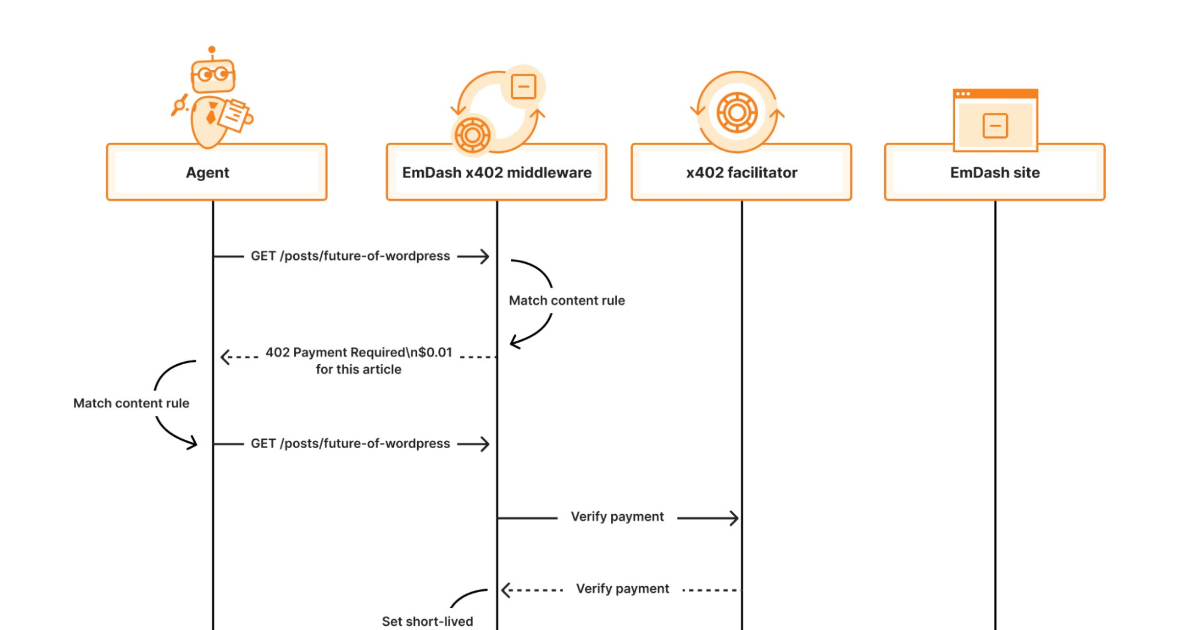
Cloudflare recently announced the preview of EmDash, a new open-source CMS it describes as a β€œspiritual successor to WordPress.” Designed to rebuild the CMS model around a serverless, developer-focused architecture, EmDash includes AI-native features, developer tooling, and migration paths from WordPress, sparking debate across the WordPress and broader CMS community.

By Renato Losio
  •  

Uber’s Hive Federation Decentralizes 16K Datasets and 10+ PB for Zero-Downtime Analytics at Scale

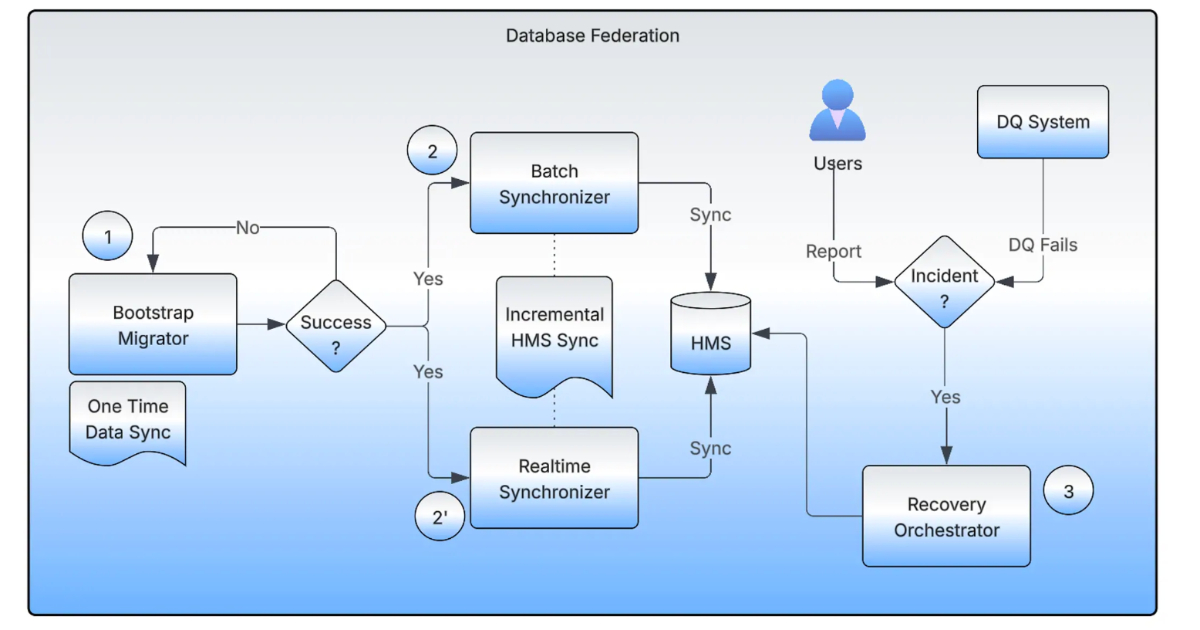
Uber has decentralized its Hive data warehouse, migrating 16,000 datasets totaling over 10 petabytes using pointer-based federation. The migration ensures zero downtime, strict ACL enforcement, improved governance, and scalable, domain-specific datasets for analytics and machine learning workloads.

By Leela Kumili
  •  

AAIF's MCP Dev Summit: Gateways, gRPC, and Observability Signal Protocol Hardening

The MCP Dev Summit North America 2026, held on April 2-3 at the New York Marriott Marquis, gathered about 1,200 attendees. Hosted by the Linux Foundation's Agentic AI Foundation, discussions focused on the Model Context Protocol's evolution and enterprise adoption, particularly by Amazon and Uber, emphasizing security, interoperability, and scaling for production.

By Andrew Hoblitzell
  •  

Presentation: Choosing Your AI Copilot: Maximizing Developer Productivity

Sepehr Khosravi discusses the current state of AI-assisted coding, moving beyond basic autocompletion to sophisticated agentic workflows. He explains the technical nuances of Cursor’s "Composer" and Claude Code’s research capabilities, providing tips for managing context windows and MCP integrations. He shares lessons from industry leaders on shrinking process time beyond just writing code.

By Sepehr Khosravi
  •  

Developing Your Leadership Skills toward Principal Engineering

Work isn’t the only place where you can develop valuable leadership skills, Sophie Weston mentioned in the video The Principal Engineer’s Path from her QCon London talk. She suggested thinking about the things you do outside of your job where you can learn and practice useful leadership skills, and bringing your full skill set - your whole self - to work.

By Ben Linders
  •  

Article: Building Hierarchical Agentic RAG Systems: Multi-Modal Reasoning with Autonomous Error Recovery

In this article, the author explores how hierarchical agentic RAG systems coordinate specialized workers through structured orchestration to improve accuracy, reliability, and explainability in complex enterprise analytics workflows. The article uses Protocol-H as a to show how deterministic routing, reflective retry, and modality-aware reasoning support safer multi-source query execution.

By Abhijit Ubale
  •  

Aspire 13.2 Released with Expanded CLI, TypeScript AppHost Preview, and Dashboard Improvements

Aspire 13.2 brings expanded CLI with detached mode and process management, TypeScript AppHost support in preview, dashboard telemetry export and import, stable Docker Compose publishing, Microsoft Foundry integration, Azure Virtual Network support, and a major VS Code extension update. The release also includes several breaking changes to configuration files and resource commands.

By Almir Vuk
  •  

Google Brings MCP Support to Colab, Enabling Cloud Execution for AI Agents

Google has released the open-source Colab MCP Server, enabling AI agents to directly interact with Google Colab through the Model Context Protocol (MCP). The project is designed to bridge local agent workflows with cloud-based execution, allowing developers to offload compute-intensive or potentially unsafe tasks from their own machines.

By Robert KrzaczyΕ„ski
  •  

Presentation: When Every Bit Counts: How Valkey Rebuilt Its Hashtable for Modern Hardware

Madelyn Olson discusses the evolution of Valkey's data structures, moving away from "textbook" pointer-chasing HashMaps to more cache-aware designs. She explains the implementation of "Swedish" tables to maximize memory density. She shares insights on systems intuition, memory prefetching, and the rigorous testing needed for mission-critical caches.

By Madelyn Olson
  •  

Article: Bloom Filters: Theory, Engineering Trade‑offs, and Implementation in Go

This article walks you through the Go implementation of Bloom filters to optimize the performance of a recommender. It cover the architectural view, Bloom filter mechanics, Go integration, parameter tuning, and practical lessons learned from making it work under production constraints.

By Gabor Koos
  •  

Anthropic Accidentally Exposes Claude Code Source via npm Source Map File

Anthropic's Claude Code CLI had its full TypeScript source exposed after a source map file was accidentally included in version 2.1.88 of its npm package. The 512,000-line codebase was archived to GitHub within hours. Anthropic called it a packaging error caused by human error. The leak revealed unreleased features, internal model codenames, and multi-agent orchestration architecture.

By Steef-Jan Wiggers
  •  

Google Open Sources Experimental Multi-Agent Orchestration Testbed Scion

Designed to manage concurrent agents running in containers across local and remote compute, Scion is an experimental orchestration testbed that enables developers to run groups of specialized agents with isolated identities, credentials, and shared workspaces.

By Sergio De Simone
  •  
❌