Reading view
Organoid-based precision cancer modeling: New frontier in lung cancer research
Cell Rep. 2025 Nov 20;44(12):116595. doi: 10.1016/j.celrep.2025.116595. Online ahead of print.
ABSTRACT
Lung cancer remains a leading cause of cancer-related mortality globally, underscoring the need for advanced preclinical models that accurately recapitulate disease biology. Recent advances in organoid technology have enabled the establishment of patient-derived lung cancer organoids (LCOs), which faithfully reproduce the histological, genetic, and phenotypic features of primary tumors. This organoid-based precision modeling facilitates deeper insights into tumor biology and disease progression, supporting the identification of novel therapeutic targets and biomarkers. In this review, we summarize recent progress in LCO-based precision modeling, focusing on their ability to preserve tumor heterogeneity, link genotype and phenotype through multi-omics integration, and explore tumor-microenvironment interactions via gene editing and co-culture systems. We also highlight the growing importance of LCO biobanks and international collaborations in translational research. Despite challenges such as low establishment efficiency, LCO-based precision modeling offers a powerful platform for understanding lung cancer pathogenesis and guiding the development of more effective therapies.
PMID:41273722 | DOI:10.1016/j.celrep.2025.116595
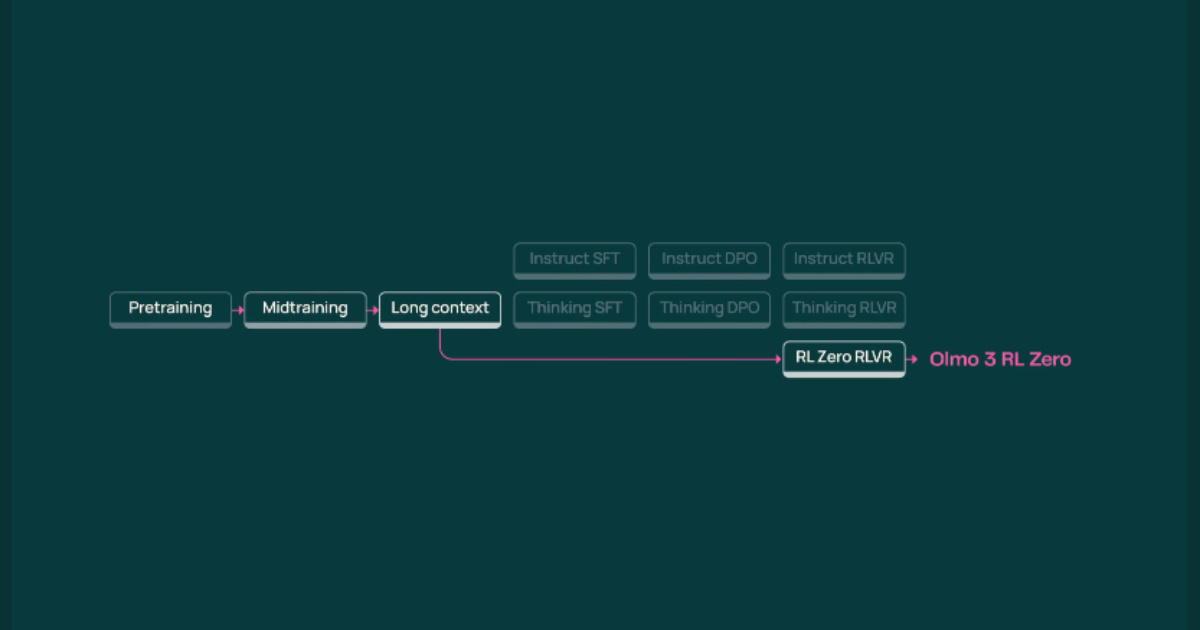
Olmo 3 Release Provides Full Transparency into Model Development and Training

The Allen Institute for AI has unveiled Olmo 3, an open-source language model family that empowers developers with full access to the model lifecycle, from training datasets to checkpoints. Featuring reasoning-focused variants and robust tools for post-training modifications, Olmo 3 promotes transparency, experimentation, and community collaboration, driving innovations in AI.
By Robert KrzaczyńskiPan-cancer prevalence, risk, and clinical and demographic characteristics of Lynch Syndrome-associated variants in BioBank Japan
Commun Med (Lond). 2025 Nov 13. doi: 10.1038/s43856-025-01231-9. Online ahead of print.
ABSTRACT
BACKGROUND: Although germline testing for DNA mismatch repair (MMR) genes is routinely performed, clinical guidelines highlight evidence gaps due to limited populations and biases. We examined germline pathogenic variants of MMR genes (MLH1, MSH2, MSH6, and PMS2) in 112,927 unselected individuals from BioBank Japan.
METHODS: We analyzed 74,085 cancer patients with 23 cancer types and 38,842 controls matched by sex, age, and hospital area from BioBank Japan, collected between April 2003 and March 2018. Germline pathogenic variants in the coding regions and 2 bp flanking intronic sequences of MMR genes were identified using a multiplex PCR-based target sequencing method. We examined associations with cancer types and demographic characterization of the pathogenic variants, comparing findings to existing clinical guidelines.
RESULTS: Here we show 228 pathogenic variants identified in MMR genes, with pathogenic MSH6 variants most frequently observed in endometrial cancer and 12 other significant associations. Twelve other significant associations are noted across a broad range of odds ratios, whereas pancreatic cancer exhibits no such association. Pathogenic variant carriers are diagnosed up to 12.4 years earlier than non-carriers, and colorectal and gastric cancers are diagnosed up to 16.4 years later than indicated by the guidelines. Higher carrier frequencies are observed in patients with both colorectal and endometrial cancers (24.8%) and in those with endometrial cancer and a family history of endometrial (26.0%) or colorectal (16.1%) cancers.
CONCLUSIONS: This study provides critical insights for clinical guidelines on the associations between cancer types, age at diagnosis, and carrier frequency.
PMID:41258140 | DOI:10.1038/s43856-025-01231-9
Latent plasticity of the human pancreas across development, health, and disease
bioRxiv [Preprint]. 2025 Oct 3:2025.10.01.679230. doi: 10.1101/2025.10.01.679230.
ABSTRACT
The pancreas plays a central role in major human diseases, yet our understanding of its cellular diversity and plasticity remains incomplete. Here, we present a single-cell multiomics atlas of the human pancreas, profiling over four million cells and nuclei from 57 donors across fetal development, adult homeostasis, and type 2 diabetes (T2D). Integrating sc/snRNA-seq, snATAC-seq, VASA-seq, spatial transcriptomics (Xenium), and multiplexed proteomics (CODEX), we resolve gene expression, chromatin accessibility, and spatial organization at high resolution. We identify transcriptionally plastic centroacinar-like cells (pCACs) in adults with fetal-like features, delineate endocrine and exocrine lineage trajectories during development, and uncover HNF1A-defined beta cell epigenetic states. In T2D, we observe shifts in beta cell subtypes and altered regulatory programs. Glucose perturbation of healthy islets reveals cell-type-specific adaptation and stress responses. This atlas provides a foundational framework to understand pancreas biology and the role of cellular plasticity in regeneration and disease.
PMID:41256699 | PMC:PMC12622017 | DOI:10.1101/2025.10.01.679230
Foundation Models in Medical Imaging: A Review and Outlook
Embedding Explainable AI in NHS Clinical Safety: The Explainability-Enabled Clinical Safety Framework (ECSF)
CLINB: A Climate Intelligence Benchmark for Foundational Models
MiniGPT-Pancreas: Multimodal Large Language Model for Pancreas Cancer Classification and Detection
Embedding Explainable AI in NHS Clinical Safety: The Explainability-Enabled Clinical Safety Framework (ECSF)
A Novel Hierarchical Integration Method for Efficient Model Merging in Medical LLMs
AI Fairness Beyond Complete Demographics: Current Achievements and Future Directions
A large language model-based approach to quantifying the effects of social determinants in liver transplant decisions
npj Digital Medicine, Published online: 17 November 2025; doi:10.1038/s41746-025-02025-y
A large language model-based approach to quantifying the effects of social determinants in liver transplant decisionsMethods for Analytical Validation of Novel Digital Clinical Measures: Implementation Feasibility Evaluation Using Real-World Datasets
Case Study: Transformer-Based Solution for the Automatic Digitization of Gas Plants
Benevolent Dictators? On LLM Agent Behavior in Dictator Games
AgentFlux: Decoupled Fine-Tuning & Inference for On-Device Agentic Systems
LLM4AD: Large Language Models for Autonomous Driving - Concept, Review, Benchmark, Experiments, and Future Trends
Asking the Right Questions: Benchmarking Large Language Models in the Development of Clinical Consultation Templates
Early Detection of Lung Cancer: A Review of Innovative Milestones and Techniques
J Clin Med. 2025 Nov 3;14(21):7812. doi: 10.3390/jcm14217812.
ABSTRACT
Lung cancer is the most frequently diagnosed cancer and the leading cause of cancer death worldwide. Early detection of lung cancer can lead to identification of the cancer at its initial treatable stages and improves survival. Low-dose CT scan (LDCT) is currently the gold standard for lung cancer screening in high-risk individuals. Despite the observed stage migration and consistently demonstrated disease-specific overall survival benefit, LDCT has inherent limitations, including false-positive results, radiation exposure, and low compliance. Recently, new techniques have been investigated for early detection of lung cancer. Several studies have shown that liquid biopsy biomarkers such as circulating cell-free DNA (cfDNA), microRNA molecules (miRNA), circulating tumor cells (CTCs), tumor-derived exosomes (TDEs), and tumor-educated platelets (TEPs), as well as volatile organic compounds (VOCs), have the power to distinguish lung cancer patients from healthy subjects, offering potential for minimally invasive and non-invasive means of early cancer detection. Furthermore, recent studies have shown that the integration of artificial intelligence (AI) with clinical, imaging, and laboratory data has provided significant advancements and can offer potential solutions to some challenges related to early detection of lung cancer. Adopting AI-based multimodality strategies, such as multi-omics liquid biopsy and/or VOCs' detection, with LDCT augmented by advanced AI, could revolutionize early lung cancer screening by improving accuracy, efficiency, and personalization, especially when combined with patient clinical data. However, challenges remain in validating, standardizing, and integrating these approaches into clinical practice. In this review, we described these innovative milestones and methods, as well as their advantages and limitations in screening and early diagnosis of lung cancer.
PMID:41227214 | PMC:PMC12609116 | DOI:10.3390/jcm14217812