
❌

Reading view

Prognostic Value of Circulating Tumor DNA in HR+/HER2- Stage I-III Breast Cancer: A Systematic Review

Cancers (Basel). 2025 Aug 29;17(17):2831. doi: 10.3390/cancers17172831.

ABSTRACT

Background: Hormone receptor-positive (HR+), HER2-negative breast cancer accounts for the majority of breast cancer diagnoses. While outcomes have improved with neoadjuvant and adjuvant therapies, the risk of late recurrence persists, and there remains a critical need for reliable biomarkers to guide prognosis and post-treatment surveillance. Circulating tumor DNA (ctDNA), detectable via liquid biopsy, has emerged as a promising tool for monitoring minimal residual disease and predicting survival outcomes. This systematic review evaluates the association between ctDNA detection during neoadjuvant or adjuvant treatment and survival outcomes in early-stage HR+/HER2- breast cancer. Methods: This systematic review was conducted in accordance with PRISMA guidelines. A comprehensive literature search of Ovid MEDLINE and Embase was conducted to identify studies published through 3 May 2024 that evaluated ctDNA as a prognostic biomarker in stage I-III HR+/HER2- breast cancer. We included studies reporting recurrence-free survival, invasive disease-free survival, or overall survival and excluded non-original studies, conference abstracts, and non-English articles. Data extraction and qualitative synthesis were performed, and the risk of bias was qualitatively assessed across studies. No review protocol was registered. Results: Eleven studies comprising 1644 patients met the inclusion criteria. In the neoadjuvant setting, ctDNA positivity prior to treatment initiation was associated with inferior survival outcomes. In the adjuvant setting, detection of ctDNA during or after treatment was consistently linked to poorer recurrence-free and invasive disease-free survival. Across studies, ctDNA detection was a significant negative prognostic marker. Conclusions: This systematic review supports the prognostic value of ctDNA in HR+/HER2- early-stage breast cancer. Limitations include small sample sizes, observational study designs, and heterogeneity in ctDNA assays. Standardization of ctDNA testing methods and further prospective trials are needed to validate its clinical utility and explore its potential role in guiding therapeutic interventions.

PMID:40940926 | PMC:PMC12427406 | DOI:10.3390/cancers17172831
  •  

Interventions Based on Biofeedback Systems to Improve Workers’ Psychological Well-Being, Mental Health, and Safety: Systematic Literature Review

Background: In modern, high-speed work settings, the significance of mental health disorders is increasingly acknowledged as a pressing health issue, with potential adverse consequences for organizations, including reduced productivity and increased absenteeism. Over the past few years, various mental health management solutions, such as biofeedback applications, have surfaced as promising avenues to improve employees’ mental well-being. However, most studies on these interventions have been conducted in controlled laboratory settings. Objective: This review aimed to systematically identify and analyze studies that implemented biofeedback-based interventions in real-world occupational settings, focusing on their effectiveness in improving psychological well-being and mental health. Methods: A systematic review was conducted following the PRISMA (Preferred Reporting Items for Systematic Reviews and Meta-Analyses) guidelines. We searched PubMed and EBSCO databases for studies published between 2012 and 2024. Inclusion criteria were original peer-reviewed studies that focused on employees and used biofeedback interventions to improve mental health or prevent mental illness. Exclusion criteria included nonemployee samples, lack of a description of the intervention, and low methodological quality (assessed using the Physiotherapy Evidence Database [PEDro] checklist). Data were extracted on study characteristics, intervention type, physiological and self-reported outcomes, and follow-up measures. Risk of bias was assessed, and VOSviewer was used to visualize the distribution of research topics. Results: A total of 9 studies met the inclusion criteria. The interventions used a range of delivery methods, including traditional biofeedback, mobile apps, mindfulness techniques, virtual reality, and cerebral blood flow monitoring. Most studies focused on breathing techniques to regulate physiological responses (eg, heart rate variability and respiratory sinus arrhythmia) and showed reductions in stress, anxiety, and depressive symptoms. Mobile and app-directed interventions appeared particularly promising for improving resilience and facilitating recovery after stress. Of the 9 studies, 8 (89%) reported positive outcomes, with 1 (11%) study showing initial increases in stress due to logistical limitations in biofeedback access. Sample sizes were generally small, and long-term follow-up data were limited. Conclusions: Biofeedback interventions in workplace settings show promising short-term results in reducing stress and improving mental health, particularly when incorporating breathing techniques and user-friendly delivery methods such as mobile apps. However, the field remains underexplored in occupational contexts. Future research should address adherence challenges, scalability, cost-effectiveness, and long-term outcomes to support broader implementation of biofeedback as a sustainable workplace mental health strategy.
  •  
  •  

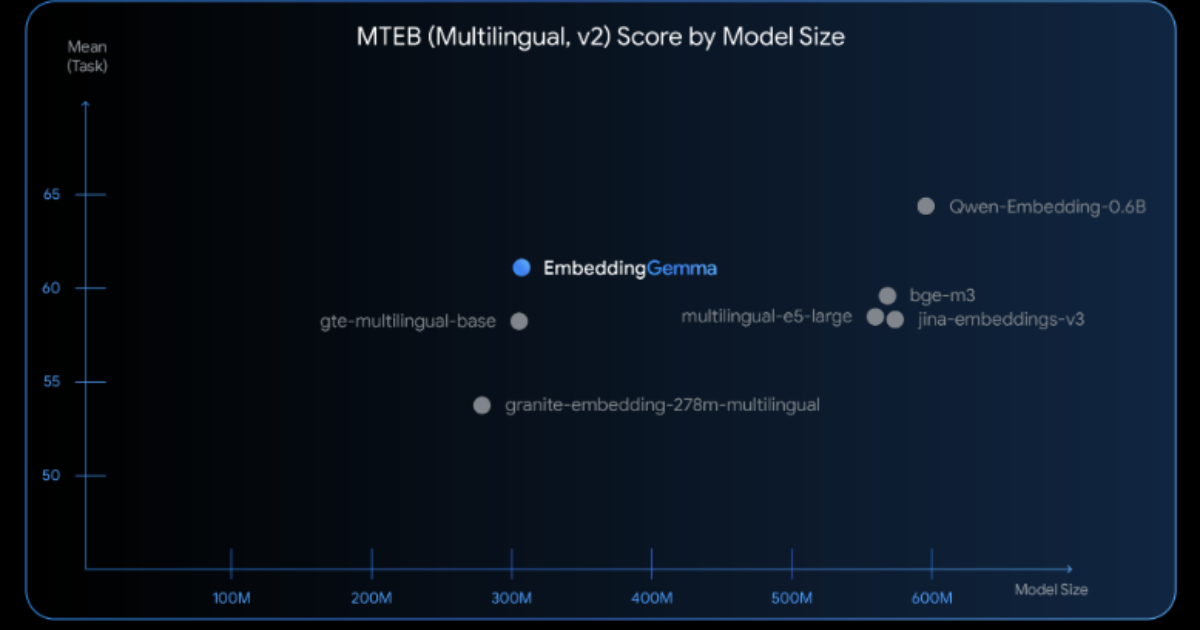
Google DeepMind Launches EmbeddingGemma, an Open Model for On-Device Embeddings

Google DeepMind has introduced EmbeddingGemma, a 308M parameter open embedding model designed to run efficiently on-device. The model aims to make applications like retrieval-augmented generation (RAG), semantic search, and text classification accessible without the need for a server or internet connection.

By Robert Krzaczyński
  •  

Single-cell multiome and spatial profiling reveals pancreas cell type-specific gene regulatory programs of type 1 diabetes progression

Sci Adv. 2025 Sep 12;11(37):eady0080. doi: 10.1126/sciadv.ady0080. Epub 2025 Sep 10.

ABSTRACT

Cell type-specific regulatory programs that drive type 1 diabetes (T1D) in the pancreas are poorly understood. Here, we performed single-nucleus multiomics and spatial transcriptomics in up to 32 nondiabetic (ND), autoantibody-positive (AAB+), and T1D pancreas donors. Genomic profiles from 853,005 cells mapped to 12 pancreatic cell types, including multiple exocrine subtypes. β, Acinar, and other cell types, and related cellular niches, had altered abundance and gene activity in T1D progression, including distinct pathways altered in AAB+ compared to T1D. We identified epigenomic drivers of gene activity in T1D and AAB+ which, combined with genetic association, revealed causal pathways of T1D risk including antigen presentation in β cells. Last, single-cell and spatial profiles together revealed widespread changes in cell-cell signaling in T1D including signals affecting β cell regulation. Overall, these results revealed drivers of T1D in the pancreas, which form the basis for therapeutic targets for disease prevention.

PMID:40929272 | PMC:PMC12422192 | DOI:10.1126/sciadv.ady0080

  •  
❌