❌

Reading view

Building an Internal Developer Platform with Artificial Intelligence

Agents are becoming the new developer platform, using semantic search with data from tools like Git, Slack, and Jira for context. Things to consider are setting guardrails to block or allow things, and using logs, metrics, and traces to understand agent behavior.

By Ben Linders


  •  

Presentation: Teaching Engineers, Trusting AI: How Education Enabled Autonomous Code Review

Sarah Deitke discusses how Duolingo drives cultural AI adoption beyond tooling access. She explains their internal AI literacy workshops and observability dashboards, then shares a case study on redesigning code review using an automated PR risk-assessment bot. Deitke demonstrates how pairing targeted developer education with safe AI guardrails speeds up delivery without increasing defect rates.

By Sarah Deitke
  •  

Presentation: Platform Engineering in the Age of AI

The panelists explain how platform teams adapt to support AI-assisted engineering, highlighting which capabilities belong in the platform. They discuss trade-offs between standardization and developer autonomy, while sharing strategies to manage AI tooling, security guardrails, and shifting workflows.

By StΓ©phane Di Cesare, Davide de Paolis, Stephen Cihak, Camila Macedo, Renato Losio
  •  

Github Integrates AI to Improve Accessibility Issue Management and Automate Feedback Triage

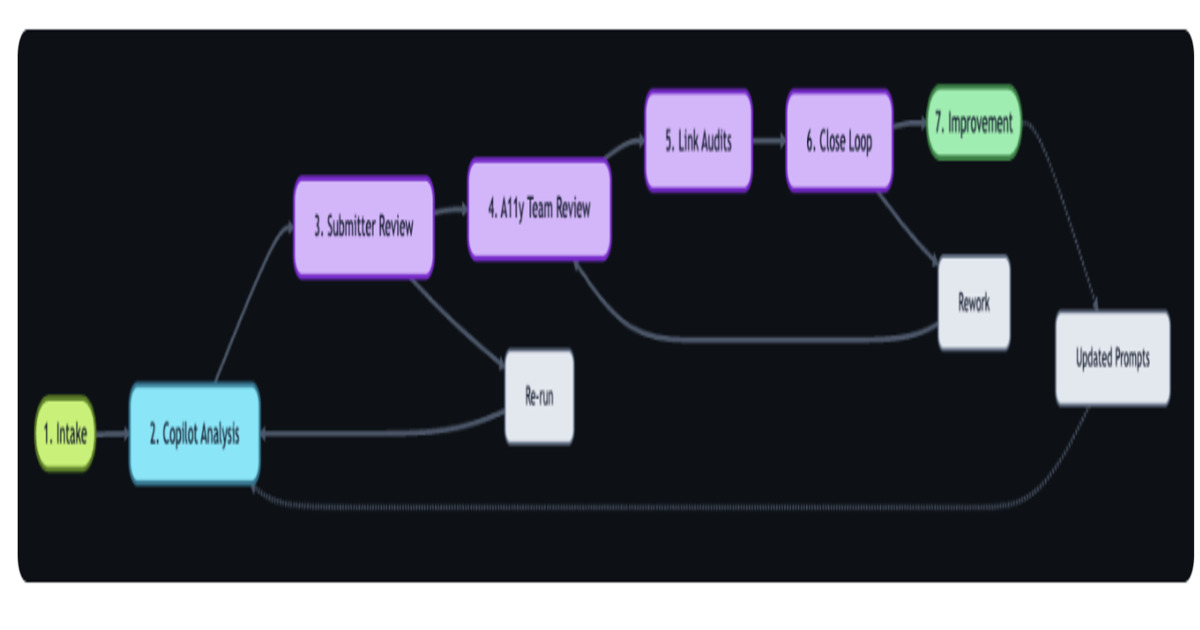
GitHub has launched a continuous AI-powered workflow to manage accessibility feedback at scale. Using GitHub Actions, Copilot, and Models APIs, the system centralizes reports, analyzes WCAG compliance, and automates triage while maintaining human validation. Teams now resolve feedback faster, improving inclusion and cross-functional collaboration.

By Leela Kumili
  •  
❌