❌

Reading view

M&T Bank expands enterprise AI after years of technology overhaul

M&T Bank has deployed AI copilots to more than 15,000 employees as the US regional bank applies AI to internal operations, customer service, software development, and risk management.

The bank uses AI to analyse call-centre conversations, draft reports, generate code, identify customer needs, and flag portfolio risks, according to Fast Company. M&T is also examining agentic AI applications in cybersecurity and fraud detection.

American Banker reported in September 2025 that 16,000 of M&T’s roughly 22,000 employees were already using Microsoft Copilot for tasks including drafting emails and reports and summarising call-centre conversations.

Before the wider rollout, M&T initially restricted employee access to public large language models. Chief data officer Andrew Foster told American Banker that the bank blocked the tools because employees could potentially enter sensitive company information into public-facing services.

M&T later evaluated enterprise providers and selected Microsoft Copilot, starting with a pilot involving about 800 employees before expanding access across the organisation.

Foster said using generative AI to summarise call-centre conversations saves about six minutes per call. Software developers at the bank also use GitLab tools to generate code, while employees remain responsible for reviewing AI-generated work.

M&T’s human-review requirement is also reflected in its 2026 Code of Business Conduct and Ethics. The policy requires employees to use approved AI tools and prohibits confidential, proprietary, customer, employee, or regulated information from being entered into unapproved systems. Employees remain responsible for the accuracy and appropriateness of AI-assisted work.

Building the technology and data foundation

M&T’s AI deployment follows a technology overhaul that began in 2018. The bank said more than half of its technology specialists were external workers at the time, compared with an 80% in-house technology workforce today.

M&T now has about 2,000 technologists working across more than 300 agile teams and has hired more than 1,000 technology specialists during the programme.

The bank has also replaced dozens of older platforms. M&T said technology outages have fallen by more than 80% since 2018, while the number of system upgrades completed annually has increased by 300%.

Technology spending exceeded $1.2 billion in 2025, nearly three times its 2017 level. Wisler told Forbes in August 2026 that annual technology releases increased from about 15,000 in 2018 to 65,000 in 2025.

Wisler joined M&T as chief information officer in 2018 before becoming senior executive vice-president for technology and operations in 2025. His current remit covers both technology and operational functions across the bank.

M&T’s data programme developed alongside the broader technology overhaul. Foster, who joined the bank in 2023, began building a data-lineage programme to track where information originates, how it is used, and how it moves between systems.

Foster told American Banker that the data-lineage work was not created in response to generative AI. He described it as a core capability for understanding M&T’s data estate.

The bank also established a Data Academy focused on data governance and data skills, with around 2,000 employees participating in the programme.

M&T has created an internal repository called Edison containing authoritative documents and information on bank policies. The bank also uses data-lineage software from Solidatus and Monte Carlo to trace information as it passes through databases, applications, and business-intelligence systems.

The lineage work gives M&T visibility into the source, meaning, quality, and governance of individual data elements, according to Foster. He said one application for that governed data is the bank’s use of Copilot.

M&T also uses retrieval-augmented generation with internal, governed data, according to American Banker.

Scaling AI into daily banking operations

Wisler told Forbes that M&T is pursuing generative AI through three routes: general employee use, AI capabilities embedded in existing applications, and proprietary systems built around the bank’s own data and processes.

M&T operates more than 1,800 applications, many supplied by third-party vendors. Wisler said one of the bank’s AI pathways is identifying useful AI capabilities already embedded within those applications.

M&T’s third pathway involves proprietary AI development around the bank’s own data and processes. Forbes reported that early applications include repetitive operational work, software development, fraud prevention, and cyber defence.

Fast Company’s September report also said M&T continues to assess both internally developed AI systems and external tools, including general enterprise software and technology designed specifically for banks.

Earlier workforce use cases centred on drafting, summarisation, call-centre work, and software development. Fast Company reported that newer applications include identifying customer needs and flagging portfolio risks.

Other large US banks have also expanded generative AI across employee workflows.

JPMorganChase launched its internal LLM Suite platform to more than 200,000 employees in 2024. By 2025, more than 65,000 employees in its Corporate and Investment Bank were actively using the platform, while more than 90% of its engineers were using AI coding assistants.

The bank also said AI-based transaction screening allowed it to review more than twice the previous transaction volume while reducing manual operator checks by half.

Bank of America is using a generative AI-enabled system called EricaAssist with more than 18,000 customer service employees. The tool summarises why a customer is calling, retrieves relevant information, and recommends possible next steps while keeping the employee responsible for the interaction.

Bank of America said in July 2026 that EricaAssist can deliver contextual guidance in under three seconds and has reduced average call times by nearly one minute. The bank plans to extend the system to additional servicing scenarios and business lines later in 2026.

(Photo by Alain Pierre-Lys)

See also: Bank of England reviews AI rules for agentic AI in finance

Banner for AI & Big Data Expo by TechEx events.

Want to learn more about AI and big data from industry leaders? Check out AI & Big Data Expo taking place in Amsterdam, California, and London. The comprehensive event is part of TechEx and is co-located with other leading technology events, click here for more information.

AI News is powered by TechForge Media. Explore other upcoming enterprise technology events and webinars here.

The post M&T Bank expands enterprise AI after years of technology overhaul appeared first on AI News.

  •  

Enterprise AI roadblocks and roadmaps, security and physical AI: Day two at TechEx

Day two of TechEx North America has been more of a deeper, critical examination of AI in the enterprise, but with a optimistic bent. The AI and Big Data programme opened with reference to what was termed the “AI graveyard” – that is, AI projects that seem to perform well in pilot, but don’t seem to cut it in the real world. Despite the presence of what might be a negative term, multiple speakers and sessions addressed ways in which the forward-thinking business might not ever have to experience the technological cemetery.

The different show tracks of the second day of this event dived deeper into the pervasive issues that may be affecting AI deployments. Sessions in the Enterprise AI Implementation, ROI and Adoption tracks took stalled pilots as a starting point, and tried to ascertain the reasons behind faltering projects. There was a good deal of sound advice for organisations, with sessions on focusing agentic AI on specific business areas, building agent-ready data foundations (planning for success under the hood), and the realities of token-based AI charging on the business’s finances.

At an infra level, there were deeper discussions too on whether companies should buy or build physical infrastructure for their AI projects, and the best ways to create durable ROI on data and AI projects when all the many effecting factors are given due consideration..

In projects where AI roll-outs get stuck, the core issue could be epitomised by the concept of the ‘personal copilot’. This works well on a single worker’s desk and for their individual workflows, but doesn’t really scale to a whole department – never mind a whole business. Many companies report having the budget to start such AI experiments at the level of the single user, and there are usually great results. When said user is a C-suite executive, a personally-achieved efficiency tends to increase the levels of excitement around the company, which has to be considered a positive. But transitioning from this point to meaningful change across the business is where many organisations find their individual struggles and roadblocks. Here was the meat and gravy of day two’s activities on the show floor and the numerous stages at the San Jose McEnery Convention Center.

Cyber issues

Despite the use of terms like ‘stalled’ and ‘difficult to scale’, in the Cyber Security and Cloud Expo stage, speakers cited the the speed at which businesses and organisations adopt agentic AI systems as a cause of a ‘velocity gap’. Where AI deployments are successful, they gain traction fast! But security and governance issues crop up when business units adopt generative AI faster than the security team can govern and ensure the enterprise’s safety.

Like the proverbial double-edged sword, AI can be considered as a force that changes and can improve both attack and defence in the cybersecurity space. There are the issues created internally by unbounded agents and large language models, plus the addition to attackers’ arsenals of AI scanning tools that can identify potential exploits.

Also prevalent among the round-table discussions and keynote speeches was the older theme of shadow IT, now presenting in its new guise as shadow AI. If staff place sensitive material into unsanctioned tools for example, or if approved AI systems are poorly bounded and managed, then the attack surface can expand without the cybersecurity team even being aware of it happening. Therefore, data governance and system oversight are becoming more intertwined than before – this was the message from both cybersecurity strands of the show, and the Cloud and Big Data elements too.

For pure-play cybersecurity functions, zero trust was presented as one answer to the runaway adoption of AI outside the auspices of cybersecurity teams – the adoption the ‘denial by default’ position for humans and machines alike. Proof of identity and privilege levels need also to apply to services and agents; that way, automated workflows are subject to the same permission models as every other element in the IT stack.

The second day of TechEx North America was certainly not a rejection of decision-makers’ AI ambitions – the role of AI and even agents were things of accepted fact among speakers, thought-leaders, and delegates at the event. But there were details and considerations presented by representatives from different industries and business functions, each with positive and insightful things to contribute. Each placed their concerns and their enthusiasms on the table, adding to the discussions around AI implementation in 2026.

The march of the robots

And there was a great deal of excitement, still, in many areas of the conference floor. The humanoid robots on show were a source of much enthusiasm (everyone seems to love a lovable android!), but more pragmatically, the new Physical AI track drew some of the show’s biggest audiences. Multiple delegates away from the track cited software coding as the place that has first yielded positive results from the use of large language models in professional settings. And from many places too came the opinion that automated physical systems will be the next industry segment set to benefit from concerted work around new models and their practical harnesses.

The AI models at the heart of next-gen physical AI are unlikely to be LLMs (although these will be useful if the devices are designed to interact with humans), and as such models develop and emerge from their research stages, it’s the TechEx Events series that will be the first to showcase and present these, and how they can work viably in business contexts.

New learning strands to the event

This year’s event saw a welcome injection of pragmatic coding, with hands-on learning sessions that took attendees through spinning up their own AI agentic models, with lessons in how agents can improve themselves, right from interactive Google Colab instances. The TechEx Learning Hub also featured workshops from Nvidia and the ever-popular Google Hackathon, with learners ranging in abilities from those that needed introducing to an IDE through to those that came with software skills already well-tuned. Putting learnings into practice is what this event is all about, whether it’s C-suite decision makers taking on lessons on best strategic practices, or developers turning creative ideas into reality.

TechEx takes the cutting edge, and distils it through the business lens; pragmatic yet future facing. Catch the next leg of TechEx in Amsterdam this September – who knows how far we may have progressed in the space of four short months?

(Image source: TechEx Events)

Want to learn more about AI and big data from industry leaders? Check out AI & Big Data Expo taking place in Amsterdam, California, and London. The comprehensive event is part of TechEx and co-located with other leading technology events. Click here for more information.

AI News is powered by TechForge Media. Explore other upcoming enterprise technology events and webinars here.

The post Enterprise AI roadblocks and roadmaps, security and physical AI: Day two at TechEx appeared first on AI News.

  •  

GitHub Copilot CLI Reaches General Availability

GitHub has launched Copilot CLI into general availability, bringing generative AI directly to the terminal. Integrated with the GitHub CLI, it offers natural language command suggestions and code explanations. Recent updates introduce "agentic" workflows with Autopilot mode and GPT-5.4 support, alongside new enterprise telemetry for tracking usage across development teams.

By Mark Silvester
  •  

Github Integrates AI to Improve Accessibility Issue Management and Automate Feedback Triage

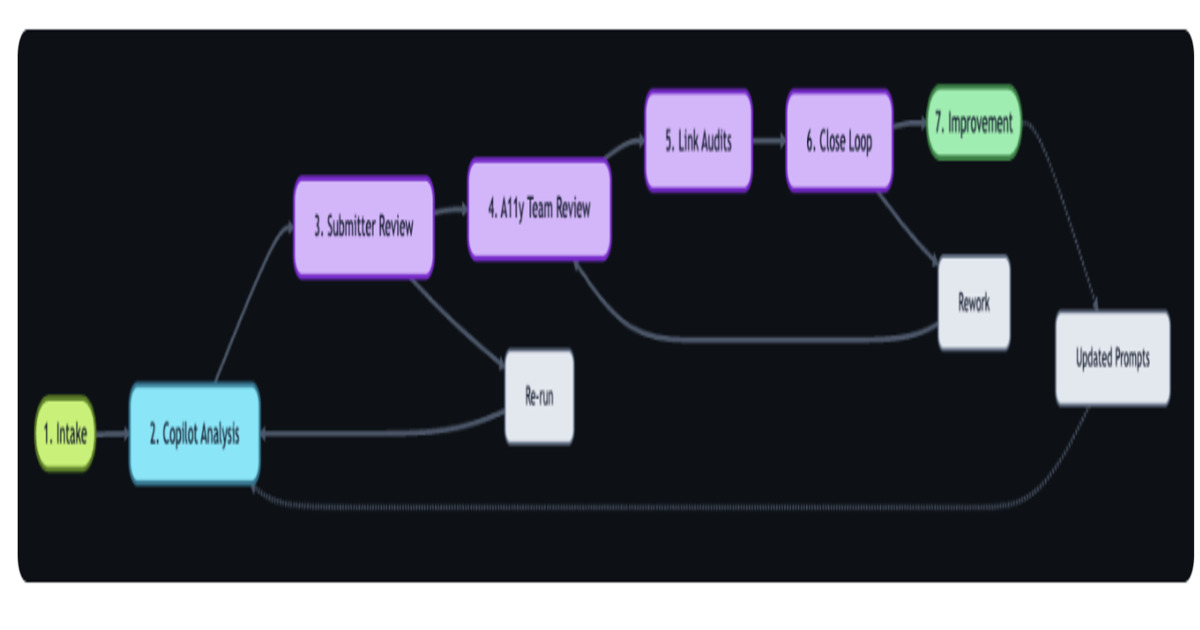
GitHub has launched a continuous AI-powered workflow to manage accessibility feedback at scale. Using GitHub Actions, Copilot, and Models APIs, the system centralizes reports, analyzes WCAG compliance, and automates triage while maintaining human validation. Teams now resolve feedback faster, improving inclusion and cross-functional collaboration.

By Leela Kumili
  •  
❌