❌

Reading view

Presentation: When Every Bit Counts: How Valkey Rebuilt Its Hashtable for Modern Hardware

Madelyn Olson discusses the evolution of Valkey's data structures, moving away from "textbook" pointer-chasing HashMaps to more cache-aware designs. She explains the implementation of "Swedish" tables to maximize memory density. She shares insights on systems intuition, memory prefetching, and the rigorous testing needed for mission-critical caches.

By Madelyn Olson


  •  

Anthropic Accidentally Exposes Claude Code Source via npm Source Map File

Anthropic's Claude Code CLI had its full TypeScript source exposed after a source map file was accidentally included in version 2.1.88 of its npm package. The 512,000-line codebase was archived to GitHub within hours. Anthropic called it a packaging error caused by human error. The leak revealed unreleased features, internal model codenames, and multi-agent orchestration architecture.

By Steef-Jan Wiggers
  •  

Google Open Sources Experimental Multi-Agent Orchestration Testbed Scion

Designed to manage concurrent agents running in containers across local and remote compute, Scion is an experimental orchestration testbed that enables developers to run groups of specialized agents with isolated identities, credentials, and shared workspaces.

By Sergio De Simone
  •  

Podcast: Context Engineering with Adi Polak

In this episode, Thomas Betts and Adi Polak talk about the need for context engineering when interacting with LLMs and designing agentic systems. Prompt engineering techniques work with a stateless approach, while context engineering allows AI systems to be stateful.

By Adi Polak
  •  

Dynamic Languages Faster and Cheaper in 13-Language Claude Code Benchmark

A 600-run benchmark by Ruby committer Yusuke Endoh tested Claude Code across 13 languages, implementing a simplified Git. Ruby, Python, and JavaScript were the fastest and cheapest, at $0.36- $0.39 per run. Statistically typed languages cost 1.4-2.6x more. Adding type checkers to dynamic languages imposed 1.6-3.2x slowdowns. Full dataset available on GitHub.

By Steef-Jan Wiggers
  •  

Anthropic Designs Three-Agent Harness Supports Long-Running Full-Stack AI Development

Anthropic introduces a three-agent harness separating planning, generation, and evaluation to improve long-running autonomous AI workflows for frontend and full-stack development. Industry commentary highlights structured approaches, iterative evaluation, and practical methods to maintain coherence and quality over multi-hour AI coding sessions.

By Leela Kumili
  •  

TigerFS Mounts PostgreSQL Databases as a Filesystem for Developers and AI Agents

TigerFS is a new experimental filesystem that mounts a database as a directory and stores files directly in PostgreSQL. The open source project exposes database data through a standard filesystem interface, allowing developers and AI agents to interact with it using common Unix tools such as ls, cat, find, and grep, rather than via APIs or SDKs.

By Renato Losio
  •  

Github Integrates AI to Improve Accessibility Issue Management and Automate Feedback Triage

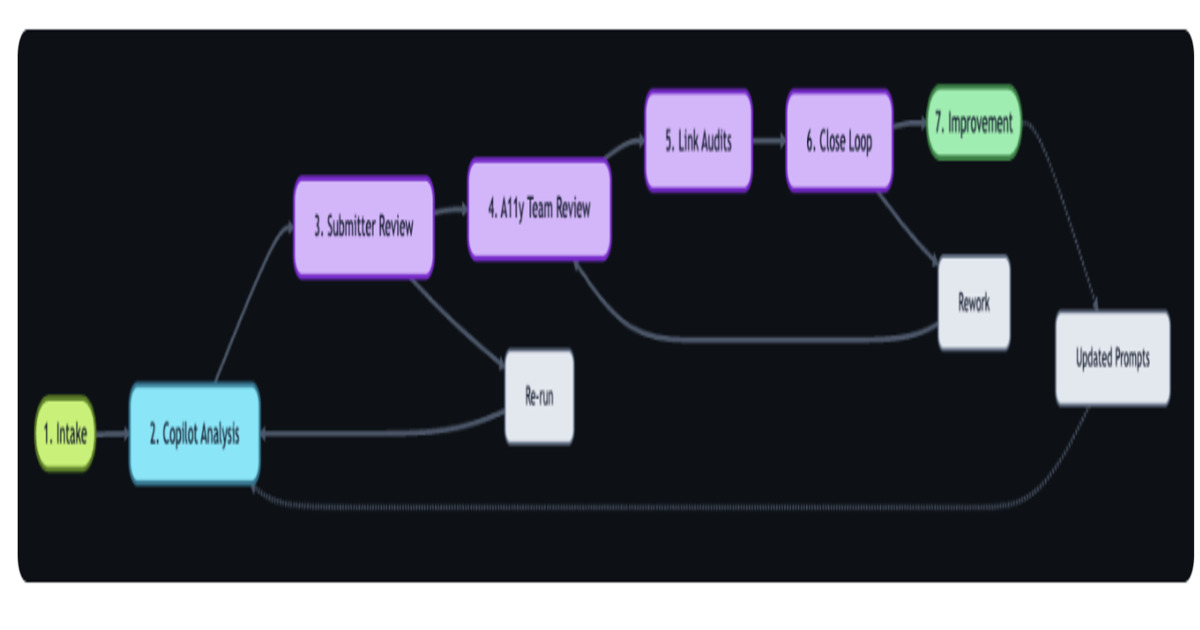
GitHub has launched a continuous AI-powered workflow to manage accessibility feedback at scale. Using GitHub Actions, Copilot, and Models APIs, the system centralizes reports, analyzes WCAG compliance, and automates triage while maintaining human validation. Teams now resolve feedback faster, improving inclusion and cross-functional collaboration.

By Leela Kumili
  •  

Presentation: Directing a Swarm of Agents for Fun and Profit

Adrian Cockcroft explains the transition from cloud-native to AI-native development. He shares his "director-level" approach to managing swarms of autonomous agents using tools like Cursor and Claude Flow. Discussing real-world experiments in BDD, MCP servers, and language porting, he discusses why the future of engineering lies in building platforms that orchestrate AI-driven development.

By Adrian Cockcroft
  •  
❌