❌

Reading view

Presentation: When Every Bit Counts: How Valkey Rebuilt Its Hashtable for Modern Hardware

Madelyn Olson discusses the evolution of Valkey's data structures, moving away from "textbook" pointer-chasing HashMaps to more cache-aware designs. She explains the implementation of "Swedish" tables to maximize memory density. She shares insights on systems intuition, memory prefetching, and the rigorous testing needed for mission-critical caches.

By Madelyn Olson
  •  

STAT+: Gilead to buy cancer biotech Tubulis for more than $3 billion

In a move that will grow its oncology pipeline, Gilead Sciences is spending more than $3 billion to buy the German biotech Tubulis, the companies said Tuesday.

The deal includes an upfront payment of $3.15 billion and up to $1.85 billion more if certain milestones are reached. It also highlights both the therapeutic and commercial promise of antibody-drug conjugates, the next-generation chemotherapy treatments that the privately held Tubulis is developing.

Gilead’s latest move comes just months after it said it would acquire Arcellx in a deal worth $7.8 billion. The two companies had already been working together on a multiple myeloma CAR-T therapy that could be approved later this year. Gilead last month also announced that it was buying Ouro Therapeutics, which is focused on drugs for autoimmune disease, for up to $2.18 billion.

Continue to STAT+ to read the full story…

© Justin Sullivan/Getty Images

  •  

Article: Bloom Filters: Theory, Engineering Trade‑offs, and Implementation in Go

This article walks you through the Go implementation of Bloom filters to optimize the performance of a recommender. It cover the architectural view, Bloom filter mechanics, Go integration, parameter tuning, and practical lessons learned from making it work under production constraints.

By Gabor Koos
  •  

University of Michigan wins 2026 STAT Madness for new insights into abdominal aortic aneurysms

An abdominal aortic aneurysm is a life-threatening vascular condition with limited treatment options. 

Now, researchers from the University of Michigan Frankel Cardiovascular Center have identified a driving force behind the condition, opening up a potential target for new therapies. Their paper uncovering the causal link between triglycerides and abdominal aortic aneurysms won the STAT Madness 2026 popular vote. 

Read the rest…

© Kara Gavin/University of Michigan

  •  

STAT+: FDA backs proposals to entice pharma companies to test, make drugs domestically

WASHINGTON — The Food and Drug Administration used the president’s budget to propose policies aimed at encouraging domestic development and manufacturing of drugs.  

FDA Commissioner Marty Makary has said the agency needs “giant, big ideas” to counter China’s dominance in early-stage clinical development of drugs. Among the FDA’s ideas are proposals to make it easier to run early-stage trials in the U.S. and to hand an advantage to U.S.-based generics manufacturers.

The Trump administration has been using a variety of policy levers to try and bring drug manufacturing to the U.S. For example, many of the brand drugmakers that struck deals to lower U.S. prices also promised to increase domestic manufacturing, under the threat of tariffs.

Continue to STAT+ to read the full story…

© DREW ANGERER/AFP via Getty Images

  •  

Anthropic Accidentally Exposes Claude Code Source via npm Source Map File

Anthropic's Claude Code CLI had its full TypeScript source exposed after a source map file was accidentally included in version 2.1.88 of its npm package. The 512,000-line codebase was archived to GitHub within hours. Anthropic called it a packaging error caused by human error. The leak revealed unreleased features, internal model codenames, and multi-agent orchestration architecture.

By Steef-Jan Wiggers
  •  

Google Open Sources Experimental Multi-Agent Orchestration Testbed Scion

Designed to manage concurrent agents running in containers across local and remote compute, Scion is an experimental orchestration testbed that enables developers to run groups of specialized agents with isolated identities, credentials, and shared workspaces.

By Sergio De Simone
  •  

STAT+: A key Medicare Advantage announcement is due today

This is the online version of STAT’s weekly email newsletter Health Care Inc. Sign up here.

Well hullo! You think you can get the last word, literally, with AI? Think again. There’s always human interaction available here: bob.herman@statnews.com.

Today’s the day

By law, the 2027 Medicare Advantage payment regulation must come out today. It will set the tone for how the Trump administration wants to work with the health insurance industry: as the “new sheriff in town” or just another friendly regulator.

Continue to STAT+ to read the full story…

© Photo illustration: Alex Hogan/STAT

  •  

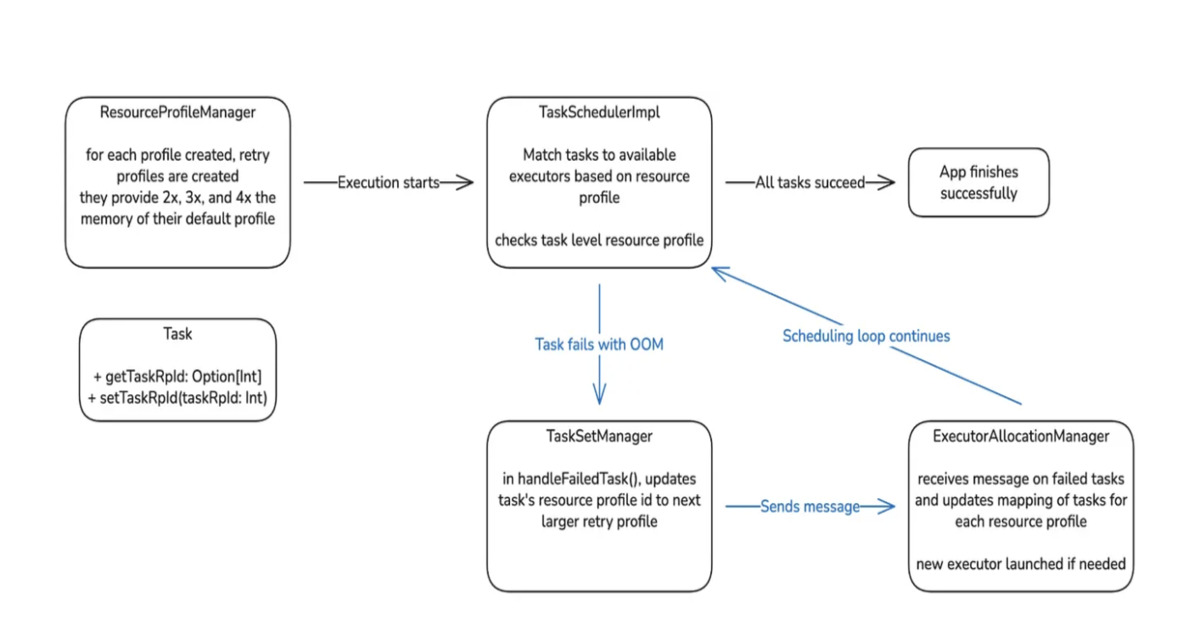
Pinterest Reduces Spark OOM Failures by 96% Through Auto Memory Retries

Pinterest Engineering cut Apache Spark out-of-memory failures by 96% using improved observability, configuration tuning, and automatic memory retries. Staged rollout, dashboards, and proactive memory adjustments stabilized data pipelines, reduced manual intervention, and lowered operational overhead across tens of thousands of daily jobs.

By Leela Kumili
  •  

STAT+: Stealth biotech Stipple bets on secretive ADCs

Want to stay on top of the science and politics driving biotech today? Sign up to get our biotech newsletter in your inbox.

A four-month FDA delay prompted a cash-strapped biotech company to shutter. The White House’s proposed NIH cuts are drawing bipartisan backlash. Peptide hype is outpacing evidence. And more!

The need-to-know this morning

  • Neurocrine Biosciences said this morning that it would buy Soleno Therapeutics and its treatment for Prader-Willi syndrome for $2.9 billion. Neurocrine is paying $53 a share for Soleno, a 34% premium to its closing price on Thursday.

A four-month FDA delay derailed a small biotech. Is it a sign of the times?

FDA delays can happen. For large drugmakers, they can be frustrating; for small drugmakers, they can be existential.

Continue to STAT+ to read the full story…

© Adobe

  •  

Article: A Better Alternative to Reducing CI Regression Test Suite Sizes

How can you focus in a sea of results from a large regression test suite? This article describes a stochastic approach that relies on some degree of redundancy in your CI regression test set. This approach does not guarantee you will catch every bug every time, but it gives you your best bet of not missing the subtle signatures of all the bugs uncovered by your CI regression test suite runs.

By James Bornefelt Westfall
  •  

Dynamic Languages Faster and Cheaper in 13-Language Claude Code Benchmark

A 600-run benchmark by Ruby committer Yusuke Endoh tested Claude Code across 13 languages, implementing a simplified Git. Ruby, Python, and JavaScript were the fastest and cheapest, at $0.36- $0.39 per run. Statistically typed languages cost 1.4-2.6x more. Adding type checkers to dynamic languages imposed 1.6-3.2x slowdowns. Full dataset available on GitHub.

By Steef-Jan Wiggers
  •  

Java News Roundup: TornadoVM 4.0, Google ADK for Java 1.0, Grails, Tomcat, Log4j, Gradle

This week's Java roundup for March 30th, 2026, features news highlighting: the GA release of TornadoVM 4.0 and Google ADK for Java 1.0; first release candidates of Grails and Gradle; maintenance releases of Micronaut, Apache Tomcart and Apache Log4j; and an update on Jakarta EE 12.

By Michael Redlich
  •  
❌