❌

Reading view

  •  

Views of People With Psychosis About Algorithm-Based Relapse Prediction and Data Sharing: Qualitative Study

Background: Preventing relapses of psychosis is difficult and important. Digital remote monitoring (DRM) systems are being developed and tested to support this. Increasingly, these systems use algorithm-based relapse prediction. Hence, understanding stakeholder views about algorithmic prediction is crucial. Existing qualitative work has explored health professionals’ views, but very few studies have examined the perspectives of people with psychosis on this topic. Objective: This paper aimed to provide an in-depth examination of the views of people with psychosis regarding algorithmic relapse prediction within a DRM system that incorporates active symptom monitoring and passive sensing data. Methods: People with psychosis (n=58) were recruited from 6 geographically distinct areas of the United Kingdom. They participated in semistructured qualitative interviews exploring their views about using a DRM system that predicts psychosis relapse based on a machine learning algorithm. Transcripts were analyzed using reflexive thematic analysis. People with lived experience of psychosis were involved extensively in study design, analysis, and reporting. Results: Findings were described across 4 themes. First, was a prominent theme. Participants emphasized that transparency about algorithm sensitivity and specificity is crucial and discussed the risks of the relapse prediction algorithm producing false positives (flagging that someone was relapsing when they were not) and false negatives (missing actual relapses). In both cases, participants said that errors may be partially mitigated through a approach (theme 2), with DRM blended with human oversight, from clinicians or a dedicated digital monitoring team, and calibrated based on service user, carer, and clinician feedback. The third theme, noted the interplay between users’ trust in the DRM system and their relationship with the clinical team. This theme described participants’ fears about potential overreactions (hospitalization or excessive medication) or underreactions (no additional support) from the clinical team in response to algorithm-generated relapse predictions. It emphasized the importance of retaining choice around the use of relapse detection algorithms and the sharing of personal data. The final theme described participants’ views about the , including facilitating early intervention, triaging care according to need, minimizing human bias in assessment, and efficiency in saving staff time. Conclusions: People with psychosis acknowledged potential benefits of algorithm-assisted relapse prediction for receiving timely or efficient care, but with several caveats. Algorithm-generated relapse alerts need to be sufficiently accurate and must be interpreted, with understanding of their limitations, by a trustworthy human who is aware of the relevant context. Algorithm-based relapse predictions should only be used with valid consent, in a way that promotes and respects the autonomy and voice of service users and avoids increasing the use of excessive restriction.
  •  

Misinformation in Social Media Narratives on Highly Pathogenic Avian Influenza: Systematic Content Analysis of Facebook and Instagram Posts

Background: Recurrent outbreaks of the highly pathogenic avian influenza (HPAI) A (H5N1) virus in farmed poultry, and reports of infections in dairy cattle herds in the United States since March 2024, have triggered concerns about the spillover threat to human populations and a subsequent influenza pandemic. The increasing threat that H5N1 poses to human health has led to more vigilant public health monitoring of these developments. In addition to intensifying surveillance, preventative strategies—like vaccinating those at higher risk—are being evaluated to help minimize infection and spread. Objective: Efforts to mitigate and respond to such an event will entail broad public health interventions including vaccination. However, analysis of the COVID-19 pandemic suggests that information quality can significantly impact the effectiveness of such measures by influencing public understanding and trust. Misinformation about H5N1 and other viruses circulating online often includes inaccurate information about transmission, prevention, and the severity of the viruses. By systematically analyzing these false narratives, public health authorities can better tailor their pandemic prevention, preparedness, and response strategies. Methods: In light of the emerging threat of H5N1, we analyzed the content of social media posts from Facebook (approximately 350,000) and Instagram (n=69,551) related to HPAI. Using 40 keywords associated with misinformation, we identified over 500 posts explicitly mentioning H5N1 and related terms for further systematic analysis. Posts were coded to identify targets and topics in the social media narratives. The “target” refers to the organization or person mentioned in the post, while the “topic” refers to the primary issue or subject being addressed. Results: Our content analysis identifies 7 main targets of misinformation, including government (149/544, 27%), health authorities (108/544, 20%), and international organizations (74/544, 14%). Also, from the 6 topics that have been identified, we found that the most widespread one was that authority figures purposefully engineer pandemics to achieve multiple political, economic, and other objectives (362/544, 67%) followed by societal destruction (121/544, 22%), and anti-vaccination (84/544, 15%). Other themes include societal destruction and religious allusions and prophecies. Conclusions: Our analysis of online content showed that H5N1 misinformation was primarily aimed at individuals or groups with differing degrees of political or institutional authority, such as government leaders and public health officials. These figures were often the focus due to their involvement in making health policy decisions and implementing public health measures. Decision-making entities and individuals were the target of various misinformation narratives. Results demonstrate the ongoing need for monitoring health misinformation to inform evolving public health responses to HPAI.

  •  

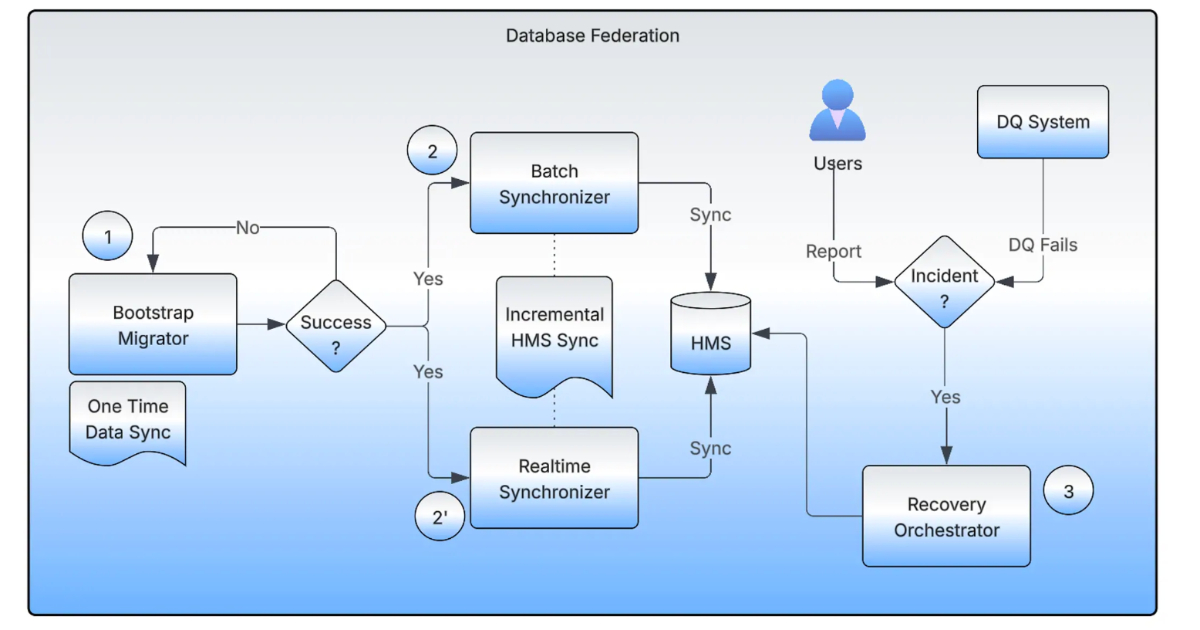
Uber’s Hive Federation Decentralizes 16K Datasets and 10+ PB for Zero-Downtime Analytics at Scale

Uber has decentralized its Hive data warehouse, migrating 16,000 datasets totaling over 10 petabytes using pointer-based federation. The migration ensures zero downtime, strict ACL enforcement, improved governance, and scalable, domain-specific datasets for analytics and machine learning workloads.

By Leela Kumili
  •  

Multiomics and multi-region spatial transcriptome analysis reveal cellular networks and pathways associated with HCC recurrence

JHEP Rep. 2026 Feb 18;8(5):101790. doi: 10.1016/j.jhepr.2026.101790. Online ahead of print.

ABSTRACT

BACKGROUND & AIMS: Hepatocellular carcinoma (HCC) exhibits diverse aetiologies and molecular heterogeneity, with a median 5-year overall survival of <70% due to high recurrence rates following curative-intent surgery. This study investigated the complex tumour microenvironment (TME) in HCC and explored interactions between various cell types and their roles in disease recurrence.

METHODS: Using a multi-omics approach on multi-region samples of surgically resected HCC from the PLANet 1.0 cohort (NCT03267641), we performed spatial transcriptomics on 17 tissue samples from four patients and bulk RNA sequencing on 329 sectors from 90 patients. Findings were validated using immunofluorescence and multiplex immunohistochemistry.

RESULTS: Our analysis revealed extensive intra- and intertumour gene expression heterogeneity and identified a specific subset of endothelial cells (ECs), INTS6+ ECs, enriched and spatially colocalised with tumour cells in primary tumours from patients with recurrence (p = 0.021, n = 49). A significant ANGPTL4-SDC1 ligand-receptor interaction was identified between INTS6+ ECs and tumour cells. Notably, INTS6+ ECs were enriched in microvascular invasion regions and spatially colocalised with tumour cells in patients with recurrence (p = 0.036, n = 53). These findings highlight endothelial-tumour cell interactions within the TME as potential therapeutic targets.

CONCLUSIONS: INTS6+ ECs are enriched in microvascular invasion regions and spatially colocalised with tumour cells in recurrent HCC, suggesting a potential role in disease recurrence and representing a promising therapeutic target within the TME.

IMPACT AND IMPLICATIONS: The spatial co-localisation of cell types plays a significant role in the recurrence of hepatocellular carcinoma. In this study, we have pinpointed a particular group of endothelial cells, known as INTS6+ endothelial cells, which are spatially colocalised with tumour cells and enriched in microvascular invasion regions in patients experiencing recurrence. These discoveries highlight novel therapeutic targets that focus on endothelial cell interactions within the tumour microenvironment to prevent recurrence and enhance overall patient survival.

PMID:41950768 | DOI:10.1016/j.jhepr.2026.101790

  •  

Multiomics and multi-region spatial transcriptome analysis reveal cellular networks and pathways associated with HCC recurrence

JHEP Rep. 2026 Feb 18;8(5):101790. doi: 10.1016/j.jhepr.2026.101790. Online ahead of print.

ABSTRACT

BACKGROUND & AIMS: Hepatocellular carcinoma (HCC) exhibits diverse aetiologies and molecular heterogeneity, with a median 5-year overall survival of <70% due to high recurrence rates following curative-intent surgery. This study investigated the complex tumour microenvironment (TME) in HCC and explored interactions between various cell types and their roles in disease recurrence.

METHODS: Using a multi-omics approach on multi-region samples of surgically resected HCC from the PLANet 1.0 cohort (NCT03267641), we performed spatial transcriptomics on 17 tissue samples from four patients and bulk RNA sequencing on 329 sectors from 90 patients. Findings were validated using immunofluorescence and multiplex immunohistochemistry.

RESULTS: Our analysis revealed extensive intra- and intertumour gene expression heterogeneity and identified a specific subset of endothelial cells (ECs), INTS6+ ECs, enriched and spatially colocalised with tumour cells in primary tumours from patients with recurrence (p = 0.021, n = 49). A significant ANGPTL4-SDC1 ligand-receptor interaction was identified between INTS6+ ECs and tumour cells. Notably, INTS6+ ECs were enriched in microvascular invasion regions and spatially colocalised with tumour cells in patients with recurrence (p = 0.036, n = 53). These findings highlight endothelial-tumour cell interactions within the TME as potential therapeutic targets.

CONCLUSIONS: INTS6+ ECs are enriched in microvascular invasion regions and spatially colocalised with tumour cells in recurrent HCC, suggesting a potential role in disease recurrence and representing a promising therapeutic target within the TME.

IMPACT AND IMPLICATIONS: The spatial co-localisation of cell types plays a significant role in the recurrence of hepatocellular carcinoma. In this study, we have pinpointed a particular group of endothelial cells, known as INTS6+ endothelial cells, which are spatially colocalised with tumour cells and enriched in microvascular invasion regions in patients experiencing recurrence. These discoveries highlight novel therapeutic targets that focus on endothelial cell interactions within the tumour microenvironment to prevent recurrence and enhance overall patient survival.

PMID:41950768 | DOI:10.1016/j.jhepr.2026.101790

  •  

High-precision measurement of the W boson mass with the CMS experiment

Nature, Published online: 08 April 2026; doi:10.1038/s41586-026-10168-5

The CMS experiment at CERN reports one of the highest-precision measurements of the W boson mass, finding it in line with standard model predictions and at odds with recent anomalous measurements.
  •  

Mummified early Permian reptile reveals ancient amniote breathing apparatus

Nature, Published online: 08 April 2026; doi:10.1038/s41586-026-10307-y

A mummified fossil of the early Permian reptile Captorhinus reveals the potential ancestral amniote breathing mechanism and its impact on terrestrial vertebrate evolution.
  •  
❌