❌

Normal view

Presentation: When Every Bit Counts: How Valkey Rebuilt Its Hashtable for Modern Hardware

7 April 2026 at 21:40

Madelyn Olson discusses the evolution of Valkey's data structures, moving away from "textbook" pointer-chasing HashMaps to more cache-aware designs. She explains the implementation of "Swedish" tables to maximize memory density. She shares insights on systems intuition, memory prefetching, and the rigorous testing needed for mission-critical caches.

By Madelyn Olson


Istio Evolves for the AI Era with Multicluster, Ambient Mode, and Inference Capabilities

7 April 2026 at 20:00

The Cloud Native Computing Foundation (CNCF) has announced a major evolution of Istio, introducing new capabilities aimed at making service meshes β€œfuture-ready” for AI-driven workloads.

By Craig Risi

Article: Bloom Filters: Theory, Engineering Trade‑offs, and Implementation in Go

7 April 2026 at 17:00

This article walks you through the Go implementation of Bloom filters to optimize the performance of a recommender. It cover the architectural view, Bloom filter mechanics, Go integration, parameter tuning, and practical lessons learned from making it work under production constraints.

By Gabor Koos
  • βœ‡InfoQ
  • Anthropic Accidentally Exposes Claude Code Source via npm Source Map File Steef-Jan Wiggers
    Anthropic's Claude Code CLI had its full TypeScript source exposed after a source map file was accidentally included in version 2.1.88 of its npm package. The 512,000-line codebase was archived to GitHub within hours. Anthropic called it a packaging error caused by human error. The leak revealed unreleased features, internal model codenames, and multi-agent orchestration architecture. By Steef-Jan Wiggers
     

Anthropic Accidentally Exposes Claude Code Source via npm Source Map File

7 April 2026 at 16:00

Anthropic's Claude Code CLI had its full TypeScript source exposed after a source map file was accidentally included in version 2.1.88 of its npm package. The 512,000-line codebase was archived to GitHub within hours. Anthropic called it a packaging error caused by human error. The leak revealed unreleased features, internal model codenames, and multi-agent orchestration architecture.

By Steef-Jan Wiggers

Google Open Sources Experimental Multi-Agent Orchestration Testbed Scion

7 April 2026 at 16:00

Designed to manage concurrent agents running in containers across local and remote compute, Scion is an experimental orchestration testbed that enables developers to run groups of specialized agents with isolated identities, credentials, and shared workspaces.

By Sergio De Simone
  • βœ‡InfoQ
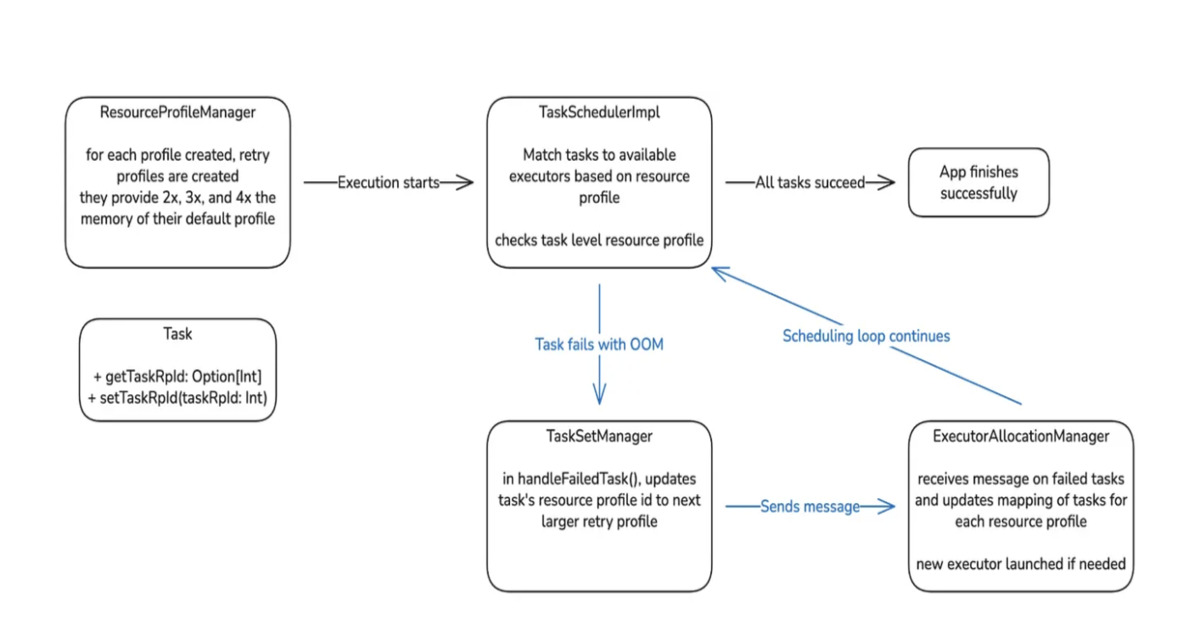
  • Pinterest Reduces Spark OOM Failures by 96% Through Auto Memory Retries Leela Kumili
    Pinterest Engineering cut Apache Spark out-of-memory failures by 96% using improved observability, configuration tuning, and automatic memory retries. Staged rollout, dashboards, and proactive memory adjustments stabilized data pipelines, reduced manual intervention, and lowered operational overhead across tens of thousands of daily jobs. By Leela Kumili
     

Pinterest Reduces Spark OOM Failures by 96% Through Auto Memory Retries

6 April 2026 at 22:32

Pinterest Engineering cut Apache Spark out-of-memory failures by 96% using improved observability, configuration tuning, and automatic memory retries. Staged rollout, dashboards, and proactive memory adjustments stabilized data pipelines, reduced manual intervention, and lowered operational overhead across tens of thousands of daily jobs.

By Leela Kumili
  • βœ‡InfoQ
  • Presentation: Duolingo's Kubernetes Leap Franka Passing
    Franka Passing discusses the architectural shift of Duolingo’s 500+ backend services to Kubernetes. She explains the move toward GitOps with Argo CD, the transition to IPv6-only pods, and the "cellular architecture" used to isolate environments. She shares "reports from the trenches" on managing developer trust, navigating AWS rate limits, and productionizing early adopter services. By Franka Passing
     

Presentation: Duolingo's Kubernetes Leap

6 April 2026 at 20:11

Franka Passing discusses the architectural shift of Duolingo’s 500+ backend services to Kubernetes. She explains the move toward GitOps with Argo CD, the transition to IPv6-only pods, and the "cellular architecture" used to isolate environments. She shares "reports from the trenches" on managing developer trust, navigating AWS rate limits, and productionizing early adopter services.

By Franka Passing
  • βœ‡InfoQ
  • Article: A Better Alternative to Reducing CI Regression Test Suite Sizes James Bornefelt Westfall
    How can you focus in a sea of results from a large regression test suite? This article describes a stochastic approach that relies on some degree of redundancy in your CI regression test set. This approach does not guarantee you will catch every bug every time, but it gives you your best bet of not missing the subtle signatures of all the bugs uncovered by your CI regression test suite runs. By James Bornefelt Westfall
     

Article: A Better Alternative to Reducing CI Regression Test Suite Sizes

6 April 2026 at 19:00

How can you focus in a sea of results from a large regression test suite? This article describes a stochastic approach that relies on some degree of redundancy in your CI regression test set. This approach does not guarantee you will catch every bug every time, but it gives you your best bet of not missing the subtle signatures of all the bugs uncovered by your CI regression test suite runs.

By James Bornefelt Westfall
  • βœ‡InfoQ
  • Podcast: Context Engineering with Adi Polak Adi Polak
    In this episode, Thomas Betts and Adi Polak talk about the need for context engineering when interacting with LLMs and designing agentic systems. Prompt engineering techniques work with a stateless approach, while context engineering allows AI systems to be stateful. By Adi Polak
     

Podcast: Context Engineering with Adi Polak

6 April 2026 at 19:00

In this episode, Thomas Betts and Adi Polak talk about the need for context engineering when interacting with LLMs and designing agentic systems. Prompt engineering techniques work with a stateless approach, while context engineering allows AI systems to be stateful.

By Adi Polak
  • βœ‡InfoQ
  • Dynamic Languages Faster and Cheaper in 13-Language Claude Code Benchmark Steef-Jan Wiggers
    A 600-run benchmark by Ruby committer Yusuke Endoh tested Claude Code across 13 languages, implementing a simplified Git. Ruby, Python, and JavaScript were the fastest and cheapest, at $0.36- $0.39 per run. Statistically typed languages cost 1.4-2.6x more. Adding type checkers to dynamic languages imposed 1.6-3.2x slowdowns. Full dataset available on GitHub. By Steef-Jan Wiggers
     

Dynamic Languages Faster and Cheaper in 13-Language Claude Code Benchmark

6 April 2026 at 12:01

A 600-run benchmark by Ruby committer Yusuke Endoh tested Claude Code across 13 languages, implementing a simplified Git. Ruby, Python, and JavaScript were the fastest and cheapest, at $0.36- $0.39 per run. Statistically typed languages cost 1.4-2.6x more. Adding type checkers to dynamic languages imposed 1.6-3.2x slowdowns. Full dataset available on GitHub.

By Steef-Jan Wiggers

Java News Roundup: TornadoVM 4.0, Google ADK for Java 1.0, Grails, Tomcat, Log4j, Gradle

6 April 2026 at 10:30

This week's Java roundup for March 30th, 2026, features news highlighting: the GA release of TornadoVM 4.0 and Google ADK for Java 1.0; first release candidates of Grails and Gradle; maintenance releases of Micronaut, Apache Tomcart and Apache Log4j; and an update on Jakarta EE 12.

By Michael Redlich

Anthropic Designs Three-Agent Harness Supports Long-Running Full-Stack AI Development

4 April 2026 at 22:24

Anthropic introduces a three-agent harness separating planning, generation, and evaluation to improve long-running autonomous AI workflows for frontend and full-stack development. Industry commentary highlights structured approaches, iterative evaluation, and practical methods to maintain coherence and quality over multi-hour AI coding sessions.

By Leela Kumili

TigerFS Mounts PostgreSQL Databases as a Filesystem for Developers and AI Agents

4 April 2026 at 16:18

TigerFS is a new experimental filesystem that mounts a database as a directory and stores files directly in PostgreSQL. The open source project exposes database data through a standard filesystem interface, allowing developers and AI agents to interact with it using common Unix tools such as ls, cat, find, and grep, rather than via APIs or SDKs.

By Renato Losio
  • βœ‡InfoQ
  • Swift 6.3 Stabilizes Android SDK, Extends C Interop, and More Sergio De Simone
    Swift 6.3 advances Swift cross-platform story with official Android support, improves significantly C interoperability through the new @c attribute, and continues extending embedded programming support. It also strengthens the ecosystem with a unified build system direction and gives developers more low-level performance control. By Sergio De Simone
     

Swift 6.3 Stabilizes Android SDK, Extends C Interop, and More

4 April 2026 at 01:00

Swift 6.3 advances Swift cross-platform story with official Android support, improves significantly C interoperability through the new @c attribute, and continues extending embedded programming support. It also strengthens the ecosystem with a unified build system direction and gives developers more low-level performance control.

By Sergio De Simone

Open Source Security Tool Trivy Hit by Supply Chain Attack, Prompting Urgent Industry Response

3 April 2026 at 20:00

A major security incident affecting the widely used open source vulnerability scanner Trivy has exposed critical weaknesses in software supply chain security, after maintainers confirmed that a malicious release was briefly distributed to users.

By Craig Risi
  • βœ‡InfoQ
  • Module Federation 2.0 Reaches Stable Release with Wider Support outside of Webpack Daniel Curtis
    Module Federation 2.0, an open-source micro-frontend mechanism introduced with webpack 5, offers significant updates including dynamic TypeScript type hints, decoupled runtime layers, and Node.js support. It enhances compatibility across various bundlers and frameworks. Key features include a Side Effect Scanner and easier integration for remote modules, addressing previous adoption challenges. By Daniel Curtis
     

Module Federation 2.0 Reaches Stable Release with Wider Support outside of Webpack

3 April 2026 at 18:12

Module Federation 2.0, an open-source micro-frontend mechanism introduced with webpack 5, offers significant updates including dynamic TypeScript type hints, decoupled runtime layers, and Node.js support. It enhances compatibility across various bundlers and frameworks. Key features include a Side Effect Scanner and easier integration for remote modules, addressing previous adoption challenges.

By Daniel Curtis

Presentation: Panel: Taking Architecture Out of the Echo Chamber

Andrew Harmel-Law and a panel of expert architects discuss the shifting practice of architecture in 2025. They explain strategies for communicating technical debt to stakeholders, the benefits of decentralized decision-making through ADRs, and the career paths of modern leaders. The panel shares insights on bridging the gap between mobile and backend teams to ensure a holistic system.

By Andrew Harmel-Law, Cat Morris, Diana Montalion, Shana Dacres-Lawrence, Vanessa Formicola, Elena Stojmilova, Peter Hunter

Article: Replacing Database Sequences at Scale Without Breaking 100+ Services

3 April 2026 at 17:00

The article discusses the challenges faced during a migration from a relational database to NoSQL, focusing on the importance of database sequences for unique identifiers. It outlines the development of a new sequence service using DynamoDB and a two-tier caching architecture.

By Saumya Tyagi

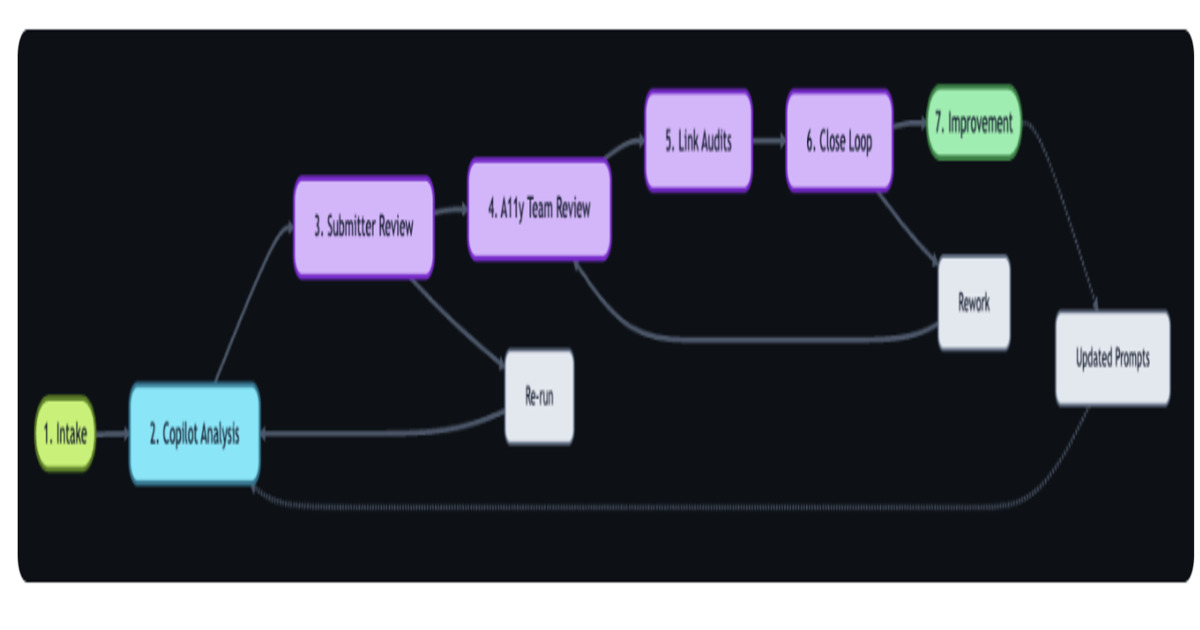
Github Integrates AI to Improve Accessibility Issue Management and Automate Feedback Triage

2 April 2026 at 22:45

GitHub has launched a continuous AI-powered workflow to manage accessibility feedback at scale. Using GitHub Actions, Copilot, and Models APIs, the system centralizes reports, analyzes WCAG compliance, and automates triage while maintaining human validation. Teams now resolve feedback faster, improving inclusion and cross-functional collaboration.

By Leela Kumili
  • βœ‡InfoQ
  • Axios npm Package Compromised in Supply Chain Attack Daniel Curtis
    On March 31, 2026, two versions of the Axios library were compromised and found to contain a Remote Access Trojan. The malicious packages were published through a hijacked maintainer account. The Axios team is investigating how the breach occurred and has deprecated the affected versions. Security experts emphasize the need for better dependency management. By Daniel Curtis
     

Axios npm Package Compromised in Supply Chain Attack

2 April 2026 at 21:53

On March 31, 2026, two versions of the Axios library were compromised and found to contain a Remote Access Trojan. The malicious packages were published through a hijacked maintainer account. The Axios team is investigating how the breach occurred and has deprecated the affected versions. Security experts emphasize the need for better dependency management.

By Daniel Curtis
❌