❌

Normal view

Digital Health Technology Infrastructure Challenges to Support Health Equity in the United States: Scoping Review

Background: Even though Digital Health Technology (DHT) is widely utilized in the United States (U.S.) at both hospital provider and individual levels, it is beset with several challenges that have contributed to inequities in the health service delivery. Previous studies have shown that health inequities observed may be amplified many by DHT requirements. Objective: The objectives of this scoping review are aimed at synthesizing information on DHT inequities by exploring evidence that describes DHT infrastructure needs focused on promoting health equity in the U.S. and identifying key challenges at both the individual/patient level and at the health service provider's level. Methods: We adapted Arksey and O'Malley's scoping review guidelines in our review. We searched PubMed, Web of Science, CINAHL, and PsycINFO were searched. We also conducted supplementary searches on Google Scholar. The inclusion criteria were peer-reviewed publications that broadly conceptualize or analyze DHT infrastructure from a health equity perspective and the challenges of DHT requirements between 2020 and 2024. Following a full-text screening using eligibility criteria such as studies were included if they examined DHT infrastructure in the U.S. from a health equity perspective, discussed health disparities resulting from DHT interventions, or investigated the variables influencing health inequities connected to DHT. Two researchers evaluated each citation’s individually at the title and abstract levels. Thematic approach and qualitative analysis determined this scoping review’s outcome. Results: Of the 628 research articles from the search, 27 were included in the analysis based on the inclusion criteria. In this review, we discussed factors such as elderly population, education, race, ethnicity, and socioeconomic status leading to health inequities in DHT. Patients and Service providers challenges that exist in health inequities related to DHT. The most common challenges for service providers were infrastructure and technical issues such as inadequate integration with existing workflows, user-unfriendly health information exchange (HIE) interfaces, and lack of skilled staff, while for individuals or patients, this included limited broadband internet access, cultural or linguistic appropriateness, and access to digital tools. Conclusions: The study identified that in the U.S., DHT is an essential part of the delivery of health services, yet it is saddled with key challenges leading to health inequities. Finding pragmatic solutions to these challenges can improve health equity in DHT.

Prompt Engineering in Clinical Practice: Tutorial for Clinicians

Large language models (LLMs), such as OpenAI’s GPT series and Google’s PaLM, are transforming healthcare by improving clinical decision-making, enhancing patient communication, and simplifying administrative tasks. However, their performance relies heavily on prompt design, where small changes in wording or structure can greatly impact output quality. This poses a challenge for clinicians who are not experts in natural language processing (NLP). This tutorial combines prompt engineering techniques tailored for clinical use, covering methods like zero-shot, few-shot, chain-of-thought, and meta-prompting. We examine four critical dimensions (accuracy, bias mitigation, privacy protection, and workflow integration) through clinical case studies grounded in real-world practice. We provide actionable guidance on defining objectives, applying core principles, iteratively refining prompts, and integrating them into interoperable electronic health record (EHR) systems. This framework helps clinicians leverage LLMs to improve decision-making, streamline documentation, and enhance patient communication while maintaining ethical standards and ensuring patient safety.
  • ✇InfoQ
  • Hugging Face Releases FinePDFs: a 3-Trillion-Token Dataset Built from PDFs Robert Krzaczyński
    Hugging Face has unveiled FinePDFs, the largest publicly available corpus built entirely from PDFs. The dataset spans 475 million documents in 1,733 languages, totaling roughly 3 trillion tokens. At 3.65 terabytes in size, FinePDFs introduces a new dimension to open training datasets by tapping into a resource long considered too complex and expensive to process. By Robert Krzaczyński
     

Hugging Face Releases FinePDFs: a 3-Trillion-Token Dataset Built from PDFs

15 September 2025 at 16:55

Hugging Face has unveiled FinePDFs, the largest publicly available corpus built entirely from PDFs. The dataset spans 475 million documents in 1,733 languages, totaling roughly 3 trillion tokens. At 3.65 terabytes in size, FinePDFs introduces a new dimension to open training datasets by tapping into a resource long considered too complex and expensive to process.

By Robert Krzaczyński

Do startups still need Silicon Valley? Leaders at SignalFire, Lago, and Revolution debate at TechCrunch Disrupt 2025

24 September 2025 at 01:15
Does Silicon Valley still give founders an edge? At TechCrunch Disrupt 2025, Anh-Tho Chuong (Lago), David Hall (Revolution), and Tawni Nazario-Cranz (SignalFire) debate whether location still drives startup success.

Primary care detection of Alzheimer’s disease using a self-administered digital cognitive test and blood biomarkers

Nature Medicine, Published online: 15 September 2025; doi:10.1038/s41591-025-03965-4

A brief, self-administered digital cognitive test, in combination with a blood test, accurately detects clinical Alzheimer’s disease in primary care.

Functions of the global health system in a new era

Nature Medicine, Published online: 11 September 2025; doi:10.1038/s41591-025-03936-9

In an irrevocably changed landscape, reform of the global health system needs to answer key questions on functions, what should be delivered in different contexts and at different levels, and how the system should operate.

Interventions Based on Biofeedback Systems to Improve Workers’ Psychological Well-Being, Mental Health, and Safety: Systematic Literature Review

Background: In modern, high-speed work settings, the significance of mental health disorders is increasingly acknowledged as a pressing health issue, with potential adverse consequences for organizations, including reduced productivity and increased absenteeism. Over the past few years, various mental health management solutions, such as biofeedback applications, have surfaced as promising avenues to improve employees’ mental well-being. However, most studies on these interventions have been conducted in controlled laboratory settings. Objective: This review aimed to systematically identify and analyze studies that implemented biofeedback-based interventions in real-world occupational settings, focusing on their effectiveness in improving psychological well-being and mental health. Methods: A systematic review was conducted following the PRISMA (Preferred Reporting Items for Systematic Reviews and Meta-Analyses) guidelines. We searched PubMed and EBSCO databases for studies published between 2012 and 2024. Inclusion criteria were original peer-reviewed studies that focused on employees and used biofeedback interventions to improve mental health or prevent mental illness. Exclusion criteria included nonemployee samples, lack of a description of the intervention, and low methodological quality (assessed using the Physiotherapy Evidence Database [PEDro] checklist). Data were extracted on study characteristics, intervention type, physiological and self-reported outcomes, and follow-up measures. Risk of bias was assessed, and VOSviewer was used to visualize the distribution of research topics. Results: A total of 9 studies met the inclusion criteria. The interventions used a range of delivery methods, including traditional biofeedback, mobile apps, mindfulness techniques, virtual reality, and cerebral blood flow monitoring. Most studies focused on breathing techniques to regulate physiological responses (eg, heart rate variability and respiratory sinus arrhythmia) and showed reductions in stress, anxiety, and depressive symptoms. Mobile and app-directed interventions appeared particularly promising for improving resilience and facilitating recovery after stress. Of the 9 studies, 8 (89%) reported positive outcomes, with 1 (11%) study showing initial increases in stress due to logistical limitations in biofeedback access. Sample sizes were generally small, and long-term follow-up data were limited. Conclusions: Biofeedback interventions in workplace settings show promising short-term results in reducing stress and improving mental health, particularly when incorporating breathing techniques and user-friendly delivery methods such as mobile apps. However, the field remains underexplored in occupational contexts. Future research should address adherence challenges, scalability, cost-effectiveness, and long-term outcomes to support broader implementation of biofeedback as a sustainable workplace mental health strategy.

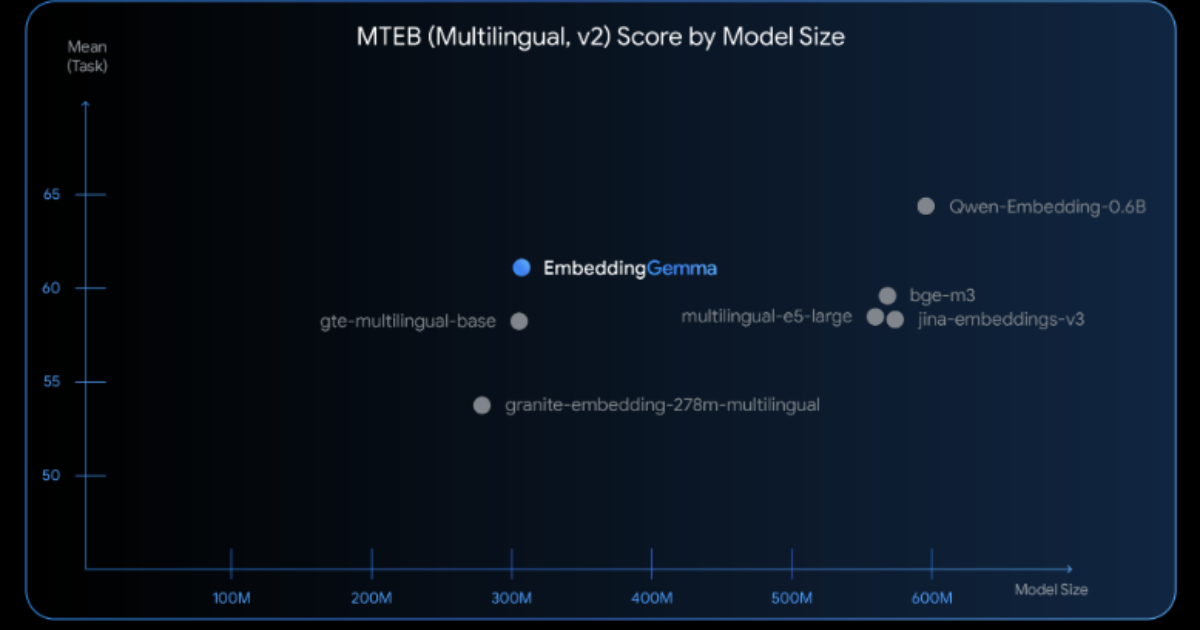
Google DeepMind Launches EmbeddingGemma, an Open Model for On-Device Embeddings

12 September 2025 at 02:30

Google DeepMind has introduced EmbeddingGemma, a 308M parameter open embedding model designed to run efficiently on-device. The model aims to make applications like retrieval-augmented generation (RAG), semantic search, and text classification accessible without the need for a server or internet connection.

By Robert Krzaczyński

Single-cell multiome and spatial profiling reveals pancreas cell type-specific gene regulatory programs of type 1 diabetes progression

Sci Adv. 2025 Sep 12;11(37):eady0080. doi: 10.1126/sciadv.ady0080. Epub 2025 Sep 10.

ABSTRACT

Cell type-specific regulatory programs that drive type 1 diabetes (T1D) in the pancreas are poorly understood. Here, we performed single-nucleus multiomics and spatial transcriptomics in up to 32 nondiabetic (ND), autoantibody-positive (AAB+), and T1D pancreas donors. Genomic profiles from 853,005 cells mapped to 12 pancreatic cell types, including multiple exocrine subtypes. β, Acinar, and other cell types, and related cellular niches, had altered abundance and gene activity in T1D progression, including distinct pathways altered in AAB+ compared to T1D. We identified epigenomic drivers of gene activity in T1D and AAB+ which, combined with genetic association, revealed causal pathways of T1D risk including antigen presentation in β cells. Last, single-cell and spatial profiles together revealed widespread changes in cell-cell signaling in T1D including signals affecting β cell regulation. Overall, these results revealed drivers of T1D in the pancreas, which form the basis for therapeutic targets for disease prevention.

PMID:40929272 | PMC:PMC12422192 | DOI:10.1126/sciadv.ady0080

Organoids in Genetic Disorders: from Disease Modeling to Translational Applications

Stem Cell Rev Rep. 2025 Sep 11. doi: 10.1007/s12015-025-10973-x. Online ahead of print.

ABSTRACT

The emergence of organoid models has significantly bridged the gap between traditional cell cultures/animal models and authentic human disease states, particularly for genetic disorders, where their inherent genetic fidelity enables more biologically relevant research directions and enhances translational validity. This review systematically analyzes established organoid models of genetic diseases across organs (e.g., brain, eye, kidney, lung, and heart), highlighting their pivotal roles in identifying novel pathogenic genes, elucidating disease mechanisms, and advancing therapeutic strategies such as drug screening platforms, gene-editing therapies, and organ transplantation strategies. Furthermore, we critically address current limitations-including challenges in recapitulating complex pathologies and scaling production-while underscoring their potential for personalized medicine through multi-omics integration and bioengineering innovations. Although the scope of "genetic diseases" is broad, this synthesis focuses on disorders with well-defined inheritance patterns, such as monogenic disorders, copy number variations (CNVs), and aneuploidies. Despite covering only a subset of these conditions, this review aims to provide researchers with a comprehensive overview of the field, emphasizing how organoid-based approaches could accelerate both mechanistic discoveries and clinical translation in genetic disease research.

PMID:40931310 | DOI:10.1007/s12015-025-10973-x

Liquid biopsy- A pivotal test to help navigate clinical decisions at a precision center in India!

J Liq Biopsy. 2025 Aug 9;9:100323. doi: 10.1016/j.jlb.2025.100323. eCollection 2025 Sep.

ABSTRACT

Liquid biopsy, specifically circulating tumor DNA (ctDNA) analysis, has emerged as a transformative tool in precision oncology, providing real-time, minimally invasive characterizations of the tumor and tumor dynamics. While tissue biopsy is a critical tool for baseline diagnosis of malignancy, it is often limited by sampling constraints and an inability to capture tumor heterogeneity. In this study, we explored the clinical utility of serial ctDNA testing in guiding therapeutic decisions across a cohort of 30 patients with diverse solid tumors. Our real-world analysis demonstrates that ctDNA profiling meaningfully influenced treatment escalation, de-escalation, disease monitoring, and early relapse prediction. Cases where ctDNA positivity indicated minimal residual disease prompted timely escalation of therapy, while ctDNA clearance allowed safe treatment de-intensification, minimizing toxicity without compromising outcomes. Longitudinal ctDNA monitoring provided a dynamic, non-invasive method for assessing treatment response and detecting recurrence months before radiological progression. Our study highlights the potential of integrating liquid biopsy into routine clinical practice to enable dynamic treatment monitoring, early detection of therapeutic resistance, and more informed, personalized decision-making across various cancer types.

PMID:40919127 | PMC:PMC12409318 | DOI:10.1016/j.jlb.2025.100323

Applications of Federated Large Language Model for Adverse Drug Reactions Prediction: Scoping Review

Background: Adverse drug reactions (ADRs) pose significant challenges in healthcare, where early prevention is vital for effective treatment and patient safety. Objective: Traditional supervised learning methods are limited in addressing healthcare data, which is often unstructured, heavily regulated, and involves restricted access to sensitive personal information. Methods: The integration of Federated Learning (FL) and Large Language Model (LLM) offers a promising solution to these challenges since FL supports the distributed training on edge device with limited resources and the capability of LLM to deal with unstructured healthcare data. Additionally, client models trained on the edge device can be merged into a global model on the server, preserving data privacy. Results: Natural Language Processing (NLP) technologies underpinning LLM provide a full set of tools that can readily be used to process unstructured ADR as input, enabling LLM to predict ADR outcome effectively. The ADR output space can be discrete labels, unstructured texts, or both. Conclusions: This review presents a scoping review following the PRISMA protocol on the applications of Federated Large Language Model (FedLLM) in ADR prediction, aiming to explore future research venue on ADR applications

The WHO global landscape of cancer clinical trials

Nature Medicine, Published online: 09 September 2025; doi:10.1038/s41591-025-03926-x

This Review of the WHO’s International Clinical Trials Registry Platform presents a snapshot of the global cancer trial landscape and provides critical empirical evidence to inform policy, practice and investment.

Hugging Face Introduces AI Sheets, a No-Code Tool for Dataset Transformation

9 September 2025 at 03:45

Hugging Face has released AI Sheets, an open-source application designed to let users build, transform, and enrich datasets using AI models through a spreadsheet-like interface. The tool, available both on the Hub and for local deployment, allows users to experiment with thousands of open models, including OpenAI’s gpt-oss, without requiring code.

By Robert Krzaczyński
❌