❌

Normal view

Digital Health Technology Infrastructure Challenges to Support Health Equity in the United States: Scoping Review

Background: Even though Digital Health Technology (DHT) is widely utilized in the United States (U.S.) at both hospital provider and individual levels, it is beset with several challenges that have contributed to inequities in the health service delivery. Previous studies have shown that health inequities observed may be amplified many by DHT requirements. Objective: The objectives of this scoping review are aimed at synthesizing information on DHT inequities by exploring evidence that describes DHT infrastructure needs focused on promoting health equity in the U.S. and identifying key challenges at both the individual/patient level and at the health service provider's level. Methods: We adapted Arksey and O'Malley's scoping review guidelines in our review. We searched PubMed, Web of Science, CINAHL, and PsycINFO were searched. We also conducted supplementary searches on Google Scholar. The inclusion criteria were peer-reviewed publications that broadly conceptualize or analyze DHT infrastructure from a health equity perspective and the challenges of DHT requirements between 2020 and 2024. Following a full-text screening using eligibility criteria such as studies were included if they examined DHT infrastructure in the U.S. from a health equity perspective, discussed health disparities resulting from DHT interventions, or investigated the variables influencing health inequities connected to DHT. Two researchers evaluated each citation’s individually at the title and abstract levels. Thematic approach and qualitative analysis determined this scoping review’s outcome. Results: Of the 628 research articles from the search, 27 were included in the analysis based on the inclusion criteria. In this review, we discussed factors such as elderly population, education, race, ethnicity, and socioeconomic status leading to health inequities in DHT. Patients and Service providers challenges that exist in health inequities related to DHT. The most common challenges for service providers were infrastructure and technical issues such as inadequate integration with existing workflows, user-unfriendly health information exchange (HIE) interfaces, and lack of skilled staff, while for individuals or patients, this included limited broadband internet access, cultural or linguistic appropriateness, and access to digital tools. Conclusions: The study identified that in the U.S., DHT is an essential part of the delivery of health services, yet it is saddled with key challenges leading to health inequities. Finding pragmatic solutions to these challenges can improve health equity in DHT.
  • ✇InfoQ
  • Hugging Face Releases FinePDFs: a 3-Trillion-Token Dataset Built from PDFs Robert Krzaczyński
    Hugging Face has unveiled FinePDFs, the largest publicly available corpus built entirely from PDFs. The dataset spans 475 million documents in 1,733 languages, totaling roughly 3 trillion tokens. At 3.65 terabytes in size, FinePDFs introduces a new dimension to open training datasets by tapping into a resource long considered too complex and expensive to process. By Robert Krzaczyński
     

Hugging Face Releases FinePDFs: a 3-Trillion-Token Dataset Built from PDFs

15 September 2025 at 16:55

Hugging Face has unveiled FinePDFs, the largest publicly available corpus built entirely from PDFs. The dataset spans 475 million documents in 1,733 languages, totaling roughly 3 trillion tokens. At 3.65 terabytes in size, FinePDFs introduces a new dimension to open training datasets by tapping into a resource long considered too complex and expensive to process.

By Robert Krzaczyński

Prognostic Value of Circulating Tumor DNA in HR+/HER2- Stage I-III Breast Cancer: A Systematic Review

Cancers (Basel). 2025 Aug 29;17(17):2831. doi: 10.3390/cancers17172831.

ABSTRACT

Background: Hormone receptor-positive (HR+), HER2-negative breast cancer accounts for the majority of breast cancer diagnoses. While outcomes have improved with neoadjuvant and adjuvant therapies, the risk of late recurrence persists, and there remains a critical need for reliable biomarkers to guide prognosis and post-treatment surveillance. Circulating tumor DNA (ctDNA), detectable via liquid biopsy, has emerged as a promising tool for monitoring minimal residual disease and predicting survival outcomes. This systematic review evaluates the association between ctDNA detection during neoadjuvant or adjuvant treatment and survival outcomes in early-stage HR+/HER2- breast cancer. Methods: This systematic review was conducted in accordance with PRISMA guidelines. A comprehensive literature search of Ovid MEDLINE and Embase was conducted to identify studies published through 3 May 2024 that evaluated ctDNA as a prognostic biomarker in stage I-III HR+/HER2- breast cancer. We included studies reporting recurrence-free survival, invasive disease-free survival, or overall survival and excluded non-original studies, conference abstracts, and non-English articles. Data extraction and qualitative synthesis were performed, and the risk of bias was qualitatively assessed across studies. No review protocol was registered. Results: Eleven studies comprising 1644 patients met the inclusion criteria. In the neoadjuvant setting, ctDNA positivity prior to treatment initiation was associated with inferior survival outcomes. In the adjuvant setting, detection of ctDNA during or after treatment was consistently linked to poorer recurrence-free and invasive disease-free survival. Across studies, ctDNA detection was a significant negative prognostic marker. Conclusions: This systematic review supports the prognostic value of ctDNA in HR+/HER2- early-stage breast cancer. Limitations include small sample sizes, observational study designs, and heterogeneity in ctDNA assays. Standardization of ctDNA testing methods and further prospective trials are needed to validate its clinical utility and explore its potential role in guiding therapeutic interventions.

PMID:40940926 | PMC:PMC12427406 | DOI:10.3390/cancers17172831

Interventions Based on Biofeedback Systems to Improve Workers’ Psychological Well-Being, Mental Health, and Safety: Systematic Literature Review

Background: In modern, high-speed work settings, the significance of mental health disorders is increasingly acknowledged as a pressing health issue, with potential adverse consequences for organizations, including reduced productivity and increased absenteeism. Over the past few years, various mental health management solutions, such as biofeedback applications, have surfaced as promising avenues to improve employees’ mental well-being. However, most studies on these interventions have been conducted in controlled laboratory settings. Objective: This review aimed to systematically identify and analyze studies that implemented biofeedback-based interventions in real-world occupational settings, focusing on their effectiveness in improving psychological well-being and mental health. Methods: A systematic review was conducted following the PRISMA (Preferred Reporting Items for Systematic Reviews and Meta-Analyses) guidelines. We searched PubMed and EBSCO databases for studies published between 2012 and 2024. Inclusion criteria were original peer-reviewed studies that focused on employees and used biofeedback interventions to improve mental health or prevent mental illness. Exclusion criteria included nonemployee samples, lack of a description of the intervention, and low methodological quality (assessed using the Physiotherapy Evidence Database [PEDro] checklist). Data were extracted on study characteristics, intervention type, physiological and self-reported outcomes, and follow-up measures. Risk of bias was assessed, and VOSviewer was used to visualize the distribution of research topics. Results: A total of 9 studies met the inclusion criteria. The interventions used a range of delivery methods, including traditional biofeedback, mobile apps, mindfulness techniques, virtual reality, and cerebral blood flow monitoring. Most studies focused on breathing techniques to regulate physiological responses (eg, heart rate variability and respiratory sinus arrhythmia) and showed reductions in stress, anxiety, and depressive symptoms. Mobile and app-directed interventions appeared particularly promising for improving resilience and facilitating recovery after stress. Of the 9 studies, 8 (89%) reported positive outcomes, with 1 (11%) study showing initial increases in stress due to logistical limitations in biofeedback access. Sample sizes were generally small, and long-term follow-up data were limited. Conclusions: Biofeedback interventions in workplace settings show promising short-term results in reducing stress and improving mental health, particularly when incorporating breathing techniques and user-friendly delivery methods such as mobile apps. However, the field remains underexplored in occupational contexts. Future research should address adherence challenges, scalability, cost-effectiveness, and long-term outcomes to support broader implementation of biofeedback as a sustainable workplace mental health strategy.

Google DeepMind Launches EmbeddingGemma, an Open Model for On-Device Embeddings

12 September 2025 at 02:30

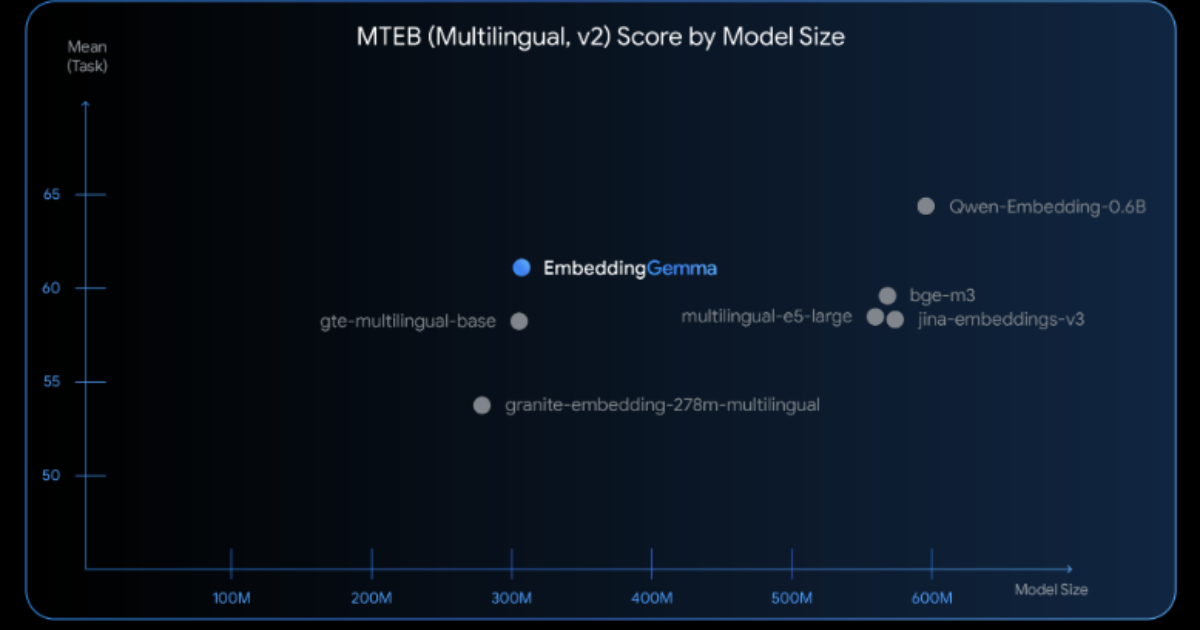
Google DeepMind has introduced EmbeddingGemma, a 308M parameter open embedding model designed to run efficiently on-device. The model aims to make applications like retrieval-augmented generation (RAG), semantic search, and text classification accessible without the need for a server or internet connection.

By Robert Krzaczyński

Single-cell multiome and spatial profiling reveals pancreas cell type-specific gene regulatory programs of type 1 diabetes progression

Sci Adv. 2025 Sep 12;11(37):eady0080. doi: 10.1126/sciadv.ady0080. Epub 2025 Sep 10.

ABSTRACT

Cell type-specific regulatory programs that drive type 1 diabetes (T1D) in the pancreas are poorly understood. Here, we performed single-nucleus multiomics and spatial transcriptomics in up to 32 nondiabetic (ND), autoantibody-positive (AAB+), and T1D pancreas donors. Genomic profiles from 853,005 cells mapped to 12 pancreatic cell types, including multiple exocrine subtypes. β, Acinar, and other cell types, and related cellular niches, had altered abundance and gene activity in T1D progression, including distinct pathways altered in AAB+ compared to T1D. We identified epigenomic drivers of gene activity in T1D and AAB+ which, combined with genetic association, revealed causal pathways of T1D risk including antigen presentation in β cells. Last, single-cell and spatial profiles together revealed widespread changes in cell-cell signaling in T1D including signals affecting β cell regulation. Overall, these results revealed drivers of T1D in the pancreas, which form the basis for therapeutic targets for disease prevention.

PMID:40929272 | PMC:PMC12422192 | DOI:10.1126/sciadv.ady0080

The WHO global landscape of cancer clinical trials

Nature Medicine, Published online: 09 September 2025; doi:10.1038/s41591-025-03926-x

This Review of the WHO’s International Clinical Trials Registry Platform presents a snapshot of the global cancer trial landscape and provides critical empirical evidence to inform policy, practice and investment.

Hugging Face Introduces AI Sheets, a No-Code Tool for Dataset Transformation

9 September 2025 at 03:45

Hugging Face has released AI Sheets, an open-source application designed to let users build, transform, and enrich datasets using AI models through a spreadsheet-like interface. The tool, available both on the Hub and for local deployment, allows users to experiment with thousands of open models, including OpenAI’s gpt-oss, without requiring code.

By Robert Krzaczyński

DNA methylation subtypes dictate metastatic heterogeneity of osteosarcoma via distinct tumor-stromal interactions: Multi-omics profiling and decitabine validation

7 September 2025 at 18:00

Int J Biol Macromol. 2025 Sep 5;327(Pt 2):147473. doi: 10.1016/j.ijbiomac.2025.147473. Online ahead of print.

ABSTRACT

Osteosarcoma (OS), the most prevalent primary bone malignancy in adolescents, is characterized by aggressive progression and early metastasis. However, the epigenetic drivers of its metastatic heterogeneity remain poorly understood. Herein, we integrated bulk DNA methylation profiling and single-cell RNA sequencing (scRNA-seq) to elucidate the epigenetic mechanisms driving OS metastatic heterogeneity. Consensus clustering identified two methylation subtypes (K = 2) with distinct survival outcomes, where hypermethylated (MSO-high) tumors exhibited poor prognosis. Weighted gene co-expression network analysis (WGCNA) revealed methylation-associated modules enriched in metabolic and immune pathways, pinpointing key genes such as CAMK1G and SLC11A1. Single-cell profiling uncovered MSO-high myeloid cells associated with inflammatory and oxidative phosphorylation pathways, while MSO-high OS cells displayed transdifferentiation toward fibroblasts via pseudotime trajectories, remodeling the extracellular matrix (ECM) to facilitate lung metastasis. Conversely, MSO-low tumors activated HLA-B-mediated neutrophil-CD8+ T cell interactions, promoting lymphatic metastasis via CXCR4/CXCL12 signaling. Furthermore, functional validation using the DNA demethylating agent decitabine demonstrated reduced fibroblastic transdifferentiation and suppressed invasive capacity in MSO-high osteosarcoma cells, supporting the therapeutic potential of targeting methylation dysregulation. These findings establish a model where DNA methylation dictates metastatic phenotypes through differential tumor-stromal crosstalk, providing novel targets for epigenetic therapy to disrupt fibrotic-immune networks and metastatic colonization.

PMID:40915448 | DOI:10.1016/j.ijbiomac.2025.147473

GASPS: A Multi-Omics Framework for Defining Genomic Aberration-Driven Signatures and Predicting Patient Outcomes in Lung Cancer

bioRxiv [Preprint]. 2025 Aug 25:2025.08.21.671519. doi: 10.1101/2025.08.21.671519.

ABSTRACT

Lung cancer is the most common cause of cancer-related death worldwide. Recent advancements in targeted therapies and immunotherapies have achieved remarkable success. However, patient responses to treatments with lung cancer vary substantially. The mutation status of driver genes can direct personalized treatment, but their prognostic value and treatment efficacy are limited. In this study, we developed a statistical framework named Genomic Aberration-Derived Signature for Patient Stratification (GASPS) to characterize the transcriptomic deregulation of driver genomic aberrations and stratify patients. By applying GASPS to The Cancer Genome Atlas Lung Adenocarcinoma (TCGA-LUAD) data, we developed gene signatures for 38 driver genomic aberrations, including gene mutations, amplifications, and deletions. These signatures were applied to independent lung cancer transcriptomic datasets containing a total of 2,226 patient samples. Our results indicated that these driver gene signatures are much more prognostic than their corresponding genomic mutations. Interestingly, the two EGFR-related signatures characterizing EGFR mutation and amplification, respectively, exhibited contrasting associations with prognosis, treatment response, and immune infiltration in the tumor microenvironment. Moreover, the STK11 mutation signature, rather than the mutation status, was found to be predictive of the response and long-term benefit of patients treated with immune checkpoint blockade therapy in lung cancer. This framework is readily applicable to most cancer types using existing data to improve prognostic risk assessment and treatment efficacy by guiding personalized therapies.

PMID:40909579 | PMC:PMC12407784 | DOI:10.1101/2025.08.21.671519

GASPS: A Multi-Omics Framework for Defining Genomic Aberration-Driven Signatures and Predicting Patient Outcomes in Lung Cancer

bioRxiv [Preprint]. 2025 Aug 25:2025.08.21.671519. doi: 10.1101/2025.08.21.671519.

ABSTRACT

Lung cancer is the most common cause of cancer-related death worldwide. Recent advancements in targeted therapies and immunotherapies have achieved remarkable success. However, patient responses to treatments with lung cancer vary substantially. The mutation status of driver genes can direct personalized treatment, but their prognostic value and treatment efficacy are limited. In this study, we developed a statistical framework named Genomic Aberration-Derived Signature for Patient Stratification (GASPS) to characterize the transcriptomic deregulation of driver genomic aberrations and stratify patients. By applying GASPS to The Cancer Genome Atlas Lung Adenocarcinoma (TCGA-LUAD) data, we developed gene signatures for 38 driver genomic aberrations, including gene mutations, amplifications, and deletions. These signatures were applied to independent lung cancer transcriptomic datasets containing a total of 2,226 patient samples. Our results indicated that these driver gene signatures are much more prognostic than their corresponding genomic mutations. Interestingly, the two EGFR-related signatures characterizing EGFR mutation and amplification, respectively, exhibited contrasting associations with prognosis, treatment response, and immune infiltration in the tumor microenvironment. Moreover, the STK11 mutation signature, rather than the mutation status, was found to be predictive of the response and long-term benefit of patients treated with immune checkpoint blockade therapy in lung cancer. This framework is readily applicable to most cancer types using existing data to improve prognostic risk assessment and treatment efficacy by guiding personalized therapies.

PMID:40909579 | PMC:PMC12407784 | DOI:10.1101/2025.08.21.671519

Scalable generation and functional classification of genetic variants in inborn errors of immunity to accelerate clinical diagnosis and treatment

In lieu of traditional genetic variant testing approaches, an approach using scalable variant classification in primary human T cells with a clinically relevant readout can inform rapid diagnosis and treatment of inborn errors of immunity.

STAMP: Single-cell transcriptomics analysis and multimodal profiling through imaging

Single-cell transcriptomics analysis and multimodal profiling (STAMP) by imaging enables single-cell analysis of cells in suspension without the need for sequencing. The markedly reduced costs and flexible experimental designs support the profiling of millions of cells or the large-scale multiplexing of conditions, perturbations, and sample types.
  • ✇Omics In Lung
  • Challenges in diagnosis of sarcoidosis Karol Bączek · Wojciech J Piotrowski · Francesco Bonella
    Curr Opin Immunol. 2025 Sep 1;97:102652. doi: 10.1016/j.coi.2025.102652. Online ahead of print.ABSTRACTPURPOSE OF REVIEW: Diagnosing sarcoidosis remains challenging. Histology findings and a variable clinical presentation can mimic other infectious, malignant, and autoimmune diseases. This review synthesizes current evidence on histopathology, sampling techniques, imaging modalities, and biomarkers and explores how emerging 'omics' and artificial intelligence tools may sharpen diagnostic accurac
     

Challenges in diagnosis of sarcoidosis

Curr Opin Immunol. 2025 Sep 1;97:102652. doi: 10.1016/j.coi.2025.102652. Online ahead of print.

ABSTRACT

PURPOSE OF REVIEW: Diagnosing sarcoidosis remains challenging. Histology findings and a variable clinical presentation can mimic other infectious, malignant, and autoimmune diseases. This review synthesizes current evidence on histopathology, sampling techniques, imaging modalities, and biomarkers and explores how emerging 'omics' and artificial intelligence tools may sharpen diagnostic accuracy.

RECENT FINDINGS: Within the typical granulomatous lesions, limited or 'burned-out' necrosis is an ancillary finding, which can be present in up to one-third of sarcoid biopsies, and demands a careful differential diagnostic work-up. Endobronchial ultrasound-guided transbronchial needle aspiration of lymph nodes has replaced mediastinoscopy as first-line sampling tool, while cryobiopsy is still under validation. Volumetric PET metrics such as total lung glycolysis and somatostatin-receptor tracers refine activity assessment; combined FDG PET/MRI improves detection of occult cardiac disease. Advanced bronchoalveolar lavage (BAL) immunophenotyping via flow cytometry and serum, BAL, and genetic biomarkers show to correlate with inflammatory burden but have low diagnostic value. Multi-omics signatures and Positron Emission Tomography with Computer Tomography radiomics, supported by deep-learning algorithms, show promising results for noninvasive diagnostic confirmation, phenotyping, and disease monitoring.

SUMMARY: No single test is conclusive for diagnosing sarcoidosis. An integrated, multidisciplinary strategy is needed. Large, multicenter, and multiethnic studies are essential to translate and validate data from emerging AI tools and -omics research into clinical routine.

PMID:40902264 | DOI:10.1016/j.coi.2025.102652

Enabling Digital Compassion in Digital Health Environments: Modified eDelphi Study to Identify Interprofessional Competencies and Technology Attributes

Background: Health care continues to advance through digital innovation, and technology-enabled processes and interventions are increasingly being introduced to deliver and expand access to care. In this evolving digital health ecosystem, health care professionals (HCPs), learners, and organizations may not be prepared or equipped with the knowledge, skills, and behaviors required to navigate these new digital tools while simultaneously sustaining and integrating compassionate care. Moreover, the tools may not be designed and implemented in a manner that facilitates digital compassion. Objective: This study aimed to identify (1) core digital compassion competencies for health professionals and (2) digital compassion health IT attributes. Methods: We conducted this study based on the Delphi method, a consensus-building technique using structured group communication that allows a group of experts to identify competencies and agree on items such as standards and attributes by achieving consensus on a given topic. To encourage enriched discussions, we used a modified eDelphi method, where the first round consisted of a group activity and focus group rather than a questionnaire. Due to COVID-19 pandemic restrictions, the first round was held online. Subsequent rounds consisted of questionnaires administered via email and a web-based survey. Using purposive sampling, participants were recruited from project partners and networks of the research team. A panel of experts across Canada in the fields of compassion, health professional or medical education, and technology was engaged to identify and prioritize professional domains and competency statements, as well as essential attributes for the development and deployment of digital technologies for compassionate care. Results: A total of 54 experts across Canada were recruited, representing diverse professions including patients or service users, HCPs, administrators, policy makers, health educators, data scientists, health technology designers, and software engineers. Overall, 9 focus groups were conducted and analyzed thematically. Seven domains of digital compassion were identified: (1) digital literacy, (2) patient preference, (3) collaboration and co-design, (4) therapeutic relationship, (5) ethical implications, (6) patient safety, and (7) technology safety. Technology attributes to facilitate digital compassion were also generated. We reached consensus after several subsequent rounds, resulting in 58 digital compassion competency statements and 15 technology attributes. Conclusions: This study identified a digital compassion framework consisting of competencies for HCPs and attributes for digital technologies that would enhance compassion in virtual care encounters. To promote a cultural shift where technologies are perceived to be not only efficient but also compassionate, practices of co-design, training, and ongoing evaluation and iteration must be prioritized within health care organizations. Future research should explore the adaptability of the professional competencies and technology attributes to specific medical specialties or in patient populations.

❌