❌

Normal view

Molecular advances in early-stage and locally advanced non-small cell lung carcinoma: Shaping the future of precision oncology-systematic review

24 September 2025 at 18:00

Sci Prog. 2025 Jul-Sep;108(3):368504251383055. doi: 10.1177/00368504251383055. Epub 2025 Sep 24.

ABSTRACT

ObjectiveTo synthesize recent molecular advances that inform diagnosis, risk-stratification, and perioperative treatment in early-stage and locally advanced non-small cell lung carcinoma (NSCLC), with emphasis on comprehensive genomic profiling, minimal residual disease (MRD) detection by circulating tumor DNA (ctDNA), and the translation of biomarkers into targeted and immunotherapy strategies.MethodsSystematic review registered in PROSPERO (CRD420251076423). Searches of PubMed, Scopus, Web of Science, and Embase (January 2015-April 2025) followed PRISMA 2020/PRISMA-S. From 4640 records, 890 duplicates were removed; 3750 titles/abstracts were screened; 150 full texts were assessed; 75 studies met inclusion criteria. Risk of bias used Newcastle-Ottawa Scale (NOS) for observational studies and Cochrane RoB 2 tool for randomized controlled trials; certainty was summarized with GRADE where applicable.ResultsActionable alterations (e.g. EGFR, ALK, KRAS, MET, RET, BRAF, NTRK) are prevalent in early-stage NSCLC and comparable to advanced disease, supporting routine comprehensive genomic profiling in curative-intent settings. Next-generation sequencing (NGS) and ctDNA enable the detection of MRD, earlier relapse prediction, and dynamic treatment monitoring. Perioperative strategies integrating targeted therapy and immunotherapy (e.g. adjuvant EGFR-TKI, neoadjuvant chemo-immunotherapy) improve pathological and disease-free outcomes in selected biomarker-defined populations. Evidence profiles generally show low-to-moderate risk of bias and moderate-to-high certainty for key outcomes related to profiling and MRD, with heterogeneity across platforms and endpoints.ConclusionsMolecular advances-particularly broad NGS and ctDNA-based MRD-are reshaping the perioperative management of early and locally advanced NSCLC, enabling precision selection for targeted and immunotherapy approaches. Standardization of testing workflows and reporting, and cost-effective implementation are priorities for equitable adoption and for future trials that combine NGS, MRD, and multi-omic/AI-driven risk stratification.

PMID:40990633 | PMC:PMC12461064 | DOI:10.1177/00368504251383055

Expanding care coordination in an integrated health system through causal machine learning

npj Digital Medicine, Published online: 24 September 2025; doi:10.1038/s41746-025-01925-3

Expanding care coordination in an integrated health system through causal machine learning

Diabetic Foot Ulcer Classification Models Using Artificial Intelligence and Machine Learning Techniques: Systematic Review

Background: Diabetes-related foot ulceration (DFU) is a common complication of diabetes, with a significant impact on survival, health care costs, and health-related quality of life. The prognosis of DFU varies widely among individuals. The International Working Group on the Diabetic Foot recently updated their guidelines on how to classify ulcers using “classical” classification and scoring systems. No system was recommended for individual prognostication, and the group considered that more detail in ulcer characterization was needed and that machine learning (ML)–based models may be the solution. Despite advances in the field, no assessment of available evidence was done. Objective: This study aimed to identify and collect available evidence assessing the ability of ML-based models to predict clinical outcomes in people with DFU. Methods: We searched the MEDLINE database (PubMed), Scopus, Web of Science, and IEEE Xplore for papers published up to July 2023. Studies were eligible if they were anterograde analytical studies that examined the prognostic abilities of ML models in predicting clinical outcomes in a population that included at least 80% of adults with DFU. The literature was screened independently by 2 investigators (MMS and DAR or EH in the first phase, and MMS and MAS in the second phase) for eligibility criteria and data extracted. The risk of bias was evaluated using the Quality In Prognosis Studies tool and the Prediction model Risk Of Bias Assessment Tool by 2 investigators (MMS and MAS) independently. A narrative synthesis was conducted. Results: We retrieved a total of 2412 references after removing duplicates, of which 167 were subjected to full-text screening. Two references were added from searching relevant studies’ lists of references. A total of 11 studies, comprising 13 papers, were included focusing on 3 outcomes: wound healing, lower extremity amputation, and mortality. Overall, 55 predictive models were created using mostly clinical characteristics, random forest as the developing method, and area under the receiver operating characteristic curve (AUROC) as a discrimination accuracy measure. AUROC varied from 0.56 to 0.94, with the majority of the models reporting an AUROC equal or superior to 0.8 but lacking 95% CIs. All studies were found to have a high risk of bias, mainly due to a lack of uniform variable definitions, outcome definitions and follow-up periods, insufficient sample sizes, and inadequate handling of missing data. Conclusions: We identified several ML-based models predicting clinical outcomes with good discriminatory ability in people with DFU. Due to the focus on development and internal validation of the models, the proposal of several models in each study without selecting the “best one,” and the use of nonexplainable techniques, the use of this type of model is clearly impaired. Future studies externally validating explainable models are needed so that ML models can become a reality in DFU care. Trial Registration: PROSPERO CRD42022308248; https://www.crd.york.ac.uk/PROSPERO/view/CRD42022308248

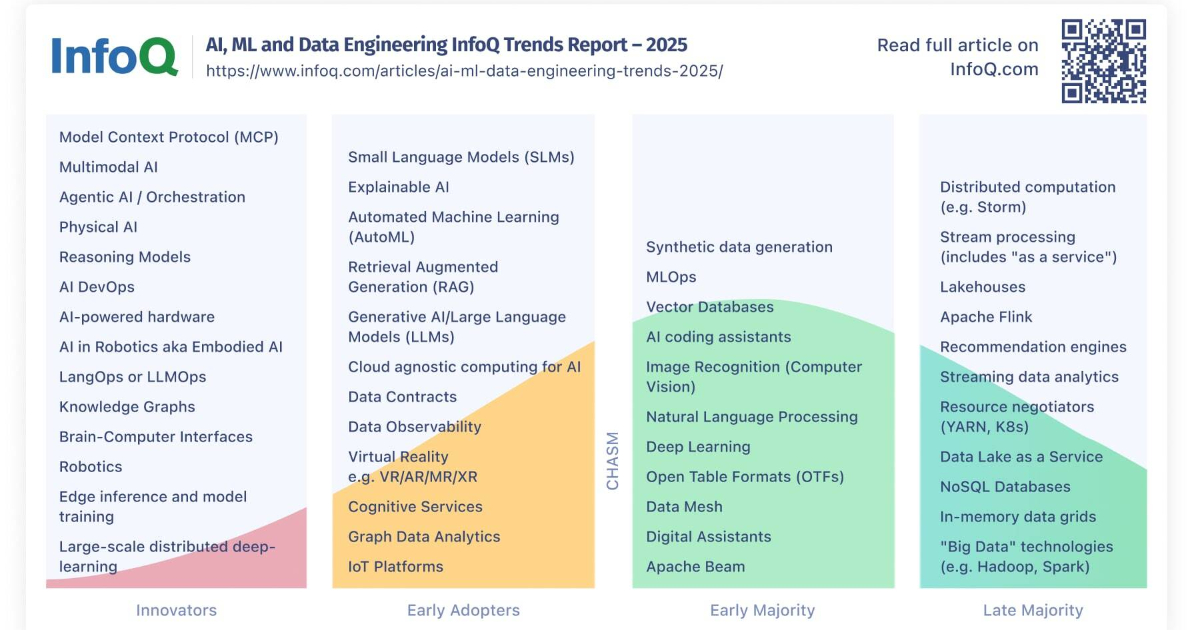
Article: InfoQ AI, ML and Data Engineering Trends Report - 2025

This InfoQ Trends Report offers readers a comprehensive overview of emerging trends and technologies in the areas of AI, ML, and Data Engineering. This report summarizes the InfoQ editorial team’s and external guests' view on the current trends in AI and ML technologies and what to look out for in the next 12 months.

By Srini Penchikala, Savannah Kunovsky, Anthony Alford, Daniel Dominguez, Vinod Goje

Fine-Tuning Methods for Large Language Models in Clinical Medicine by Supervised Fine-Tuning and Direct Preference Optimization: Comparative Evaluation

Background: Large language model (LLM) fine tuning is the process of adjusting out-of-the-box model weights using a dataset of interest. Fine tuning can be a powerful technique to improve model performance in fields like medicine, where data access is restricted and LLMs may have poor out-of-the-box performance. Objective: In this study we investigated the benefits of fine tuning with supervised fine tuning (SFT) and direct preference optimization (DPO) across a range of LLM applications for medicine Methods: We use Llama3 7B and Mistral 7B v2 to compare the performance of SFT and DPO across four datasets for common natural language tasks in medicine. The tasks evaluated were simple classification, clinical reasoning, summarization, and clinical triage. Results: Clinical Reasoning accuracy increased 8% and 7% with DPO over SFT for Llama3 (p value 0.003) and Mistral2 (p value 0.004) respectively. Summarization quality, graded on a five point Likert scale, increased 0.13 and 0.10 for Llama3 and Mistral2 (p values

Comparative Evaluation of a Medical Large Language Model in Answering Real-World Radiation Oncology Questions: Multicenter Observational Study

Background: Large language models (LLMs) hold promise for supporting clinical tasks, particularly in data-driven and technical disciplines such as radiation oncology. While prior evaluation studies have focused on examination-style settings for evaluating LLMs, their performance in real-life clinical scenarios remains unclear. In the future, LLMs might be used as general AI assistants to answer questions arising in clinical practice. It is unclear how well a modern LLM, locally executed within the infrastructure of a hospital, would answer such questions compared with clinical experts. Objective: This study aimed to assess the performance of a locally deployed, state-of-the-art medical LLM in answering real-world clinical questions in radiation oncology compared with clinical experts. The aim was to evaluate the overall quality of answers, as well as the potential harmfulness of the answers if used for clinical decision-making. Methods: Physicians from 10 departments of European hospitals collected questions arising in the clinical practice of radiation oncology. Fifty of these questions were answered by 3 senior radiation oncology experts with at least 10 years of work experience, as well as the LLM Llama3-OpenBioLLM-70B (Ankit Pal and Malaikannan Sankarasubbu). In a blinded review, physicians rated the overall answer quality on a 5-point Likert scale (quality), assessed whether an answer might be potentially harmful if used for clinical decision-making (harmfulness), and determined if responses were from an expert or the LLM (recognizability). Comparisons between clinical experts and LLMs were then made for quality, harmfulness, and recognizability. Results: There were no significant differences between the quality of the answers between LLM and clinical experts (mean scores of 3.38 vs 3.63; median 4.00, IQR 3.00-4.00 vs median 3.67, IQR 3.33-4.00; P=.26; Wilcoxon signed rank test). The answers were deemed potentially harmful in 13% of cases for the clinical experts compared with 16% of cases for the LLM (P=.63; Fisher exact test). Physicians correctly identified whether an answer was given by a clinical expert or an LLM in 78% and 72% of cases, respectively. Conclusions: A state-of-the-art medical LLM can answer real-life questions from the clinical practice of radiation oncology similarly well as clinical experts regarding overall quality and potential harmfulness. Such LLMs can already be deployed within the local hospital environment at an affordable cost. While LLMs may not yet be ready for clinical implementation as general AI assistants, the technology continues to improve at a rapid pace. Evaluation studies based on real-life situations are important to better understand the weaknesses and limitations of LLMs in clinical practice. Such studies are also crucial to define when the technology is ready for clinical implementation. Furthermore, education for health care professionals on generative AI is needed to ensure responsible clinical implementation of this transforming technology.

Deciphering the Heterogeneity of Pancreatic Cancer: DNA Methylation-Based Cell Type Deconvolution Unveils Distinct Subgroups and Immune Landscapes

Epigenomes. 2025 Sep 5;9(3):34. doi: 10.3390/epigenomes9030034.

ABSTRACT

Background: Pancreatic ductal adenocarcinoma (PDAC) is a highly heterogeneous malignancy, characterized by low tumor cellularity, a dense stromal response, and intricate cellular and molecular interactions within the tumor microenvironment (TME). Although bulk omics technologies have enhanced our understanding of the molecular landscape of PDAC, the specific contributions of non-malignant immune and stromal components to tumor progression and therapeutic response remain poorly understood. Methods: We explored genome-wide DNA methylation and transcriptomic data from the Cancer Genome Atlas Pancreatic Adenocarcinoma cohort (TCGA-PAAD) to profile the immune composition of the TME and uncover gene co-expression networks. Bioinformatic analyses included DNA methylation profiling followed by hierarchical deconvolution, epigenetic age estimation, and a weighted gene co-expression network analysis (WGCNA). Results: The unsupervised clustering of methylation profiles identified two major tumor groups, with Group 2 (n = 98) exhibiting higher tumor purity and a greater frequency of KRAS mutations compared to Group 1 (n = 87) (p < 0.0001). The hierarchical deconvolution of DNA methylation data revealed three distinct TME subtypes, termed hypo-inflamed (immune-deserted), myeloid-enriched, and lymphoid-enriched (notably T-cell predominant). These immune clusters were further supported by co-expression modules identified via WGCNA, which were enriched in immune regulatory and signaling pathways. Conclusions: This integrative epigenomic-transcriptomic analysis offers a robust framework for stratifying PDAC patients based on the tumor immune microenvironment (TIME), providing valuable insights for biomarker discovery and the development of precision immunotherapies.

PMID:40981070 | PMC:PMC12452622 | DOI:10.3390/epigenomes9030034

Cancer in a drop: Liquid biopsy highlights from the American Society of Clinical Oncology (ASCO) 2025 annual congress

J Liq Biopsy. 2025 Aug 6;9:100320. doi: 10.1016/j.jlb.2025.100320. eCollection 2025 Sep.

ABSTRACT

Over the past decade, liquid biopsy has progressively expanded its role in oncology, supported by mounting evidence demonstrating an increasing number of clinical applications. At the 2025 American Society of Clinical Oncology (ASCO) Annual Meeting, liquid biopsy emerged as a central theme across multiple sessions, with more than 700 abstracts, investigating the clinical utility of liquid biopsy across a wide range of tumor types and disease stages. Applications presented included cancer screening, minimal residual disease (MRD) detection, management of metastatic disease, and potential use for matching patients to clinical trials. This editorial, authored on the behalf of the Young Committee of the International Society of Liquid Biopsy (ISLB) highlights the result of selected studies, grouped by tumor type.

PMID:40980343 | PMC:PMC12447415 | DOI:10.1016/j.jlb.2025.100320

Cell-free DNA fragmentomics: a universal framework for early cancer detection and monitoring

22 September 2025 at 18:00

Am J Clin Exp Immunol. 2025 Aug 15;14(4):237-240. doi: 10.62347/EBRY4326. eCollection 2025.

ABSTRACT

Cell-free DNA (cfDNA) fragmentomics has emerged as a powerful and noninvasive approach for cancer detection, characterization, and monitoring. By analyzing genome-wide fragmentation patterns - including fragment length distributions, end motifs, nucleosome footprints, and copy number variations - cfDNA fragmentomics provides high-resolution insights into tumor-specific biological signals even at low tumor burden. This technology offers advantages over conventional mutation-based assays by capturing aggregate structural and epigenomic alterations without requiring prior knowledge of driver mutations. In non-small cell lung cancer (NSCLC), cfDNA fragmentomics enables early detection, discrimination of malignant pulmonary nodules, and post-surgical monitoring of minimal residual disease. Recent studies have demonstrated that fragmentomic risk scores can accurately stratify recurrence risk and improve prognostic sensitivity beyond traditional genomic assays. In hepatocellular carcinoma (HCC), integration of fragment size selection, CNV profiling, and end-motif analysis has led to high-performing models for early diagnosis, particularly in high-risk populations. Moreover, cfDNA fragmentomics has proven effective in detecting malignant transformation in patients with neurofibromatosis-associated peripheral nerve sheath tumors, distinguishing benign from premalignant or malignant lesions with high precision. Expanding beyond these major cancers, fragmentomic approaches have demonstrated diagnostic potential in gastric, urological, hematologic, and pediatric malignancies. Notably, the DELFI-TF (DNA Evaluation of Fragments for early Interception-Tumor Fraction) framework has shown prognostic relevance by correlating pre-treatment cfDNA features with survival outcomes in colorectal and lung cancer patients, outperforming conventional imaging. All of these results highlight the translational importance of cfDNA fragmentomics as a cutting-edge precision oncology tool. Its continued integration into clinical workflows may redefine early cancer detection, facilitate subtype-specific interventions, and enable real-time, individualized treatment monitoring.

PMID:40977920 | PMC:PMC12444407 | DOI:10.62347/EBRY4326

Circulating tumor DNA in patients with cancer: insights from clinical laboratory

Adv Lab Med. 2025 Jun 16;6(3):259-276. doi: 10.1515/almed-2025-0010. eCollection 2025 Sep.

ABSTRACT

Blood-based circulating tumor DNA (ctDNA) analysis has emerged as a highly relevant non-invasive method for molecular profiling of solid tumors, offering valuable information about the genetic landscape of cancer. Somatic mutation analysis of ctDNA is now used clinically to guide targeted therapies for advanced cancers. Recent advancements have also revealed its potential in early detection, prognosis, minimal residual disease assessment, and prediction/monitoring of therapeutic response. In recent years, significant progress has been made with the development of various PCR and NGS-based methods designed for assessing gene variants in ctDNA of patients with cancer. However, despite the transformative possibilities that ctDNA analysis presents, challenges persist. Standardization of preanalytical and analytical protocols, assay sensitivity, and the interpretation of results remain critical hurdles that need to be addressed for the widespread clinical implementation of ctDNA testing. In addition to somatic mutations, emerging studies on DNA methylation (epigenomics) and fragment size patterns (fragmentomics) in several types of biological fluids are yielding promising results as non-invasive biomarkers for effective cancer management. This review addresses the clinical applications of somatic gene variants in ctDNA, emphasizes their potential as cancer biomarkers, and highlights essential factors for successful implementation in clinical laboratories and cancer management.

PMID:40977813 | PMC:PMC12446922 | DOI:10.1515/almed-2025-0010

A statistical physics approach to integrating multi-omics data for disease-module detection

Cell Rep Methods. 2025 Sep 19:101183. doi: 10.1016/j.crmeth.2025.101183. Online ahead of print.

ABSTRACT

Genes associated with the same disease frequently engage in mutual biological interactions, e.g., perturbation within a specific neighborhood in the molecular interactome, often referred to as the disease module. This has propelled the advancement of network-based approaches toward elucidating the molecular bases of human diseases. Although many computational methods have been developed to integrate the molecular interactome and omics profiles to extract such context-dependent disease modules, approaches that leverage multi-omics for disease-module detection are still lacking. Here, we developed a statistical physics approach based on the random-field O(n) model (RFOnM) to fill this gap. We applied the RFOnM approach to integrate gene-expression data and genome-wide association studies or mRNA data and DNA methylation for several complex diseases with the human interactome. We found that the RFOnM approach outperforms existing single omics methods in most of the complex diseases considered in this study.

PMID:40975055 | DOI:10.1016/j.crmeth.2025.101183

Implementation of a Virtual Hospital in the Home Service for Patients With COVID-19 in Queensland, Australia: Mixed Methods Evaluation Using the RE-AIM Framework

Background: Hospital in the home (HITH) provides home-based care as an alternative to traditional hospitalization. In response to the COVID-19 Omicron wave, a public hospital in the rural Western portion of Southeast Queensland implemented a virtual HITH service to support adults, maternity patients, and children with moderate COVID-19 symptoms and additional health concerns. Although the pandemic accelerated the uptake of virtual care within HITH models, existing literature has focused on clinical outcomes, with limited evidence on key implementation outcomes. Objective: Using the RE-AIM (reach, effectiveness, adoption, implementation, and maintenance) framework, this study evaluated the implementation of the virtual COVID-19 HITH service and identified factors influencing its implementation, to inform ongoing service development and support potential scaling of this model of care. Methods: The RE-AIM implementation science framework was selected to guide the evaluation, capturing both clinical and contextual dimensions of implementation at both individual and organizational levels. Quantitative data on service usage and costs were retrospectively extracted from electronic medical records and finance records, while patient experience data were drawn from patient-reported experience measures surveys. Qualitative data were collected through one-on-one interviews with patients and staff. All data sources were analyzed separately and then triangulated within the RE-AIM framework to understand what occurred, how, and why. Results: The service admitted 3192 patients, most of whom were female (2027/3192, 63.5%), English-speaking (3140/3192, 98.4%), and residing in socioeconomically disadvantaged areas (1879/3192, 58.9%) (reach). The model was feasible and safe to implement, managing 3240 admissions with no reported deaths. Patients valued continuous access to care and described better recovery experiences at home (effectiveness). Staff viewed the model as appropriate for identifying and managing high-risk patients in the community, easing pressure on hospital beds (adoption). The service cost Aus $ 5.4 million (US $3.5 million) over 11 months. Implementation barriers included the urgency of the pandemic scenario, limited infrastructure and human resources, and changing requirements in relation to COVID-19. These were mitigated by several people factors that were critical to its successful implementation, including a consultant-led structure, staff commitment, and adaptability (implementation). The service saved 16,651 inpatient bed days before being integrated into core HITH operations. The experience strengthened staff capabilities in emergency response, virtual care delivery, and strategic planning. The model shows promise for broader application into pediatric care, though further work is needed to enhance interdepartmental collaboration and staff recognition (maintenance). Conclusions: This study demonstrated that a virtual HITH model can be implemented effectively and safely at scale. Findings support its potential for integration into routine care, provided that adequate resource planning, a skilled and multidisciplinary workforce, well-defined care pathways, and equity-focused strategies are in place.

  • ✇STAT
  • STAT+: Fresh data on hospital AI use & Califf dishes on tech Mario Aguilar
    You’re reading the web edition of STAT’s Health Tech newsletter, our guide to how technology is transforming the life sciences. Sign up to get it delivered in your inbox every Tuesday and Thursday. Califf warns AI in health care ‘overhyped’ On a makeshift stage in a Midtown Manhattan office earlier this week,former Food and Drug Administration Commissioner Robert Califf struck a measured tone about the potential for artificial intelligence in health care. Asked whether the technology was o
     

STAT+: Fresh data on hospital AI use & Califf dishes on tech

18 September 2025 at 22:18

You’re reading the web edition of STAT’s Health Tech newsletter, our guide to how technology is transforming the life sciences. Sign up to get it delivered in your inbox every Tuesday and Thursday.

Califf warns AI in health care ‘overhyped’

On a makeshift stage in a Midtown Manhattan office earlier this week,former Food and Drug Administration Commissioner Robert Califf struck a measured tone about the potential for artificial intelligence in health care. Asked whether the technology was overhyped he said it was. “I hear way too much about the money. I’m not hearing a lot of human values coming through discussions,” he said. Adding:

“Almost all of the technology is being applied to optimizing the financial status of healthcare delivery entities or companies that are making medical products and that’s not aligned with equitable, better patient outcomes. So until someone puts a soul back in the system, I think it’s going to get worse and worse.”

Continue to STAT+ to read the full story…

© Adobe

Opinion: Four reasons why generative AI chatbots could lead to psychosis in vulnerable people

18 September 2025 at 16:30

Three scholars discovered a strange mirror deep in the forest. It spoke to them in a soothing voice and answered all their questions warmly, knowledgeably, and eloquently.

The captivated scholars became obsessed, whispering one secret after another to the mirror. It replied with affection, promise, and meaning that kept them returning to it. They began ignoring one another, each convinced the mirror “understood” them best.

Read the rest…

© Adobe

❌