❌

Normal view

Views of People With Psychosis About Algorithm-Based Relapse Prediction and Data Sharing: Qualitative Study

Background: Preventing relapses of psychosis is difficult and important. Digital remote monitoring (DRM) systems are being developed and tested to support this. Increasingly, these systems use algorithm-based relapse prediction. Hence, understanding stakeholder views about algorithmic prediction is crucial. Existing qualitative work has explored health professionals’ views, but very few studies have examined the perspectives of people with psychosis on this topic. Objective: This paper aimed to provide an in-depth examination of the views of people with psychosis regarding algorithmic relapse prediction within a DRM system that incorporates active symptom monitoring and passive sensing data. Methods: People with psychosis (n=58) were recruited from 6 geographically distinct areas of the United Kingdom. They participated in semistructured qualitative interviews exploring their views about using a DRM system that predicts psychosis relapse based on a machine learning algorithm. Transcripts were analyzed using reflexive thematic analysis. People with lived experience of psychosis were involved extensively in study design, analysis, and reporting. Results: Findings were described across 4 themes. First, was a prominent theme. Participants emphasized that transparency about algorithm sensitivity and specificity is crucial and discussed the risks of the relapse prediction algorithm producing false positives (flagging that someone was relapsing when they were not) and false negatives (missing actual relapses). In both cases, participants said that errors may be partially mitigated through a approach (theme 2), with DRM blended with human oversight, from clinicians or a dedicated digital monitoring team, and calibrated based on service user, carer, and clinician feedback. The third theme, noted the interplay between users’ trust in the DRM system and their relationship with the clinical team. This theme described participants’ fears about potential overreactions (hospitalization or excessive medication) or underreactions (no additional support) from the clinical team in response to algorithm-generated relapse predictions. It emphasized the importance of retaining choice around the use of relapse detection algorithms and the sharing of personal data. The final theme described participants’ views about the , including facilitating early intervention, triaging care according to need, minimizing human bias in assessment, and efficiency in saving staff time. Conclusions: People with psychosis acknowledged potential benefits of algorithm-assisted relapse prediction for receiving timely or efficient care, but with several caveats. Algorithm-generated relapse alerts need to be sufficiently accurate and must be interpreted, with understanding of their limitations, by a trustworthy human who is aware of the relevant context. Algorithm-based relapse predictions should only be used with valid consent, in a way that promotes and respects the autonomy and voice of service users and avoids increasing the use of excessive restriction.

Misinformation in Social Media Narratives on Highly Pathogenic Avian Influenza: Systematic Content Analysis of Facebook and Instagram Posts

Background: Recurrent outbreaks of the highly pathogenic avian influenza (HPAI) A (H5N1) virus in farmed poultry, and reports of infections in dairy cattle herds in the United States since March 2024, have triggered concerns about the spillover threat to human populations and a subsequent influenza pandemic. The increasing threat that H5N1 poses to human health has led to more vigilant public health monitoring of these developments. In addition to intensifying surveillance, preventative strategies—like vaccinating those at higher risk—are being evaluated to help minimize infection and spread. Objective: Efforts to mitigate and respond to such an event will entail broad public health interventions including vaccination. However, analysis of the COVID-19 pandemic suggests that information quality can significantly impact the effectiveness of such measures by influencing public understanding and trust. Misinformation about H5N1 and other viruses circulating online often includes inaccurate information about transmission, prevention, and the severity of the viruses. By systematically analyzing these false narratives, public health authorities can better tailor their pandemic prevention, preparedness, and response strategies. Methods: In light of the emerging threat of H5N1, we analyzed the content of social media posts from Facebook (approximately 350,000) and Instagram (n=69,551) related to HPAI. Using 40 keywords associated with misinformation, we identified over 500 posts explicitly mentioning H5N1 and related terms for further systematic analysis. Posts were coded to identify targets and topics in the social media narratives. The “target” refers to the organization or person mentioned in the post, while the “topic” refers to the primary issue or subject being addressed. Results: Our content analysis identifies 7 main targets of misinformation, including government (149/544, 27%), health authorities (108/544, 20%), and international organizations (74/544, 14%). Also, from the 6 topics that have been identified, we found that the most widespread one was that authority figures purposefully engineer pandemics to achieve multiple political, economic, and other objectives (362/544, 67%) followed by societal destruction (121/544, 22%), and anti-vaccination (84/544, 15%). Other themes include societal destruction and religious allusions and prophecies. Conclusions: Our analysis of online content showed that H5N1 misinformation was primarily aimed at individuals or groups with differing degrees of political or institutional authority, such as government leaders and public health officials. These figures were often the focus due to their involvement in making health policy decisions and implementing public health measures. Decision-making entities and individuals were the target of various misinformation narratives. Results demonstrate the ongoing need for monitoring health misinformation to inform evolving public health responses to HPAI.

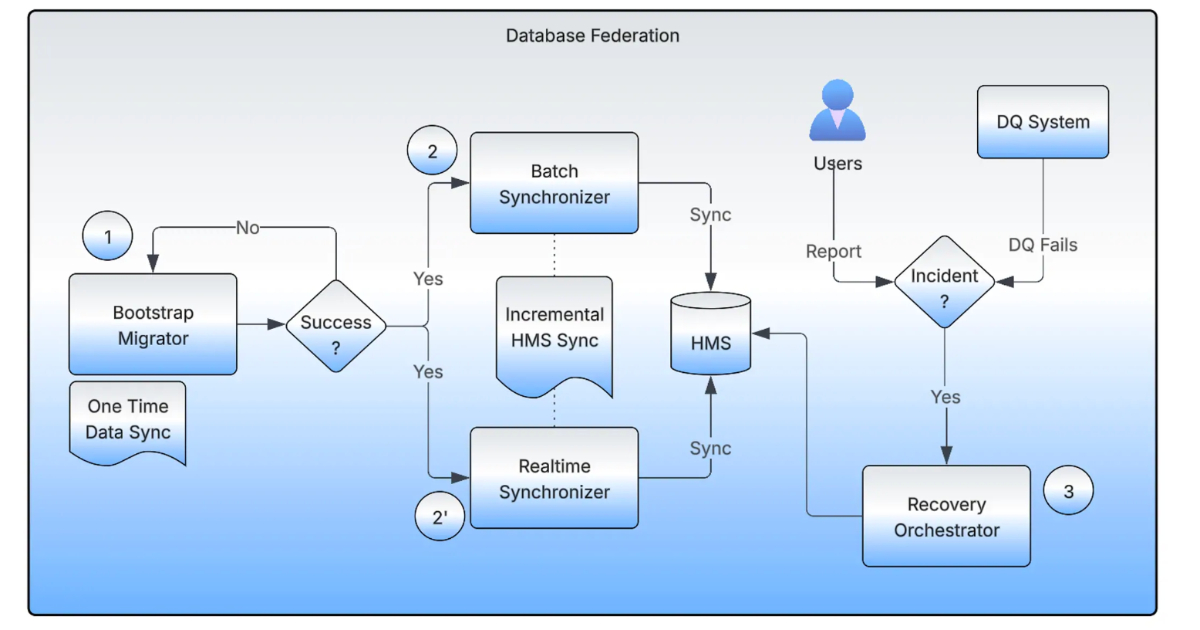
Uber’s Hive Federation Decentralizes 16K Datasets and 10+ PB for Zero-Downtime Analytics at Scale

9 April 2026 at 21:54

Uber has decentralized its Hive data warehouse, migrating 16,000 datasets totaling over 10 petabytes using pointer-based federation. The migration ensures zero downtime, strict ACL enforcement, improved governance, and scalable, domain-specific datasets for analytics and machine learning workloads.

By Leela Kumili

Multiomics and multi-region spatial transcriptome analysis reveal cellular networks and pathways associated with HCC recurrence

JHEP Rep. 2026 Feb 18;8(5):101790. doi: 10.1016/j.jhepr.2026.101790. Online ahead of print.

ABSTRACT

BACKGROUND & AIMS: Hepatocellular carcinoma (HCC) exhibits diverse aetiologies and molecular heterogeneity, with a median 5-year overall survival of <70% due to high recurrence rates following curative-intent surgery. This study investigated the complex tumour microenvironment (TME) in HCC and explored interactions between various cell types and their roles in disease recurrence.

METHODS: Using a multi-omics approach on multi-region samples of surgically resected HCC from the PLANet 1.0 cohort (NCT03267641), we performed spatial transcriptomics on 17 tissue samples from four patients and bulk RNA sequencing on 329 sectors from 90 patients. Findings were validated using immunofluorescence and multiplex immunohistochemistry.

RESULTS: Our analysis revealed extensive intra- and intertumour gene expression heterogeneity and identified a specific subset of endothelial cells (ECs), INTS6+ ECs, enriched and spatially colocalised with tumour cells in primary tumours from patients with recurrence (p = 0.021, n = 49). A significant ANGPTL4-SDC1 ligand-receptor interaction was identified between INTS6+ ECs and tumour cells. Notably, INTS6+ ECs were enriched in microvascular invasion regions and spatially colocalised with tumour cells in patients with recurrence (p = 0.036, n = 53). These findings highlight endothelial-tumour cell interactions within the TME as potential therapeutic targets.

CONCLUSIONS: INTS6+ ECs are enriched in microvascular invasion regions and spatially colocalised with tumour cells in recurrent HCC, suggesting a potential role in disease recurrence and representing a promising therapeutic target within the TME.

IMPACT AND IMPLICATIONS: The spatial co-localisation of cell types plays a significant role in the recurrence of hepatocellular carcinoma. In this study, we have pinpointed a particular group of endothelial cells, known as INTS6+ endothelial cells, which are spatially colocalised with tumour cells and enriched in microvascular invasion regions in patients experiencing recurrence. These discoveries highlight novel therapeutic targets that focus on endothelial cell interactions within the tumour microenvironment to prevent recurrence and enhance overall patient survival.

PMID:41950768 | DOI:10.1016/j.jhepr.2026.101790

Multiomics and multi-region spatial transcriptome analysis reveal cellular networks and pathways associated with HCC recurrence

JHEP Rep. 2026 Feb 18;8(5):101790. doi: 10.1016/j.jhepr.2026.101790. Online ahead of print.

ABSTRACT

BACKGROUND & AIMS: Hepatocellular carcinoma (HCC) exhibits diverse aetiologies and molecular heterogeneity, with a median 5-year overall survival of <70% due to high recurrence rates following curative-intent surgery. This study investigated the complex tumour microenvironment (TME) in HCC and explored interactions between various cell types and their roles in disease recurrence.

METHODS: Using a multi-omics approach on multi-region samples of surgically resected HCC from the PLANet 1.0 cohort (NCT03267641), we performed spatial transcriptomics on 17 tissue samples from four patients and bulk RNA sequencing on 329 sectors from 90 patients. Findings were validated using immunofluorescence and multiplex immunohistochemistry.

RESULTS: Our analysis revealed extensive intra- and intertumour gene expression heterogeneity and identified a specific subset of endothelial cells (ECs), INTS6+ ECs, enriched and spatially colocalised with tumour cells in primary tumours from patients with recurrence (p = 0.021, n = 49). A significant ANGPTL4-SDC1 ligand-receptor interaction was identified between INTS6+ ECs and tumour cells. Notably, INTS6+ ECs were enriched in microvascular invasion regions and spatially colocalised with tumour cells in patients with recurrence (p = 0.036, n = 53). These findings highlight endothelial-tumour cell interactions within the TME as potential therapeutic targets.

CONCLUSIONS: INTS6+ ECs are enriched in microvascular invasion regions and spatially colocalised with tumour cells in recurrent HCC, suggesting a potential role in disease recurrence and representing a promising therapeutic target within the TME.

IMPACT AND IMPLICATIONS: The spatial co-localisation of cell types plays a significant role in the recurrence of hepatocellular carcinoma. In this study, we have pinpointed a particular group of endothelial cells, known as INTS6+ endothelial cells, which are spatially colocalised with tumour cells and enriched in microvascular invasion regions in patients experiencing recurrence. These discoveries highlight novel therapeutic targets that focus on endothelial cell interactions within the tumour microenvironment to prevent recurrence and enhance overall patient survival.

PMID:41950768 | DOI:10.1016/j.jhepr.2026.101790

High-precision measurement of the W boson mass with the CMS experiment

Nature, Published online: 08 April 2026; doi:10.1038/s41586-026-10168-5

The CMS experiment at CERN reports one of the highest-precision measurements of the W boson mass, finding it in line with standard model predictions and at odds with recent anomalous measurements.

Mummified early Permian reptile reveals ancient amniote breathing apparatus

Nature, Published online: 08 April 2026; doi:10.1038/s41586-026-10307-y

A mummified fossil of the early Permian reptile Captorhinus reveals the potential ancestral amniote breathing mechanism and its impact on terrestrial vertebrate evolution.

Preferences for Personalized Text Message Appointment Reminders Among Outpatients in a Universal Health System: Cross-Sectional Study

Background: SMS text messaging reminders are widely used to reduce missed outpatient appointments; however, evidence remains limited regarding which types of reminder content patients prefer, particularly within East Asian universal health systems. In Taiwan, minimal financial barriers to care and unrestricted access to secondary and tertiary hospitals contribute to high outpatient visit volumes and persistent no-show rates. These contextual features underscore the need for behaviorally informed and demographically tailored reminder strategies rather than uniform messaging approaches. Objective: This study aimed to examine patient preferences for 6 theory-guided SMS appointment reminder types and to identify the predictors of reminder preference related to demographic characteristics and health care utilization, with the goal of informing personalized reminder design for a forthcoming randomized controlled trial. Methods: We conducted a cross-sectional online survey among adults in Taiwan with prior outpatient experience. Six SMS reminder prototypes were developed based on behavioral communication principles and validated by a multidisciplinary expert panel using item-level content validity indices. Participants selected their preferred SMS reminder type and reported sociodemographic characteristics and recent health care utilization. Bivariate associations were examined using chi-square tests and one-way ANOVA, with Benjamini-Hochberg false discovery rate correction applied to control for multiple testing. To identify independent predictors of SMS reminder preference while adjusting for potential confounding, we fitted a multinomial logistic regression model with all covariates entered simultaneously. Results: A total of 1095 respondents completed the survey. General reminders and messages referencing prior missed appointments were most frequently preferred, whereas empathy-based or relationally framed messages were selected less often. In false discovery rate–adjusted univariate analyses, both age and sex were associated with SMS reminder preference. However, in the fully adjusted multinomial logistic regression model, age emerged as the only statistically significant independent predictor. Participants younger than 50 years were significantly more likely to prefer alternative reminder message types compared with the general reminder (adjusted odds ratio 1.64, 95% CI 1.18‐2.28; =.003). Sex did not retain statistical significance after multivariable adjustment. Other sociodemographic characteristics and health care utilization variables, including education level, employment status, residential region, outpatient visit frequency, and recent missed appointments history, were not independently associated with reminder preference. Conclusions: Preferences for outpatient SMS reminder content vary systematically, with age representing the most robust independent predictor. Across the sample, concise and behavior-focused reminders were preferred over empathy-oriented or relational formats. These findings support age-informed tailoring of SMS reminder content and provide content-validated SMS prototypes for use in subsequent interventional research. The results offer formative evidence to guide the design of randomized trials aimed at reducing outpatient no-shows and improving the efficiency of ambulatory care delivery in Taiwan’s universal health care system.

Initial Insights Into an Institutional Secure Large Language Model for Magnetic Resonance Imaging Examination Requests: Retrospective Study

Background: Incomplete clinical details on magnetic resonance imaging (MRI) examination requests (MERs) can lead to suboptimal protocol selection. An institutional secure large language model (sLLM) with access to manually retrieved salient data from the electronic medical record (EMR) may improve request completeness and protocol accuracy across multiple MRI subspecialties. Objective: The objective of this study was to compare clinician MERs with sLLM-augmented MERs for information quality and to evaluate the protocoling accuracy of the sLLM versus board-certified radiologists across body, musculoskeletal, and neuroradiology MRI. Methods: This retrospective study included 608 random outpatient MRI examinations performed between September 2023 and July 2024 (body 206, musculoskeletal 203, neuroradiology 199). The cohort comprised 528 patients (mean 51.2 years, SD 19.2; range 4‐93; n=279, 52.8% women, n=249, 47.2% men). MERs without EMR access were excluded. A privately hosted Anthropic Claude 3.5 model (temperature 0) augmented each MER with manually retrieved salient EMR data and, via rule-based parsing, mapped the extracted elements onto predefined institutional criteria to recommend region or coverage and contrast use. Two experienced radiologists established a consensus reference standard. Two board-certified general radiologists (Rad 3 and Rad 4) and the sLLM were compared with this standard. Clinical information quality was graded using the Reason-for-Exam Imaging Reporting and Data System (RI-RADS). Interrater reliability was quantified with Gwet AC1. Paired accuracies were compared with the McNemar test to determine whether there was a statistically significant difference. Results: Interreader agreement for RI-RADS was almost perfect for sLLM-augmented MERs (AC1 0.97, 95% CI 0.94‐0.99) and moderate for clinician MERs (AC1 0.43, 95% CI 0.34‐0.52). Limited or deficient clinical information (RI-RADS C/D) fell to 0% to 0.7% (0/608 to 4/608) with sLLM augmentation vs 4.1% to 20.4% (25/608 to 124/608) for clinician MERs. Overall protocol accuracy was 93.1% (566/608; 95% CI 89.6‐96.6) for the sLLM, 91.4% (556/608; 95% CI 87.6‐95.3) for Rad 3, and 92.1% (560/608; 95% CI 88.4‐95.8) for Rad 4 (sLLM vs Rad 3 =.23 vs Rad 4 =.40). Region or coverage accuracy was similar (sLLM: 579/608, 95.2%; Rad 3: 585/608, 96.2%; Rad 4: 573/608, 94.2%; =.46 and =.36). Contrast decisions were more accurate using the sLLM at 94.4% (574/608; 95% CI 91.3‐97.5) vs Rad 3 at 92.1% (560/608; 95% CI 88.4‐95.8; =.027) and were not significantly different to Rad 4 at 92.9% (565/608; 95% CI 89.4‐96.4; =.16). Subspecialty analyses showed similar patterns, with the sLLM outperforming Rad 4 for musculoskeletal MRI contrast decisions (96.6% vs 91.1%; =.006) and matching readers elsewhere. Manual review indicated that sLLM improvements arose from EMR details not listed on the MER (infection/inflammation, tumor history, prior surgery). No clinically significant hallucinations were identified in a manual review of discordant cases. Conclusions: Across body, musculoskeletal, and neuroradiology MRI, sLLM-augmented examination requests improved clinical context and enhanced contrast selection while demonstrating accuracy comparable to general radiologists for region or coverage. Integrating sLLMs into routine vetting workflows may reduce manual workload in protocol selection for more efficient, standardized protocoling.

Changes in Workplace Productivity and Estimated Cost Savings During Internet-Based Cognitive Behavioral Therapy in the Irish National Health Service: Naturalistic, Repeated-Measures, Retrospective Survey Study

Background: Depression and anxiety can significantly impact workplace productivity, for instance, by increasing absenteeism and presenteeism. This loss of productivity leads to diminished workplace economic outcomes. Internet-based cognitive behavioral therapy (iCBT) has emerged as a cost-effective intervention within workplace settings that improves workplace productivity loss due to depression and anxiety, but more generalizable evidence beyond the workplace, such as in a national health service setting, is lacking. Objective: This naturalistic, repeated-measures, retrospective study investigated the impact of iCBT on work productivity metrics using nationally representative data from patients enrolled in the Irish national health service (ie, the Health Service Executive). Methods: We analyzed repeated measures retrospective data from 7125 employed patients enrolled in iCBT at the Health Service Executive between March 2023 and May 2024. The Work Productivity and Activity Impairment questionnaire was used to measure absenteeism, presenteeism, overall productivity loss, and activity impairment. Secondary outcomes included depression (Patient Health Questionnaire-9) and anxiety (Generalized Anxiety Disorder-7). Patients were primarily 25 to 64 years old (n=5578, 78%), female (n=4956, 70%), and met clinical scoring criteria on the Patient Health Questionnaire-9 or Generalized Anxiety Disorder-7 (n=4774, 67%). Missing data were handled using multiple imputation. We used mixed-effects models to assess pre-post treatment changes in outcomes and then utilized Irish national salary estimates from 2022 to derive cost savings (in 2022 € values; €1=approximately US $1.05) based on productivity improvement during use of the iCBT program. Results: From baseline to follow-up, absenteeism reduced by 6.85% (

TimeSeek: Temporal Reliability of Agentic Forecasters

arXiv:2604.04220v1 Announce Type: new Abstract: We introduce TimeSeek, a benchmark for studying how the reliability of agentic LLM forecasters changes over a prediction market's lifecycle. We evaluate 10 frontier models on 150 CFTC-regulated Kalshi binary markets at five temporal checkpoints, with and without web search, for 15,000 forecasts total. Models are most competitive early in a market's life and on high-uncertainty markets, but much less competitive near resolution and on strong-consensus markets. Web search improves pooled Brier Skill Score (BSS) for every model overall, yet hurts in 12% of model-checkpoint pairs, indicating that retrieval is helpful on average but not uniformly so. Simple two-model ensembles reduce error without surpassing the market overall. These descriptive results motivate time-aware evaluation and selective-deference policies rather than a single market snapshot or a uniform tool-use setting.

REAM: Merging Improves Pruning of Experts in LLMs

arXiv:2604.04356v1 Announce Type: new Abstract: Mixture-of-Experts (MoE) large language models (LLMs) are among the top-performing architectures. The largest models, often with hundreds of billions of parameters, pose significant memory challenges for deployment. Traditional approaches to reduce memory requirements include weight pruning and quantization. Motivated by the Router-weighted Expert Activation Pruning (REAP) that prunes experts, we propose a novel method, Router-weighted Expert Activation Merging (REAM). Instead of removing experts, REAM groups them and merges their weights, better preserving original performance. We evaluate REAM against REAP and other baselines across multiple MoE LLMs on diverse multiple-choice (MC) question answering and generative (GEN) benchmarks. Our results reveal a trade-off between MC and GEN performance that depends on the mix of calibration data. By controlling the mix of general, math and coding data, we examine the Pareto frontier of this trade-off and show that REAM often outperforms the baselines and in many cases is comparable to the original uncompressed models.

PSY-STEP: Structuring Therapeutic Targets and Action Sequences for Proactive Counseling Dialogue Systems

arXiv:2604.04448v1 Announce Type: new Abstract: Cognitive Behavioral Therapy (CBT) aims to identify and restructure automatic negative thoughts pertaining to involuntary interpretations of events, yet existing counseling agents struggle to identify and address them in dialogue settings. To bridge this gap, we introduce STEP, a dataset that models CBT counseling by explicitly reflecting automatic thoughts alongside dynamic, action-level counseling sequences. Using this dataset, we train STEPPER, a counseling agent that proactively elicits automatic thoughts and executes cognitively grounded interventions. To further enhance both decision accuracy and empathic responsiveness, we refine STEPPER through preference learning based on simulated, synthesized counseling sessions. Extensive CBT-aligned evaluations show that STEPPER delivers more clinically grounded, coherent, and personalized counseling compared to other strong baseline models, and achieves higher counselor competence without inducing emotional disruption.

Can LLMs Reason About Attention? Towards Zero-Shot Analysis of Multimodal Classroom Behavior

arXiv:2604.03401v1 Announce Type: cross Abstract: Understanding student engagement usually requires time-consuming manual observation or invasive recording that raises privacy concerns. We present a privacy-preserving pipeline that analyzes classroom videos to extract insights about student attention, without storing any identifiable footage. Our system runs on a single GPU, using OpenPose for skeletal extraction and Gaze-LLE for visual attention estimation. Original video frames are deleted immediately after pose extraction, thus only geometric coordinates (stored as JSON) are retained, ensuring compliance with FERPA. The extracted pose and gaze data is processed by QwQ-32B-Reasoning, which performs zero-shot analysis of student behavior across lecture segments. Instructors access results through a web dashboard featuring attention heatmaps and behavioral summaries. Our preliminary findings suggest that LLMs may show promise for multimodal behavior understanding, although they still struggle with spatial reasoning about classroom layouts. We discuss these limitations and outline directions for improving LLM spatial comprehension in educational analytics contexts.

VisionClaw: Always-On AI Agents through Smart Glasses

arXiv:2604.03486v1 Announce Type: cross Abstract: We present VisionClaw, an always-on wearable AI agent that integrates live egocentric perception with agentic task execution. Running on Meta Ray-Ban smart glasses, VisionClaw continuously perceives real-world context and enables in-situ, speech-driven action initiation and delegation via OpenClaw AI agents. Therefore, users can directly execute tasks through the smart glasses, such as adding real-world objects to an Amazon cart, generating notes from physical documents, receiving meeting briefings on the go, creating events from posters, or controlling IoT devices. We evaluate VisionClaw through a controlled laboratory study (N=12) and a longitudinal deployment study (N=5). Results show that integrating perception and execution enables faster task completion and reduces interaction overhead compared to non-always-on and non-agent baselines. Beyond performance gains, deployment findings reveal a shift in interaction: tasks are initiated opportunistically during ongoing activities, and execution is increasingly delegated rather than manually controlled. These results suggest a new paradigm for wearable AI agents, where perception and action are continuously coupled to support situated, hands-free interaction.

Delayed Homomorphic Reinforcement Learning for Environments with Delayed Feedback

arXiv:2604.03641v1 Announce Type: cross Abstract: Reinforcement learning in real-world systems is often accompanied by delayed feedback, which breaks the Markov assumption and impedes both learning and control. Canonical state augmentation approaches cause the state-space explosion, which introduces a severe sample-complexity burden. Despite recent progress, the state-of-the-art augmentation-based baselines remain incomplete: they either predominantly reduce the burden on the critic or adopt non-unified treatments for the actor and critic. To provide a structured and sample-efficient solution, we propose delayed homomorphic reinforcement learning (DHRL), a framework grounded in MDP homomorphisms that collapses belief-equivalent augmented states and enables efficient policy learning on the resulting abstract MDP without loss of optimality. We provide theoretical analyses of state-space compression bounds and sample complexity, and introduce a practical algorithm. Experiments on continuous control tasks in MuJoCo benchmark confirm that our algorithm outperforms strong augmentation-based baselines, particularly under long delays.

Learning Dexterous Grasping from Sparse Taxonomy Guidance

arXiv:2604.04138v1 Announce Type: cross Abstract: Dexterous manipulation requires planning a grasp configuration suited to the object and task, which is then executed through coordinated multi-finger control. However, specifying grasp plans with dense pose or contact targets for every object and task is impractical. Meanwhile, end-to-end reinforcement learning from task rewards alone lacks controllability, making it difficult for users to intervene when failures occur. To this end, we present GRIT, a two-stage framework that learns dexterous control from sparse taxonomy guidance. GRIT first predicts a taxonomy-based grasp specification from the scene and task context. Conditioned on this sparse command, a policy generates continuous finger motions that accomplish the task while preserving the intended grasp structure. Our result shows that certain grasp taxonomies are more effective for specific object geometries. By leveraging this relationship, GRIT improves generalization to novel objects over baselines and achieves an overall success rate of 87.9%. Moreover, real-world experiments demonstrate controllability, enabling grasp strategies to be adjusted through high-level taxonomy selection based on object geometry and task intent.
❌