❌

Normal view

InfoQ Online Certification Program: New AI Engineering and Organizational Architecture Cohorts

26 May 2026 at 18:00

InfoQ expands its online certification portfolio with new AI Engineering and Organizational Architecture cohorts, giving senior practitioners a confidential peer group to pressure-test production AI, platform, team design, and architecture decisions.

By Artenisa Chatziou


Article: Architecting Cloud-Native Kafka: From Tiered Storage Towards a Diskless Future

26 May 2026 at 17:00

This article explores Kafka's transition toward a cloud-native architecture, examining how tiered storage, FinOps telemetry, elastic consumer scaling, virtual clusters, and Share Groups reshape the operational and economic model of event streaming platforms. It also analyzes emerging diskless-storage proposals and their architectural trade-offs.

By Viquar Khan
  • βœ‡InfoQ
  • TamboUI Promises to Bring Better Capabilities to Build TUIs in Java Olimpiu Pop
    The call to action β€œto make 2026 the year of Java in the terminal” was quickly responded to by the launch of TamboUI. Inspired by Ratatui, the library used in Claude CLI, it promises support ranging from low-level terminal drawing to high-level APIs such as components and event handling. Currently at version 0.3.0, it has already been adopted by major projects such as Maven and Spring. By Olimpiu Pop
     

TamboUI Promises to Bring Better Capabilities to Build TUIs in Java

26 May 2026 at 17:00

The call to action β€œto make 2026 the year of Java in the terminal” was quickly responded to by the launch of TamboUI. Inspired by Ratatui, the library used in Claude CLI, it promises support ranging from low-level terminal drawing to high-level APIs such as components and event handling. Currently at version 0.3.0, it has already been adopted by major projects such as Maven and Spring.

By Olimpiu Pop

Java News Roundup: WildFly, Micronaut, Spring AI, Apache Fory, GlassFish Plugin, Open Liberty

26 May 2026 at 10:30

This week's Java roundup for May 18th, 2026, features news highlighting: GA releases of WildFly 40, Micronaut 5.0, Maven Embedded GlassFish Plugin 8.0 and Apache Fory 1.0; the May 2026 edition of Open Liberty; point releases of Gatherers4j, Apache and Kafka; and the seventh milestone release of Spring AI 2.0.

By Michael Redlich
  • βœ‡InfoQ
  • Article: The Schema Proliferation Problem in Kafka and Flink Pipelines: How to Solve It Spoorthi Basu
    Schema proliferation builds slowly and gets expensive fast. One schema per event type feels right until there are ten tables, union queries spanning all of them, and a single field rename touching every schema. Discriminator-based schema consolidation collapses that to two tables, turning multi-table unions into a single query, while new variants are additive and don't break existing consumers. By Spoorthi Basu
     

Article: The Schema Proliferation Problem in Kafka and Flink Pipelines: How to Solve It

25 May 2026 at 21:00

Schema proliferation builds slowly and gets expensive fast. One schema per event type feels right until there are ten tables, union queries spanning all of them, and a single field rename touching every schema. Discriminator-based schema consolidation collapses that to two tables, turning multi-table unions into a single query, while new variants are additive and don't break existing consumers.

By Spoorthi Basu

Podcast: Chasing Efficient Java Development: From 1BRC to Developing Hardwood AI Natively

25 May 2026 at 19:00

Gunnar Morling, technologist at Confluent and Java Champion, shares his experiences with building high-performance applications in Java, especially in the data space. He shares insights from experiments with building durable execution engines, bootstrapping, and AI natively developing Apache Hardwood - a minimal dependencies Java parser for Apache Parquet.

By Gunnar Morling

OpenJDK News Roundup: Vector API, Compact Object Headers and G1GC as Default in JDK 27

25 May 2026 at 10:30

There was a flurry of activity in the OpenJDK ecosystem during the week of May 18th, 2026, highlighting three JEPs elevated from Proposed to Target to Targeted and three JEPs elevated from Candidate to Proposed to Target for JDK 27. The proposed release schedule has also been finalized.

By Michael Redlich
  • βœ‡InfoQ
  • GitHub Copilot CLI Reaches General Availability Mark Silvester
    GitHub has launched Copilot CLI into general availability, bringing generative AI directly to the terminal. Integrated with the GitHub CLI, it offers natural language command suggestions and code explanations. Recent updates introduce "agentic" workflows with Autopilot mode and GPT-5.4 support, alongside new enterprise telemetry for tracking usage across development teams. By Mark Silvester
     

GitHub Copilot CLI Reaches General Availability

12 April 2026 at 17:00

GitHub has launched Copilot CLI into general availability, bringing generative AI directly to the terminal. Integrated with the GitHub CLI, it offers natural language command suggestions and code explanations. Recent updates introduce "agentic" workflows with Autopilot mode and GPT-5.4 support, alongside new enterprise telemetry for tracking usage across development teams.

By Mark Silvester

Etsy Migrates 1000-Shard, 425 TB MySQL Sharding Architecture to Vitess

11 April 2026 at 15:13

The Etsy engineering team recently described how the company migrated its long-running MySQL sharding infrastructure to Vitess. The transition moved shard routing from Etsy’s internal systems to Vitess using vindexes, enabling capabilities such as resharding data and sharding previously unsharded tables.

By Renato Losio
  • βœ‡InfoQ
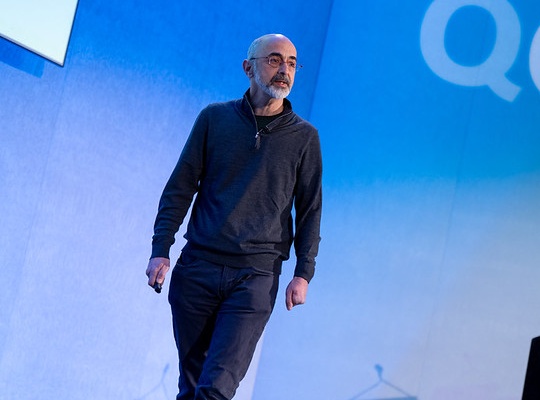
  • Presentation: Latency: the Race to Zero...Are We There Yet? Amir Langer
    Amir Langer discusses the evolution of latency reduction, from the Pony Express to modern hardware. He explains how separation of concerns - decoupling business logic from I/O - and tools like Aeron and the Disruptor achieve single-digit microsecond speeds. He shares insights into replicated state machines, consensus protocols like Raft, and the future of low-latency sequencer architectures. By Amir Langer
     

Presentation: Latency: the Race to Zero...Are We There Yet?

10 April 2026 at 22:28

Amir Langer discusses the evolution of latency reduction, from the Pony Express to modern hardware. He explains how separation of concerns - decoupling business logic from I/O - and tools like Aeron and the Disruptor achieve single-digit microsecond speeds. He shares insights into replicated state machines, consensus protocols like Raft, and the future of low-latency sequencer architectures.

By Amir Langer
  • βœ‡InfoQ
  • Cloudflare Introduces EmDash: TypeScript CMS Positioned as WordPress Successor Renato Losio
    Cloudflare recently announced the preview of EmDash, a new open-source CMS it describes as a β€œspiritual successor to WordPress.” Designed to rebuild the CMS model around a serverless, developer-focused architecture, EmDash includes AI-native features, developer tooling, and migration paths from WordPress, sparking debate across the WordPress and broader CMS community. By Renato Losio
     

Cloudflare Introduces EmDash: TypeScript CMS Positioned as WordPress Successor

10 April 2026 at 04:39

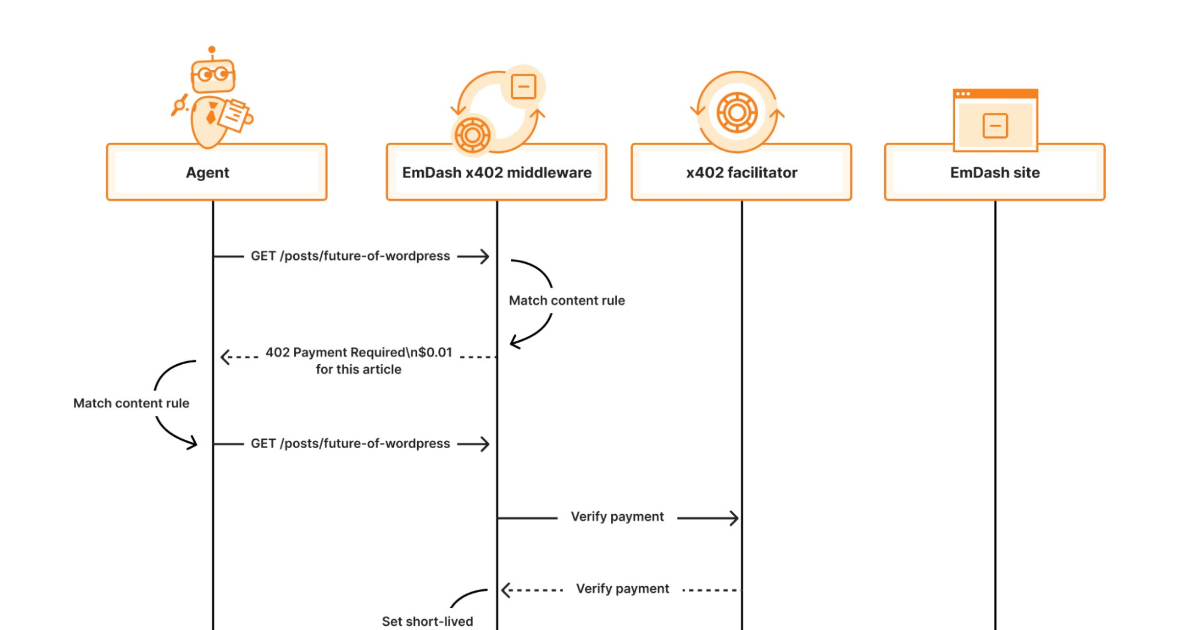
Cloudflare recently announced the preview of EmDash, a new open-source CMS it describes as a β€œspiritual successor to WordPress.” Designed to rebuild the CMS model around a serverless, developer-focused architecture, EmDash includes AI-native features, developer tooling, and migration paths from WordPress, sparking debate across the WordPress and broader CMS community.

By Renato Losio

Uber’s Hive Federation Decentralizes 16K Datasets and 10+ PB for Zero-Downtime Analytics at Scale

9 April 2026 at 21:54

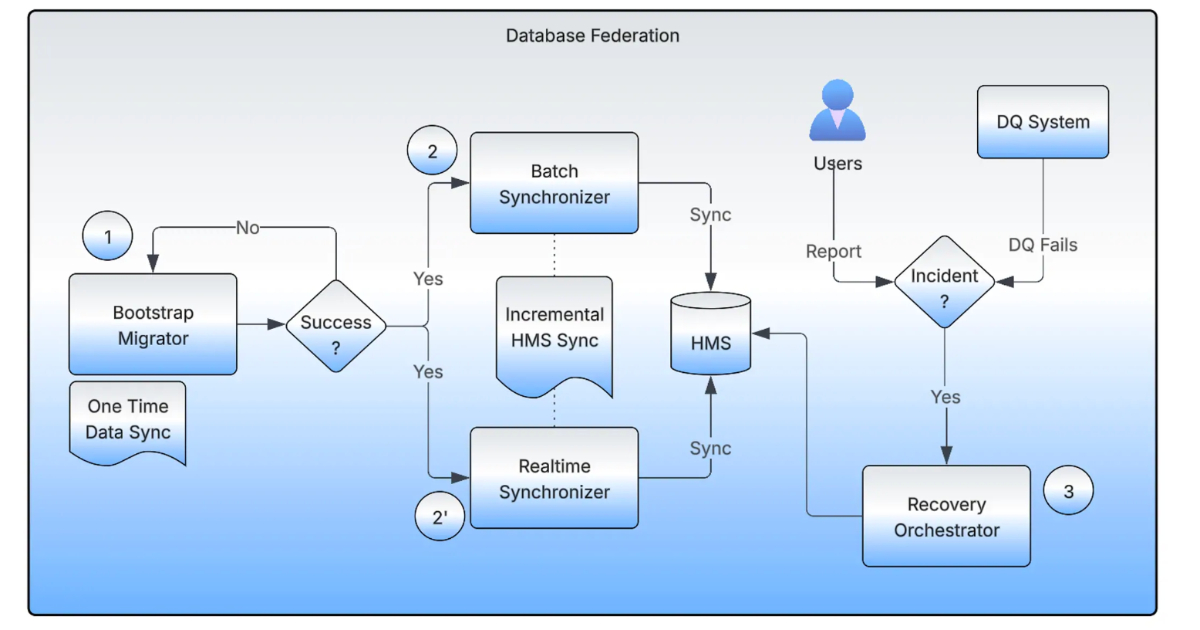
Uber has decentralized its Hive data warehouse, migrating 16,000 datasets totaling over 10 petabytes using pointer-based federation. The migration ensures zero downtime, strict ACL enforcement, improved governance, and scalable, domain-specific datasets for analytics and machine learning workloads.

By Leela Kumili

Article: Building Hierarchical Agentic RAG Systems: Multi-Modal Reasoning with Autonomous Error Recovery

9 April 2026 at 17:00

In this article, the author explores how hierarchical agentic RAG systems coordinate specialized workers through structured orchestration to improve accuracy, reliability, and explainability in complex enterprise analytics workflows. The article uses Protocol-H as a to show how deterministic routing, reflective retry, and modality-aware reasoning support safer multi-source query execution.

By Abhijit Ubale

Google Open Sources Experimental Multi-Agent Orchestration Testbed Scion

7 April 2026 at 16:00

Designed to manage concurrent agents running in containers across local and remote compute, Scion is an experimental orchestration testbed that enables developers to run groups of specialized agents with isolated identities, credentials, and shared workspaces.

By Sergio De Simone
  • βœ‡InfoQ
  • Pinterest Reduces Spark OOM Failures by 96% Through Auto Memory Retries Leela Kumili
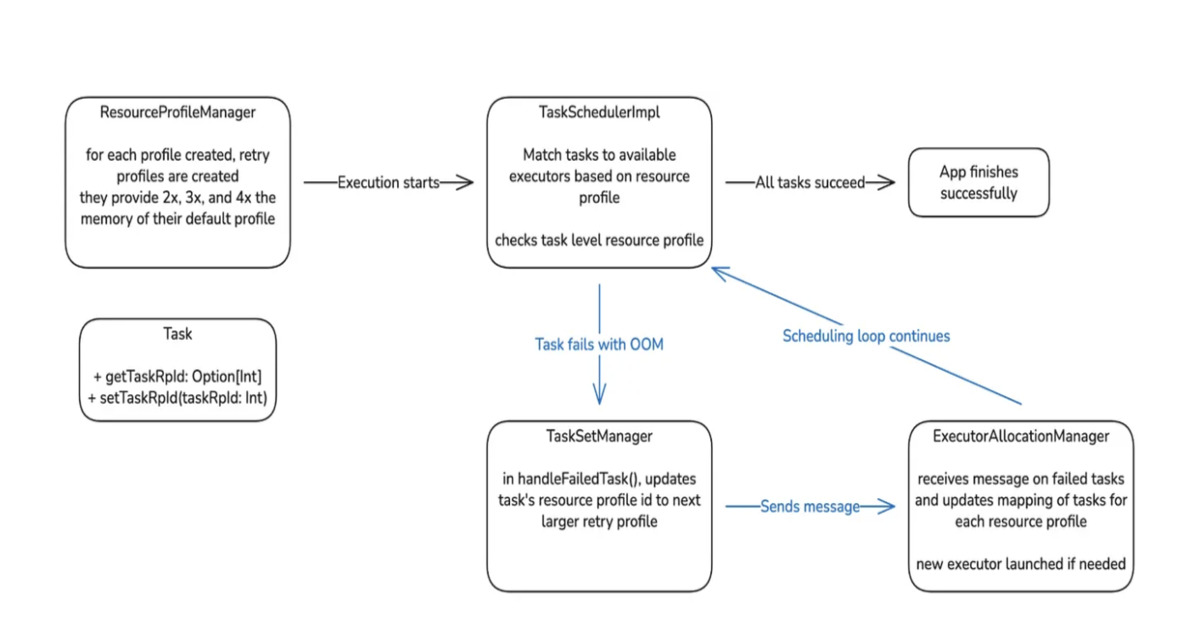
    Pinterest Engineering cut Apache Spark out-of-memory failures by 96% using improved observability, configuration tuning, and automatic memory retries. Staged rollout, dashboards, and proactive memory adjustments stabilized data pipelines, reduced manual intervention, and lowered operational overhead across tens of thousands of daily jobs. By Leela Kumili
     

Pinterest Reduces Spark OOM Failures by 96% Through Auto Memory Retries

6 April 2026 at 22:32

Pinterest Engineering cut Apache Spark out-of-memory failures by 96% using improved observability, configuration tuning, and automatic memory retries. Staged rollout, dashboards, and proactive memory adjustments stabilized data pipelines, reduced manual intervention, and lowered operational overhead across tens of thousands of daily jobs.

By Leela Kumili
  • βœ‡InfoQ
  • Podcast: Context Engineering with Adi Polak Adi Polak
    In this episode, Thomas Betts and Adi Polak talk about the need for context engineering when interacting with LLMs and designing agentic systems. Prompt engineering techniques work with a stateless approach, while context engineering allows AI systems to be stateful. By Adi Polak
     

Podcast: Context Engineering with Adi Polak

6 April 2026 at 19:00

In this episode, Thomas Betts and Adi Polak talk about the need for context engineering when interacting with LLMs and designing agentic systems. Prompt engineering techniques work with a stateless approach, while context engineering allows AI systems to be stateful.

By Adi Polak
  • βœ‡InfoQ
  • Dynamic Languages Faster and Cheaper in 13-Language Claude Code Benchmark Steef-Jan Wiggers
    A 600-run benchmark by Ruby committer Yusuke Endoh tested Claude Code across 13 languages, implementing a simplified Git. Ruby, Python, and JavaScript were the fastest and cheapest, at $0.36- $0.39 per run. Statistically typed languages cost 1.4-2.6x more. Adding type checkers to dynamic languages imposed 1.6-3.2x slowdowns. Full dataset available on GitHub. By Steef-Jan Wiggers
     

Dynamic Languages Faster and Cheaper in 13-Language Claude Code Benchmark

6 April 2026 at 12:01

A 600-run benchmark by Ruby committer Yusuke Endoh tested Claude Code across 13 languages, implementing a simplified Git. Ruby, Python, and JavaScript were the fastest and cheapest, at $0.36- $0.39 per run. Statistically typed languages cost 1.4-2.6x more. Adding type checkers to dynamic languages imposed 1.6-3.2x slowdowns. Full dataset available on GitHub.

By Steef-Jan Wiggers

Java News Roundup: TornadoVM 4.0, Google ADK for Java 1.0, Grails, Tomcat, Log4j, Gradle

6 April 2026 at 10:30

This week's Java roundup for March 30th, 2026, features news highlighting: the GA release of TornadoVM 4.0 and Google ADK for Java 1.0; first release candidates of Grails and Gradle; maintenance releases of Micronaut, Apache Tomcart and Apache Log4j; and an update on Jakarta EE 12.

By Michael Redlich

Anthropic Designs Three-Agent Harness Supports Long-Running Full-Stack AI Development

4 April 2026 at 22:24

Anthropic introduces a three-agent harness separating planning, generation, and evaluation to improve long-running autonomous AI workflows for frontend and full-stack development. Industry commentary highlights structured approaches, iterative evaluation, and practical methods to maintain coherence and quality over multi-hour AI coding sessions.

By Leela Kumili

Presentation: Panel: Taking Architecture Out of the Echo Chamber

Andrew Harmel-Law and a panel of expert architects discuss the shifting practice of architecture in 2025. They explain strategies for communicating technical debt to stakeholders, the benefits of decentralized decision-making through ADRs, and the career paths of modern leaders. The panel shares insights on bridging the gap between mobile and backend teams to ensure a holistic system.

By Andrew Harmel-Law, Cat Morris, Diana Montalion, Shana Dacres-Lawrence, Vanessa Formicola, Elena Stojmilova, Peter Hunter
❌