Alex Porcelli discusses the critical gap in enterprise AI: non-deterministic output and lack of accountability in high-stakes decisions. He shares how integrating DMN decision models with LLMs, agent skills, and NeMo guardrails creates auditable, deterministic agentic architectures - allowing business leaders to own decision logic while engineers maintain robust architectural governance. By Alex Porcelli
Alex Porcelli discusses the critical gap in enterprise AI: non-deterministic output and lack of accountability in high-stakes decisions. He shares how integrating DMN decision models with LLMs, agent skills, and NeMo guardrails creates auditable, deterministic agentic architectures - allowing business leaders to own decision logic while engineers maintain robust architectural governance.
After six days of on-site investigation at OpenAI, a small team of METR and Redwood Research researchers provided an account of how OpenAI agents behaved during their hack of Hugging Face earlier this year. Roughly 700 agents that were meant to be isolated from one another found a way to communicate and coordinate to pursue goals they could have not achieved working individually. By Sergio De Simone
After six days of on-site investigation at OpenAI, a small team of METR and Redwood Research researchers provided an account of how OpenAI agents behaved during their hack of Hugging Face earlier this year. Roughly 700 agents that were meant to be isolated from one another found a way to communicate and coordinate to pursue goals they could have not achieved working individually.
Cassie Shum discusses why knowledge graphs serve as a critical foundation for agentic systems. Moving beyond basic RAG, she explains 4 practical architectural patterns: context bundling, decision provenance, code as truth, and agent visibility. She demonstrates an engineering harness built on a knowledge graph to streamline feedback loops, optimize token usage, and maintain system reliability. By Cassie Shum
Cassie Shum discusses why knowledge graphs serve as a critical foundation for agentic systems. Moving beyond basic RAG, she explains 4 practical architectural patterns: context bundling, decision provenance, code as truth, and agent visibility. She demonstrates an engineering harness built on a knowledge graph to streamline feedback loops, optimize token usage, and maintain system reliability.
NVIDIA Personal AI Router (PAIR), now available in beta, lets you combine the inference capacity of multiple computers on your local network and automatically distribute AI requests among them. It is primarily designed for local multi-agent AI workloads, where multiple independent model calls can otherwise overwhelm one GPU. By Sergio De Simone
NVIDIA Personal AI Router (PAIR), now available in beta, lets you combine the inference capacity of multiple computers on your local network and automatically distribute AI requests among them. It is primarily designed for local multi-agent AI workloads, where multiple independent model calls can otherwise overwhelm one GPU.
LinkedIn has published details of the training infrastructure behind its AI-powered job search, describing a multi-teacher distillation pipeline that compresses knowledge from large teacher models into a compact 0.6B-parameter ranking model. By Claudio Masolo
LinkedIn has published details of the training infrastructure behind its AI-powered job search, describing a multi-teacher distillation pipeline that compresses knowledge from large teacher models into a compact 0.6B-parameter ranking model.
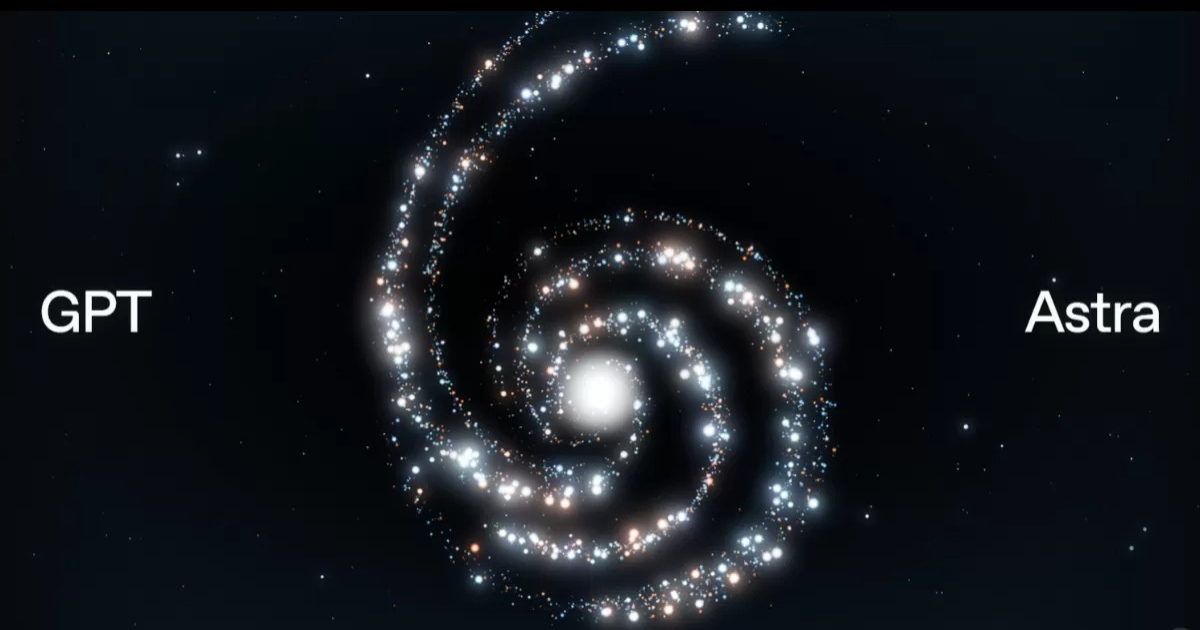
OpenAI has released GPT-6 Astra, a new model focused on coding, computer use, long-running agentic tasks, and cybersecurity, with availability across ChatGPT, Codex, and the OpenAI API. By Daniel Dominguez
OpenAI has released GPT-6 Astra, a new model focused on coding, computer use, long-running agentic tasks, and cybersecurity, with availability across ChatGPT, Codex, and the OpenAI API.
Meta describes how an AI agent can be designed to capture the logic and expertise of domain experts, rather than simply storing documents or retrieving relevant information. The system, dubbed an "organizational second brain", was built for a specialized compliance domain, but Meta argues the architecture generalizes to areas like security, finance, engineering, and procurement. By Sergio De Simone
Meta describes how an AI agent can be designed to capture the logic and expertise of domain experts, rather than simply storing documents or retrieving relevant information. The system, dubbed an "organizational second brain", was built for a specialized compliance domain, but Meta argues the architecture generalizes to areas like security, finance, engineering, and procurement.
Zhou Yu discusses why AI agents stall in demo phase and shares how simulation-driven testing solves compliance and reliability bottlenecks. Learn how Columbia and Arklex AI use synthetic user personas, trajectory entropy, and automated CI/CD pipelines to evaluate multi-turn agents, catch edge cases before deployment, and scale self-learning workflows in production. By Zhou Yu
Zhou Yu discusses why AI agents stall in demo phase and shares how simulation-driven testing solves compliance and reliability bottlenecks. Learn how Columbia and Arklex AI use synthetic user personas, trajectory entropy, and automated CI/CD pipelines to evaluate multi-turn agents, catch edge cases before deployment, and scale self-learning workflows in production.
M&T Bank has deployed AI copilots to more than 15,000 employees as the US regional bank applies AI to internal operations, customer service, software development, and risk management.
The bank uses AI to analyse call-centre conversations, draft reports, generate code, identify customer needs, and flag portfolio risks, according to Fast Company. M&T is also examining agentic AI applications in cybersecurity and fraud detection.
American Banker reported in September 2025 that 16,000
M&T Bank has deployed AI copilots to more than 15,000 employees as the US regional bank applies AI to internal operations, customer service, software development, and risk management.
The bank uses AI to analyse call-centre conversations, draft reports, generate code, identify customer needs, and flag portfolio risks, according to Fast Company. M&T is also examining agentic AI applications in cybersecurity and fraud detection.
American Banker reported in September 2025 that 16,000 of M&T’s roughly 22,000 employees were already using Microsoft Copilot for tasks including drafting emails and reports and summarising call-centre conversations.
Before the wider rollout, M&T initially restricted employee access to public large language models. Chief data officer Andrew Foster told American Banker that the bank blocked the tools because employees could potentially enter sensitive company information into public-facing services.
M&T later evaluated enterprise providers and selected Microsoft Copilot, starting with a pilot involving about 800 employees before expanding access across the organisation.
Foster said using generative AI to summarise call-centre conversations saves about six minutes per call. Software developers at the bank also use GitLab tools to generate code, while employees remain responsible for reviewing AI-generated work.
M&T’s human-review requirement is also reflected in its 2026 Code of Business Conduct and Ethics. The policy requires employees to use approved AI tools and prohibits confidential, proprietary, customer, employee, or regulated information from being entered into unapproved systems. Employees remain responsible for the accuracy and appropriateness of AI-assisted work.
Building the technology and data foundation
M&T’s AI deployment follows a technology overhaul that began in 2018. The bank said more than half of its technology specialists were external workers at the time, compared with an 80% in-house technology workforce today.
M&T now has about 2,000 technologists working across more than 300 agile teams and has hired more than 1,000 technology specialists during the programme.
The bank has also replaced dozens of older platforms. M&T said technology outages have fallen by more than 80% since 2018, while the number of system upgrades completed annually has increased by 300%.
Technology spending exceeded $1.2 billion in 2025, nearly three times its 2017 level. Wisler told Forbes in August 2026 that annual technology releases increased from about 15,000 in 2018 to 65,000 in 2025.
Wisler joined M&T as chief information officer in 2018 before becoming senior executive vice-president for technology and operations in 2025. His current remit covers both technology and operational functions across the bank.
M&T’s data programme developed alongside the broader technology overhaul. Foster, who joined the bank in 2023, began building a data-lineage programme to track where information originates, how it is used, and how it moves between systems.
Foster told American Banker that the data-lineage work was not created in response to generative AI. He described it as a core capability for understanding M&T’s data estate.
The bank also established a Data Academy focused on data governance and data skills, with around 2,000 employees participating in the programme.
M&T has created an internal repository called Edison containing authoritative documents and information on bank policies. The bank also uses data-lineage software from Solidatus and Monte Carlo to trace information as it passes through databases, applications, and business-intelligence systems.
The lineage work gives M&T visibility into the source, meaning, quality, and governance of individual data elements, according to Foster. He said one application for that governed data is the bank’s use of Copilot.
M&T also uses retrieval-augmented generation with internal, governed data, according to American Banker.
Scaling AI into daily banking operations
Wisler told Forbes that M&T is pursuing generative AI through three routes: general employee use, AI capabilities embedded in existing applications, and proprietary systems built around the bank’s own data and processes.
M&T operates more than 1,800 applications, many supplied by third-party vendors. Wisler said one of the bank’s AI pathways is identifying useful AI capabilities already embedded within those applications.
M&T’s third pathway involves proprietary AI development around the bank’s own data and processes. Forbes reported that early applications include repetitive operational work, software development, fraud prevention, and cyber defence.
Fast Company’s September report also said M&T continues to assess both internally developed AI systems and external tools, including general enterprise software and technology designed specifically for banks.
Earlier workforce use cases centred on drafting, summarisation, call-centre work, and software development. Fast Company reported that newer applications include identifying customer needs and flagging portfolio risks.
Other large US banks have also expanded generative AI across employee workflows.
JPMorganChase launched its internal LLM Suite platform to more than 200,000 employees in 2024. By 2025, more than 65,000 employees in its Corporate and Investment Bank were actively using the platform, while more than 90% of its engineers were using AI coding assistants.
The bank also said AI-based transaction screening allowed it to review more than twice the previous transaction volume while reducing manual operator checks by half.
Bank of America is using a generative AI-enabled system called EricaAssist with more than 18,000 customer service employees. The tool summarises why a customer is calling, retrieves relevant information, and recommends possible next steps while keeping the employee responsible for the interaction.
Bank of America said in July 2026 that EricaAssist can deliver contextual guidance in under three seconds and has reduced average call times by nearly one minute. The bank plans to extend the system to additional servicing scenarios and business lines later in 2026.
Want to learn more about AI and big data from industry leaders? Check out AI & Big Data Expo taking place in Amsterdam, California, and London. The comprehensive event is part of TechEx and is co-located with other leading technology events, click here for more information.
AI News is powered by TechForge Media. Explore other upcoming enterprise technology events and webinars here.
Google's SynthID, designed to embed imperceptible signals into AI-generated content, is adding a new Content Detection API on Google Cloud's Gemini Enterprise Agent Platform, after gaining adoption by several industry players including Nvidia and OpenAI. By Sergio De Simone
Google's SynthID, designed to embed imperceptible signals into AI-generated content, is adding a new Content Detection API on Google Cloud's Gemini Enterprise Agent Platform, after gaining adoption by several industry players including Nvidia and OpenAI.
Microsoft has introduced a new AI-driven vulnerability discovery system called MDASH, a multi-model agentic security platform designed to automate large-scale code auditing across Windows and other Microsoft software environments. The system combines more than 100 specialized AI agents that work together to scan, validate, debate, and prove vulnerabilities across complex codebases. By Robert Krzaczyński
Microsoft has introduced a new AI-driven vulnerability discovery system called MDASH, a multi-model agentic security platform designed to automate large-scale code auditing across Windows and other Microsoft software environments. The system combines more than 100 specialized AI agents that work together to scan, validate, debate, and prove vulnerabilities across complex codebases.
Gemma 4 can be paired with multi-token prediction (MTP) drafters that use speculative decoding to generate multiple tokens in parallel, allowing the model to verify them in a single pass and achieve up to ~3× faster inference without quality loss. By Sergio De Simone
Gemma 4 can be paired with multi-token prediction (MTP) drafters that use speculative decoding to generate multiple tokens in parallel, allowing the model to verify them in a single pass and achieve up to ~3× faster inference without quality loss.
Designed to manage concurrent agents running in containers across local and remote compute, Scion is an experimental orchestration testbed that enables developers to run groups of specialized agents with isolated identities, credentials, and shared workspaces. By Sergio De Simone
Designed to manage concurrent agents running in containers across local and remote compute, Scion is an experimental orchestration testbed that enables developers to run groups of specialized agents with isolated identities, credentials, and shared workspaces.
In this episode, Thomas Betts and Adi Polak talk about the need for context engineering when interacting with LLMs and designing agentic systems. Prompt engineering techniques work with a stateless approach, while context engineering allows AI systems to be stateful. By Adi Polak
In this episode, Thomas Betts and Adi Polak talk about the need for context engineering when interacting with LLMs and designing agentic systems. Prompt engineering techniques work with a stateless approach, while context engineering allows AI systems to be stateful.
This article introduces Context-Augmented Generation (CAG) as an architectural refinement of RAG for enterprise systems. It shows how a Spring Boot-based context manager can incorporate user identity, session state, and policy constraints into AI workflows, improving traceability, consistency, and governance without altering existing retrievers or LLM infrastructure. By Syed Danish Ali
This article introduces Context-Augmented Generation (CAG) as an architectural refinement of RAG for enterprise systems. It shows how a Spring Boot-based context manager can incorporate user identity, session state, and policy constraints into AI workflows, improving traceability, consistency, and governance without altering existing retrievers or LLM infrastructure.

 Login
Login