❌

Reading view

Olmo 3 Release Provides Full Transparency into Model Development and Training
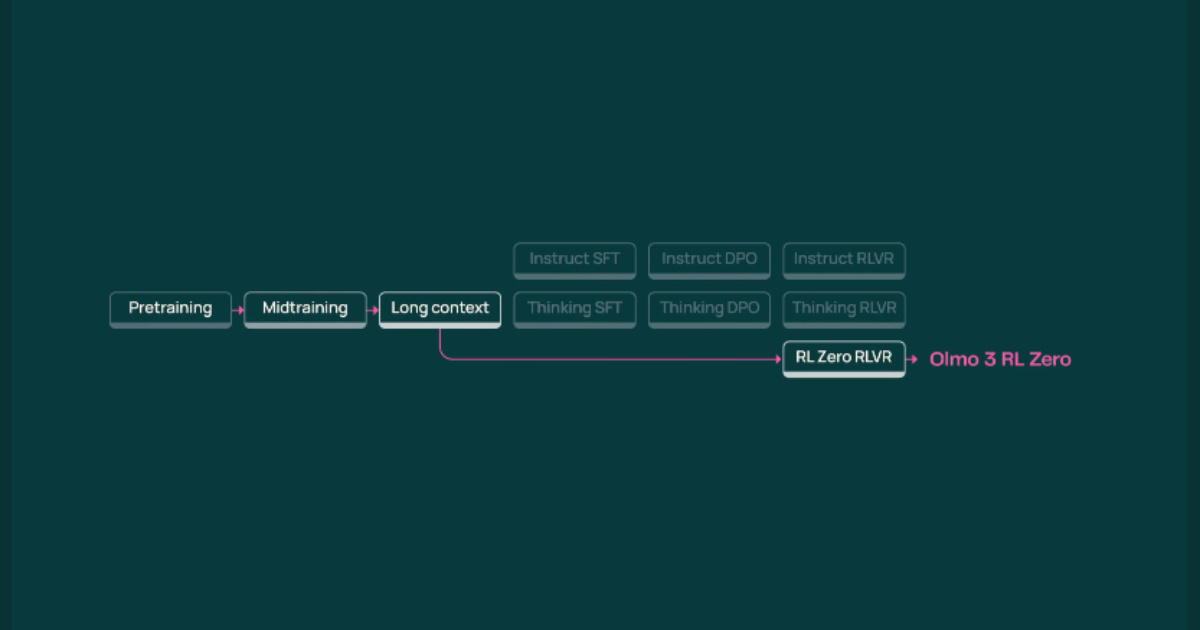
The Allen Institute for AI has unveiled Olmo 3, an open-source language model family that empowers developers with full access to the model lifecycle, from training datasets to checkpoints. Featuring reasoning-focused variants and robust tools for post-training modifications, Olmo 3 promotes transparency, experimentation, and community collaboration, driving innovations in AI.

By Robert Krzaczyński
  •  

Hugging Face Releases FinePDFs: a 3-Trillion-Token Dataset Built from PDFs

Hugging Face has unveiled FinePDFs, the largest publicly available corpus built entirely from PDFs. The dataset spans 475 million documents in 1,733 languages, totaling roughly 3 trillion tokens. At 3.65 terabytes in size, FinePDFs introduces a new dimension to open training datasets by tapping into a resource long considered too complex and expensive to process.

By Robert Krzaczyński
  •  

Google DeepMind Launches EmbeddingGemma, an Open Model for On-Device Embeddings

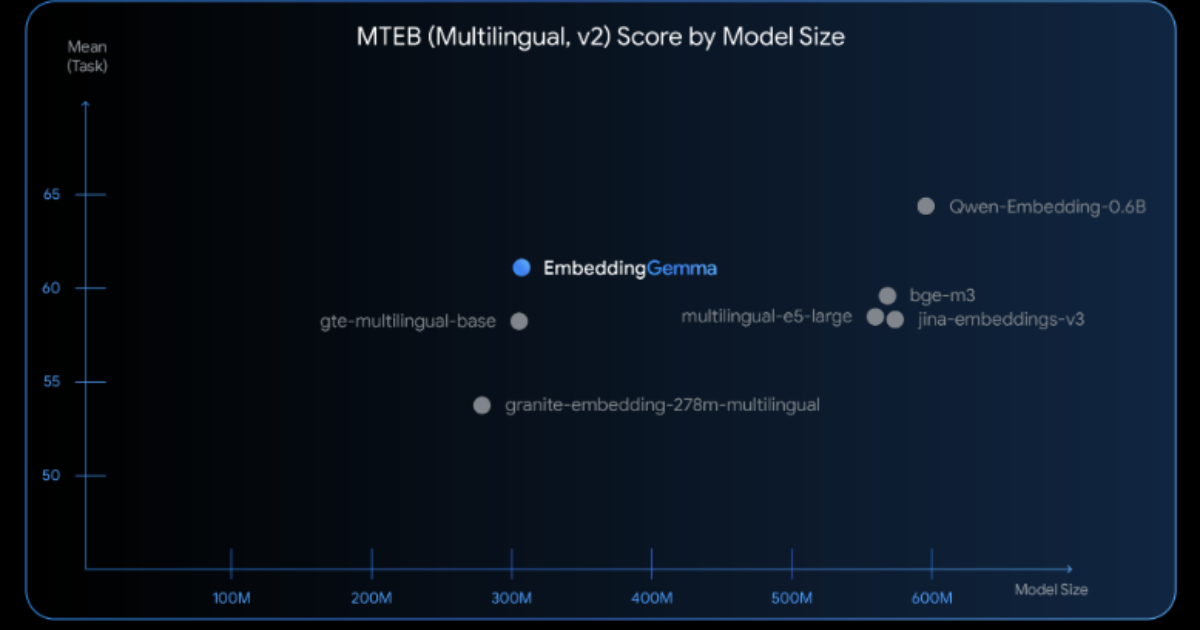
Google DeepMind has introduced EmbeddingGemma, a 308M parameter open embedding model designed to run efficiently on-device. The model aims to make applications like retrieval-augmented generation (RAG), semantic search, and text classification accessible without the need for a server or internet connection.

By Robert Krzaczyński
  •  

Hugging Face Introduces AI Sheets, a No-Code Tool for Dataset Transformation

Hugging Face has released AI Sheets, an open-source application designed to let users build, transform, and enrich datasets using AI models through a spreadsheet-like interface. The tool, available both on the Hub and for local deployment, allows users to experiment with thousands of open models, including OpenAI’s gpt-oss, without requiring code.

By Robert Krzaczyński
  •  

LangChain Launches Open SWE, an Open-Source Asynchronous Coding Agent

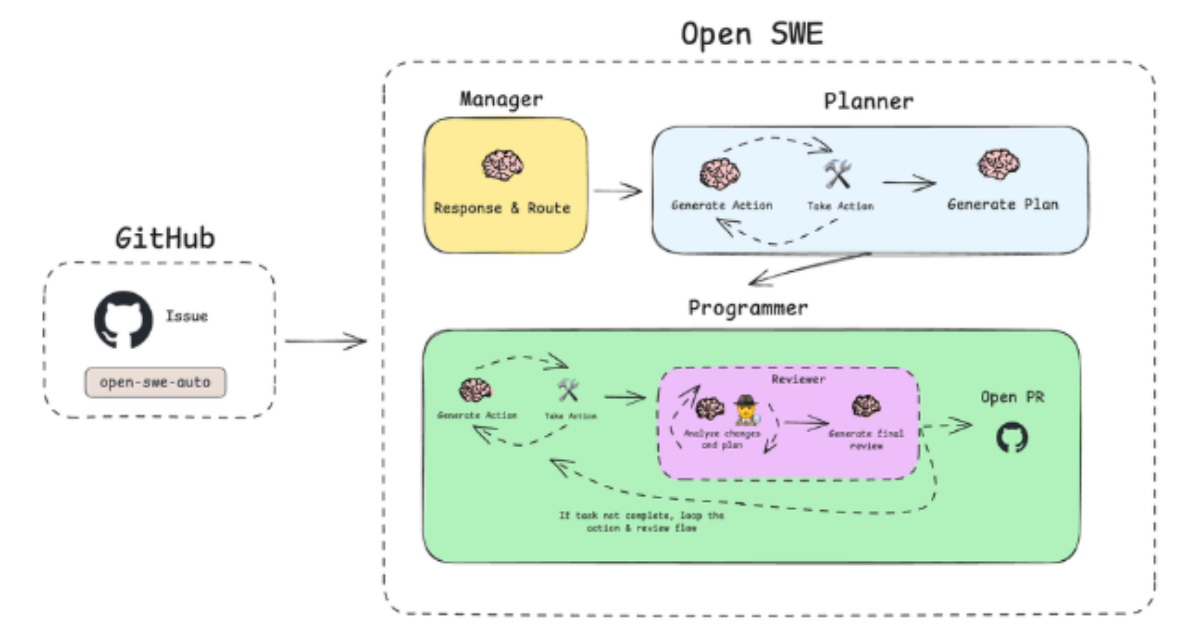
LangChain has released Open SWE, a fully open-source, asynchronous coding agent designed to operate in the cloud and handle complex software development tasks. The company says Open SWE represents a shift away from real-time “copilot” assistants toward more autonomous, long-running agents that integrate directly with a developer’s existing workflows.

By Robert Krzaczyński
  •  

LM Studio 0.3.17 Adds Model Context Protocol (MCP) Support for Tool-Integrated LLMs

LM Studio has released version 0.3.17, introducing support for the Model Context Protocol (MCP) — a step forward in enabling language models to access external tools and data sources. Originally developed by Anthropic, MCP defines a standardized interface for connecting LLMs to services such as GitHub, Notion, or Stripe, enabling more powerful, contextual reasoning.

By Robert Krzaczyński
  •  

Google DeepMind Unveils AlphaGenome: a Unified AI Model for High-Resolution Genome Interpretation

Google DeepMind has announced the release of AlphaGenome, a new AI model designed to predict how genetic variants affect gene regulation across the entire genome. It represents a significant advancement in computational genomics by integrating long-range sequence context with base-pair resolution in a single, general-purpose architecture.

By Robert Krzaczyński
  •  

OWASP Launches AI Testing Guide to Address Security, Bias, and Risk in AI Systems

The OWASP Foundation has officially introduced the AI Testing Guide (AITG), a new open-source initiative aimed at assisting organizations in the systematic testing and security of artificial intelligence systems. This guide serves as a fundamental resource for developers, testers, risk officers, and cybersecurity professionals, promoting best practices in AI system security.

By Robert Krzaczyński
  •  

MiniMax Releases M1: a 456B Hybrid-Attention Model for Long-Context Reasoning and Software Tasks

MiniMax has introduced MiniMax-M1, a new open-weight reasoning model built to handle extended contexts and complex problem-solving with high efficiency. Built on top of the earlier MiniMax-Text-01, M1 features a hybrid Mixture-of-Experts (MoE) architecture and a novel “lightning attention” mechanism.

By Robert Krzaczyński
  •  

Anthropic Releases Claude Code SDK to Power AI-Paired Programming

Anthropic has launched Claude Code SDK, a new toolkit that extends the reach of its code assistant, Claude, far beyond the chat interface. Designed for integration into modern developer workflows, the SDK offers a suite of tools for TypeScript, Python, and the command line, enabling advanced automation of code review, refactoring, and transformation tasks.

By Robert Krzaczyński
  •  

Google Releases MedGemma: Open AI Models for Medical Text and Image Analysis

Google has released MedGemma, a pair of open-source generative AI models designed to support medical text and image understanding in healthcare applications. Based on the Gemma 3 architecture, the models are available in two configurations: MedGemma 4B, a multimodal model capable of processing both images and text, and MedGemma 27B, a larger model focused solely on medical text.

By Robert Krzaczyński
  •  

AI Continent: European Commission Outlines Strategy for Scaling AI Development

The European Commission has presented the AI Continent Action Plan, a new strategy designed to strengthen the European Union’s capacity for AI development and deployment. The plan outlines coordinated investment in infrastructure, access to high-quality data, AI adoption in strategic sectors, and support for regulatory implementation.

By Robert Krzaczyński
  •  
❌