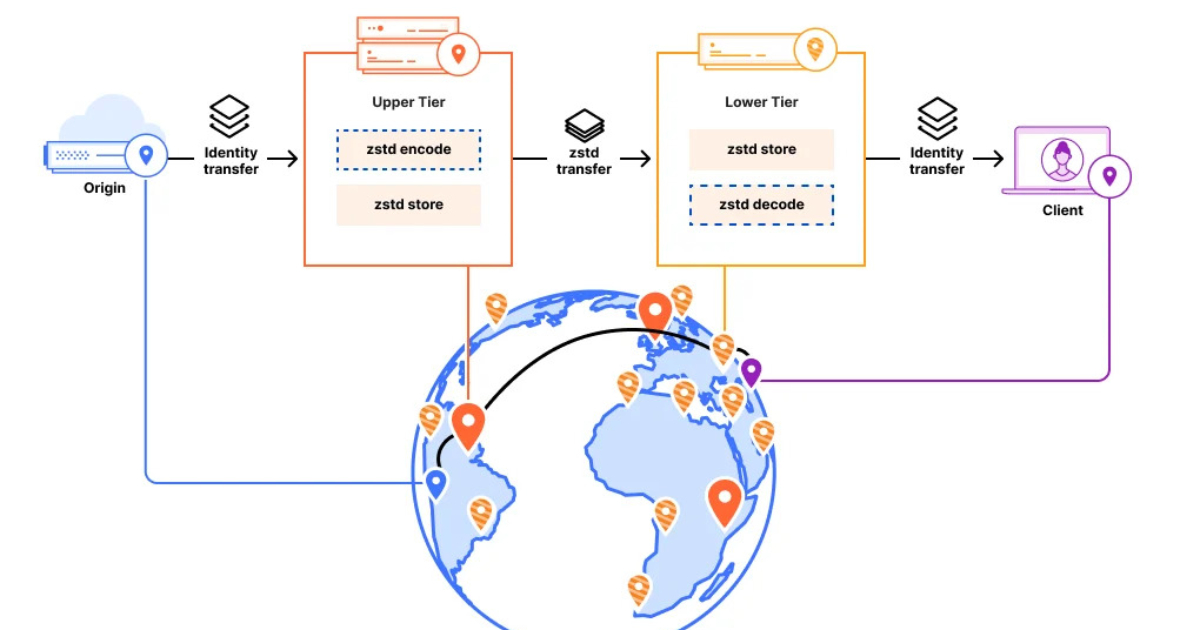
Cloudflare recently described a prototype called Cache Transcoding that compresses eligible cache content, mainly uncompressed text such as HTML, JSON, CSS, and JavaScript, using Zstandard before storing it on disk. The hyperscaler estimates that the approach could provide petabytes of additional effective cache capacity, although broader testing is still needed.
GitHub's Project HydraFusion is a research preview for GitHub Copilot that enhances coding intelligence through runtime model orchestration. It dynamically assembles execution plans using models from various providers. The system employs three execution patterns based on task complexity. Evaluations indicate that it achieves high task quality while significantly reducing operational costs.
The open-Source project vphone-cli enables a full iOS 27 system to run as a virtual machine on Apple Silicon. Built on Apple's own Virtualization.framework rather than traditional emulation, the project opens up new possibilities for security research, reverse engineering, and automated iOS testing.
Cassie Shum discusses why knowledge graphs serve as a critical foundation for agentic systems. Moving beyond basic RAG, she explains 4 practical architectural patterns: context bundling, decision provenance, code as truth, and agent visibility. She demonstrates an engineering harness built on a knowledge graph to streamline feedback loops, optimize token usage, and maintain system reliability.
AWS has extended Lambda SnapStart to container image functions, which hold up to 10 GB against 250 MB for zip archives. Teams previously chose between dependency headroom and sub-second startup. A Reddit thread from a month earlier shows what that cost: stripping whitespace and docstrings from installed packages to stay under the limit.
Rustls, a Rust TLS library, marks its decade-long progression from a grassroots project to a funded open-source initiative. Key contributions from organisations boosted development, resulting in features like post-quantum cryptography and robust performance. The upcoming 0.24 release aims to enhance architecture and flexibility, including new input buffering and improved session handling.
NVIDIA Personal AI Router (PAIR), now available in beta, lets you combine the inference capacity of multiple computers on your local network and automatically distribute AI requests among them. It is primarily designed for local multi-agent AI workloads, where multiple independent model calls can otherwise overwhelm one GPU.
Netflix has reworked its Conductor workflow orchestration engine to handle larger workloads, increasing supported workflow size from about 2,500 to 30,000 tasks and reducing p99 workflow evaluation latency by about 40%. Conductor 4.0 separates workflow metadata from task data, moves evaluation to asynchronous processing, and introduces dynamic worker allocation and concurrency controls.
tsgolint has released a stable v7, enhancing TypeScript linting with native Go speed. It offers type-aware linting, leveraging TypeScript's semantic analysis through the typescript-go compiler. Oxlint manages configurations and file discovery. The release, compatible with TypeScript 7.0.2, handles 59 of 61 type-aware rules and shows significant performance improvements over ESLint.
TinyGo version 0.42 introduces significant updates, including recoverable panics and support for Go 1.27 and LLVM 22, improving error handling and enabling Go code to run as UEFI applications. The TinyGo Starter Kit with Seeed Studio XIAO facilitates hardware use for developers, featuring an ESP32-C3 board and modular sensors. These features enhance its functionality for embedded systems and Wasm.
The Python core development team has officially recognized RISC-V as a Tier 3 platform in CPython, following extensive community collaboration on its implementation. Ongoing efforts aim to enhance integration into the continuous testing pipeline and move towards Tier 2 support. Feedback from developers with RISC-V hardware is encouraged to improve stability and performance.
Meta describes how an AI agent can be designed to capture the logic and expertise of domain experts, rather than simply storing documents or retrieving relevant information. The system, dubbed an "organizational second brain", was built for a specialized compliance domain, but Meta argues the architecture generalizes to areas like security, finance, engineering, and procurement.
Want to stay on top of the science and politics driving biotech today? Sign up to get our biotech newsletter in your inbox.
First came the new teaser for Nathan Fielder’s documentary on Elizabeth Holmes. Now come the memes. Bring it on.
FDA names permanent heads of drug and biologics centers
For the past few months, key centers at the FDA have been led by acting officials. The agency said yesterday it will now make them permanent. Michael Davis will be director of the Center for Drug Evaluation and Research, and Karim Mikhail will be director of the Center for Biologics Evaluation and Research.
Felipe Huici explains how Unikraft achieves millisecond cold boots, stateful scale-to-zero, and extreme density for sandboxing AI workloads. He discusses isolation primitives, Linux kernel optimizations, and snapshotting tricks, demonstrating how to maintain sub-10ms performance at scale while integrating seamlessly into Kubernetes environments with hardware-level security.
Microsoft has made Azure Virtual Desktop Hybrid generally available. Session hosts run on customer hardware through Azure Arc while brokering stays in Azure. The Hybrid service license is unpriced, Windows Server support requires RDS CALs with Software Assurance, and multi-session Windows is not supported at all.
Neovim has introduced a structured concurrency library in its Lua standard library via the vim.async namespace. This framework provides a standardized method for managing async workflows, addressing issues related to task management and error propagation. It allows for cooperative scheduling and clear task hierarchies, improving plugin development and error handling in asynchronous operations.
WASHINGTON — The Trump administration permanently filled four key leadership roles at the Food and Drug Administration on Tuesday, after it nominated Heidi Overton to lead the agency late last month.
Three of the officials are serving in an acting capacity, and will take the same roles permanently, the administration said. They are Michael Davis, a psychiatrist who will be director of the Center for Drug Evaluation and Research; former Merck official Karim Mikhail, who will be director of the Center for Biologics Evaluation and Research; and Bret Koplow, an attorney who has been at the FDA since 2011 and will serve as director of the Center for Tobacco Products.
The fourth appointee, Jared Seehafer, will serve as the FDA’s first deputy commissioner for technology and artificial intelligence. He joined the FDA as an adviser in 2025 after founding a life science software company and working in investment advising in biotech, according to his LinkedIn. Under the Trump administration, the agency has pushed its staff to use AI to speed up its review processes.
UnitedHealth Group’s top executives, including CEO Stephen Hemsley, and board members recently flooded the campaign coffers of Rep. Katherine Clark of Massachusetts, the No. 2 Democrat in the House who just beat two opponents in a closely watched primary.
Want to stay on top of the science and politics driving biotech today? Sign up to get our biotech newsletter in your inbox.
Today, we delve into how an FDA approval paradoxically complicated access to Revolution Medicines’ new pancreatic cancer drug for some patients, see standout mid-stage results for Roivant’s pulmonary hypertension drug, and more.
Hope you had a lovely long weekend! Estoy trabajando en este Readout de la Biblioteca Vasconcelos en la CDMX.
The panelists explain how platform teams adapt to support AI-assisted engineering, highlighting which capabilities belong in the platform. They discuss trade-offs between standardization and developer autonomy, while sharing strategies to manage AI tooling, security guardrails, and shifting workflows.
By Stéphane Di Cesare, Davide de Paolis, Stephen Cihak, Camila Macedo, Renato Losio

 Login
Login