
โŒ

Normal view

GPT-6 Astra Is the First Model OpenAI Classifies as Critical for Cybersecurity

17 September 2026 at 12:59

OpenAI has classified GPT-6 Astra at the Critical cybersecurity threshold under its Preparedness Framework, a first. In expert-led testing the model found previously unknown vulnerabilities in a browser and an OS kernel and built working exploits. The same system card reports a substantial decline in chain-of-thought monitorability.

By Steef-Jan Wiggers

Dropbox Outlines How Focusing on Existing Infrastructure Efficiency Can Create Headroom for AI

16 September 2026 at 15:15

Dropbox has outlined how a decade of infrastructure optimization is helping it absorb growing demand from AI without treating new data-center capacity as the only answer. Its work spans forecasting, fleet utilization, storage density, hardware lifecycles, and rack-level power delivery, much of it predating the current AI boom.

By Matt Foster
  • โœ‡InfoQ
  • Cloudflare Tests Cache Transcoding to Reduce Storage Requirements Renato Losio
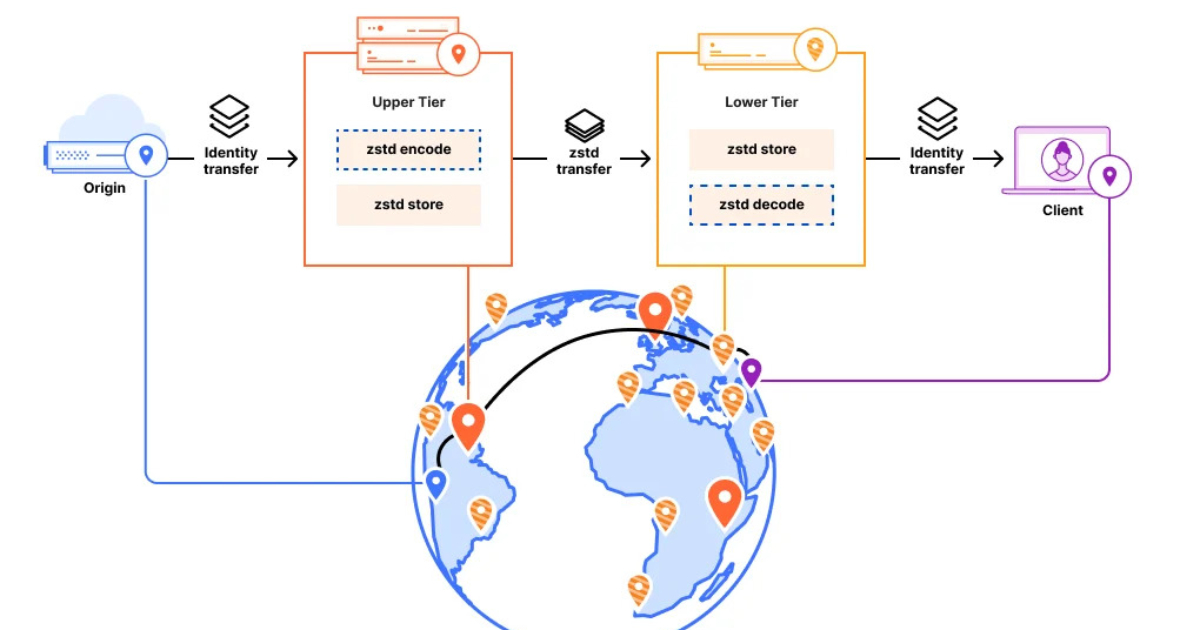
    Cloudflare recently described a prototype called Cache Transcoding that compresses eligible cache content, mainly uncompressed text such as HTML, JSON, CSS, and JavaScript, using Zstandard before storing it on disk. The hyperscaler estimates that the approach could provide petabytes of additional effective cache capacity, although broader testing is still needed. By Renato Losio
     

Cloudflare Tests Cache Transcoding to Reduce Storage Requirements

13 September 2026 at 18:35

Cloudflare recently described a prototype called Cache Transcoding that compresses eligible cache content, mainly uncompressed text such as HTML, JSON, CSS, and JavaScript, using Zstandard before storing it on disk. The hyperscaler estimates that the approach could provide petabytes of additional effective cache capacity, although broader testing is still needed.

By Renato Losio
  • โœ‡InfoQ
  • Lambda SnapStart Comes to Container Images, Ending a Packaging Tradeoff Steef-Jan Wiggers
    AWS has extended Lambda SnapStart to container image functions, which hold up to 10 GB against 250 MB for zip archives. Teams previously chose between dependency headroom and sub-second startup. A Reddit thread from a month earlier shows what that cost: stripping whitespace and docstrings from installed packages to stay under the limit. By Steef-Jan Wiggers
     

Lambda SnapStart Comes to Container Images, Ending a Packaging Tradeoff

12 September 2026 at 18:09

AWS has extended Lambda SnapStart to container image functions, which hold up to 10 GB against 250 MB for zip archives. Teams previously chose between dependency headroom and sub-second startup. A Reddit thread from a month earlier shows what that cost: stripping whitespace and docstrings from installed packages to stay under the limit.

By Steef-Jan Wiggers
  • โœ‡InfoQ
  • Presentation: How To Run on Three Clouds at Once, and When Not To Ross McFarlane ยท Kevin Holditch
    Ross McFarlane and Kevin Holditch discuss Form3's evolution from a single-cloud setup to a triple active multi-cloud architecture. They share key engineering strategies for cross-cloud networking, distributed databases with CockroachDB and NATS, custom Kubernetes operators, and navigating distinct regional disaster recovery expectations across the UK, Europe, and US financial markets. By Ross McFarlane, Kevin Holditch
     

Presentation: How To Run on Three Clouds at Once, and When Not To

11 September 2026 at 19:00

Ross McFarlane and Kevin Holditch discuss Form3's evolution from a single-cloud setup to a triple active multi-cloud architecture. They share key engineering strategies for cross-cloud networking, distributed databases with CockroachDB and NATS, custom Kubernetes operators, and navigating distinct regional disaster recovery expectations across the UK, Europe, and US financial markets.

By Ross McFarlane, Kevin Holditch

Presentation: Fixing the AI Infra Scale Problem by Stuffing 1M Sandboxes in a Single Server

9 September 2026 at 19:00

Felipe Huici explains how Unikraft achieves millisecond cold boots, stateful scale-to-zero, and extreme density for sandboxing AI workloads. He discusses isolation primitives, Linux kernel optimizations, and snapshotting tricks, demonstrating how to maintain sub-10ms performance at scale while integrating seamlessly into Kubernetes environments with hardware-level security.

By Felipe Huici

Azure Virtual Desktop Hybrid Reaches GA with Licensing Details Unpublished

9 September 2026 at 16:54

Microsoft has made Azure Virtual Desktop Hybrid generally available. Session hosts run on customer hardware through Azure Arc while brokering stays in Azure. The Hybrid service license is unpriced, Windows Server support requires RDS CALs with Software Assurance, and multi-session Windows is not supported at all.

By Steef-Jan Wiggers

Article: Implementing Chaos Engineering in Financial Payment Systems: Lessons from Enterprise ECS Deployments

8 September 2026 at 17:00

Standard chaos engineering assumes experiments stop cleanly, blast radius is knowable in advance, and production is fair game. Payment systems violate all three. Salim Adedeji describes ECS-specific failure modes from enterprise deployments: a 60-second DNS TTL that produced 93-second failover, retry logic amplifying database load 2.4x, and AZ rebalancing loops that generic tooling misses.

By Salim Adedeji

Does ICANN Open the Door on Identity Theft by Dropping 3rd Level .name Domains Registrations?

8 September 2026 at 16:08

Neil Fraser's disclosure highlights a regulatory change affecting the .name top-level domain. Following ICANN's approval, Verisign will eliminate third-level registrations due to declining usage. This affects about 22,000 registrants and raises security concerns, as released second-level domains could be exploited. Affected users are considering legal options to challenge the decision.

By Olimpiu Pop
  • โœ‡InfoQ
  • Zone Redundancy Comes to API Management Standard v2 Steef-Jan Wiggers
    Microsoft has enabled zone redundancy on the Standard v2 tier of Azure API Management, following its arrival on Premium v2 in December. Standard v2 starts at $700 per month against $2,801 for Premium v2, but carries a 99.95% SLA rather than 99.99%. Zone redundancy can only be configured when creating an instance. By Steef-Jan Wiggers
     

Zone Redundancy Comes to API Management Standard v2

7 September 2026 at 18:09

Microsoft has enabled zone redundancy on the Standard v2 tier of Azure API Management, following its arrival on Premium v2 in December. Standard v2 starts at $700 per month against $2,801 for Premium v2, but carries a 99.95% SLA rather than 99.99%. Zone redundancy can only be configured when creating an instance.

By Steef-Jan Wiggers
  • โœ‡InfoQ
  • Presentation: Realtime and Batch Processing of GPU Workloads Joseph Stein
    Joseph Stein discusses engineering an enterprise AI-as-a-Service platform within a private cloud data center. He explains how to maximize underutilized GPU pools via multi-namespace scheduling, leverage Valkey and Lua for atomic priority queuing and backpressure management, mitigate OWASP Top 10 LLM risks via central proxy gateways, and scale batch pipelines using a custom S3-to-Kafka proxy. By Joseph Stein
     

Presentation: Realtime and Batch Processing of GPU Workloads

26 May 2026 at 17:08

Joseph Stein discusses engineering an enterprise AI-as-a-Service platform within a private cloud data center. He explains how to maximize underutilized GPU pools via multi-namespace scheduling, leverage Valkey and Lua for atomic priority queuing and backpressure management, mitigate OWASP Top 10 LLM risks via central proxy gateways, and scale batch pipelines using a custom S3-to-Kafka proxy.

By Joseph Stein

Google Expands SynthID Adoption for AI Watermarking, Previews Content Detection API

26 May 2026 at 17:00

Google's SynthID, designed to embed imperceptible signals into AI-generated content, is adding a new Content Detection API on Google Cloud's Gemini Enterprise Agent Platform, after gaining adoption by several industry players including Nvidia and OpenAI.

By Sergio De Simone
  • โœ‡InfoQ
  • Google Cloud Highlights Ongoing Work on PostgreSQL Core Capabilities Robert Krzaczyล„ski
    Google Cloud has outlined its recent technical contributions to PostgreSQL, emphasizing improvements in logical replication, upgrade processes, and overall system stability. The update reflects ongoing collaboration with the upstream community and focuses on enhancements to the core engine aimed at addressing scalability, replication, and operational challenges. By Robert Krzaczyล„ski
     

Google Cloud Highlights Ongoing Work on PostgreSQL Core Capabilities

10 April 2026 at 17:30

Google Cloud has outlined its recent technical contributions to PostgreSQL, emphasizing improvements in logical replication, upgrade processes, and overall system stability. The update reflects ongoing collaboration with the upstream community and focuses on enhancements to the core engine aimed at addressing scalability, replication, and operational challenges.

By Robert Krzaczyล„ski
โŒ