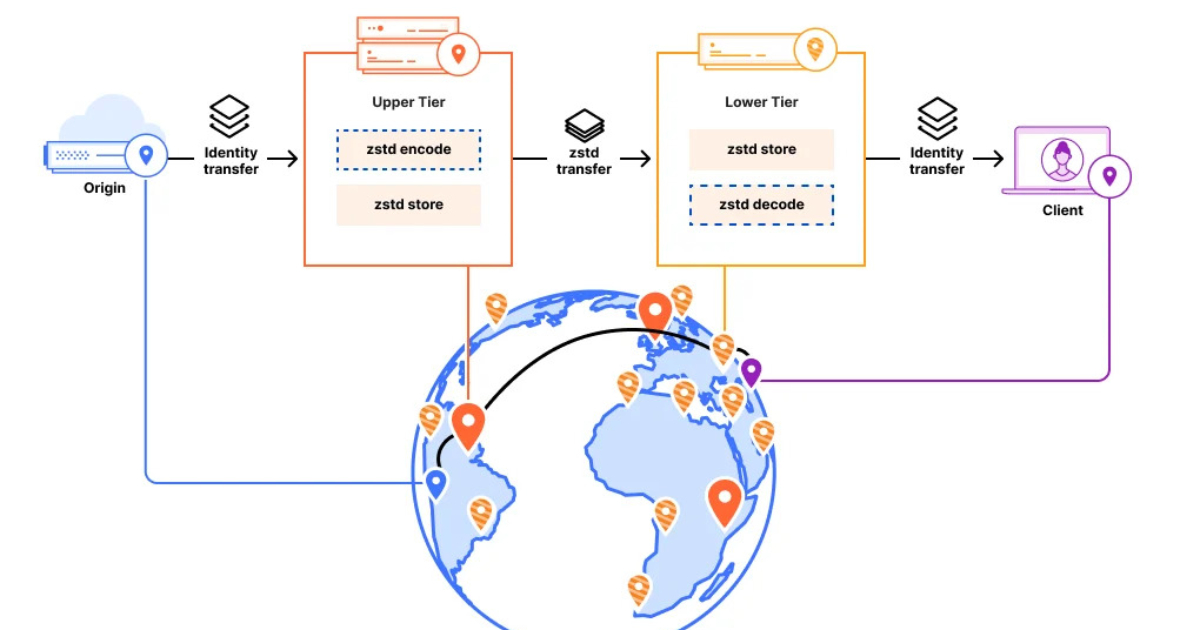
Cloudflare recently described a prototype called Cache Transcoding that compresses eligible cache content, mainly uncompressed text such as HTML, JSON, CSS, and JavaScript, using Zstandard before storing it on disk. The hyperscaler estimates that the approach could provide petabytes of additional effective cache capacity, although broader testing is still needed.
GitHub's Project HydraFusion is a research preview for GitHub Copilot that enhances coding intelligence through runtime model orchestration. It dynamically assembles execution plans using models from various providers. The system employs three execution patterns based on task complexity. Evaluations indicate that it achieves high task quality while significantly reducing operational costs.
The open-Source project vphone-cli enables a full iOS 27 system to run as a virtual machine on Apple Silicon. Built on Apple's own Virtualization.framework rather than traditional emulation, the project opens up new possibilities for security research, reverse engineering, and automated iOS testing.
AWS has extended Lambda SnapStart to container image functions, which hold up to 10 GB against 250 MB for zip archives. Teams previously chose between dependency headroom and sub-second startup. A Reddit thread from a month earlier shows what that cost: stripping whitespace and docstrings from installed packages to stay under the limit.
Rustls, a Rust TLS library, marks its decade-long progression from a grassroots project to a funded open-source initiative. Key contributions from organisations boosted development, resulting in features like post-quantum cryptography and robust performance. The upcoming 0.24 release aims to enhance architecture and flexibility, including new input buffering and improved session handling.
NVIDIA Personal AI Router (PAIR), now available in beta, lets you combine the inference capacity of multiple computers on your local network and automatically distribute AI requests among them. It is primarily designed for local multi-agent AI workloads, where multiple independent model calls can otherwise overwhelm one GPU.
Netflix has reworked its Conductor workflow orchestration engine to handle larger workloads, increasing supported workflow size from about 2,500 to 30,000 tasks and reducing p99 workflow evaluation latency by about 40%. Conductor 4.0 separates workflow metadata from task data, moves evaluation to asynchronous processing, and introduces dynamic worker allocation and concurrency controls.
tsgolint has released a stable v7, enhancing TypeScript linting with native Go speed. It offers type-aware linting, leveraging TypeScript's semantic analysis through the typescript-go compiler. Oxlint manages configurations and file discovery. The release, compatible with TypeScript 7.0.2, handles 59 of 61 type-aware rules and shows significant performance improvements over ESLint.
The Terraform AWS Provider continues its rapid evolution, with v6.62.0 adding support for new AWS capabilities while improving how Terraform understands and manages existing infrastructure.
LinkedIn has published details of the training infrastructure behind its AI-powered job search, describing a multi-teacher distillation pipeline that compresses knowledge from large teacher models into a compact 0.6B-parameter ranking model.
Session traces and cost controls are emerging as key observability techniques for diagnosing AI agent failures, helping teams spot tool-call loops and runaway spend while preserving enough execution context for post-incident debugging.
TinyGo version 0.42 introduces significant updates, including recoverable panics and support for Go 1.27 and LLVM 22, improving error handling and enabling Go code to run as UEFI applications. The TinyGo Starter Kit with Seeed Studio XIAO facilitates hardware use for developers, featuring an ESP32-C3 board and modular sensors. These features enhance its functionality for embedded systems and Wasm.
OpenAI has released GPT-6 Astra, a new model focused on coding, computer use, long-running agentic tasks, and cybersecurity, with availability across ChatGPT, Codex, and the OpenAI API.
The Python core development team has officially recognized RISC-V as a Tier 3 platform in CPython, following extensive community collaboration on its implementation. Ongoing efforts aim to enhance integration into the continuous testing pipeline and move towards Tier 2 support. Feedback from developers with RISC-V hardware is encouraged to improve stability and performance.
Meta describes how an AI agent can be designed to capture the logic and expertise of domain experts, rather than simply storing documents or retrieving relevant information. The system, dubbed an "organizational second brain", was built for a specialized compliance domain, but Meta argues the architecture generalizes to areas like security, finance, engineering, and procurement.
Microsoft has made Azure Virtual Desktop Hybrid generally available. Session hosts run on customer hardware through Azure Arc while brokering stays in Azure. The Hybrid service license is unpriced, Windows Server support requires RDS CALs with Software Assurance, and multi-session Windows is not supported at all.
Samsung has partnered with Mistral AI to deploy on-premises models across its semiconductor manufacturing and engineering operations.
The agreement was announced during the bilateral state summit held in Paris between South Korea and France. Samsung will integrate Mistral’s software suite – including its flagship Mistral Large model – into internal semiconductor facilities to build customised models for intelligence-driven factory infrastructure.
On-premises AI models for semiconductor fab infrastructure
The deployment relies on private enterprise installations to process sensitive engineering and operational records within Samsung’s computing perimeter. This architecture keeps proprietary technical data contained within company infrastructure, avoiding external cloud exposure while maintaining control over operational assets.
“Increasing complexities involved in AI chip design and manufacturing requires continuous innovation in semiconductor technologies,” says Young Hyun Jun, Vice Chairman and CEO of the Device Solutions (DS) Division at Samsung Electronics.
Mistral will provide Samsung with a specialised stack of software tools to assist in how processors are designed and produced.
“AI is reshaping how we build complex technologies, from silicon to software,” says Arthur Mensch, co-founder and CEO of Mistral.
“We are proud to support Samsung Electronics with our expertise in electronics and semiconductors, helping to improve how chips are designed and manufactured, and to accelerate technical progress across the global semiconductor and AI value chain.”
Defect detection and yield stabilisation
Samsung plans to deploy the targeted models directly to automated defect detection and fab machinery tuning. As semiconductor production processes advance, rapid data analysis inside the fab becomes necessary to maintain factory throughput.
The company expects targeted AI models to accelerate development cycles, improve manufacturing precision, and stabilise production yields across advanced memory and logic chips. The operational scope covers Samsung’s memory division, logic design units, and contract foundry business.
Samsung also led Mistral AI’s Series D funding round, securing a strategic equity stake to support long-term technical cooperation.
The lead investment expands cross-industry collaboration between silicon manufacturers and AI developers across advanced memory, logic, and foundry operations.
Want to learn more about AI and big data from industry leaders? Check out AI & Big Data Expo taking place in Amsterdam, California, and London. The comprehensive event is part of TechEx and is co-located with other leading technology events including the Cyber Security & Cloud Expo. Click here for more information.
AI News is powered by TechForge Media. Explore other upcoming enterprise technology events and webinars here.
Neovim has introduced a structured concurrency library in its Lua standard library via the vim.async namespace. This framework provides a standardized method for managing async workflows, addressing issues related to task management and error propagation. It allows for cooperative scheduling and clear task hierarchies, improving plugin development and error handling in asynchronous operations.
WASHINGTON — The Trump administration permanently filled four key leadership roles at the Food and Drug Administration on Tuesday, after it nominated Heidi Overton to lead the agency late last month.
Three of the officials are serving in an acting capacity, and will take the same roles permanently, the administration said. They are Michael Davis, a psychiatrist who will be director of the Center for Drug Evaluation and Research; former Merck official Karim Mikhail, who will be director of the Center for Biologics Evaluation and Research; and Bret Koplow, an attorney who has been at the FDA since 2011 and will serve as director of the Center for Tobacco Products.
The fourth appointee, Jared Seehafer, will serve as the FDA’s first deputy commissioner for technology and artificial intelligence. He joined the FDA as an adviser in 2025 after founding a life science software company and working in investment advising in biotech, according to his LinkedIn. Under the Trump administration, the agency has pushed its staff to use AI to speed up its review processes.
HashiCorp has released Packer v1.16.0, adding native support for generating, signing, and verifying SLSA provenance attestations for every image the tool builds. The release provides teams with a secure, tamper-proof record of how a machine image was made. It does this without needing extra supply-chain tools.

 Login
Login