❌

Reading view

Podcast: How Will We Train Developers If AI Does the Routine Work: A Conversation with Scott Hanselman

In this podcast, Michael Stiefel spoke to Scott Hanselman about developing new software engineers when artificial intelligence agents are doing most of the work on which junior developers were trained. Hanselman suggests the software industry should adopt a preceptorship model similar to the nursing profession.

By Scott Hanselman


  •  

Presentation: Decision Models in Agentic Architectures: From Production to Agent Skills

Alex Porcelli discusses the critical gap in enterprise AI: non-deterministic output and lack of accountability in high-stakes decisions. He shares how integrating DMN decision models with LLMs, agent skills, and NeMo guardrails creates auditable, deterministic agentic architectures - allowing business leaders to own decision logic while engineers maintain robust architectural governance.

By Alex Porcelli
  •  

Presentation: From Retrieval to Reasoning: Building Production-Ready Agentic AI Systems with Knowledge Graphs

Cassie Shum discusses why knowledge graphs serve as a critical foundation for agentic systems. Moving beyond basic RAG, she explains 4 practical architectural patterns: context bundling, decision provenance, code as truth, and agent visibility. She demonstrates an engineering harness built on a knowledge graph to streamline feedback loops, optimize token usage, and maintain system reliability.

By Cassie Shum
  •  

Lambda SnapStart Comes to Container Images, Ending a Packaging Tradeoff

AWS has extended Lambda SnapStart to container image functions, which hold up to 10 GB against 250 MB for zip archives. Teams previously chose between dependency headroom and sub-second startup. A Reddit thread from a month earlier shows what that cost: stripping whitespace and docstrings from installed packages to stay under the limit.

By Steef-Jan Wiggers
  •  

Netflix Reworks Conductor for 420 Million Monthly Workflow Executions and 10X Larger Workflows

Netflix has reworked its Conductor workflow orchestration engine to handle larger workloads, increasing supported workflow size from about 2,500 to 30,000 tasks and reducing p99 workflow evaluation latency by about 40%. Conductor 4.0 separates workflow metadata from task data, moves evaluation to asynchronous processing, and introduces dynamic worker allocation and concurrency controls.

By Leela Kumili
  •  

Presentation: How To Run on Three Clouds at Once, and When Not To

Ross McFarlane and Kevin Holditch discuss Form3's evolution from a single-cloud setup to a triple active multi-cloud architecture. They share key engineering strategies for cross-cloud networking, distributed databases with CockroachDB and NATS, custom Kubernetes operators, and navigating distinct regional disaster recovery expectations across the UK, Europe, and US financial markets.

By Ross McFarlane, Kevin Holditch
  •  

How LinkedIn Trains AI Job Search 8x Faster with Multi-Teacher Distillation

LinkedIn has published details of the training infrastructure behind its AI-powered job search, describing a multi-teacher distillation pipeline that compresses knowledge from large teacher models into a compact 0.6B-parameter ranking model.

By Claudio Masolo
  •  

InfoQ Online Certification Program: New AI Engineering and Organizational Architecture Cohorts

InfoQ expands its online certification portfolio with new AI Engineering and Organizational Architecture cohorts, giving senior practitioners a confidential peer group to pressure-test production AI, platform, team design, and architecture decisions.

By Artenisa Chatziou
  •  

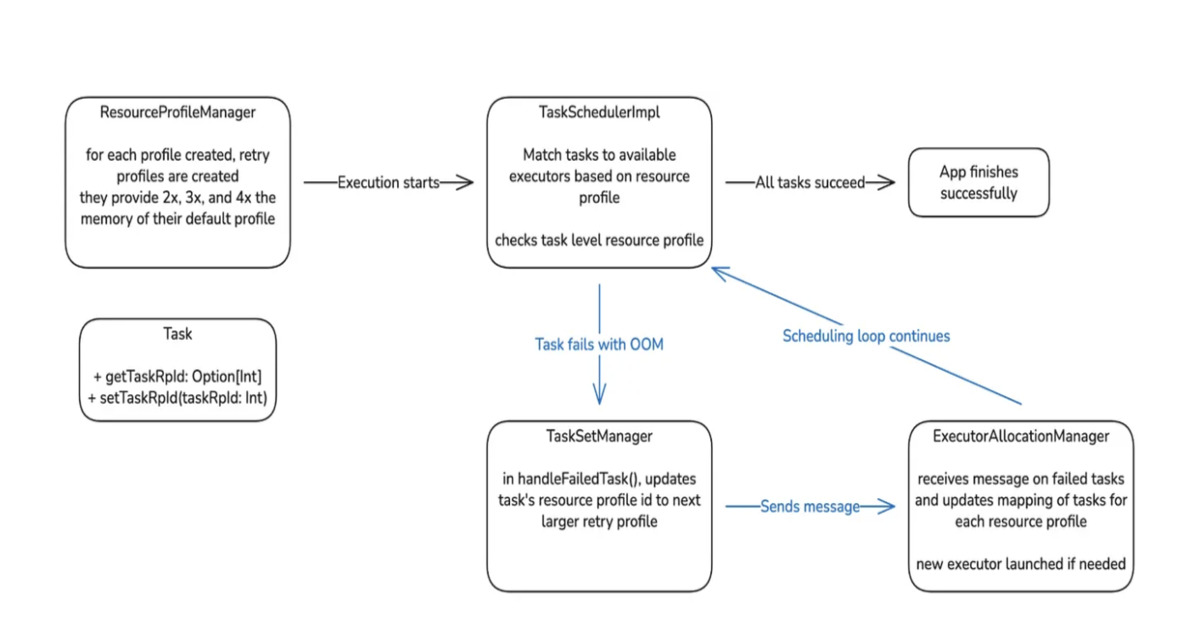
Pinterest Reduces Spark OOM Failures by 96% Through Auto Memory Retries

Pinterest Engineering cut Apache Spark out-of-memory failures by 96% using improved observability, configuration tuning, and automatic memory retries. Staged rollout, dashboards, and proactive memory adjustments stabilized data pipelines, reduced manual intervention, and lowered operational overhead across tens of thousands of daily jobs.

By Leela Kumili
  •  

Podcast: Context Engineering with Adi Polak

In this episode, Thomas Betts and Adi Polak talk about the need for context engineering when interacting with LLMs and designing agentic systems. Prompt engineering techniques work with a stateless approach, while context engineering allows AI systems to be stateful.

By Adi Polak
  •  

Anthropic Designs Three-Agent Harness Supports Long-Running Full-Stack AI Development

Anthropic introduces a three-agent harness separating planning, generation, and evaluation to improve long-running autonomous AI workflows for frontend and full-stack development. Industry commentary highlights structured approaches, iterative evaluation, and practical methods to maintain coherence and quality over multi-hour AI coding sessions.

By Leela Kumili
  •  

Presentation: Panel: Taking Architecture Out of the Echo Chamber

Andrew Harmel-Law and a panel of expert architects discuss the shifting practice of architecture in 2025. They explain strategies for communicating technical debt to stakeholders, the benefits of decentralized decision-making through ADRs, and the career paths of modern leaders. The panel shares insights on bridging the gap between mobile and backend teams to ensure a holistic system.

By Andrew Harmel-Law, Cat Morris, Diana Montalion, Shana Dacres-Lawrence, Vanessa Formicola, Elena Stojmilova, Peter Hunter
  •  

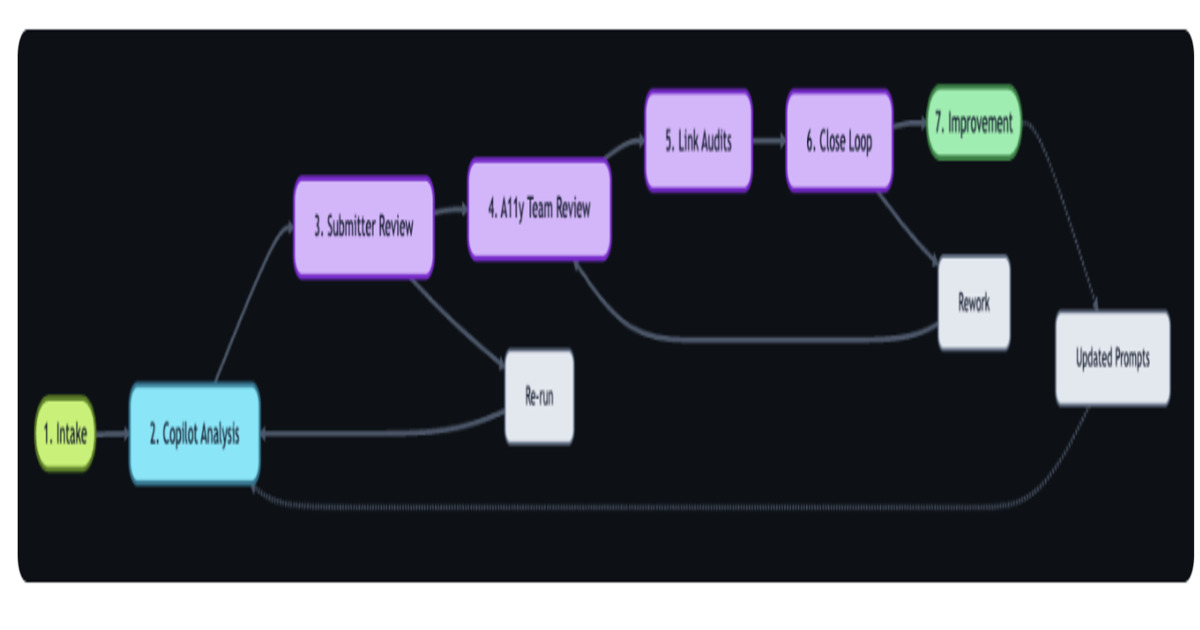
Github Integrates AI to Improve Accessibility Issue Management and Automate Feedback Triage

GitHub has launched a continuous AI-powered workflow to manage accessibility feedback at scale. Using GitHub Actions, Copilot, and Models APIs, the system centralizes reports, analyzes WCAG compliance, and automates triage while maintaining human validation. Teams now resolve feedback faster, improving inclusion and cross-functional collaboration.

By Leela Kumili
  •  
❌