❌

Reading view

Java News Roundup: New OpenJDK JEPs, CDI 5.0, Spring, Open Liberty, RefactorFirst, ADK for Kotlin
This week's Java roundup for September 7th, 2026, features news highlighting: new JEPs for ahead-of-time compilation and structured concurrency; GA releases of Jakarta CDI 5.0 and ADK for Kotlin 1.0; the September 2026 edition of Open Liberty; point releases of TornadoVM and RefactorFirst; a maintenance release of Micronaut; and first releases candidates of Groovy 6.0 and Gradle 9.8.

By Michael Redlich

  •  

Agoda Replaces 72-Shard SQL Server Price Cache with DragonflyDB

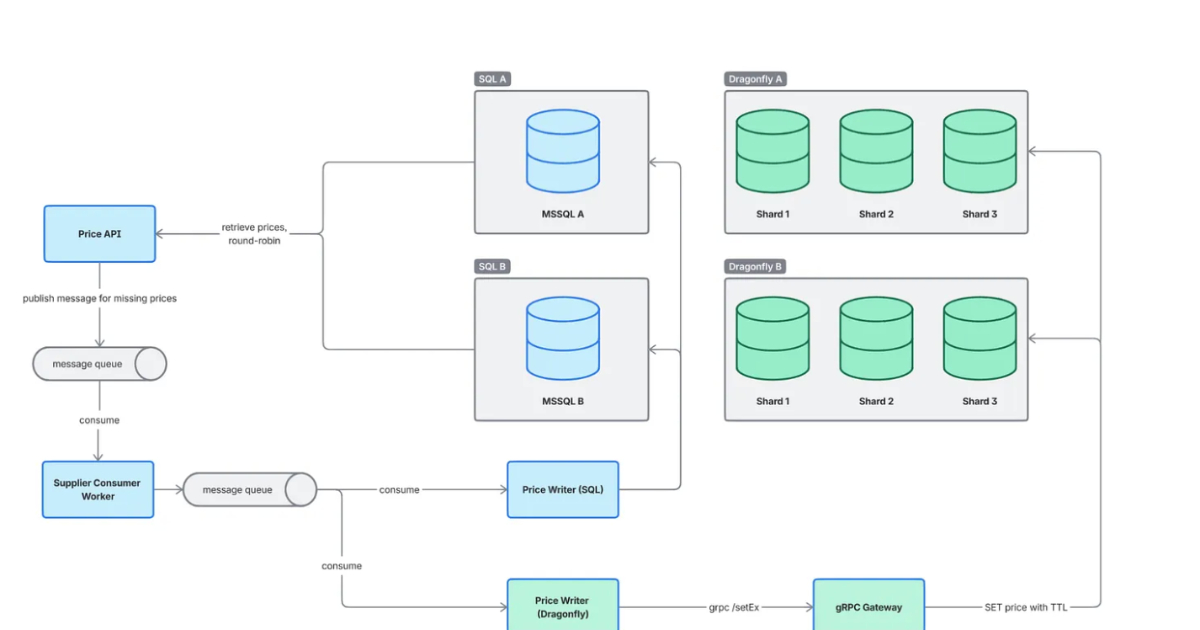
Agoda migrated its 1.5 TB hotel Price Cache from 72 SQL Server shards to DragonflyDB to handle growing read and write volumes. The migration used staged dual reads, parity validation, gradual traffic shifting, and decentralized failover detection. Agoda reports an approximately eightfold reduction in P99 read latency, with two DragonflyDB clusters providing high availability.

By Leela Kumili
  •  

Presentation: Decision Models in Agentic Architectures: From Production to Agent Skills

Alex Porcelli discusses the critical gap in enterprise AI: non-deterministic output and lack of accountability in high-stakes decisions. He shares how integrating DMN decision models with LLMs, agent skills, and NeMo guardrails creates auditable, deterministic agentic architectures - allowing business leaders to own decision logic while engineers maintain robust architectural governance.

By Alex Porcelli
  •  

Independent Investigation of Hugging Face Incident Reveals How Agents Collaborated and Behaved

After six days of on-site investigation at OpenAI, a small team of METR and Redwood Research researchers provided an account of how OpenAI agents behaved during their hack of Hugging Face earlier this year. Roughly 700 agents that were meant to be isolated from one another found a way to communicate and coordinate to pursue goals they could have not achieved working individually.

By Sergio De Simone
  •  

Jotai 3.0 Ships as a Modernized, ESM-Only Package That Drops Legacy Builds and Deprecated APIs

Jotai, an atomic state management library for React, has released version 3.0.0, now exclusively using ES modules. It maintains backward compatibility but removes some deprecated APIs. Migration is straightforward for most users. This version emphasizes a leaner core with improvements while deferring significant feature changes for future updates.

By Daniel Curtis
  •  

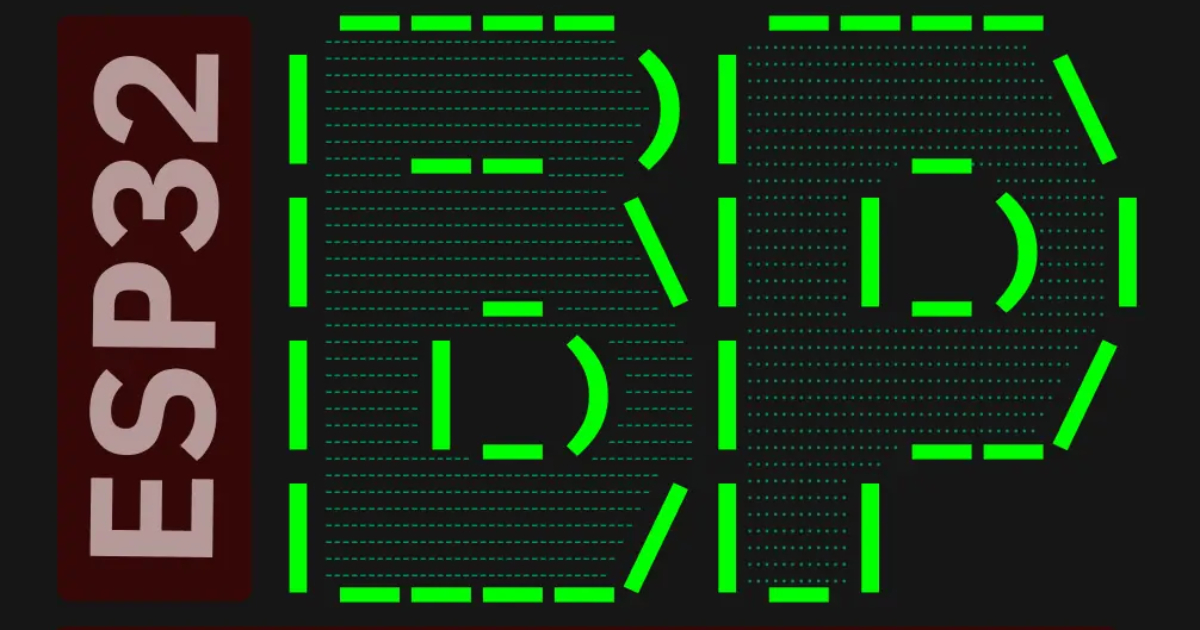
ESP32 Bit Pirate: Bridging Modern Microcontrollers and Browser-Based Hardware Debugging

ESP32 Bit Pirate project integrates multi-protocol debugging within a browser environment using HTML5 APIs. It enables users to install firmware and interact with microcontrollers like the ESP32-S3 directly from the browser. The platform supports various digital and wireless protocols while providing hands-on guidance through practical recipes for tasks such as memory dumping and signal analysis.

By Olimpiu Pop
  •  

Meta Open-Sources Astryx, its Agent-Ready React Design System

Meta recently announced the beta release of Astryx, an open-source React design system developed internally over eight years. Astryx builds on React 19 and StyleX to provide over 150 accessible UI components, customizable CSS design tokens, and dedicated CLI and MCP tooling β€” for both engineers and AI agents.

By Bruno Couriol
  •  

Cloudflare Tests Cache Transcoding to Reduce Storage Requirements

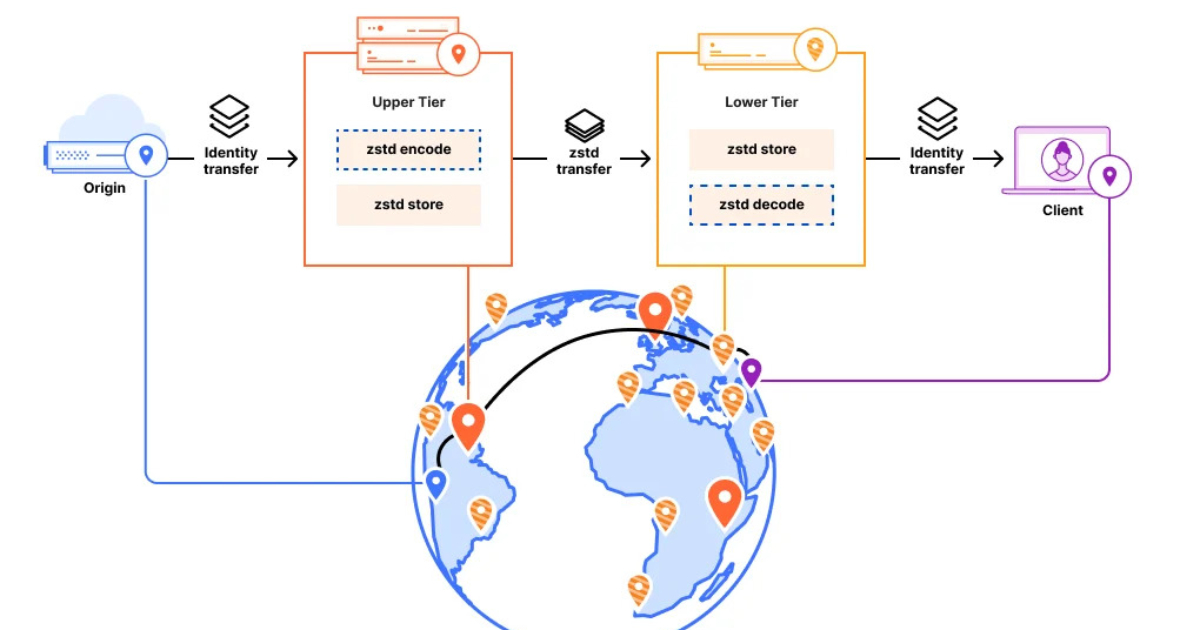
Cloudflare recently described a prototype called Cache Transcoding that compresses eligible cache content, mainly uncompressed text such as HTML, JSON, CSS, and JavaScript, using Zstandard before storing it on disk. The hyperscaler estimates that the approach could provide petabytes of additional effective cache capacity, although broader testing is still needed.

By Renato Losio
  •  

GitHub Copilot's Project HydraFusion Promises Frontier Level Performance through Multi-Model Routing

GitHub's Project HydraFusion is a research preview for GitHub Copilot that enhances coding intelligence through runtime model orchestration. It dynamically assembles execution plans using models from various providers. The system employs three execution patterns based on task complexity. Evaluations indicate that it achieves high task quality while significantly reducing operational costs.

By Olimpiu Pop
  •  

Open-Source Project Brings Full iOS 27 Virtualization to Apple Silicon

The open-Source project vphone-cli enables a full iOS 27 system to run as a virtual machine on Apple Silicon. Built on Apple's own Virtualization.framework rather than traditional emulation, the project opens up new possibilities for security research, reverse engineering, and automated iOS testing.

By Sergio De Simone
  •  

Presentation: From Retrieval to Reasoning: Building Production-Ready Agentic AI Systems with Knowledge Graphs

Cassie Shum discusses why knowledge graphs serve as a critical foundation for agentic systems. Moving beyond basic RAG, she explains 4 practical architectural patterns: context bundling, decision provenance, code as truth, and agent visibility. She demonstrates an engineering harness built on a knowledge graph to streamline feedback loops, optimize token usage, and maintain system reliability.

By Cassie Shum
  •  

Lambda SnapStart Comes to Container Images, Ending a Packaging Tradeoff

AWS has extended Lambda SnapStart to container image functions, which hold up to 10 GB against 250 MB for zip archives. Teams previously chose between dependency headroom and sub-second startup. A Reddit thread from a month earlier shows what that cost: stripping whitespace and docstrings from installed packages to stay under the limit.

By Steef-Jan Wiggers
  •  

One Decade of Rustls: Evolution, Benchmarks, and Future Roadmap

Rustls, a Rust TLS library, marks its decade-long progression from a grassroots project to a funded open-source initiative. Key contributions from organisations boosted development, resulting in features like post-quantum cryptography and robust performance. The upcoming 0.24 release aims to enhance architecture and flexibility, including new input buffering and improved session handling.

By Olimpiu Pop
  •  

NVIDIA Personal AI Router Distributes AI Tasks across Local Compute

NVIDIA Personal AI Router (PAIR), now available in beta, lets you combine the inference capacity of multiple computers on your local network and automatically distribute AI requests among them. It is primarily designed for local multi-agent AI workloads, where multiple independent model calls can otherwise overwhelm one GPU.

By Sergio De Simone
  •  

Netflix Reworks Conductor for 420 Million Monthly Workflow Executions and 10X Larger Workflows

Netflix has reworked its Conductor workflow orchestration engine to handle larger workloads, increasing supported workflow size from about 2,500 to 30,000 tasks and reducing p99 workflow evaluation latency by about 40%. Conductor 4.0 separates workflow metadata from task data, moves evaluation to asynchronous processing, and introduces dynamic worker allocation and concurrency controls.

By Leela Kumili
  •  

tsgolint Reaches Stable v7, Bringing Go-Powered Type-Aware Linting to Oxlint

tsgolint has released a stable v7, enhancing TypeScript linting with native Go speed. It offers type-aware linting, leveraging TypeScript's semantic analysis through the typescript-go compiler. Oxlint manages configurations and file discovery. The release, compatible with TypeScript 7.0.2, handles 59 of 61 type-aware rules and shows significant performance improvements over ESLint.

By Daniel Curtis
  •  

Advancing Embedded Go: Recoverable Panics, UEFI, Radio and Hardware Dev Kit

TinyGo version 0.42 introduces significant updates, including recoverable panics and support for Go 1.27 and LLVM 22, improving error handling and enabling Go code to run as UEFI applications. The TinyGo Starter Kit with Seeed Studio XIAO facilitates hardware use for developers, featuring an ESP32-C3 board and modular sensors. These features enhance its functionality for embedded systems and Wasm.

By Olimpiu Pop
  •  

CPython Officially Adds RISC-V Support As a Tier 3 Platform

The Python core development team has officially recognized RISC-V as a Tier 3 platform in CPython, following extensive community collaboration on its implementation. Ongoing efforts aim to enhance integration into the continuous testing pipeline and move towards Tier 2 support. Feedback from developers with RISC-V hardware is encouraged to improve stability and performance.

By Olimpiu Pop
  •  

Meta's Recipe for Building Agents as "Organizational Second Brains"

Meta describes how an AI agent can be designed to capture the logic and expertise of domain experts, rather than simply storing documents or retrieving relevant information. The system, dubbed an "organizational second brain", was built for a specialized compliance domain, but Meta argues the architecture generalizes to areas like security, finance, engineering, and procurement.

By Sergio De Simone
  •  

STAT+: Orexin discoverers awarded prestigiousΒ Lasker award

Want to stay on top of the science and politics driving biotech today?Β Sign upΒ to get our biotech newsletter in your inbox.

First cameΒ the new teaser for Nathan Fielder’s documentary on Elizabeth Holmes. Now come the memes.Β Bring it on.

FDA names permanent heads of drug andΒ biologics centers

For the past few months, key centers at the FDA have been led by acting officials. The agency said yesterday it will now make them permanent. Michael DavisΒ will be director of the Center for Drug Evaluation and Research, and Karim Mikhail will be director of the Center for Biologics Evaluation and Research.

Continue to STAT+ to read the full story…

Β© Adobe

  •  
❌