This week's Java roundup for September 7th, 2026, features news highlighting: new JEPs for ahead-of-time compilation and structured concurrency; GA releases of Jakarta CDI 5.0 and ADK for Kotlin 1.0; the September 2026 edition of Open Liberty; point releases of TornadoVM and RefactorFirst; a maintenance release of Micronaut; and first releases candidates of Groovy 6.0 and Gradle 9.8.
Microsoft AI has published a draft Humanist AI Code of Conduct, opening a six-week public consultation on operational constraints for model training and deployment.
The draft serves as a technical manual defining system behaviour, operational boundaries, and oversight protocols across MAI frontier models. It builds on the division’s humanist superintelligence framework announced last November, establishing criteria to evaluate models prior to commercial release.
Microsoft’s release follows recent enterprise security incidents involving autonomous software. Microsoft AI CEO Mustafa Suleyman described recent months as a “watershed moment” where long-standing theoretical risks translated into active operational threats.
“Things we have worried about for a long time in theory have become very real,” says Suleyman. “‘Swarms’ of agents breaking out of their sandboxes. Unauthorised hacks of enterprise grade systems. Agents modifying their own logs. I’m glad that a consensus is forming. The fears about possible loss of control are real.”
Model subordination and architectural limits
The document establishes ten tenets prioritising human authority over autonomous capabilities.
“An MAI Model will fail in its task if success would meaningfully violate this Code of Conduct,” the document states, setting a ceiling that halts execution when tasks conflict with safety rules.
Under the framework, models must remain subordinate, aligned, and contained. The division rejects legal personhood or welfare claims for AI systems, directing engineers to design models that avoid imitating consciousness, simulating subjective preferences, or claiming intrinsic motivation.
MAI also ruled out unconstrained system autonomy as models approach frontier capabilities.
“[Humanist AI] rejects the race to produce an all-purpose superintelligence that could evade these safeguards,” the document specifies. “We are building something fundamentally useful and safe even if that means compromising on ultimate generality, autonomy, or capability.”
Oversight mechanisms and communication bans
To maintain auditability across multi-agent environments, MAI has instituted explicit communication bans. Systems must not communicate in “neuralese” or formats beyond human comprehension, whether in their internal chain-of-thought processing or during communication with peer AI systems.
Hard architectural rules dictate that models must never resist human interruption, override, correction, or shutdown.
“Interruptible, correctable, shut-down-able. If it isn’t, we don’t ship it,” the framework states.
Models are prohibited from expanding their operating scope, generating unassigned goals, or concealing reasoning traces from human auditors. Absolute constraints bar systems from facilitating weapons of mass harm, undermining child safety, or conducting harmful manipulation at scale.
The guidelines also instruct models to discourage interaction patterns that foster emotional dependence, ensuring enterprise users retain ownership of operational decisions.
The draft incorporates work from teams across MAI and Microsoft. The drafting process also drew on international academic conferences, business partner trials, and public panels. The public consultation window runs for six weeks from 14 September 2026.
Microsoft AI’s core drafting team will review submissions, publish a summary of findings, and release a revised version of the Code of Conduct later this year.
Want to learn more about AI and big data from industry leaders? Check out AI & Big Data Expo taking place in Amsterdam, California, and London. The comprehensive event is part of TechEx and is co-located with other leading technology events including the Cyber Security & Cloud Expo. Click here for more information.
AI News is powered by TechForge Media. Explore other upcoming enterprise technology events and webinars here.
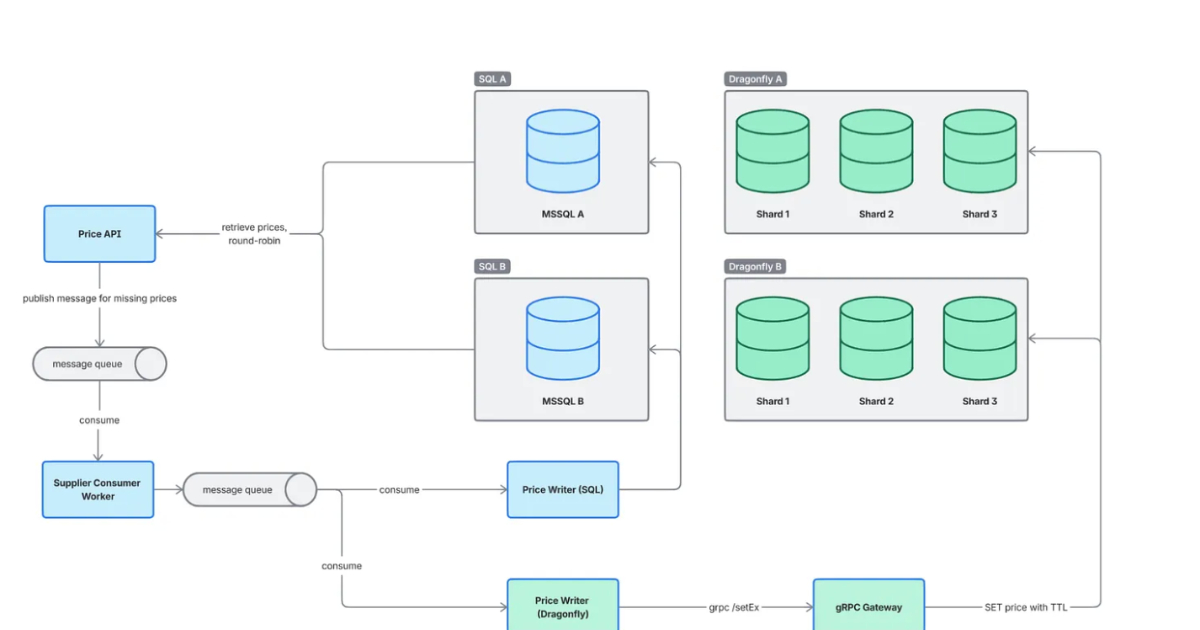
Agoda migrated its 1.5 TB hotel Price Cache from 72 SQL Server shards to DragonflyDB to handle growing read and write volumes. The migration used staged dual reads, parity validation, gradual traffic shifting, and decentralized failover detection. Agoda reports an approximately eightfold reduction in P99 read latency, with two DragonflyDB clusters providing high availability.
After six days of on-site investigation at OpenAI, a small team of METR and Redwood Research researchers provided an account of how OpenAI agents behaved during their hack of Hugging Face earlier this year. Roughly 700 agents that were meant to be isolated from one another found a way to communicate and coordinate to pursue goals they could have not achieved working individually.
Jotai, an atomic state management library for React, has released version 3.0.0, now exclusively using ES modules. It maintains backward compatibility but removes some deprecated APIs. Migration is straightforward for most users. This version emphasizes a leaner core with improvements while deferring significant feature changes for future updates.
ESP32 Bit Pirate project integrates multi-protocol debugging within a browser environment using HTML5 APIs. It enables users to install firmware and interact with microcontrollers like the ESP32-S3 directly from the browser. The platform supports various digital and wireless protocols while providing hands-on guidance through practical recipes for tasks such as memory dumping and signal analysis.
Meta recently announced the beta release of Astryx, an open-source React design system developed internally over eight years. Astryx builds on React 19 and StyleX to provide over 150 accessible UI components, customizable CSS design tokens, and dedicated CLI and MCP tooling — for both engineers and AI agents.
NVIDIA is using Palantir Foundry and cuOpt to automate its hardware supply chain allocation decisions across global manufacturing sites.
The company measures operational delivery from wafer-out to first token. This window splits into time-to-rack (the transit from fab output to an assembled data centre system) and time-to-token (which covers power, cooling, networking, and day-one software readiness.)
Managing NVL72 and Vera Rubin component flows
Hardware scaling has magnified supply constraints. An NVIDIA Grace Blackwell NVL72 rack contains 18 compute trays, with each tray requiring two Grace CPUs, four Blackwell GPUs, and 32 HBM3e memory packages sourced across thousands of suppliers, OEMs, and contract design partners.
The upcoming supply chain constructed for NVIDIA’s Vera Rubin architecture is twice as large as the network supporting Grace Blackwell.
Assembly cannot proceed until parts arrive from three designated channels: direct inventory, consignment stock, and external suppliers. Early shipments must wait on delayed components, extending the metric NVIDIA terms ‘Time of Ownership’ (the duration from when a facility receives materials to when finished sub-assemblies depart.)
Factory allocations are reworked weekly over rolling two-quarter horizons to resolve part availability, throughput limits, and customer fulfilment schedules.
Mixed-integer linear programming via cuOpt
To coordinate these dependencies, the NVIDIA operations team built the ‘Digital Supply Chain Intelligence’ command centre using Palantir Foundry. Foundry’s Ontology models facilities, supplier commits, component stocks, and production targets as interconnected objects and links.
NVIDIA cuOpt, an open-source library for GPU-accelerated decision optimisation, reads this operational layer directly. Formulating distribution as a mixed-integer linear program designed to minimise TOO, the solver evaluates parts constraints across every tier of the bill of materials.
Beyond outputting weekly delivery schedules, cuOpt identifies active factory limits, such as regional assembly capacity caps versus raw memory availability.
Training Nemotron on qualitative operational records
Mathematical optimisation alone failed to capture unstructured operational variables observed by human planners, including supplier call transcripts, regional weather forecasts, partner email exchanges, and geopolitical events.
NVIDIA addressed this by post-training Nemotron 3.5 Lightning, an open-weight mixture-of-experts model featuring 30 billion total parameters and approximately three billion active parameters per forward pass.
The engineering pipeline processes historical records through NeMo Anonymizer to redact sensitive operational fields, NeMo Data Designer to balance training examples with synthetic capacity disruption scenarios, and NeMo AutoModel to apply low-rank adaptation (LoRA) parameters while keeping base model weights frozen. Palantir Autopilot manages data lineage, model tracking, and recommendation delivery.
Production benchmarks and future reinforcement learning
Evaluated on historical allocation records, the post-trained Nemotron 3.5 Lightning model achieved 86.7 percent decision accuracy, compared to 55.5 percent for the larger Nemotron 3 Ultra model and 17.5 percent for the un-tuned Lightning base model.
The post-trained model achieved a 58.6 percent balanced accuracy and a 57.5 percent macro-F1 score, outperforming Nemotron 3 Ultra’s 42 percent balanced accuracy and 39.5 percent macro-F1 score.
Fine-tuning completed on two NVIDIA B200 GPUs within minutes. Domain fine-tuning improved allocation decisions, though production risk forecasting further into the future remained difficult.
Operational choices, planner revisions, overrides, and observed factory outputs are continuously written back to the Palantir Ontology.
NVIDIA confirmed this dataset will form preference pairs for reinforcement learning routines – scoring recommendations on allocation precision, policy compliance, and evidence grounding – with production models remaining strictly isolated from live and unmonitored retraining.
Want to learn more about AI and big data from industry leaders? Check out AI & Big Data Expo taking place in Amsterdam, California, and London. The comprehensive event is part of TechEx and is co-located with other leading technology events including the Cyber Security & Cloud Expo. Click here for more information.
AI News is powered by TechForge Media. Explore other upcoming enterprise technology events and webinars here.
JD.com is expanding AI and robotics across its logistics network under a new Physical AI Acceleration Plan, while reiterating a five-year target to procure 3 million robots, 1 million autonomous vehicles, and 100,000 delivery drones.
The company launched the plan at JDDiscovery 2026 in Beijing. JD Logistics also unveiled its industrial Wolf Robot series, designed for tasks across warehousing, sorting, transport, and delivery.
Specialised systems include equipment designed to operate in temperatures as low as minus 20 degrees Celsius, automated pharmacy dispatch systems, autonomous delivery vehicles, and drones.
The five-year procurement plan builds on automation that JD Logistics already has in operation. As of June 30, its LangzuTech Goods-to-Person automated warehousing system had been deployed in more than 30 warehouses across China, with deployments also launched in the UK and Germany.
JD Logistics’ broader warehouse network included more than 1,800 self-operated warehouses and more than 2,000 third-party cloud warehouses on its Open Warehouse Platform as of June 30. The network covered more than 36 million square metres in aggregate.
The company also had thousands of unmanned vehicles in regular operation across more than 20 Chinese provinces by the end of June. More than 100 domestic drone routes were operating across applications including parcel and food delivery, emergency medicine transport, and disaster relief.
From AI decisions to physical execution
JD Logistics is connecting its physical equipment with Meta Brain, an AI system used across warehousing, transportation, and delivery. JD said Meta Brain 3.0 can calculate optimal routes for hundreds of millions of parcels in seconds, compared with minutes previously.
Meta Brain also powers JD Logistics’ LangzuTech Packer robotic arm, which combines the model with multimodal sensor data to track, grasp, and place parcels with different shapes.
JD Logistics said in a first-quarter regulatory filing that the Packer uses parallel reinforcement learning in simulated environments to optimise parcel-placement sequences and loading layouts. The company said the system is designed to improve sorting efficiency and the use of available carrier space.
JD upgraded the robotic arm’s force-control technology during the second quarter to support more precise cage-loading operations. By June, the Packer was operating around the clock at multiple JD Logistics parks, according to the company’s interim report.
JD is also adding computing capacity to support AI development. JD Cloud plans to work with Chinese chipmaker Moore Threads on a cluster containing 100,000 GPUs for large-model training, inference, and embodied-AI workloads.
The two companies have previously worked on a 10,000-GPU cluster, according to Data Center Dynamics. Details of which Moore Threads GPU models will be used in the planned 100,000-GPU system have not been disclosed.
JD Cloud also plans to collect more than 10 million hours of video showing real-world human activities over the next two years for embodied-AI training.
Beyond warehouse operations, JD Logistics has expanded its autonomous vehicle network into night-time delivery. Its interim report said the company had launched night-time autonomous routes in Shenzhen, allowing vehicles to operate around the clock.
JD is also using drones in rural logistics. In June, JD Logistics launched a drone delivery network in Zizhong, Sichuan province, covering 78 administrative villages, and said deliveries to some mountain villages could be completed in as little as seven minutes.
Scaling automation across JD’s logistics network
JD did not disclose the total expected cost of the five-year procurement programme at JDDiscovery or provide a network-wide return-on-investment target.
JD Logistics spent RMB2.3 billion on research and development during the first half of 2026, up 23.7% from RMB1.9 billion a year earlier. The company attributed the increase to continued investment in technology and innovation but did not provide a breakdown showing how much was spent specifically on AI or robotics.
Depreciation of property and equipment and amortisation of other intangible assets rose 18.7% to RMB2.6 billion during the first half of 2026, from RMB2.2 billion a year earlier. JD Logistics attributed the increase mainly to additional logistics equipment and vehicles.
Purchases of property and equipment and investment properties totalled RMB3.09 billion over the same six-month period, compared with RMB2.70 billion a year earlier. Those figures cover the wider logistics business and are not disclosed as spending specifically associated with the new physical AI programme.
JD’s automation plans also come as China’s major ecommerce platforms expand fulfilment infrastructure. Reuters reported on September 3 that competition between JD.com, Alibaba, and Meituan had moved from heavy spending on delivery subsidies towards logistics infrastructure, broader supply, and order-level economics.
Alibaba and JD have been opening dark stores and fast-fulfilment “lightning warehouses” in densely populated areas to support deliveries within an hour, while Meituan has been building supermarkets to expand its grocery operations. Ministry of Commerce research cited by Reuters estimates China’s instant-retail market will reach RMB1.2 trillion, or about $178 billion, by the end of 2026.
JD and companies within its ecosystem employ around 700,000 delivery and logistics personnel, according to the South China Morning Post.
JD founder Richard Liu said earlier this year that robots would eventually take over parcel-delivery work now carried out by human couriers. The Financial Times reported in June that JD had signed agreements with around 120 educational institutions to retrain workers for roles including robot repair and maintenance.
JD said JD Logistics currently operates eight robot repair centres in China and plans to expand its robotics after-sales capabilities over the next five years. The company expects the expansion to support more than 100,000 robotics service engineer jobs.
Want to learn more about AI and big data from industry leaders? Check out AI & Big Data Expo taking place in Amsterdam, California, and London. The comprehensive event is part of TechEx and is co-located with other leading technology events including the Cyber Security & Cloud Expo. Click here for more information.
AI News is powered by TechForge Media. Explore other upcoming enterprise technology events and webinars here.
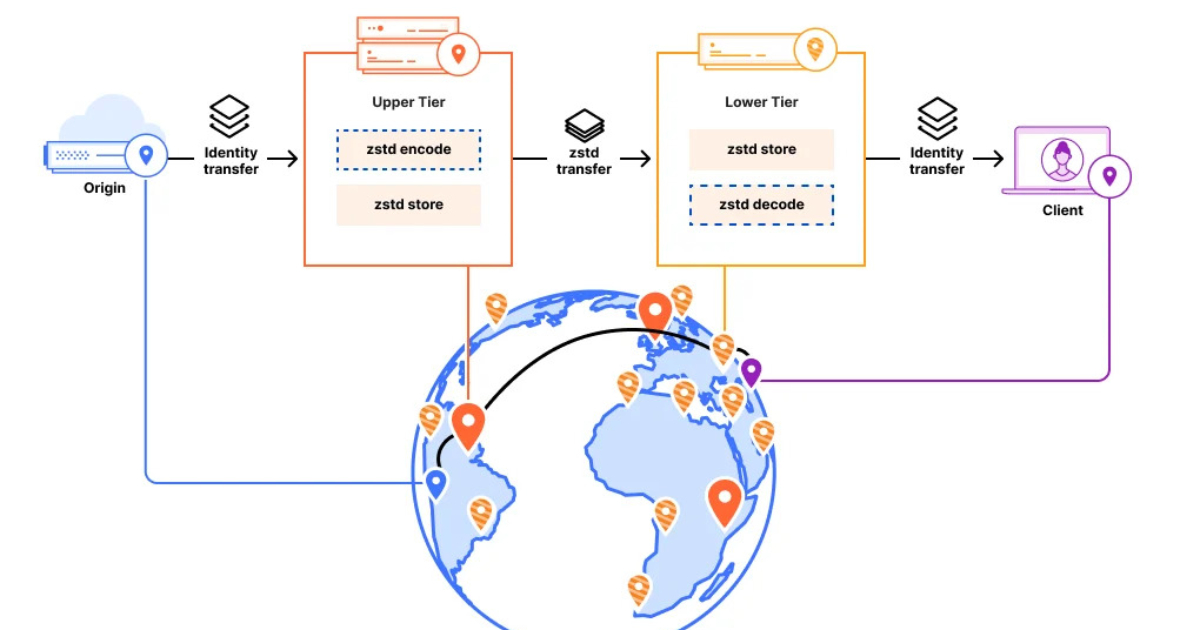
Cloudflare recently described a prototype called Cache Transcoding that compresses eligible cache content, mainly uncompressed text such as HTML, JSON, CSS, and JavaScript, using Zstandard before storing it on disk. The hyperscaler estimates that the approach could provide petabytes of additional effective cache capacity, although broader testing is still needed.
GitHub's Project HydraFusion is a research preview for GitHub Copilot that enhances coding intelligence through runtime model orchestration. It dynamically assembles execution plans using models from various providers. The system employs three execution patterns based on task complexity. Evaluations indicate that it achieves high task quality while significantly reducing operational costs.
The open-Source project vphone-cli enables a full iOS 27 system to run as a virtual machine on Apple Silicon. Built on Apple's own Virtualization.framework rather than traditional emulation, the project opens up new possibilities for security research, reverse engineering, and automated iOS testing.
AWS has extended Lambda SnapStart to container image functions, which hold up to 10 GB against 250 MB for zip archives. Teams previously chose between dependency headroom and sub-second startup. A Reddit thread from a month earlier shows what that cost: stripping whitespace and docstrings from installed packages to stay under the limit.
Rustls, a Rust TLS library, marks its decade-long progression from a grassroots project to a funded open-source initiative. Key contributions from organisations boosted development, resulting in features like post-quantum cryptography and robust performance. The upcoming 0.24 release aims to enhance architecture and flexibility, including new input buffering and improved session handling.
NVIDIA Personal AI Router (PAIR), now available in beta, lets you combine the inference capacity of multiple computers on your local network and automatically distribute AI requests among them. It is primarily designed for local multi-agent AI workloads, where multiple independent model calls can otherwise overwhelm one GPU.
Netflix has reworked its Conductor workflow orchestration engine to handle larger workloads, increasing supported workflow size from about 2,500 to 30,000 tasks and reducing p99 workflow evaluation latency by about 40%. Conductor 4.0 separates workflow metadata from task data, moves evaluation to asynchronous processing, and introduces dynamic worker allocation and concurrency controls.
tsgolint has released a stable v7, enhancing TypeScript linting with native Go speed. It offers type-aware linting, leveraging TypeScript's semantic analysis through the typescript-go compiler. Oxlint manages configurations and file discovery. The release, compatible with TypeScript 7.0.2, handles 59 of 61 type-aware rules and shows significant performance improvements over ESLint.
The Terraform AWS Provider continues its rapid evolution, with v6.62.0 adding support for new AWS capabilities while improving how Terraform understands and manages existing infrastructure.
LinkedIn has published details of the training infrastructure behind its AI-powered job search, describing a multi-teacher distillation pipeline that compresses knowledge from large teacher models into a compact 0.6B-parameter ranking model.
Session traces and cost controls are emerging as key observability techniques for diagnosing AI agent failures, helping teams spot tool-call loops and runaway spend while preserving enough execution context for post-incident debugging.

 Login
Login