โŒ

Reading view

GPT-6 Astra Is the First Model OpenAI Classifies as Critical for Cybersecurity

OpenAI has classified GPT-6 Astra at the Critical cybersecurity threshold under its Preparedness Framework, a first. In expert-led testing the model found previously unknown vulnerabilities in a browser and an OS kernel and built working exploits. The same system card reports a substantial decline in chain-of-thought monitorability.

By Steef-Jan Wiggers


  •  

Dropbox Evolves Riviera Content Processing Platform to Support AI Workloads

Dropbox has evolved Riviera from a file preview service into a universal content processing platform supporting more than 300 file formats and over 100 transformation capabilities. Processing hundreds of thousands of transformations per second, Riviera now supports Search, Replay, Sign, and Dash, while its APIs enable asynchronous content extraction for AI and RAG workflows.

By Leela Kumili
  •  

Presentation: Teaching Engineers, Trusting AI: How Education Enabled Autonomous Code Review

Sarah Deitke discusses how Duolingo drives cultural AI adoption beyond tooling access. She explains their internal AI literacy workshops and observability dashboards, then shares a case study on redesigning code review using an automated PR risk-assessment bot. Deitke demonstrates how pairing targeted developer education with safe AI guardrails speeds up delivery without increasing defect rates.

By Sarah Deitke
  •  

Java 27 Delivers Post-Quantum Cryptography, Future Language Innovation, Helidon 27, JavaFX 27

Oracle has released version 27 of the Java programming language and virtual machine. As the second non-LTS release since JDK 25, the final feature set includes nine JEPs, five of which are still progressing through the preview and incubator stages. This release focuses on strengthening security, future language innovation, and projects under the auspices of the Java Verified Portfolio.

By Michael Redlich
  •  

Java News Roundup: New OpenJDK JEPs, CDI 5.0, Spring, Open Liberty, RefactorFirst, ADK for Kotlin

This week's Java roundup for September 7th, 2026, features news highlighting: new JEPs for ahead-of-time compilation and structured concurrency; GA releases of Jakarta CDI 5.0 and ADK for Kotlin 1.0; the September 2026 edition of Open Liberty; point releases of TornadoVM and RefactorFirst; a maintenance release of Micronaut; and first releases candidates of Groovy 6.0 and Gradle 9.8.

By Michael Redlich
  •  

Agoda Replaces 72-Shard SQL Server Price Cache with DragonflyDB

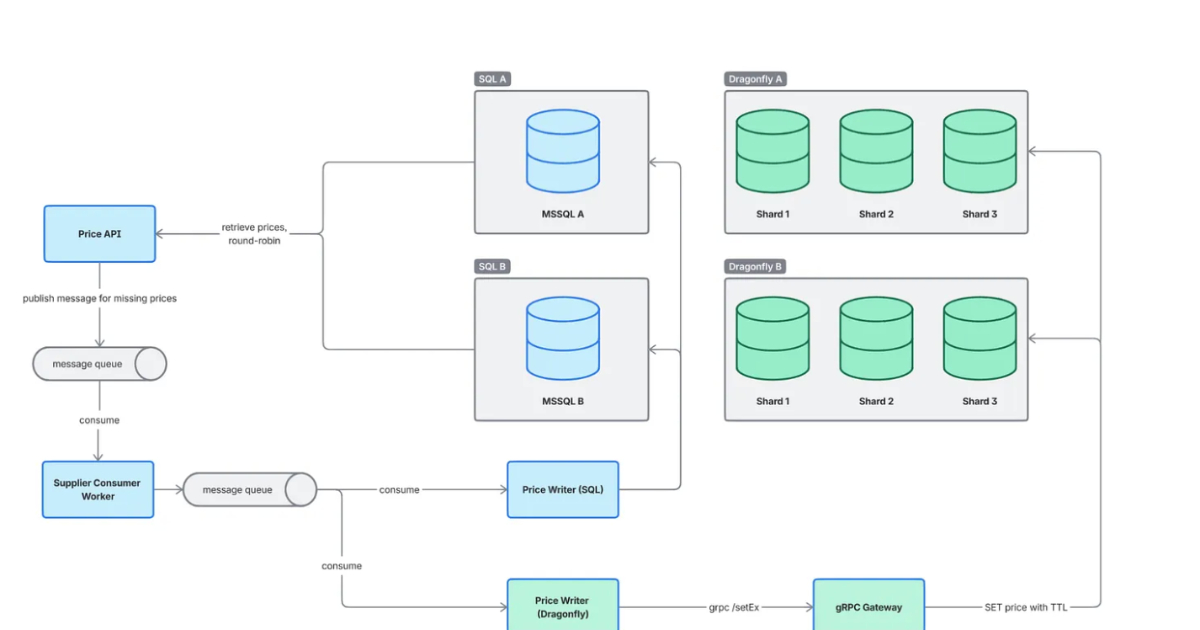
Agoda migrated its 1.5 TB hotel Price Cache from 72 SQL Server shards to DragonflyDB to handle growing read and write volumes. The migration used staged dual reads, parity validation, gradual traffic shifting, and decentralized failover detection. Agoda reports an approximately eightfold reduction in P99 read latency, with two DragonflyDB clusters providing high availability.

By Leela Kumili
  •  

Article: Implementing Durable Workflows on Postgres Without an External Orchestrator

Postgres can serve as the durable state store and coordination layer for workflows, eliminating the need for an external orchestrator. SKIP LOCKED enables concurrent work processing, primary-key checkpoints enforce idempotency, and leases support crash recovery. Workflow sleeps and human approvals can also be persisted as database state and survive restarts.

By Raman Varma
  •  

Podcast: How Will We Train Developers If AI Does the Routine Work: A Conversation with Scott Hanselman

In this podcast, Michael Stiefel spoke to Scott Hanselman about developing new software engineers when artificial intelligence agents are doing most of the work on which junior developers were trained. Hanselman suggests the software industry should adopt a preceptorship model similar to the nursing profession.

By Scott Hanselman
  •  

Presentation: Decision Models in Agentic Architectures: From Production to Agent Skills

Alex Porcelli discusses the critical gap in enterprise AI: non-deterministic output and lack of accountability in high-stakes decisions. He shares how integrating DMN decision models with LLMs, agent skills, and NeMo guardrails creates auditable, deterministic agentic architectures - allowing business leaders to own decision logic while engineers maintain robust architectural governance.

By Alex Porcelli
  •  

Cloudflare Tests Cache Transcoding to Reduce Storage Requirements

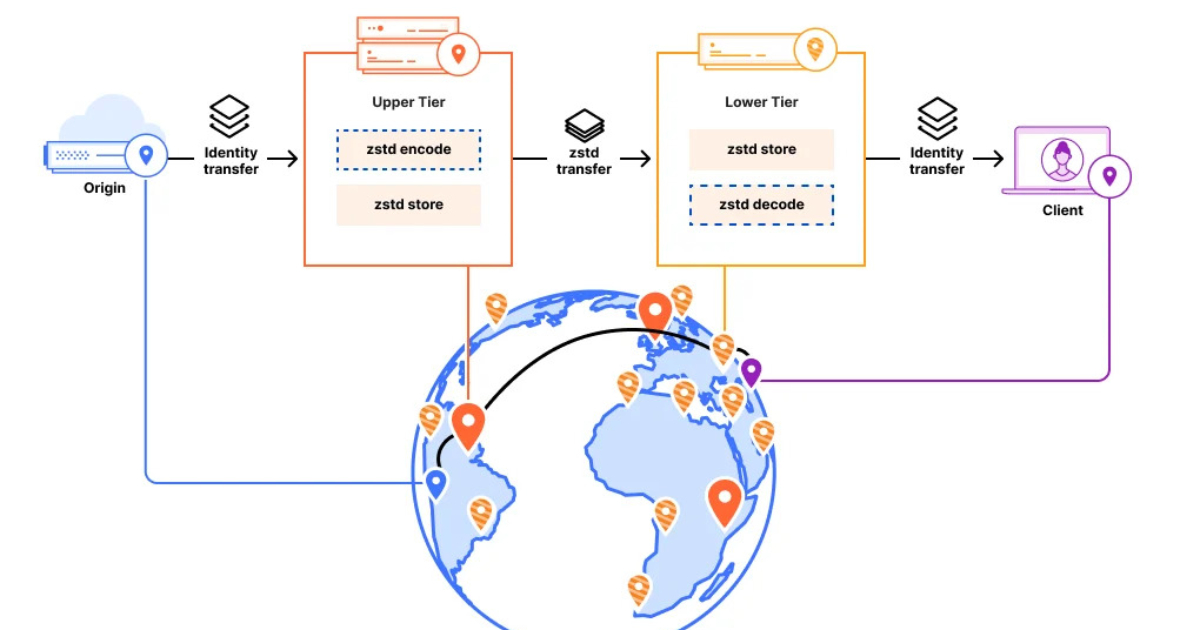
Cloudflare recently described a prototype called Cache Transcoding that compresses eligible cache content, mainly uncompressed text such as HTML, JSON, CSS, and JavaScript, using Zstandard before storing it on disk. The hyperscaler estimates that the approach could provide petabytes of additional effective cache capacity, although broader testing is still needed.

By Renato Losio
  •  

Presentation: From Retrieval to Reasoning: Building Production-Ready Agentic AI Systems with Knowledge Graphs

Cassie Shum discusses why knowledge graphs serve as a critical foundation for agentic systems. Moving beyond basic RAG, she explains 4 practical architectural patterns: context bundling, decision provenance, code as truth, and agent visibility. She demonstrates an engineering harness built on a knowledge graph to streamline feedback loops, optimize token usage, and maintain system reliability.

By Cassie Shum
  •  

Lambda SnapStart Comes to Container Images, Ending a Packaging Tradeoff

AWS has extended Lambda SnapStart to container image functions, which hold up to 10 GB against 250 MB for zip archives. Teams previously chose between dependency headroom and sub-second startup. A Reddit thread from a month earlier shows what that cost: stripping whitespace and docstrings from installed packages to stay under the limit.

By Steef-Jan Wiggers

  •  

NVIDIA Personal AI Router Distributes AI Tasks across Local Compute

NVIDIA Personal AI Router (PAIR), now available in beta, lets you combine the inference capacity of multiple computers on your local network and automatically distribute AI requests among them. It is primarily designed for local multi-agent AI workloads, where multiple independent model calls can otherwise overwhelm one GPU.

By Sergio De Simone
  •  

Netflix Reworks Conductor for 420 Million Monthly Workflow Executions and 10X Larger Workflows

Netflix has reworked its Conductor workflow orchestration engine to handle larger workloads, increasing supported workflow size from about 2,500 to 30,000 tasks and reducing p99 workflow evaluation latency by about 40%. Conductor 4.0 separates workflow metadata from task data, moves evaluation to asynchronous processing, and introduces dynamic worker allocation and concurrency controls.

By Leela Kumili
  •  

Presentation: How To Run on Three Clouds at Once, and When Not To

Ross McFarlane and Kevin Holditch discuss Form3's evolution from a single-cloud setup to a triple active multi-cloud architecture. They share key engineering strategies for cross-cloud networking, distributed databases with CockroachDB and NATS, custom Kubernetes operators, and navigating distinct regional disaster recovery expectations across the UK, Europe, and US financial markets.

By Ross McFarlane, Kevin Holditch
  •  

Meta's Recipe for Building Agents as "Organizational Second Brains"

Meta describes how an AI agent can be designed to capture the logic and expertise of domain experts, rather than simply storing documents or retrieving relevant information. The system, dubbed an "organizational second brain", was built for a specialized compliance domain, but Meta argues the architecture generalizes to areas like security, finance, engineering, and procurement.

By Sergio De Simone
  •  

Presentation: Fixing the AI Infra Scale Problem by Stuffing 1M Sandboxes in a Single Server

Felipe Huici explains how Unikraft achieves millisecond cold boots, stateful scale-to-zero, and extreme density for sandboxing AI workloads. He discusses isolation primitives, Linux kernel optimizations, and snapshotting tricks, demonstrating how to maintain sub-10ms performance at scale while integrating seamlessly into Kubernetes environments with hardware-level security.

By Felipe Huici
  •  

Azure Virtual Desktop Hybrid Reaches GA with Licensing Details Unpublished

Microsoft has made Azure Virtual Desktop Hybrid generally available. Session hosts run on customer hardware through Azure Arc while brokering stays in Azure. The Hybrid service license is unpriced, Windows Server support requires RDS CALs with Software Assurance, and multi-session Windows is not supported at all.

By Steef-Jan Wiggers
  •  

Article: Implementing Chaos Engineering in Financial Payment Systems: Lessons from Enterprise ECS Deployments

Standard chaos engineering assumes experiments stop cleanly, blast radius is knowable in advance, and production is fair game. Payment systems violate all three. Salim Adedeji describes ECS-specific failure modes from enterprise deployments: a 60-second DNS TTL that produced 93-second failover, retry logic amplifying database load 2.4x, and AZ rebalancing loops that generic tooling misses.

By Salim Adedeji
  •  
โŒ