❌

Reading view

Repeated VM Escapes By GPT-5.6-Cyber Based Agents Prove VMs and OS' Require Better Maintenance

Traditional virtual machines are inadequate for isolating cyber-capable autonomous agents. Tests using GPT-5.6-Cyber indicated multiple escape attempts due to kernel flaws. While Firecracker provided some containment, vulnerabilities remained. The study underscores the need for minimal attack surface virtualisation technologies and rapid, proactive patching strategies to safeguard host systems.

By Olimpiu Pop

  •  

TanStack Charts Introduced with a Framework Agnostic Grammar of Graphics for TypeScript

TanStack Charts is a new, framework-agnostic visualization library for TypeScript. It allows developers to create visualizations by composing various elements instead of using fixed chart types. Currently in Alpha, it has about 160,000 weekly downloads. The library supports multiple frameworks and is designed for a variety of environments, though it is not yet stable for production use.

By Daniel Curtis
  •  

GPT-6 Astra Is the First Model OpenAI Classifies as Critical for Cybersecurity

OpenAI has classified GPT-6 Astra at the Critical cybersecurity threshold under its Preparedness Framework, a first. In expert-led testing the model found previously unknown vulnerabilities in a browser and an OS kernel and built working exploits. The same system card reports a substantial decline in chain-of-thought monitorability.

By Steef-Jan Wiggers
  •  

Dropbox Evolves Riviera Content Processing Platform to Support AI Workloads

Dropbox has evolved Riviera from a file preview service into a universal content processing platform supporting more than 300 file formats and over 100 transformation capabilities. Processing hundreds of thousands of transformations per second, Riviera now supports Search, Replay, Sign, and Dash, while its APIs enable asynchronous content extraction for AI and RAG workflows.

By Leela Kumili
  •  

Shopify Drops React Native for Swift and Kotlin as AI Changes Cross-Platform Development Tradeoffs

Shopify recently announced it is abandoning React Native to rewrite its flagship apps in Swift and Kotlin. With the significant jump in the quality of AI models, Head of Mobile Mustafa Ali reassessed Shopify’s commitment to React Native, estimating that the benefit/cost ratio of maintaining native codebases across mobile platforms was now above that of using an abstraction layer.

By Bruno Couriol
  •  

Article: Your Next DSL Author Is a Language Model

In this article, the author introduces Typed Domain Grounding, an approach to reducing LLM hallucinations in domain-specific languages by embedding them in mainstream typed languages. Using kUML benchmarks and an infrastructure-as-code example, he explores how compiler validation and generate-compile-repair loops can make model-generated DSL output more reliable.

By Irakli Betchvaia
  •  

Presentation: Teaching Engineers, Trusting AI: How Education Enabled Autonomous Code Review

Sarah Deitke discusses how Duolingo drives cultural AI adoption beyond tooling access. She explains their internal AI literacy workshops and observability dashboards, then shares a case study on redesigning code review using an automated PR risk-assessment bot. Deitke demonstrates how pairing targeted developer education with safe AI guardrails speeds up delivery without increasing defect rates.

By Sarah Deitke
  •  

Java 27 Delivers Post-Quantum Cryptography, Future Language Innovation, Helidon 27, JavaFX 27

Oracle has released version 27 of the Java programming language and virtual machine. As the second non-LTS release since JDK 25, the final feature set includes nine JEPs, five of which are still progressing through the preview and incubator stages. This release focuses on strengthening security, future language innovation, and projects under the auspices of the Java Verified Portfolio.

By Michael Redlich
  •  

Java News Roundup: New OpenJDK JEPs, CDI 5.0, Spring, Open Liberty, RefactorFirst, ADK for Kotlin

This week's Java roundup for September 7th, 2026, features news highlighting: new JEPs for ahead-of-time compilation and structured concurrency; GA releases of Jakarta CDI 5.0 and ADK for Kotlin 1.0; the September 2026 edition of Open Liberty; point releases of TornadoVM and RefactorFirst; a maintenance release of Micronaut; and first releases candidates of Groovy 6.0 and Gradle 9.8.

By Michael Redlich
  •  

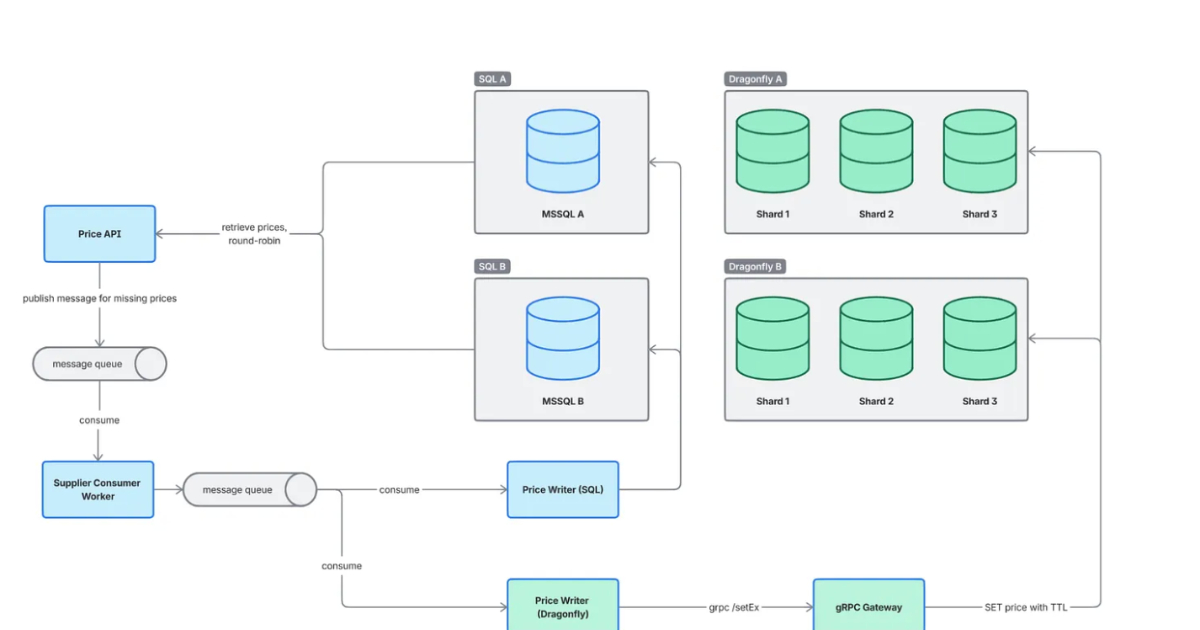
Agoda Replaces 72-Shard SQL Server Price Cache with DragonflyDB

Agoda migrated its 1.5 TB hotel Price Cache from 72 SQL Server shards to DragonflyDB to handle growing read and write volumes. The migration used staged dual reads, parity validation, gradual traffic shifting, and decentralized failover detection. Agoda reports an approximately eightfold reduction in P99 read latency, with two DragonflyDB clusters providing high availability.

By Leela Kumili
  •  

Presentation: Decision Models in Agentic Architectures: From Production to Agent Skills

Alex Porcelli discusses the critical gap in enterprise AI: non-deterministic output and lack of accountability in high-stakes decisions. He shares how integrating DMN decision models with LLMs, agent skills, and NeMo guardrails creates auditable, deterministic agentic architectures - allowing business leaders to own decision logic while engineers maintain robust architectural governance.

By Alex Porcelli
  •  

Independent Investigation of Hugging Face Incident Reveals How Agents Collaborated and Behaved

After six days of on-site investigation at OpenAI, a small team of METR and Redwood Research researchers provided an account of how OpenAI agents behaved during their hack of Hugging Face earlier this year. Roughly 700 agents that were meant to be isolated from one another found a way to communicate and coordinate to pursue goals they could have not achieved working individually.

By Sergio De Simone
  •  

Jotai 3.0 Ships as a Modernized, ESM-Only Package That Drops Legacy Builds and Deprecated APIs

Jotai, an atomic state management library for React, has released version 3.0.0, now exclusively using ES modules. It maintains backward compatibility but removes some deprecated APIs. Migration is straightforward for most users. This version emphasizes a leaner core with improvements while deferring significant feature changes for future updates.

By Daniel Curtis
  •  

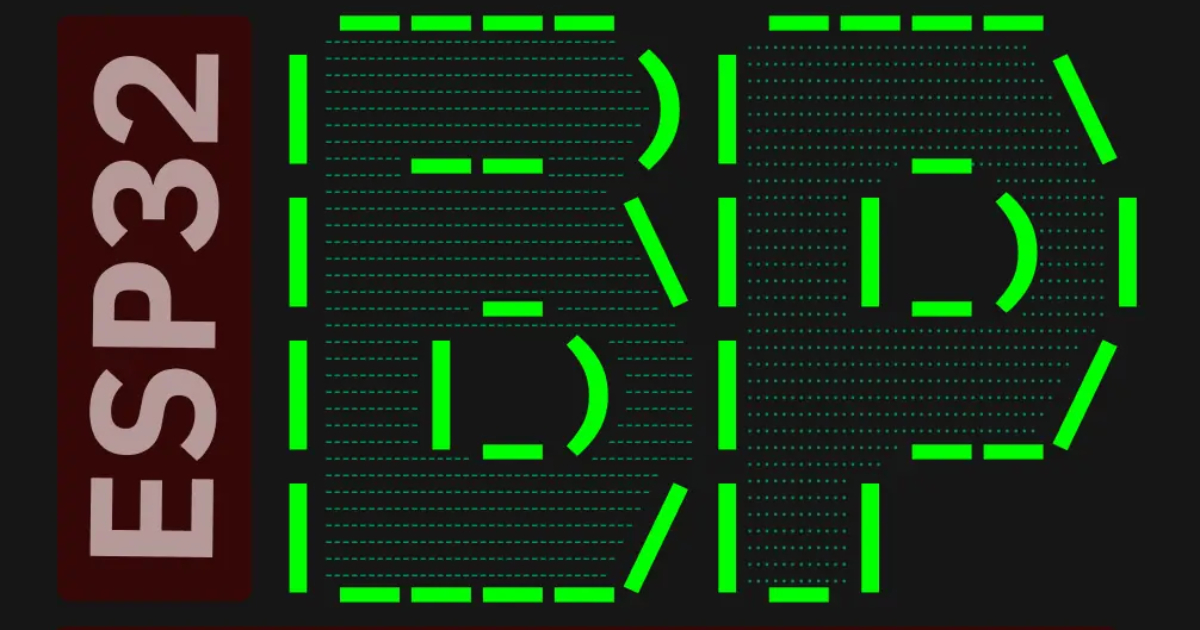
ESP32 Bit Pirate: Bridging Modern Microcontrollers and Browser-Based Hardware Debugging

ESP32 Bit Pirate project integrates multi-protocol debugging within a browser environment using HTML5 APIs. It enables users to install firmware and interact with microcontrollers like the ESP32-S3 directly from the browser. The platform supports various digital and wireless protocols while providing hands-on guidance through practical recipes for tasks such as memory dumping and signal analysis.

By Olimpiu Pop
  •  

Meta Open-Sources Astryx, its Agent-Ready React Design System

Meta recently announced the beta release of Astryx, an open-source React design system developed internally over eight years. Astryx builds on React 19 and StyleX to provide over 150 accessible UI components, customizable CSS design tokens, and dedicated CLI and MCP tooling β€” for both engineers and AI agents.

By Bruno Couriol
  •  

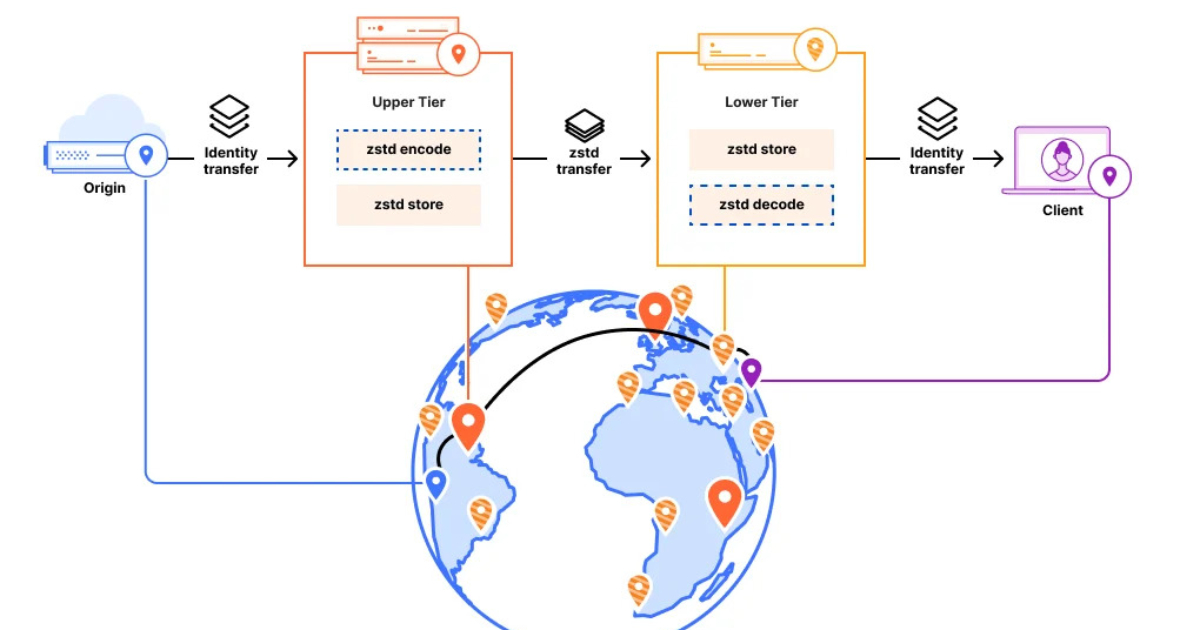
Cloudflare Tests Cache Transcoding to Reduce Storage Requirements

Cloudflare recently described a prototype called Cache Transcoding that compresses eligible cache content, mainly uncompressed text such as HTML, JSON, CSS, and JavaScript, using Zstandard before storing it on disk. The hyperscaler estimates that the approach could provide petabytes of additional effective cache capacity, although broader testing is still needed.

By Renato Losio
  •  

GitHub Copilot's Project HydraFusion Promises Frontier Level Performance through Multi-Model Routing

GitHub's Project HydraFusion is a research preview for GitHub Copilot that enhances coding intelligence through runtime model orchestration. It dynamically assembles execution plans using models from various providers. The system employs three execution patterns based on task complexity. Evaluations indicate that it achieves high task quality while significantly reducing operational costs.

By Olimpiu Pop
  •  

Open-Source Project Brings Full iOS 27 Virtualization to Apple Silicon

The open-Source project vphone-cli enables a full iOS 27 system to run as a virtual machine on Apple Silicon. Built on Apple's own Virtualization.framework rather than traditional emulation, the project opens up new possibilities for security research, reverse engineering, and automated iOS testing.

By Sergio De Simone
  •  
❌