❌

Reading view

Building an Internal Developer Platform with Artificial Intelligence

Agents are becoming the new developer platform, using semantic search with data from tools like Git, Slack, and Jira for context. Things to consider are setting guardrails to block or allow things, and using logs, metrics, and traces to understand agent behavior.

By Ben Linders


  •  

Dropbox Evolves Riviera Content Processing Platform to Support AI Workloads

Dropbox has evolved Riviera from a file preview service into a universal content processing platform supporting more than 300 file formats and over 100 transformation capabilities. Processing hundreds of thousands of transformations per second, Riviera now supports Search, Replay, Sign, and Dash, while its APIs enable asynchronous content extraction for AI and RAG workflows.

By Leela Kumili
  •  

Presentation: Fixing the AI Infra Scale Problem by Stuffing 1M Sandboxes in a Single Server

Felipe Huici explains how Unikraft achieves millisecond cold boots, stateful scale-to-zero, and extreme density for sandboxing AI workloads. He discusses isolation primitives, Linux kernel optimizations, and snapshotting tricks, demonstrating how to maintain sub-10ms performance at scale while integrating seamlessly into Kubernetes environments with hardware-level security.

By Felipe Huici
  •  

Presentation: Platform Engineering in the Age of AI

The panelists explain how platform teams adapt to support AI-assisted engineering, highlighting which capabilities belong in the platform. They discuss trade-offs between standardization and developer autonomy, while sharing strategies to manage AI tooling, security guardrails, and shifting workflows.

By StΓ©phane Di Cesare, Davide de Paolis, Stephen Cihak, Camila Macedo, Renato Losio
  •  

Presentation: From Legacy to Sovereignty: Driving the Future of Insurance through Platform Engineering

Sergiu Petean discusses the strategic journey of evolving DevOps into platform engineering within heavily regulated enterprise environments. He explains how to maximize efficiency using dynamic reference architectures, align platform KPIs directly with board-level business goals, reduce cognitive load via custom team topologies, and maintain innovation sovereignty through open-source technology.

By Sergiu Petean
  •  

Uber’s Hive Federation Decentralizes 16K Datasets and 10+ PB for Zero-Downtime Analytics at Scale

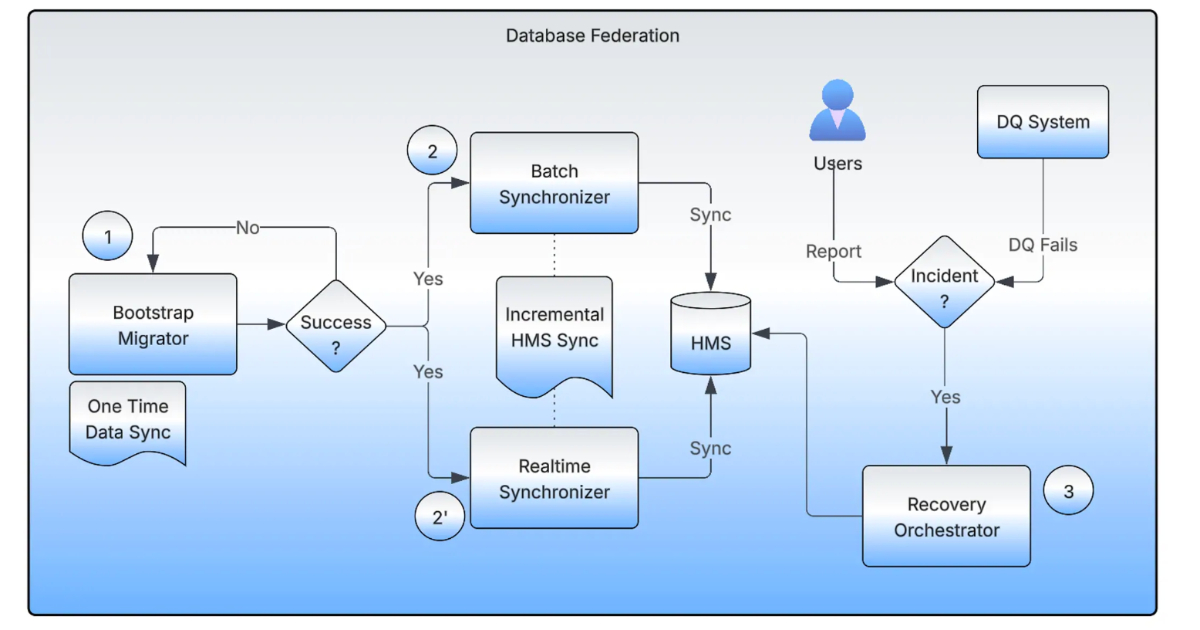
Uber has decentralized its Hive data warehouse, migrating 16,000 datasets totaling over 10 petabytes using pointer-based federation. The migration ensures zero downtime, strict ACL enforcement, improved governance, and scalable, domain-specific datasets for analytics and machine learning workloads.

By Leela Kumili
  •  
❌