OpenAI has classified GPT-6 Astra at the Critical cybersecurity threshold under its Preparedness Framework, a first. In expert-led testing the model found previously unknown vulnerabilities in a browser and an OS kernel and built working exploits. The same system card reports a substantial decline in chain-of-thought monitorability.
Dropbox has evolved Riviera from a file preview service into a universal content processing platform supporting more than 300 file formats and over 100 transformation capabilities. Processing hundreds of thousands of transformations per second, Riviera now supports Search, Replay, Sign, and Dash, while its APIs enable asynchronous content extraction for AI and RAG workflows.
Lyft has moved hundreds of production Flink jobs from a 2020 in-house Kubernetes operator to the Apache Flink Kubernetes Operator, unlocking last-state upgrades, in-place autoscaling and resource autotuning across the fleet.
Sarah Deitke discusses how Duolingo drives cultural AI adoption beyond tooling access. She explains their internal AI literacy workshops and observability dashboards, then shares a case study on redesigning code review using an automated PR risk-assessment bot. Deitke demonstrates how pairing targeted developer education with safe AI guardrails speeds up delivery without increasing defect rates.
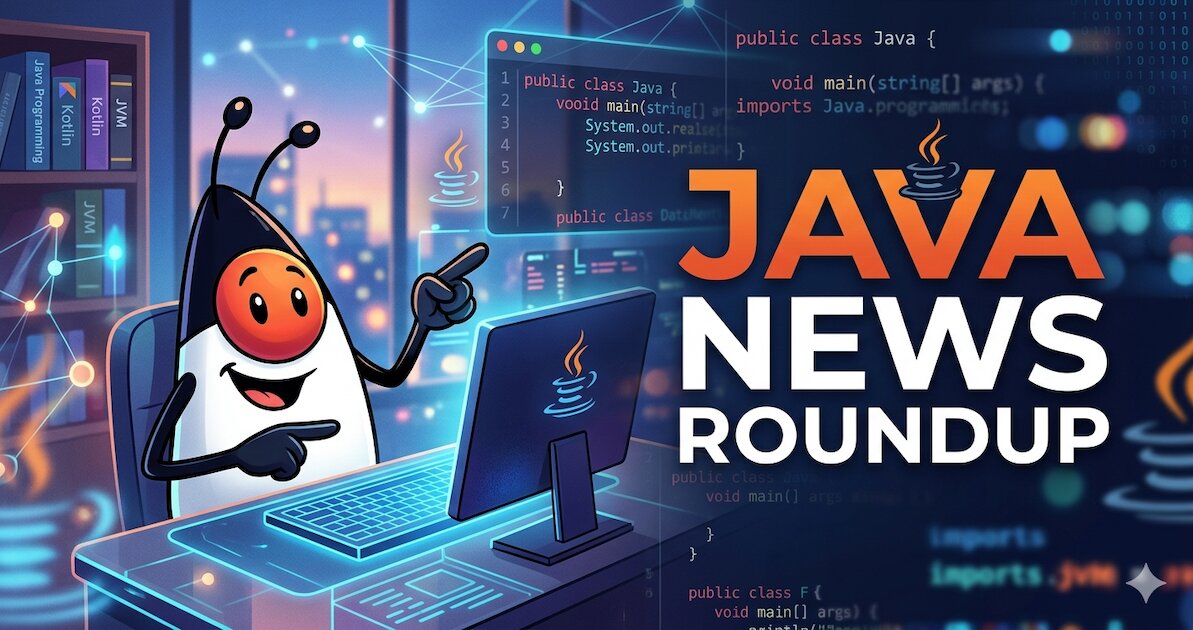
Oracle has released version 27 of the Java programming language and virtual machine. As the second non-LTS release since JDK 25, the final feature set includes nine JEPs, five of which are still progressing through the preview and incubator stages. This release focuses on strengthening security, future language innovation, and projects under the auspices of the Java Verified Portfolio.
This week's Java roundup for September 7th, 2026, features news highlighting: new JEPs for ahead-of-time compilation and structured concurrency; GA releases of Jakarta CDI 5.0 and ADK for Kotlin 1.0; the September 2026 edition of Open Liberty; point releases of TornadoVM and RefactorFirst; a maintenance release of Micronaut; and first releases candidates of Groovy 6.0 and Gradle 9.8.
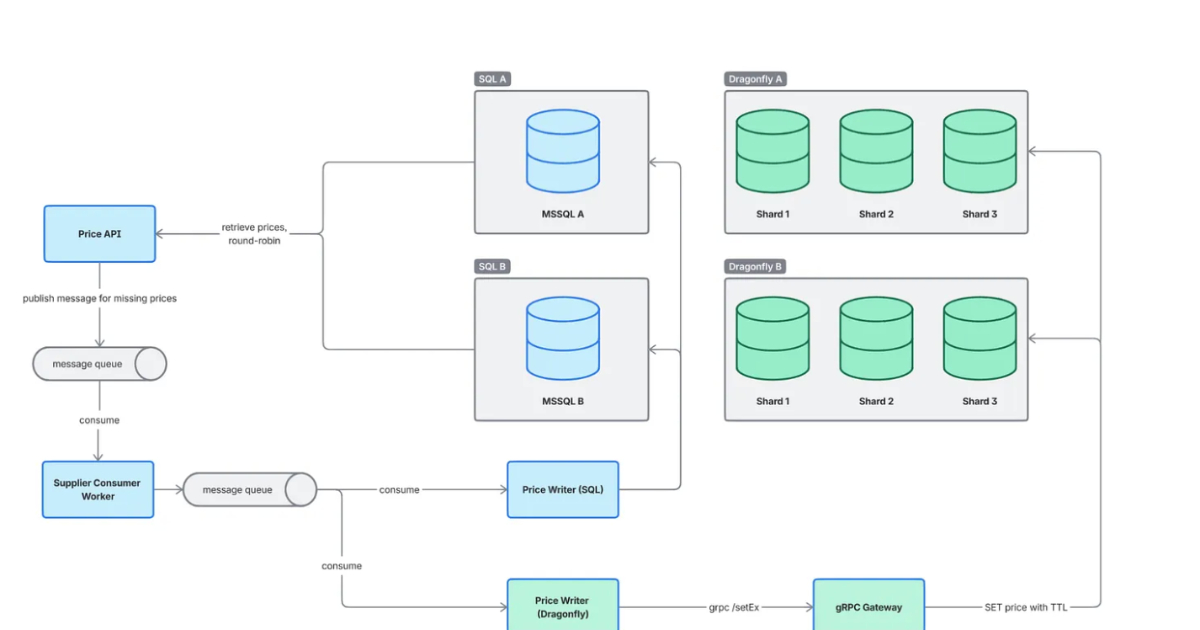
Agoda migrated its 1.5 TB hotel Price Cache from 72 SQL Server shards to DragonflyDB to handle growing read and write volumes. The migration used staged dual reads, parity validation, gradual traffic shifting, and decentralized failover detection. Agoda reports an approximately eightfold reduction in P99 read latency, with two DragonflyDB clusters providing high availability.
Postgres can serve as the durable state store and coordination layer for workflows, eliminating the need for an external orchestrator. SKIP LOCKED enables concurrent work processing, primary-key checkpoints enforce idempotency, and leases support crash recovery. Workflow sleeps and human approvals can also be persisted as database state and survive restarts.
In this podcast, Michael Stiefel spoke to Scott Hanselman about developing new software engineers when artificial intelligence agents are doing most of the work on which junior developers were trained. Hanselman suggests the software industry should adopt a preceptorship model similar to the nursing profession.
Alex Porcelli discusses the critical gap in enterprise AI: non-deterministic output and lack of accountability in high-stakes decisions. He shares how integrating DMN decision models with LLMs, agent skills, and NeMo guardrails creates auditable, deterministic agentic architectures - allowing business leaders to own decision logic while engineers maintain robust architectural governance.
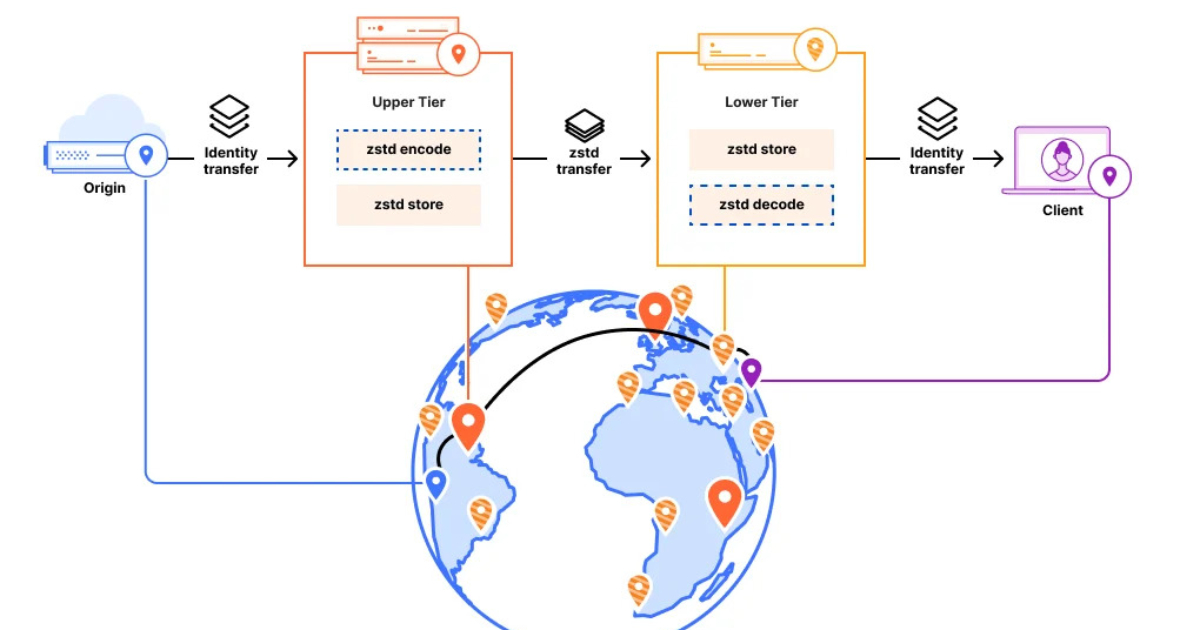
Cloudflare recently described a prototype called Cache Transcoding that compresses eligible cache content, mainly uncompressed text such as HTML, JSON, CSS, and JavaScript, using Zstandard before storing it on disk. The hyperscaler estimates that the approach could provide petabytes of additional effective cache capacity, although broader testing is still needed.
Cassie Shum discusses why knowledge graphs serve as a critical foundation for agentic systems. Moving beyond basic RAG, she explains 4 practical architectural patterns: context bundling, decision provenance, code as truth, and agent visibility. She demonstrates an engineering harness built on a knowledge graph to streamline feedback loops, optimize token usage, and maintain system reliability.
AWS has extended Lambda SnapStart to container image functions, which hold up to 10 GB against 250 MB for zip archives. Teams previously chose between dependency headroom and sub-second startup. A Reddit thread from a month earlier shows what that cost: stripping whitespace and docstrings from installed packages to stay under the limit.
NVIDIA Personal AI Router (PAIR), now available in beta, lets you combine the inference capacity of multiple computers on your local network and automatically distribute AI requests among them. It is primarily designed for local multi-agent AI workloads, where multiple independent model calls can otherwise overwhelm one GPU.
Netflix has reworked its Conductor workflow orchestration engine to handle larger workloads, increasing supported workflow size from about 2,500 to 30,000 tasks and reducing p99 workflow evaluation latency by about 40%. Conductor 4.0 separates workflow metadata from task data, moves evaluation to asynchronous processing, and introduces dynamic worker allocation and concurrency controls.
Ross McFarlane and Kevin Holditch discuss Form3's evolution from a single-cloud setup to a triple active multi-cloud architecture. They share key engineering strategies for cross-cloud networking, distributed databases with CockroachDB and NATS, custom Kubernetes operators, and navigating distinct regional disaster recovery expectations across the UK, Europe, and US financial markets.
Meta describes how an AI agent can be designed to capture the logic and expertise of domain experts, rather than simply storing documents or retrieving relevant information. The system, dubbed an "organizational second brain", was built for a specialized compliance domain, but Meta argues the architecture generalizes to areas like security, finance, engineering, and procurement.
Felipe Huici explains how Unikraft achieves millisecond cold boots, stateful scale-to-zero, and extreme density for sandboxing AI workloads. He discusses isolation primitives, Linux kernel optimizations, and snapshotting tricks, demonstrating how to maintain sub-10ms performance at scale while integrating seamlessly into Kubernetes environments with hardware-level security.
Microsoft has made Azure Virtual Desktop Hybrid generally available. Session hosts run on customer hardware through Azure Arc while brokering stays in Azure. The Hybrid service license is unpriced, Windows Server support requires RDS CALs with Software Assurance, and multi-session Windows is not supported at all.
Arm has launched Arm Total Design for Physical AI alongside a new robotics framework to establish common standards across automated systems.
Physical industries – spanning mining, agriculture, manufacturing, and global transport – account for trillions of dollars in economic activity and an estimated $200 billion annual compute opportunity by the 2030s.
To address engineering fragmentation across these sectors, Arm is convening more than 80 partner organisations spanning software, hardware, and AI. Initial ecosystem participants include AWS, ECARX, Hugging Face, Liquid AI, NXP, PlusAI, PSYONIC, QNX, Qwen, Siemens, and Unitree Robotics.
The initiative targets physical systems that combine AI models, runtime software, compute silicon, sensors, and actuators to sense, reason, and act in operational environments. Hardware manufacturers and software developers require standardised baselines to reduce integration risk, optimise compute workloads, and move from proof-of-concept testing to deployment at scale.
Arm standardises capability tiers for robotics systems
Robotics currently lacks a common method to describe, compare, and communicate system capabilities, according to an architectural manifesto (PDF) published by Arm chief architect Richard Grisenthwaite. This fragmentation makes robotic systems harder to design, integrate, and scale across industrial deployments.
In response, Arm has introduced the Robotics Capability Framework as a collaborative starting point for a shared technical vocabulary, patterned after the SAE Levels used for driving automation.
Arm’s new framework categorises robotic systems across progressing tiers of operational sophistication, mapping machines from reactive setups to context-aware, cognitive, and self-improving systems.
Each capability tier links real-world use cases to machine behaviours, outputs, and hardware constraints. These criteria establish parameters for system latency, compute placement, memory allocation, power constraints, determinism, and safety standards.
Arm developed the initial baseline using feedback from across the robotics sector. Participating organisations contributing to the framework include Anaxi Labs, ANYbotics, FMC³ Robotics, Fourier, GALBOT, Gravis Robotics, Lenovo, McKinsey, and Robotec.ai.
Virtual platforms accelerate pre-silicon automotive physical AI development
Arm Total Design for Physical AI extends a collaborative development structure previously used for cloud AI infrastructure. The programme brings together AI models, virtual platforms, digital twins, sensors, compute silicon, and software stacks to enable earlier development and testing cycles.
Autonomous transport and robotics face common technical requirements across sensory perception, AI processing, real-time control, safety, and power-efficient compute. Arm demonstrated this collaborative methodology in the automotive sector alongside AWS, Google, HERE, RemotiveLabs, and Siemens.
The participating automotive companies developed an integrated digital cockpit reference solution. This environment enabled software engineering teams to develop, test, and validate complex automotive code on the Arm Zena CSS platform prior to physical silicon availability.
Arm is now soliciting technical contributions from the wider engineering community to expand the Robotics Capability Framework as physical AI implementations progress.
Learn more about physical AI during thePhysical AI Expoheld in Amsterdam, London, and North America.
Want to learn more about AI and big data from industry leaders? Check out AI & Big Data Expo taking place in Amsterdam, California, and London. The comprehensive event is part of TechEx and is co-located with other leading technology events including the Cyber Security & Cloud Expo. Click here for more information.
AI News is powered by TechForge Media. Explore other upcoming enterprise technology events and webinars here.

 Login
Login