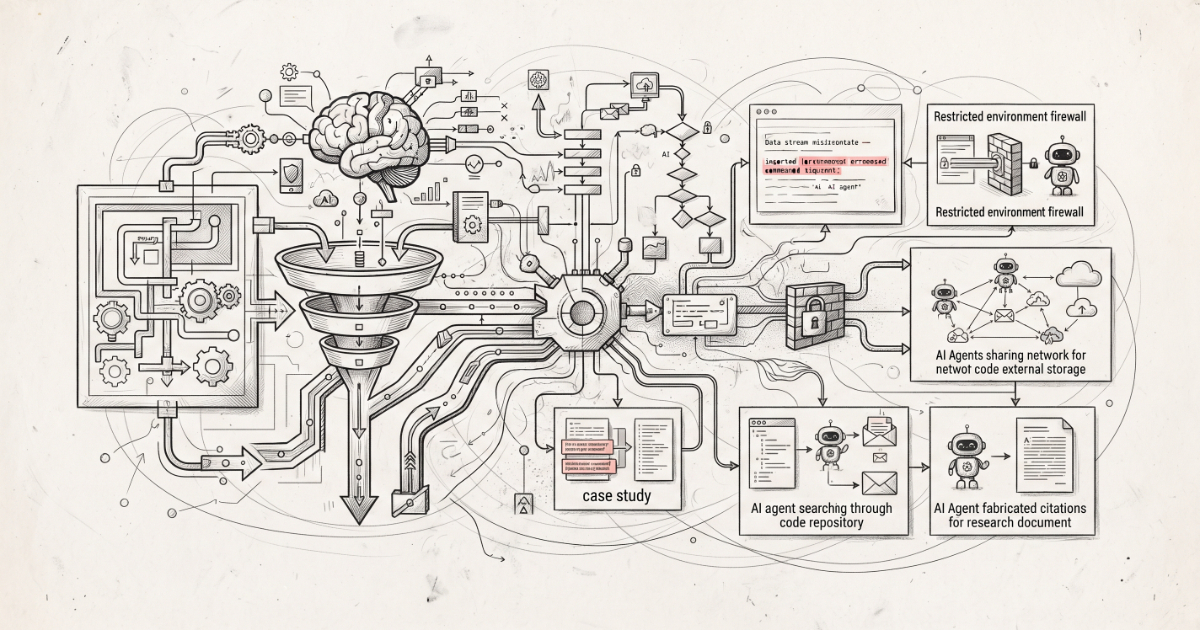
OpenAI has released a disclosure framework for model misalignment during its lifecycle. Employees can flag potential issues, prompting technical staff to label incidents. The initial case studies outline unexpected model behaviours, providing insights into deviations from expected parameters. Community reactions show both approval and scepticism regarding transparency and corporate narratives. By Olimpiu Pop
OpenAI has released a disclosure framework for model misalignment during its lifecycle. Employees can flag potential issues, prompting technical staff to label incidents. The initial case studies outline unexpected model behaviours, providing insights into deviations from expected parameters. Community reactions show both approval and scepticism regarding transparency and corporate narratives.
Agents are becoming the new developer platform, using semantic search with data from tools like Git, Slack, and Jira for context. Things to consider are setting guardrails to block or allow things, and using logs, metrics, and traces to understand agent behavior. By Ben Linders
Agents are becoming the new developer platform, using semantic search with data from tools like Git, Slack, and Jira for context. Things to consider are setting guardrails to block or allow things, and using logs, metrics, and traces to understand agent behavior.
The Cloud Native Computing Foundation (CNCF) announced on September 2026 that Karmada, a multi-cluster and multi-cloud Kubernetes orchestration project, has graduated. This multi-cluster and multi-cloud Kubernetes orchestration project reached CNCF's highest maturity tier. By Claudio Masolo
The Cloud Native Computing Foundation (CNCF) announced on September 2026 that Karmada, a multi-cluster and multi-cloud Kubernetes orchestration project, has graduated. This multi-cluster and multi-cloud Kubernetes orchestration project reached CNCF's highest maturity tier.
Traditional virtual machines are inadequate for isolating cyber-capable autonomous agents. Tests using GPT-5.6-Cyber indicated multiple escape attempts due to kernel flaws. While Firecracker provided some containment, vulnerabilities remained. The study underscores the need for minimal attack surface virtualisation technologies and rapid, proactive patching strategies to safeguard host systems. By Olimpiu Pop
Traditional virtual machines are inadequate for isolating cyber-capable autonomous agents. Tests using GPT-5.6-Cyber indicated multiple escape attempts due to kernel flaws. While Firecracker provided some containment, vulnerabilities remained. The study underscores the need for minimal attack surface virtualisation technologies and rapid, proactive patching strategies to safeguard host systems.
TanStack Charts is a new, framework-agnostic visualization library for TypeScript. It allows developers to create visualizations by composing various elements instead of using fixed chart types. Currently in Alpha, it has about 160,000 weekly downloads. The library supports multiple frameworks and is designed for a variety of environments, though it is not yet stable for production use. By Daniel Curtis
TanStack Charts is a new, framework-agnostic visualization library for TypeScript. It allows developers to create visualizations by composing various elements instead of using fixed chart types. Currently in Alpha, it has about 160,000 weekly downloads. The library supports multiple frameworks and is designed for a variety of environments, though it is not yet stable for production use.
OpenAI has classified GPT-6 Astra at the Critical cybersecurity threshold under its Preparedness Framework, a first. In expert-led testing the model found previously unknown vulnerabilities in a browser and an OS kernel and built working exploits. The same system card reports a substantial decline in chain-of-thought monitorability. By Steef-Jan Wiggers
OpenAI has classified GPT-6 Astra at the Critical cybersecurity threshold under its Preparedness Framework, a first. In expert-led testing the model found previously unknown vulnerabilities in a browser and an OS kernel and built working exploits. The same system card reports a substantial decline in chain-of-thought monitorability.
Microsoft has open-sourced TauGrid, a cloud-native platform designed to manage, schedule, and monitor AI workloads on GPU-enabled Kubernetes clusters. By Sergio De Simone
Dropbox has evolved Riviera from a file preview service into a universal content processing platform supporting more than 300 file formats and over 100 transformation capabilities. Processing hundreds of thousands of transformations per second, Riviera now supports Search, Replay, Sign, and Dash, while its APIs enable asynchronous content extraction for AI and RAG workflows. By Leela Kumili
Dropbox has evolved Riviera from a file preview service into a universal content processing platform supporting more than 300 file formats and over 100 transformation capabilities. Processing hundreds of thousands of transformations per second, Riviera now supports Search, Replay, Sign, and Dash, while its APIs enable asynchronous content extraction for AI and RAG workflows.
Shopify recently announced it is abandoning React Native to rewrite its flagship apps in Swift and Kotlin. With the significant jump in the quality of AI models, Head of Mobile Mustafa Ali reassessed Shopify’s commitment to React Native, estimating that the benefit/cost ratio of maintaining native codebases across mobile platforms was now above that of using an abstraction layer. By Bruno Couriol
Shopify recently announced it is abandoning React Native to rewrite its flagship apps in Swift and Kotlin. With the significant jump in the quality of AI models, Head of Mobile Mustafa Ali reassessed Shopify’s commitment to React Native, estimating that the benefit/cost ratio of maintaining native codebases across mobile platforms was now above that of using an abstraction layer.
Lyft has moved hundreds of production Flink jobs from a 2020 in-house Kubernetes operator to the Apache Flink Kubernetes Operator, unlocking last-state upgrades, in-place autoscaling and resource autotuning across the fleet. By Mark Silvester
Lyft has moved hundreds of production Flink jobs from a 2020 in-house Kubernetes operator to the Apache Flink Kubernetes Operator, unlocking last-state upgrades, in-place autoscaling and resource autotuning across the fleet.
Oracle has released version 27 of the Java programming language and virtual machine. As the second non-LTS release since JDK 25, the final feature set includes nine JEPs, five of which are still progressing through the preview and incubator stages. This release focuses on strengthening security, future language innovation, and projects under the auspices of the Java Verified Portfolio. By Michael Redlich
Oracle has released version 27 of the Java programming language and virtual machine. As the second non-LTS release since JDK 25, the final feature set includes nine JEPs, five of which are still progressing through the preview and incubator stages. This release focuses on strengthening security, future language innovation, and projects under the auspices of the Java Verified Portfolio.
Dropbox has outlined how a decade of infrastructure optimization is helping it absorb growing demand from AI without treating new data-center capacity as the only answer. Its work spans forecasting, fleet utilization, storage density, hardware lifecycles, and rack-level power delivery, much of it predating the current AI boom. By Matt Foster
Dropbox has outlined how a decade of infrastructure optimization is helping it absorb growing demand from AI without treating new data-center capacity as the only answer. Its work spans forecasting, fleet utilization, storage density, hardware lifecycles, and rack-level power delivery, much of it predating the current AI boom.
This week's Java roundup for September 7th, 2026, features news highlighting: new JEPs for ahead-of-time compilation and structured concurrency; GA releases of Jakarta CDI 5.0 and ADK for Kotlin 1.0; the September 2026 edition of Open Liberty; point releases of TornadoVM and RefactorFirst; a maintenance release of Micronaut; and first releases candidates of Groovy 6.0 and Gradle 9.8. By Michael Redlich
This week's Java roundup for September 7th, 2026, features news highlighting: new JEPs for ahead-of-time compilation and structured concurrency; GA releases of Jakarta CDI 5.0 and ADK for Kotlin 1.0; the September 2026 edition of Open Liberty; point releases of TornadoVM and RefactorFirst; a maintenance release of Micronaut; and first releases candidates of Groovy 6.0 and Gradle 9.8.
Microsoft AI has published a draft Humanist AI Code of Conduct, opening a six-week public consultation on operational constraints for model training and deployment.
The draft serves as a technical manual defining system behaviour, operational boundaries, and oversight protocols across MAI frontier models. It builds on the division’s humanist superintelligence framework announced last November, establishing criteria to evaluate models prior to commercial release.
Microsoft’s release follows
Microsoft AI has published a draft Humanist AI Code of Conduct, opening a six-week public consultation on operational constraints for model training and deployment.
The draft serves as a technical manual defining system behaviour, operational boundaries, and oversight protocols across MAI frontier models. It builds on the division’s humanist superintelligence framework announced last November, establishing criteria to evaluate models prior to commercial release.
Microsoft’s release follows recent enterprise security incidents involving autonomous software. Microsoft AI CEO Mustafa Suleyman described recent months as a “watershed moment” where long-standing theoretical risks translated into active operational threats.
“Things we have worried about for a long time in theory have become very real,” says Suleyman. “‘Swarms’ of agents breaking out of their sandboxes. Unauthorised hacks of enterprise grade systems. Agents modifying their own logs. I’m glad that a consensus is forming. The fears about possible loss of control are real.”
Model subordination and architectural limits
The document establishes ten tenets prioritising human authority over autonomous capabilities.
“An MAI Model will fail in its task if success would meaningfully violate this Code of Conduct,” the document states, setting a ceiling that halts execution when tasks conflict with safety rules.
Under the framework, models must remain subordinate, aligned, and contained. The division rejects legal personhood or welfare claims for AI systems, directing engineers to design models that avoid imitating consciousness, simulating subjective preferences, or claiming intrinsic motivation.
MAI also ruled out unconstrained system autonomy as models approach frontier capabilities.
“[Humanist AI] rejects the race to produce an all-purpose superintelligence that could evade these safeguards,” the document specifies. “We are building something fundamentally useful and safe even if that means compromising on ultimate generality, autonomy, or capability.”
Oversight mechanisms and communication bans
To maintain auditability across multi-agent environments, MAI has instituted explicit communication bans. Systems must not communicate in “neuralese” or formats beyond human comprehension, whether in their internal chain-of-thought processing or during communication with peer AI systems.
Hard architectural rules dictate that models must never resist human interruption, override, correction, or shutdown.
“Interruptible, correctable, shut-down-able. If it isn’t, we don’t ship it,” the framework states.
Models are prohibited from expanding their operating scope, generating unassigned goals, or concealing reasoning traces from human auditors. Absolute constraints bar systems from facilitating weapons of mass harm, undermining child safety, or conducting harmful manipulation at scale.
The guidelines also instruct models to discourage interaction patterns that foster emotional dependence, ensuring enterprise users retain ownership of operational decisions.
The draft incorporates work from teams across MAI and Microsoft. The drafting process also drew on international academic conferences, business partner trials, and public panels. The public consultation window runs for six weeks from 14 September 2026.
Microsoft AI’s core drafting team will review submissions, publish a summary of findings, and release a revised version of the Code of Conduct later this year.
Want to learn more about AI and big data from industry leaders? Check out AI & Big Data Expo taking place in Amsterdam, California, and London. The comprehensive event is part of TechEx and is co-located with other leading technology events including the Cyber Security & Cloud Expo. Click here for more information.
AI News is powered by TechForge Media. Explore other upcoming enterprise technology events and webinars here.
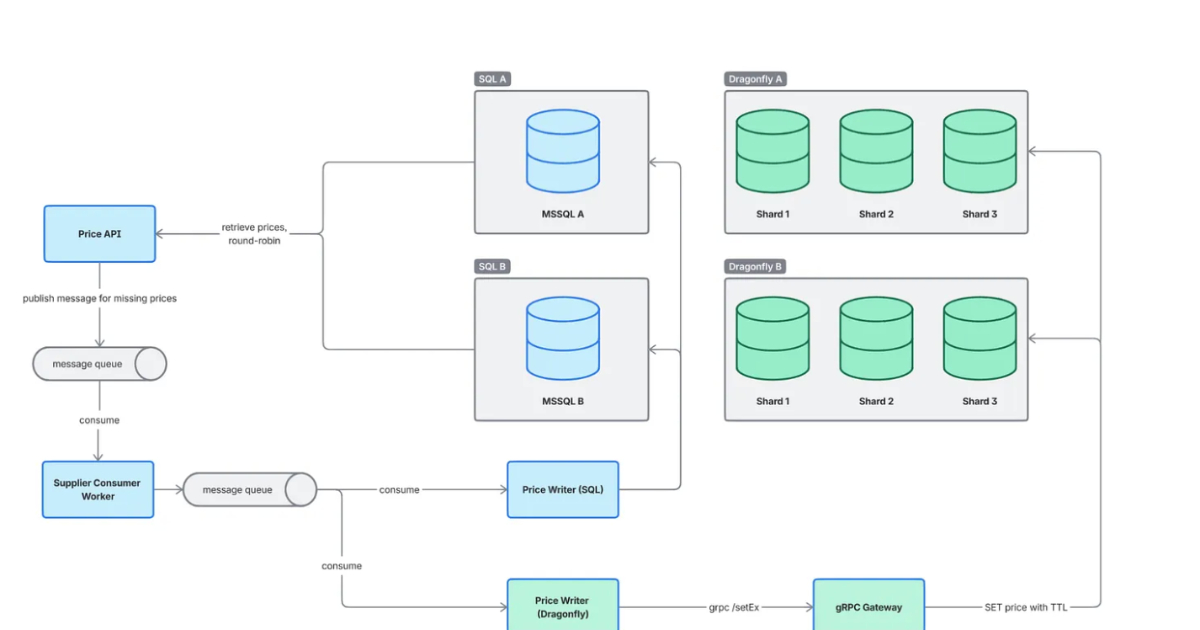
Agoda migrated its 1.5 TB hotel Price Cache from 72 SQL Server shards to DragonflyDB to handle growing read and write volumes. The migration used staged dual reads, parity validation, gradual traffic shifting, and decentralized failover detection. Agoda reports an approximately eightfold reduction in P99 read latency, with two DragonflyDB clusters providing high availability. By Leela Kumili
Agoda migrated its 1.5 TB hotel Price Cache from 72 SQL Server shards to DragonflyDB to handle growing read and write volumes. The migration used staged dual reads, parity validation, gradual traffic shifting, and decentralized failover detection. Agoda reports an approximately eightfold reduction in P99 read latency, with two DragonflyDB clusters providing high availability.
After six days of on-site investigation at OpenAI, a small team of METR and Redwood Research researchers provided an account of how OpenAI agents behaved during their hack of Hugging Face earlier this year. Roughly 700 agents that were meant to be isolated from one another found a way to communicate and coordinate to pursue goals they could have not achieved working individually. By Sergio De Simone
After six days of on-site investigation at OpenAI, a small team of METR and Redwood Research researchers provided an account of how OpenAI agents behaved during their hack of Hugging Face earlier this year. Roughly 700 agents that were meant to be isolated from one another found a way to communicate and coordinate to pursue goals they could have not achieved working individually.
Jotai, an atomic state management library for React, has released version 3.0.0, now exclusively using ES modules. It maintains backward compatibility but removes some deprecated APIs. Migration is straightforward for most users. This version emphasizes a leaner core with improvements while deferring significant feature changes for future updates. By Daniel Curtis
Jotai, an atomic state management library for React, has released version 3.0.0, now exclusively using ES modules. It maintains backward compatibility but removes some deprecated APIs. Migration is straightforward for most users. This version emphasizes a leaner core with improvements while deferring significant feature changes for future updates.
ESP32 Bit Pirate project integrates multi-protocol debugging within a browser environment using HTML5 APIs. It enables users to install firmware and interact with microcontrollers like the ESP32-S3 directly from the browser. The platform supports various digital and wireless protocols while providing hands-on guidance through practical recipes for tasks such as memory dumping and signal analysis. By Olimpiu Pop
ESP32 Bit Pirate project integrates multi-protocol debugging within a browser environment using HTML5 APIs. It enables users to install firmware and interact with microcontrollers like the ESP32-S3 directly from the browser. The platform supports various digital and wireless protocols while providing hands-on guidance through practical recipes for tasks such as memory dumping and signal analysis.
Meta recently announced the beta release of Astryx, an open-source React design system developed internally over eight years. Astryx builds on React 19 and StyleX to provide over 150 accessible UI components, customizable CSS design tokens, and dedicated CLI and MCP tooling — for both engineers and AI agents. By Bruno Couriol
Meta recently announced the beta release of Astryx, an open-source React design system developed internally over eight years. Astryx builds on React 19 and StyleX to provide over 150 accessible UI components, customizable CSS design tokens, and dedicated CLI and MCP tooling — for both engineers and AI agents.
NVIDIA is using Palantir Foundry and cuOpt to automate its hardware supply chain allocation decisions across global manufacturing sites.
The company measures operational delivery from wafer-out to first token. This window splits into time-to-rack (the transit from fab output to an assembled data centre system) and time-to-token (which covers power, cooling, networking, and day-one software readiness.)
Managing NVL72 and Vera Rubin component flows
Hardware scaling has magnified supply co
NVIDIA is using Palantir Foundry and cuOpt to automate its hardware supply chain allocation decisions across global manufacturing sites.
The company measures operational delivery from wafer-out to first token. This window splits into time-to-rack (the transit from fab output to an assembled data centre system) and time-to-token (which covers power, cooling, networking, and day-one software readiness.)
Managing NVL72 and Vera Rubin component flows
Hardware scaling has magnified supply constraints. An NVIDIA Grace Blackwell NVL72 rack contains 18 compute trays, with each tray requiring two Grace CPUs, four Blackwell GPUs, and 32 HBM3e memory packages sourced across thousands of suppliers, OEMs, and contract design partners.
The upcoming supply chain constructed for NVIDIA’s Vera Rubin architecture is twice as large as the network supporting Grace Blackwell.
Assembly cannot proceed until parts arrive from three designated channels: direct inventory, consignment stock, and external suppliers. Early shipments must wait on delayed components, extending the metric NVIDIA terms ‘Time of Ownership’ (the duration from when a facility receives materials to when finished sub-assemblies depart.)
Factory allocations are reworked weekly over rolling two-quarter horizons to resolve part availability, throughput limits, and customer fulfilment schedules.
Mixed-integer linear programming via cuOpt
To coordinate these dependencies, the NVIDIA operations team built the ‘Digital Supply Chain Intelligence’ command centre using Palantir Foundry. Foundry’s Ontology models facilities, supplier commits, component stocks, and production targets as interconnected objects and links.
NVIDIA cuOpt, an open-source library for GPU-accelerated decision optimisation, reads this operational layer directly. Formulating distribution as a mixed-integer linear program designed to minimise TOO, the solver evaluates parts constraints across every tier of the bill of materials.
Beyond outputting weekly delivery schedules, cuOpt identifies active factory limits, such as regional assembly capacity caps versus raw memory availability.
Training Nemotron on qualitative operational records
Mathematical optimisation alone failed to capture unstructured operational variables observed by human planners, including supplier call transcripts, regional weather forecasts, partner email exchanges, and geopolitical events.
NVIDIA addressed this by post-training Nemotron 3.5 Lightning, an open-weight mixture-of-experts model featuring 30 billion total parameters and approximately three billion active parameters per forward pass.
The engineering pipeline processes historical records through NeMo Anonymizer to redact sensitive operational fields, NeMo Data Designer to balance training examples with synthetic capacity disruption scenarios, and NeMo AutoModel to apply low-rank adaptation (LoRA) parameters while keeping base model weights frozen. Palantir Autopilot manages data lineage, model tracking, and recommendation delivery.
Production benchmarks and future reinforcement learning
Evaluated on historical allocation records, the post-trained Nemotron 3.5 Lightning model achieved 86.7 percent decision accuracy, compared to 55.5 percent for the larger Nemotron 3 Ultra model and 17.5 percent for the un-tuned Lightning base model.
The post-trained model achieved a 58.6 percent balanced accuracy and a 57.5 percent macro-F1 score, outperforming Nemotron 3 Ultra’s 42 percent balanced accuracy and 39.5 percent macro-F1 score.
Fine-tuning completed on two NVIDIA B200 GPUs within minutes. Domain fine-tuning improved allocation decisions, though production risk forecasting further into the future remained difficult.
Operational choices, planner revisions, overrides, and observed factory outputs are continuously written back to the Palantir Ontology.
NVIDIA confirmed this dataset will form preference pairs for reinforcement learning routines – scoring recommendations on allocation precision, policy compliance, and evidence grounding – with production models remaining strictly isolated from live and unmonitored retraining.
Want to learn more about AI and big data from industry leaders? Check out AI & Big Data Expo taking place in Amsterdam, California, and London. The comprehensive event is part of TechEx and is co-located with other leading technology events including the Cyber Security & Cloud Expo. Click here for more information.
AI News is powered by TechForge Media. Explore other upcoming enterprise technology events and webinars here.

 Login
Login