❌

Reading view

Presentation: From Retrieval to Reasoning: Building Production-Ready Agentic AI Systems with Knowledge Graphs

Cassie Shum discusses why knowledge graphs serve as a critical foundation for agentic systems. Moving beyond basic RAG, she explains 4 practical architectural patterns: context bundling, decision provenance, code as truth, and agent visibility. She demonstrates an engineering harness built on a knowledge graph to streamline feedback loops, optimize token usage, and maintain system reliability.

By Cassie Shum

  •  

Presentation: How To Run on Three Clouds at Once, and When Not To

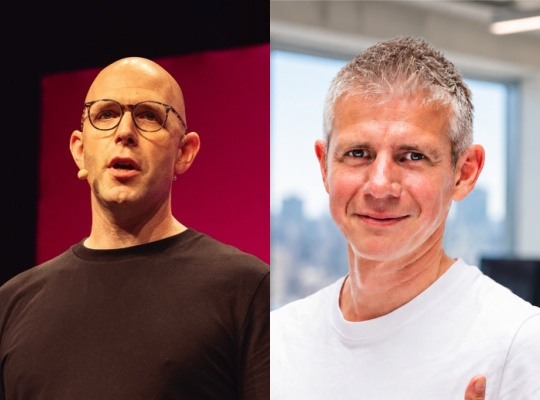
Ross McFarlane and Kevin Holditch discuss Form3's evolution from a single-cloud setup to a triple active multi-cloud architecture. They share key engineering strategies for cross-cloud networking, distributed databases with CockroachDB and NATS, custom Kubernetes operators, and navigating distinct regional disaster recovery expectations across the UK, Europe, and US financial markets.

By Ross McFarlane, Kevin Holditch
  •  

Presentation: Fixing the AI Infra Scale Problem by Stuffing 1M Sandboxes in a Single Server

Felipe Huici explains how Unikraft achieves millisecond cold boots, stateful scale-to-zero, and extreme density for sandboxing AI workloads. He discusses isolation primitives, Linux kernel optimizations, and snapshotting tricks, demonstrating how to maintain sub-10ms performance at scale while integrating seamlessly into Kubernetes environments with hardware-level security.

By Felipe Huici
  •  

Presentation: Platform Engineering in the Age of AI

The panelists explain how platform teams adapt to support AI-assisted engineering, highlighting which capabilities belong in the platform. They discuss trade-offs between standardization and developer autonomy, while sharing strategies to manage AI tooling, security guardrails, and shifting workflows.

By StΓ©phane Di Cesare, Davide de Paolis, Stephen Cihak, Camila Macedo, Renato Losio
  •  

Presentation: A Solopreneur's Journey: From Engineer to Puzzle Master and Storyteller

Joe Cassavaugh shares his journey from software engineer to successful solopreneur with a $2M+ indie franchise. He explains how he scaled production to 10 games in 5 years, adopted Unity to boost velocity 4-6x, optimized content pipelines, and leveraged refactoring patterns. He discusses key trade-offs between corporate engineering and solopreneurship for senior devs and leaders.

By Joe Cassavaugh
  •  

Presentation: From AI Agent Demo to Production: Automated Testing and Evaluation

Zhou Yu discusses why AI agents stall in demo phase and shares how simulation-driven testing solves compliance and reliability bottlenecks. Learn how Columbia and Arklex AI use synthetic user personas, trajectory entropy, and automated CI/CD pipelines to evaluate multi-turn agents, catch edge cases before deployment, and scale self-learning workflows in production.

By Zhou Yu
  •  

Presentation: Realtime and Batch Processing of GPU Workloads

Joseph Stein discusses engineering an enterprise AI-as-a-Service platform within a private cloud data center. He explains how to maximize underutilized GPU pools via multi-namespace scheduling, leverage Valkey and Lua for atomic priority queuing and backpressure management, mitigate OWASP Top 10 LLM risks via central proxy gateways, and scale batch pipelines using a custom S3-to-Kafka proxy.

By Joseph Stein
  •  

Presentation: From Legacy to Sovereignty: Driving the Future of Insurance through Platform Engineering

Sergiu Petean discusses the strategic journey of evolving DevOps into platform engineering within heavily regulated enterprise environments. He explains how to maximize efficiency using dynamic reference architectures, align platform KPIs directly with board-level business goals, reduce cognitive load via custom team topologies, and maintain innovation sovereignty through open-source technology.

By Sergiu Petean
  •  

Presentation: Latency: the Race to Zero...Are We There Yet?

Amir Langer discusses the evolution of latency reduction, from the Pony Express to modern hardware. He explains how separation of concerns - decoupling business logic from I/O - and tools like Aeron and the Disruptor achieve single-digit microsecond speeds. He shares insights into replicated state machines, consensus protocols like Raft, and the future of low-latency sequencer architectures.

By Amir Langer
  •  

Presentation: Choosing Your AI Copilot: Maximizing Developer Productivity

Sepehr Khosravi discusses the current state of AI-assisted coding, moving beyond basic autocompletion to sophisticated agentic workflows. He explains the technical nuances of Cursor’s "Composer" and Claude Code’s research capabilities, providing tips for managing context windows and MCP integrations. He shares lessons from industry leaders on shrinking process time beyond just writing code.

By Sepehr Khosravi
  •  

Presentation: When Every Bit Counts: How Valkey Rebuilt Its Hashtable for Modern Hardware

Madelyn Olson discusses the evolution of Valkey's data structures, moving away from "textbook" pointer-chasing HashMaps to more cache-aware designs. She explains the implementation of "Swedish" tables to maximize memory density. She shares insights on systems intuition, memory prefetching, and the rigorous testing needed for mission-critical caches.

By Madelyn Olson
  •  

Presentation: Duolingo's Kubernetes Leap

Franka Passing discusses the architectural shift of Duolingo’s 500+ backend services to Kubernetes. She explains the move toward GitOps with Argo CD, the transition to IPv6-only pods, and the "cellular architecture" used to isolate environments. She shares "reports from the trenches" on managing developer trust, navigating AWS rate limits, and productionizing early adopter services.

By Franka Passing
  •  

Presentation: Panel: Taking Architecture Out of the Echo Chamber

Andrew Harmel-Law and a panel of expert architects discuss the shifting practice of architecture in 2025. They explain strategies for communicating technical debt to stakeholders, the benefits of decentralized decision-making through ADRs, and the career paths of modern leaders. The panel shares insights on bridging the gap between mobile and backend teams to ensure a holistic system.

By Andrew Harmel-Law, Cat Morris, Diana Montalion, Shana Dacres-Lawrence, Vanessa Formicola, Elena Stojmilova, Peter Hunter
  •  

Presentation: Directing a Swarm of Agents for Fun and Profit

Adrian Cockcroft explains the transition from cloud-native to AI-native development. He shares his "director-level" approach to managing swarms of autonomous agents using tools like Cursor and Claude Flow. Discussing real-world experiments in BDD, MCP servers, and language porting, he discusses why the future of engineering lies in building platforms that orchestrate AI-driven development.

By Adrian Cockcroft
  •  
❌