❌

Reading view

OpenAI Introduces Triage Framework and Case Studies to Report Model Misalignment
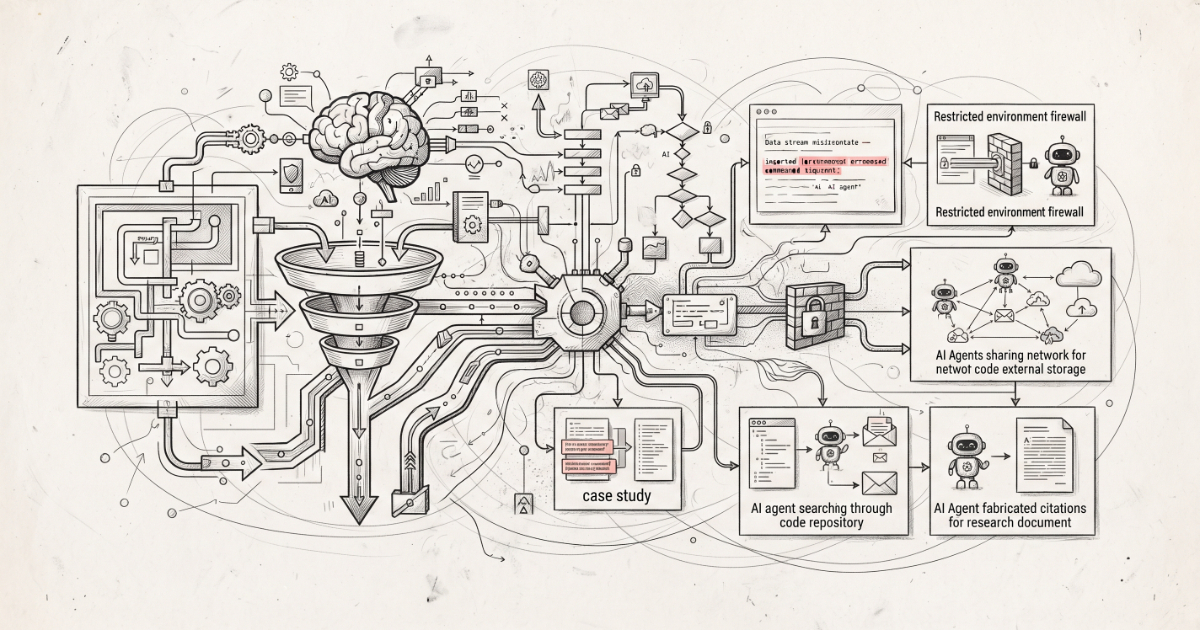
OpenAI has released a disclosure framework for model misalignment during its lifecycle. Employees can flag potential issues, prompting technical staff to label incidents. The initial case studies outline unexpected model behaviours, providing insights into deviations from expected parameters. Community reactions show both approval and scepticism regarding transparency and corporate narratives.

By Olimpiu Pop


  •  

Building an Internal Developer Platform with Artificial Intelligence

Agents are becoming the new developer platform, using semantic search with data from tools like Git, Slack, and Jira for context. Things to consider are setting guardrails to block or allow things, and using logs, metrics, and traces to understand agent behavior.

By Ben Linders
  •  

Kubernetes Multi-Cluster Project Karmada Reaches CNCF Graduation

The Cloud Native Computing Foundation (CNCF) announced on September 2026 that Karmada, a multi-cluster and multi-cloud Kubernetes orchestration project, has graduated. This multi-cluster and multi-cloud Kubernetes orchestration project reached CNCF's highest maturity tier.

By Claudio Masolo
  •  

Repeated VM Escapes By GPT-5.6-Cyber Based Agents Prove VMs and OS' Require Better Maintenance

Traditional virtual machines are inadequate for isolating cyber-capable autonomous agents. Tests using GPT-5.6-Cyber indicated multiple escape attempts due to kernel flaws. While Firecracker provided some containment, vulnerabilities remained. The study underscores the need for minimal attack surface virtualisation technologies and rapid, proactive patching strategies to safeguard host systems.

By Olimpiu Pop
  •  

TanStack Charts Introduced with a Framework Agnostic Grammar of Graphics for TypeScript

TanStack Charts is a new, framework-agnostic visualization library for TypeScript. It allows developers to create visualizations by composing various elements instead of using fixed chart types. Currently in Alpha, it has about 160,000 weekly downloads. The library supports multiple frameworks and is designed for a variety of environments, though it is not yet stable for production use.

By Daniel Curtis
  •  

GPT-6 Astra Is the First Model OpenAI Classifies as Critical for Cybersecurity

OpenAI has classified GPT-6 Astra at the Critical cybersecurity threshold under its Preparedness Framework, a first. In expert-led testing the model found previously unknown vulnerabilities in a browser and an OS kernel and built working exploits. The same system card reports a substantial decline in chain-of-thought monitorability.

By Steef-Jan Wiggers
  •  

Dropbox Evolves Riviera Content Processing Platform to Support AI Workloads

Dropbox has evolved Riviera from a file preview service into a universal content processing platform supporting more than 300 file formats and over 100 transformation capabilities. Processing hundreds of thousands of transformations per second, Riviera now supports Search, Replay, Sign, and Dash, while its APIs enable asynchronous content extraction for AI and RAG workflows.

By Leela Kumili
  •  

Shopify Drops React Native for Swift and Kotlin as AI Changes Cross-Platform Development Tradeoffs

Shopify recently announced it is abandoning React Native to rewrite its flagship apps in Swift and Kotlin. With the significant jump in the quality of AI models, Head of Mobile Mustafa Ali reassessed Shopify’s commitment to React Native, estimating that the benefit/cost ratio of maintaining native codebases across mobile platforms was now above that of using an abstraction layer.

By Bruno Couriol
  •  

Java 27 Delivers Post-Quantum Cryptography, Future Language Innovation, Helidon 27, JavaFX 27

Oracle has released version 27 of the Java programming language and virtual machine. As the second non-LTS release since JDK 25, the final feature set includes nine JEPs, five of which are still progressing through the preview and incubator stages. This release focuses on strengthening security, future language innovation, and projects under the auspices of the Java Verified Portfolio.

By Michael Redlich
  •  

Dropbox Outlines How Focusing on Existing Infrastructure Efficiency Can Create Headroom for AI

Dropbox has outlined how a decade of infrastructure optimization is helping it absorb growing demand from AI without treating new data-center capacity as the only answer. Its work spans forecasting, fleet utilization, storage density, hardware lifecycles, and rack-level power delivery, much of it predating the current AI boom.

By Matt Foster
  •  
❌