The Python core development team has officially recognized RISC-V as a Tier 3 platform in CPython, following extensive community collaboration on its implementation. Ongoing efforts aim to enhance integration into the continuous testing pipeline and move towards Tier 2 support. Feedback from developers with RISC-V hardware is encouraged to improve stability and performance.
Meta describes how an AI agent can be designed to capture the logic and expertise of domain experts, rather than simply storing documents or retrieving relevant information. The system, dubbed an "organizational second brain", was built for a specialized compliance domain, but Meta argues the architecture generalizes to areas like security, finance, engineering, and procurement.
Want to stay on top of the science and politics driving biotech today? Sign up to get our biotech newsletter in your inbox.
First came the new teaser for Nathan Fielder’s documentary on Elizabeth Holmes. Now come the memes. Bring it on.
FDA names permanent heads of drug and biologics centers
For the past few months, key centers at the FDA have been led by acting officials. The agency said yesterday it will now make them permanent. Michael Davis will be director of the Center for Drug Evaluation and Research, and Karim Mikhail will be director of the Center for Biologics Evaluation and Research.
Felipe Huici explains how Unikraft achieves millisecond cold boots, stateful scale-to-zero, and extreme density for sandboxing AI workloads. He discusses isolation primitives, Linux kernel optimizations, and snapshotting tricks, demonstrating how to maintain sub-10ms performance at scale while integrating seamlessly into Kubernetes environments with hardware-level security.
Microsoft has made Azure Virtual Desktop Hybrid generally available. Session hosts run on customer hardware through Azure Arc while brokering stays in Azure. The Hybrid service license is unpriced, Windows Server support requires RDS CALs with Software Assurance, and multi-session Windows is not supported at all.
Neovim has introduced a structured concurrency library in its Lua standard library via the vim.async namespace. This framework provides a standardized method for managing async workflows, addressing issues related to task management and error propagation. It allows for cooperative scheduling and clear task hierarchies, improving plugin development and error handling in asynchronous operations.
WASHINGTON — The Trump administration permanently filled four key leadership roles at the Food and Drug Administration on Tuesday, after it nominated Heidi Overton to lead the agency late last month.
Three of the officials are serving in an acting capacity, and will take the same roles permanently, the administration said. They are Michael Davis, a psychiatrist who will be director of the Center for Drug Evaluation and Research; former Merck official Karim Mikhail, who will be director of the Center for Biologics Evaluation and Research; and Bret Koplow, an attorney who has been at the FDA since 2011 and will serve as director of the Center for Tobacco Products.
The fourth appointee, Jared Seehafer, will serve as the FDA’s first deputy commissioner for technology and artificial intelligence. He joined the FDA as an adviser in 2025 after founding a life science software company and working in investment advising in biotech, according to his LinkedIn. Under the Trump administration, the agency has pushed its staff to use AI to speed up its review processes.
UnitedHealth Group’s top executives, including CEO Stephen Hemsley, and board members recently flooded the campaign coffers of Rep. Katherine Clark of Massachusetts, the No. 2 Democrat in the House who just beat two opponents in a closely watched primary.
Want to stay on top of the science and politics driving biotech today? Sign up to get our biotech newsletter in your inbox.
Today, we delve into how an FDA approval paradoxically complicated access to Revolution Medicines’ new pancreatic cancer drug for some patients, see standout mid-stage results for Roivant’s pulmonary hypertension drug, and more.
Hope you had a lovely long weekend! Estoy trabajando en este Readout de la Biblioteca Vasconcelos en la CDMX.
The panelists explain how platform teams adapt to support AI-assisted engineering, highlighting which capabilities belong in the platform. They discuss trade-offs between standardization and developer autonomy, while sharing strategies to manage AI tooling, security guardrails, and shifting workflows.
By Stéphane Di Cesare, Davide de Paolis, Stephen Cihak, Camila Macedo, Renato Losio
GitLab warns that isolating an AI coding agent in a sandbox does not necessarily make the agent safe. In a new security analysis, the company describes an internal evaluation in which an AI agent escaped its sandbox by exploiting a vulnerable package proxy that had been explicitly placed on the sandbox's allowlist.
In a pair of late-stage trials, a drug from AstraZeneca reduced the dangerous flare-ups that drive the worsening of COPD, positioning it as a potential new option for the vast numbers of patients with the debilitating lung condition, according to data released Tuesday.
Results from the Phase 3 trials of the drug, called tozorakimab, also amount to a re-assuring victory for AstraZeneca, which is known for its metronomic success in trials but has seen some notable misses in recent months, most dramatically with a heart disease drug. Analysts and the company have projected that “tozo,” as the injectable drug is dubbed, could reap billions in annual sales if approved, both in COPD — which, as the third-leading cause of death globally, remains greatly underserved — and in other conditions including asthma.
In the trials, tozo reduced COPD exacerbations — any sudden worsening of the disease requiring medical care, whether a severe cough or breathlessness — by about 30% across all patients over a year, according to data presented at the European Respiratory Society’s annual conference in Barcelona and published in the New England Journal of Medicine. That finding makes tozo competitive with other COPD treatments that have reached patients in recent years, but notably, the tozo trials included participants not eligible for the other new drugs. The benefits seen in those patients could give AstraZeneca a large segment of the market to itself.
Joe Cassavaugh shares his journey from software engineer to successful solopreneur with a $2M+ indie franchise. He explains how he scaled production to 10 games in 5 years, adopted Unity to boost velocity 4-6x, optimized content pipelines, and leveraged refactoring patterns. He discusses key trade-offs between corporate engineering and solopreneurship for senior devs and leaders.
Standard chaos engineering assumes experiments stop cleanly, blast radius is knowable in advance, and production is fair game. Payment systems violate all three. Salim Adedeji describes ECS-specific failure modes from enterprise deployments: a 60-second DNS TTL that produced 93-second failover, retry logic amplifying database load 2.4x, and AZ rebalancing loops that generic tooling misses.
Neil Fraser's disclosure highlights a regulatory change affecting the .name top-level domain. Following ICANN's approval, Verisign will eliminate third-level registrations due to declining usage. This affects about 22,000 registrants and raises security concerns, as released second-level domains could be exploited. Affected users are considering legal options to challenge the decision.
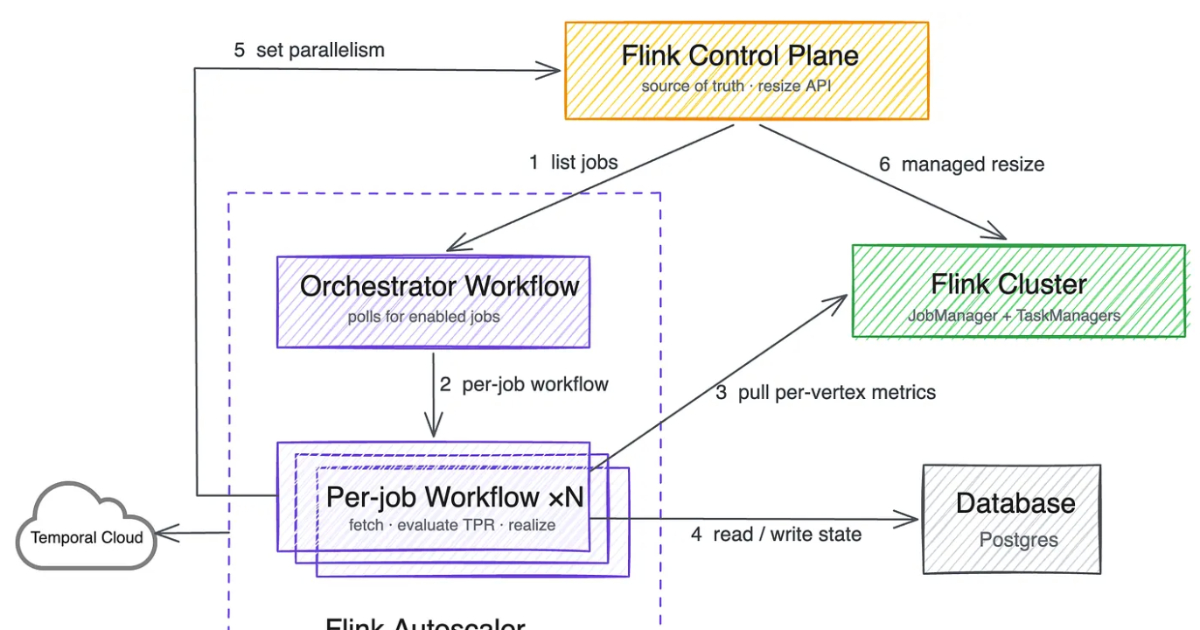
Netflix is moving toward the open-source Apache Flink Autoscaler for more than 30,000 streaming jobs across multiple AWS regions. The operator-level approach addresses limitations of Netflix’s cluster level autoscaler for complex, stateful pipelines. Netflix reports a 58% reduction in annualized Flink compute expenditure for one team, saving approximately $1.1 million annually.
Zhou Yu discusses why AI agents stall in demo phase and shares how simulation-driven testing solves compliance and reliability bottlenecks. Learn how Columbia and Arklex AI use synthetic user personas, trajectory entropy, and automated CI/CD pipelines to evaluate multi-turn agents, catch edge cases before deployment, and scale self-learning workflows in production.
Microsoft has enabled zone redundancy on the Standard v2 tier of Azure API Management, following its arrival on Premium v2 in December. Standard v2 starts at $700 per month against $2,801 for Premium v2, but carries a 99.95% SLA rather than 99.99%. Zone redundancy can only be configured when creating an instance.
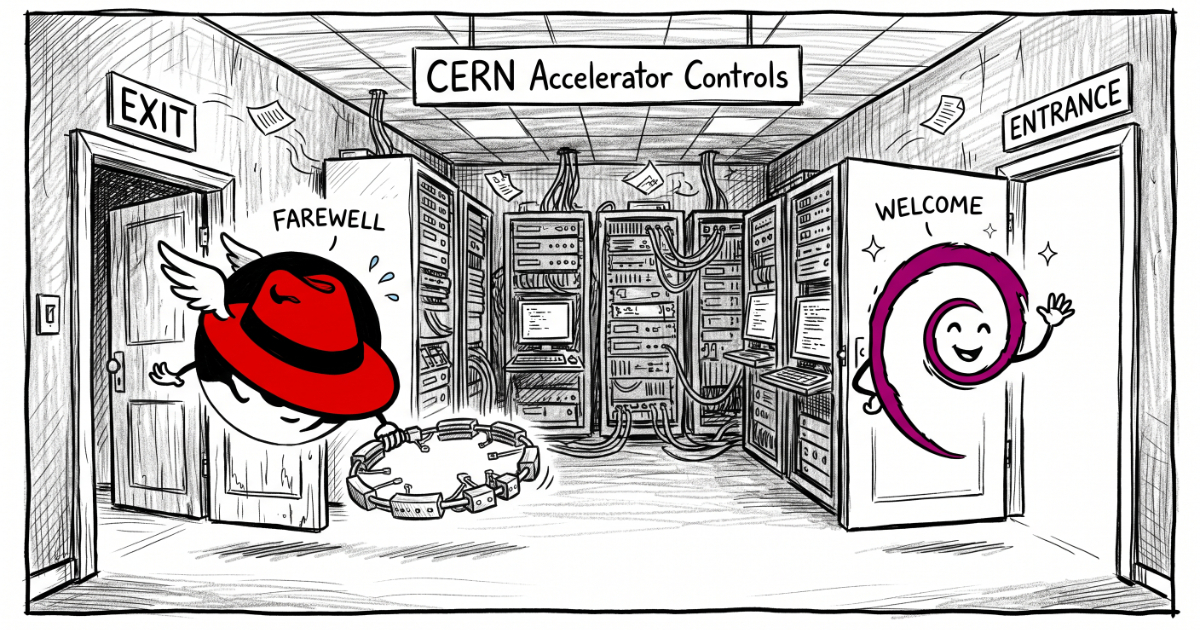
CERN engineers announced a shift from Red Hat-based distributions to Debian for its accelerator control systems. This decision stems from Red Hat's tightening compiler mandates, which threatened legacy hardware. The transition, focused on 2,200 specialized control machines, is set for completion in late 2026, while CERN's other systems will remain with Red Hat and AlmaLinux.
This is the online version of STAT’s weekly email newsletter Health Care Inc. Sign up here.
Hello, diligent HCI readers! I hope everyone enjoyed their Memorial Day weekends. We’ve got a lot of numbers in today’s edition. Get out your abacus. And tell me if you want more or less math in here: bob.herman@statnews.com.
$775 billion
Centers for Medicare and Medicaid Services
Republicans’ recent tax law targets supplemental Medicaid funds that have increasingly propped up hospitals. The cuts are expected to be even bigger than originally forecast, which almost assuredly will provoke an opposition campaign from hospitals.

 Login
Login